TikTok Shop vs Temu vs Shein: Where Dropshippers Can Still Win in 2026
TikTok Shop, Temu and Shein have changed what customers expect from product discovery, price and convenience. They also make generic products easier to compare. For an independent dropshipper, that pressure is real, but it does not mean every sale must move to a large platform.
The useful comparison is not which company is biggest or which platform has the lowest price. It is how each model creates demand, controls the transaction and fulfills the order. TikTok Shop is built around content-led discovery and in-app conversion. Temu is a broad value marketplace. Shein combines fast-moving assortment with a particularly strong fashion identity. An independent store has less built-in traffic, but it can control the offer, customer relationship and operating system more directly.
This article explains where those differences matter. It does not promise that small sellers can outspend or underprice the platforms. The practical opportunity is to create a reason to buy that cannot be reduced to an identical image and a lower listed price.
The Comparison Starts With Business Models, Not Headlines
A platform comparison becomes misleading when TikTok Shop, Temu, Shein and an independent dropshipping store are treated as interchangeable websites. Their demand engines and seller roles are different. That affects what customers expect before checkout and what a merchant can control afterward.
TikTok Shop Turns Content Into a Storefront
TikTok Shop compresses discovery, demonstration, creator influence and checkout into one environment. A product can move quickly when its use is visible and the creative matches the audience. This makes content quality, creator fit and listing accuracy inseparable from sales performance.
For a seller, the advantage is access to native discovery. The trade-off is dependence on platform eligibility, category rules, account performance, content distribution and market-specific fulfillment requirements. A strong video can create orders quickly, but the seller still needs the correct item, dependable inventory and a delivery process that can absorb a sudden change in volume. Sellers planning this channel can use the TikTok Shop dropshipping strategy to connect content testing with inventory and fulfillment readiness.
Temu Makes Price and Assortment Easy to Compare
Temu gives shoppers access to a very wide range of low-priced products inside a single marketplace. That makes it effective for browsing alternatives and comparing visible value. It also reduces the information advantage that older dropshipping stores once gained by presenting an unfamiliar factory product to a new audience.
An independent store selling the same item with the same images and no additional proof enters a difficult comparison. The customer can search by description or image and find similar products quickly. The merchant therefore needs a different specification, useful bundle, clearer application, more credible content, better support or another benefit that survives comparison.
Shein Combines Fast Assortment With a Recognisable Shopping Context
Shein is closely associated with fashion and rapidly changing styles. Its strength is not simply low price; it is the shopping environment around frequent newness, broad choice, merchandising and a familiar customer proposition. That combination is difficult for a general fashion dropshipper to copy.
A smaller apparel store can still compete when it serves a defined use case, fit need, aesthetic or community more deeply. It must support that position with reliable measurements, original imagery, material information and a return process. A generic catalogue of supplier photographs does not create the same reason to choose the independent seller.
Why Generic Dropshipping Feels More Exposed
The most vulnerable model is not dropshipping itself. It is undifferentiated retailing built on a product that customers can identify immediately elsewhere. When the item, photograph, description and bundle are identical, price and delivery become the easiest comparison points. Large marketplaces are structurally strong in both.
This is part of the wider shift away from the old low-cost product dropshipping model, where a seller relied on cheap sourcing, an information gap and basic advertising. Low-cost products can still work, but they need a defensible offer and completed-order economics rather than a large apparent markup.
The pressure is strongest when customer acquisition is paid for separately. A marketplace can spread traffic investment across an enormous catalogue and many repeat visits. An independent seller must recover creative, advertising, payment, support and fulfillment costs from a much narrower order base. That makes contribution after delivery more important than supplier-to-retail markup.
Where Independent Dropshippers Have Structural Advantages
Independent sellers do not need to reproduce the scale of a marketplace. They need to use the controls that a marketplace cannot give them in the same way. Those controls become valuable only when the seller operates them deliberately.
A Narrower Customer Promise
A large platform must serve many audiences. A specialist store can organise products, education and support around one customer situation. The position might be travel organisation for small spaces, grooming tools for a particular coat type, or apparel built around one activity and climate. The niche is useful when it changes the product specification and customer experience, not merely the homepage wording.
A narrow promise improves content because demonstrations can address recognisable problems. It also improves merchandising because related products can form a coherent solution. The customer then compares the complete offer, not only one factory item.
Control of the Offer and Product Page
An independent store can choose how a product is explained, bundled and supported. That control allows the seller to include original measurements, compatibility guidance, instructions, comparison photography and honest limitations. It also allows the store to remove weak variants rather than displaying every option a supplier offers.
Offer control is not permission to invent claims. Every material, function and performance statement should match an approved sample and supplier specification. The stronger the promise, the more important it is that fulfillment reproduces the product shown in the content.
Ownership of the Customer Relationship
A merchant with an independent store can build consent-based email, post-purchase education, support history and repeat-purchase programs. That relationship can reduce reliance on winning the same customer through a platform feed every time.
Customer ownership does not mean unrestricted data use. The store must collect and use information according to applicable privacy and marketing rules. The commercial advantage comes from relevant service and retention, not from sending more messages.
A Brand That Extends Beyond One Listing
The same product promise can be adapted across channels without becoming a different business on each one. A cross-platform dropshipping brand strategy keeps the identity and quality bar stable while changing the proof format for a marketplace listing, short video or owned storefront.
Brand control becomes defensible when it reaches the physical order. Approved specifications, consistent packaging, useful instructions and responsive after-sales support create evidence that a logo alone cannot. These elements should follow product validation so the store does not invest in custom packaging for an offer that has not proved demand.
Content Is an Advantage Only When It Creates Proof
Short-form content can help a small seller reach an audience without starting with a famous brand, but content volume alone is not a moat. Competitors can copy a hook, and platforms can change distribution. The durable asset is the learning produced by repeated content tests.
A useful creative shows the customer situation, demonstrates the approved product and connects the result to a clear offer. Comments and customer questions reveal uncertainty about size, compatibility, materials, setup or delivery. Those signals should improve both the next creative and the product page.
The content, listing and delivered item must stay aligned. If a creator shows a different bundle, colour or function from the item that ships, stronger reach increases the cost of the mismatch. Creative speed should never outrun specification control.
Price Competition Must Be Answered With Value Architecture
A small seller will rarely maintain the lowest visible price across TikTok Shop, Temu and Shein. The better question is whether the customer receives enough additional value to justify the independent offer. That value can come from a better-selected variant, a purposeful bundle, original guidance, faster problem resolution or a more reliable delivery promise.
Bundles work when the components solve one situation and reduce comparison with a single commodity item. They fail when unrelated accessories are added only to create an inflated reference price. Every bundle must be packed, weighed and quality-checked as one sellable unit.
Pricing should be tested against completed-order contribution. Product cost, shipping, packaging, payment fees, creator or advertising cost, refunds, reshipments and support all belong in the calculation. A store that looks profitable before returns may be weaker than a lower-revenue offer with better delivery and retention. The dropshipping profit margin framework helps separate headline markup from contribution and net profit.
Fulfillment Decides Whether Differentiation Is Real
Customers experience the brand through the item that arrives. A specialist promise collapses when the supplier changes material, sends the wrong variant or uses packaging that damages the product. Reliable fulfillment is therefore part of positioning, not a separate backend concern. This is why fulfillment competition increasingly determines whether an independent offer can retain customers.
The approved sample should become a reference specification. The seller needs visibility into exact stock, normal processing time, packed dimensions, route availability and tracking. Exceptions such as inactive tracking, damage, address failure and missing components need an owner and a response threshold.
When demand becomes repeatable, a limited inventory buffer can protect the approved version and reduce processing variation. The quantity should follow completed orders and replenishment time rather than viral views. Holding stock too early replaces one kind of risk with another. A measured inventory buffering strategy can support this transition without forcing a large early stock commitment.
Use Platforms as Channels, Not as the Entire Business Thesis
TikTok Shop can be an effective sales channel when the product demonstrates well and the operation meets local requirements. An owned store can provide deeper education, bundles and retention. The two can support each other when inventory, pricing and product claims are coordinated.
Temu and Shein are also useful comparison environments. They show the price pressure, assortment density and customer expectations an independent offer must face. They should not be treated as proof that copying a visible bestseller will create demand on another channel.
Channel choice should follow the product and operating model. A seller does not need to launch everywhere at once. One channel with accurate inventory, consistent creative and reliable service produces better evidence than several disconnected listings that cannot be maintained.
A Better Decision Framework Than a Platform Ranking
There is no universal winner because each model solves a different problem. TikTok Shop is strongest when native content can create and convert demand. Temu is difficult to beat on broad low-price comparison. Shein provides a strong fast-fashion shopping context. An independent store is strongest when control of positioning, customer experience and retention creates value beyond one listing.
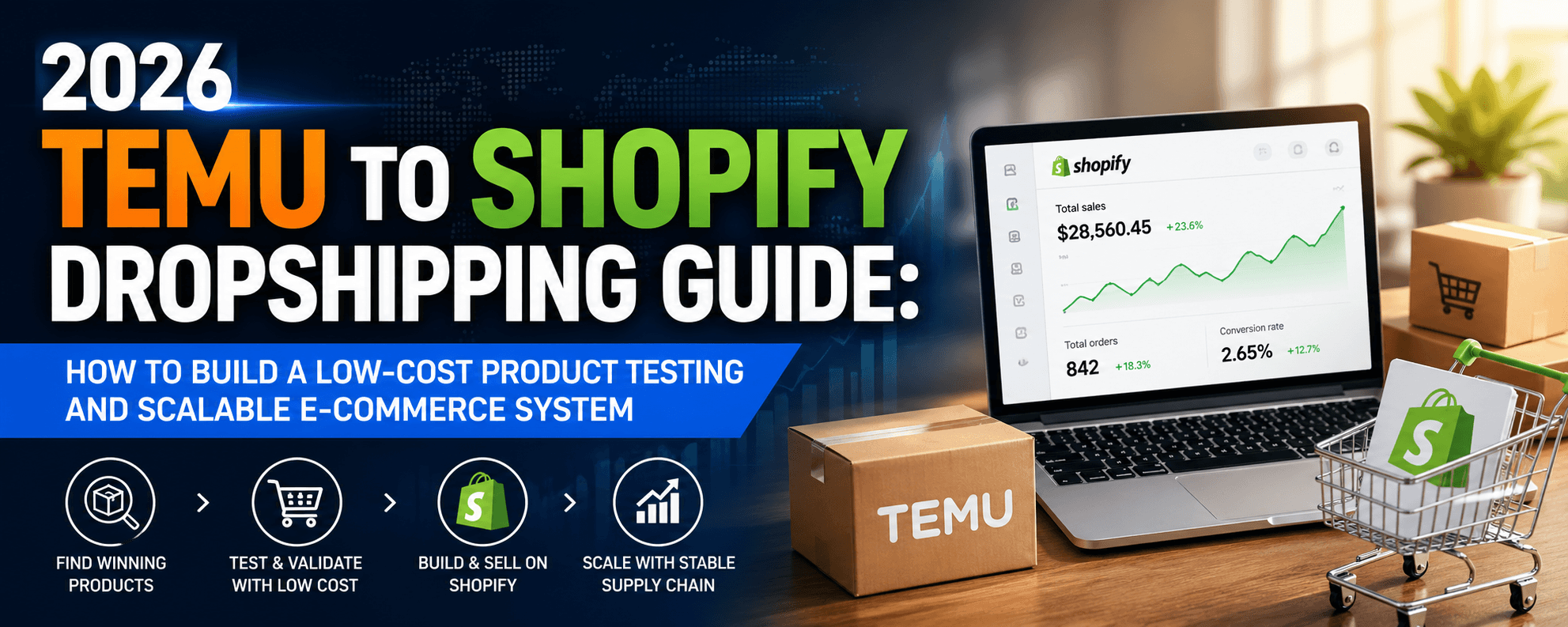
Before choosing a channel, define the audience, product proof, contribution economics and fulfillment promise. Then ask what the channel contributes and what dependency it introduces. A platform that supplies traffic may also limit customer ownership. An owned store that provides control also requires the merchant to create demand and trust. For sellers using Temu as a research source, the Temu-to-Shopify workflow clarifies where marketplace research should stop and controlled sourcing should begin.
The decision becomes clearer when the seller stops asking which platform is best and asks which system can reproduce a successful customer outcome. That outcome includes the correct item, an honest promise, acceptable delivery, a workable margin and a reason for the customer to return.
Where Dropshippers Can Still Win
Dropshippers can still compete when they use the model for flexible validation and then add control as evidence grows. The advantage is not permanent access to cheap products. It is the ability to test a focused offer without committing to deep inventory, learn from customers and move proven products into a more stable supply chain.
The strongest independent sellers avoid direct imitation. They select a narrower customer, improve the specification, create original proof, calculate the complete order and coordinate content with fulfillment. These capabilities are slower to build than copying a listing, but they are also harder to replace with a lower price alone.
TikTok Shop, Temu and Shein raise the standard for convenience and comparison. They do not remove the value of a specialist retailer. They make that value necessary.
FAQ
Is dropshipping still viable when Temu and Shein sell similar products?
It can be viable when the store offers a different specification, useful bundle, stronger content, clearer support or more reliable delivery. Selling an identical item with identical images and a higher price is much harder to defend.
Is TikTok Shop better than an independent dropshipping store?
TikTok Shop can provide native discovery and in-app checkout, while an independent store offers more control over positioning, customer relationships and retention. The better channel depends on the product, market and operating capability.
Can a Shopify store compete with Temu on price?
A small store will rarely win a sustained price race. It should compete on the complete offer, including product selection, proof, bundles, support, delivery and brand experience.
What is the main advantage of independent dropshipping?
The main advantage is flexible product testing combined with control of the offer. That advantage becomes stronger when validated products move into more consistent sourcing, inventory and fulfillment.
Should dropshippers sell on several platforms at once?
Not necessarily. One well-operated channel can produce clearer evidence than several listings with inconsistent stock, content and service. Add channels after the product and fulfillment process are repeatable.
Does branding protect a product from marketplace competition?
Branding helps only when it represents real differences such as a controlled specification, original content, useful packaging and dependable service. A logo on a generic product is easy to compare.
How should sellers use Temu or Shein for research?
Use them to understand price pressure, assortment, reviews and customer expectations. Do not assume that a bestseller on one platform proves demand or permission to copy content on another.
When should a dropshipper hold inventory?
Consider a limited buffer after a specific SKU has repeatable completed orders and the benefit of better consistency or delivery outweighs the risk of unsold stock.