TikTok Dropshipping in 2026: How to Test Products and Fulfill Orders Reliably
TikTok can help a product reach an audience quickly, but attention is not the same as a durable business. A short video may generate clicks or orders before a seller has verified product quality, stock stability, packed weight or delivery performance. When the backend is unprepared, the same content that creates a sales spike can also create late shipments, refund requests and negative comments.
A practical TikTok dropshipping strategy therefore connects three systems: content that demonstrates a clear customer outcome, product validation that confirms the item can meet expectations, and fulfillment that continues working when order volume changes. Dropshipping reduces the need to purchase a large opening inventory, but it does not remove responsibility for the product or customer experience.
This guide focuses on that operating connection. It does not promise guaranteed viral reach, fixed conversion rates or a universal profit margin. The objective is to help a seller test demand with limited inventory exposure, measure the complete economics of each order and strengthen the supply chain when a product begins to repeat.
What TikTok Changes About Product Testing
Traditional product research often begins with search volume, marketplace rankings or competitor catalogues. TikTok adds another source of evidence: how people respond when they can see a product solving a problem in a short, visual sequence. Comments, watch behavior, saves, profile visits and purchase questions can reveal whether the use case is understood before the seller commits to broad advertising or inventory.
This speed creates a temptation to treat every spike as proof of demand. A video can perform because of its opening, creator personality, controversy or entertainment value rather than the product itself. Sellers should repeat the test with different demonstrations and audiences. A product deserves more operational investment only when interest survives beyond one isolated piece of content.
For research before content production, the guide to finding winning dropshipping products in 2026 explains how demand, competition, parcel economics and supplier evidence should be combined. TikTok reaction can strengthen that evidence, but it should not replace it.
Choose Products That Can Be Demonstrated Clearly
TikTok-friendly products usually have a visible problem, action or result. The viewer should understand the use case without reading a long explanation. Organization tools, cleaning accessories, pet products, simple beauty tools and compact lifestyle products can work when the demonstration is honest and the result is repeatable.
Visual appeal alone is insufficient. The product must also survive fulfillment. Check its packed dimensions, weight, fragility, batteries, liquids, sharp components, compliance requirements and likely return reasons. A product with a strong video effect may still be unsuitable if it is expensive to ship, frequently damaged or difficult for customers to use correctly.
Start with a small group of related products rather than a general catalogue. When products serve the same customer or scenario, the account can build recognizable content and the store can create bundles. A coherent selection also makes customer questions, supplier standards and future branding easier to manage.
Validate the Physical Product Before Scaling Content
Order samples of the exact variant intended for sale. Compare the item with the supplier photographs and claims, then test the features shown in the planned video. Check materials, dimensions, accessories, instructions, packaging and any compatibility requirement. If the content demonstrates a result the sample cannot produce consistently, the problem must be fixed before launch.
Record the sample in the same conditions likely to be used by creators. This serves two purposes: it produces more credible content and exposes practical limitations. A tool may require more force than expected, a material may appear different under ordinary lighting or an assembly step may confuse first-time users. Addressing these details on the page and in the video can reduce mismatched expectations.
Build a Content Test Around One Buying Reason
A useful product can support several content angles, but each video should communicate one clear reason to care. One video might show a common frustration, another a before-and-after sequence, and another a comparison with the usual method. Testing distinct angles helps identify whether the audience responds to convenience, appearance, savings, organization or another outcome.
The call to action and product page must continue the same promise. If a video presents a travel solution, the landing page should immediately show size, included components, use instructions and delivery expectations. Sending viewers to a generic home page or a catalogue with several unrelated products adds friction and makes the content test harder to interpret.
User-generated content and creator partnerships can extend the testing process, but sellers should provide an accurate brief. Creators need the approved product, the claims that can be demonstrated, the limitations that must not be hidden and any regulated statements to avoid. Content volume does not compensate for an unclear or misleading offer.
Calculate Profit After Content and Fulfillment Costs
TikTok sales can look profitable when the seller compares retail price only with the supplier price. The real calculation also includes international shipping, packaging, fulfillment, payment processing, platform or transaction charges, creator fees, advertising, discounts, refunds, replacements and customer support. These costs must be estimated before a video is scaled.
Use a complete fulfillment cost per order calculation for the actual packed parcel and destination. This prevents a low factory price from hiding volumetric weight, processing work, remote-area charges or the cost of reshipping an exception.
Contribution profit should be measured by order and by content source. A video with cheaper traffic may attract customers who return the product more often, while a smaller creator may generate fewer orders with better bundle acceptance. The useful question is not which post produced the most revenue, but which product and content combination leaves positive contribution after delivery and after-sales costs.
Select a Supplier That Can Handle Variable Demand
TikTok demand can be uneven. A supplier may process a few orders correctly and still fail when a video creates a sudden increase. Before scaling, confirm stock status, replenishment time, daily processing capacity, cut-off times, packaging standards and the procedure for out-of-stock variants. Ask how quickly tracking is returned and what evidence is available when a parcel or product is disputed.
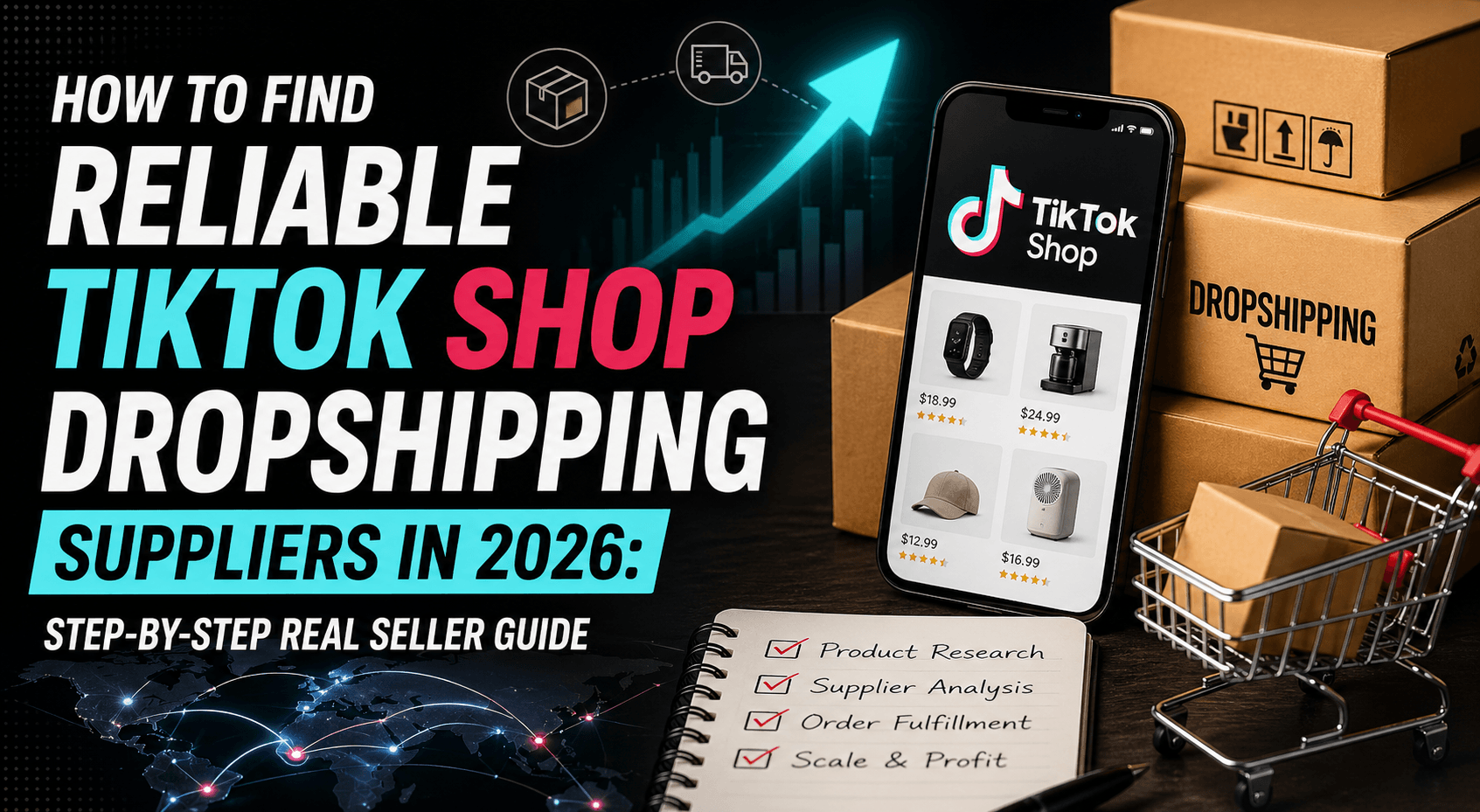
The dedicated guide to finding reliable TikTok Shop dropshipping suppliers covers supplier screening in more depth. For this operating plan, the important point is to approve the supplier before the content spike, not search for a replacement after customers have already paid.
Maintain a backup source for a product that begins to repeat, but do not assume two visually similar listings are interchangeable. Sample the alternative, compare construction and update any instructions or product-page details that differ. Switching without validation can create inconsistent reviews and a higher return rate.
Design the Order and Exception Workflow
A TikTok order must move from the selling channel or connected store to the correct supplier and shipping route. Customer address, product variant, quantity and any personalization must be transmitted accurately. Tracking should return to the order record so the customer can receive consistent updates.
As order volume grows, the guide to automating dropshipping in 2026 can help separate repetitive synchronization from decisions that still need human review. Automation should reduce copying and missed updates; it should not hide stockouts, address problems or quality exceptions.
Define ownership before launch. Someone must respond when an address is incomplete, a product is unavailable, tracking stops updating or a customer reports damage. The supplier may provide evidence and remedies, but the seller remains responsible for communication and resolution. Fast escalation protects both customer trust and the public comment environment around TikTok content.
Plan for a Sales Spike Without Overbuying
The first response to a successful video should not be an uncontrolled inventory purchase. Confirm whether orders are converting beyond the first audience, whether refunds remain manageable and whether the supplier can replenish the exact variant. A limited stock reservation for the fastest-selling version can improve processing without recreating a large inventory risk.
Use daily order data to identify which colors, sizes or bundles account for most demand. Hold inventory selectively and keep slow variants flexible. If content performance fades, the seller should still have a realistic path to sell or reuse the remaining stock. Inventory is a tool for service stability, not proof that the product will stay viral.
Use Bundles to Improve the Offer
Single low-priced products can struggle to absorb customer-acquisition and international shipping costs. A bundle can raise average order value when the items solve one complete problem. The combination should be easy to explain in content and simple for the warehouse to pick correctly.
Test the single item first, then compare a practical bundle rather than adding unrelated accessories. Measure whether the higher order value improves contribution after the extra product cost and packed weight. A bundle that pushes the parcel into a more expensive shipping tier may not improve profit as much as the retail price suggests.
Move From Viral Product to Recognizable Brand
TikTok can introduce the product, but repeat purchases depend on what customers receive. Consistent quality, clear instructions, reliable delivery and responsive service create the foundation. Branding should reinforce that experience rather than cover an unstable product with a logo.
Once demand becomes repeatable, the explanation of branded dropshipping in 2026 shows how sellers can introduce labels, inserts, packaging and product improvements in stages. The investment should follow proven demand, customer feedback and manageable return rates.
The account should also develop beyond one post. Demonstrations, customer questions, care instructions, comparisons and behind-the-scenes fulfillment content can extend the product story. This reduces dependence on endlessly finding a new item and helps the audience recognize what the store stands for.
A Practical 30 Day TikTok Product Test
Days 1 to 7 Validate Product and Economics
Approve the sample, supplier, parcel, shipping route and contribution model. Define the customer problem, primary content angles and claims that can be shown accurately. Prepare the product page and exception process before promoting the item.
Days 8 to 14 Test Several Demonstrations
Publish or advertise several distinct videos rather than repeating one edit. Keep the product, offer and landing page stable enough to compare the response to each angle. Record questions and objections from comments and customer support.
Days 15 to 21 Improve the Offer
Use evidence to revise the page, instructions, creative opening or bundle. Confirm that fulfilled orders are moving correctly and that tracking is returned. Pause content that attracts attention without qualified visits or profitable orders.
Days 22 to 30 Decide Whether to Scale
Review contribution profit, refund reasons, delivery performance and supplier capacity. Scale only when the product and backend remain stable. Otherwise revise the offer, retest a specific assumption or stop before a short-term spike becomes a larger loss.
Common TikTok Dropshipping Mistakes
Common mistakes include choosing a product only because another video went viral, copying claims without testing the sample, scaling before confirming inventory, calculating profit without content and return costs, and promising delivery that the route cannot support. Another mistake is treating comments as engagement while ignoring repeated warnings about sizing, compatibility or instructions.
Sellers also create risk when they rely on one marketplace listing for a product that has begun to generate repeat orders. The next stage is not necessarily a large purchase, but it should include supplier verification, backup planning, clearer quality standards and a documented fulfillment workflow.
Is TikTok Dropshipping Profitable in 2026?
TikTok dropshipping can be profitable when content creates qualified demand and the complete order economics remain positive. The model is not low risk in every respect, and TikTok traffic does not guarantee conversion. Product quality, acquisition cost, shipping, returns and supplier performance determine what remains after a sale.
The strongest approach is controlled progression: validate the item, test several content angles, measure contribution profit, and improve the supply chain as orders repeat. TikTok supplies fast market feedback; dropshipping limits early inventory exposure; and operational discipline turns those advantages into a business that can survive beyond one viral post.
Frequently Asked Questions
Can you use dropshipping for TikTok Shop in 2026?
The model may be used where the seller, product and fulfillment arrangement comply with the current rules of the relevant market. Sellers must verify platform policies, delivery requirements and product restrictions before listing.
What products work best for TikTok dropshipping?
Products with a clear visual use case can be easier to demonstrate, but shipping economics, quality, compliance, competition and return risk still determine whether the product is commercially suitable.
Do you need to order samples before making TikTok videos?
Yes. The exact product should be tested so demonstrations, dimensions, instructions and claims match what customers will receive.
How should sellers prepare for a viral sales spike?
Confirm supplier capacity, stock, replenishment, tracking and exception handling in advance. Reserve only validated, fast-moving variants rather than buying a large quantity of every option.
Does TikTok automation remove the need for customer service?
No. Systems can synchronize orders and tracking, but people must still handle stockouts, address problems, delivery exceptions, refunds and product complaints.
When should a TikTok product receive branded packaging?
Consider packaging after the product shows repeat demand, stable quality and manageable returns. Begin with lighter customization before committing to higher minimum quantities.