Temu to Shopify Dropshipping in 2026: How to Test Products and Build a Scalable Store
Temu has become difficult for ecommerce sellers to ignore. Its enormous product selection, aggressive pricing, customer reviews, category rankings, and constantly changing assortment make it an interesting place to observe what consumers are already buying.
For Shopify sellers, however, the biggest opportunity is not simply finding something cheap on Temu and reselling it at a higher price. Temu and Shopify perform very different jobs, and treating them as interchangeable platforms can create problems once a store begins generating consistent orders.
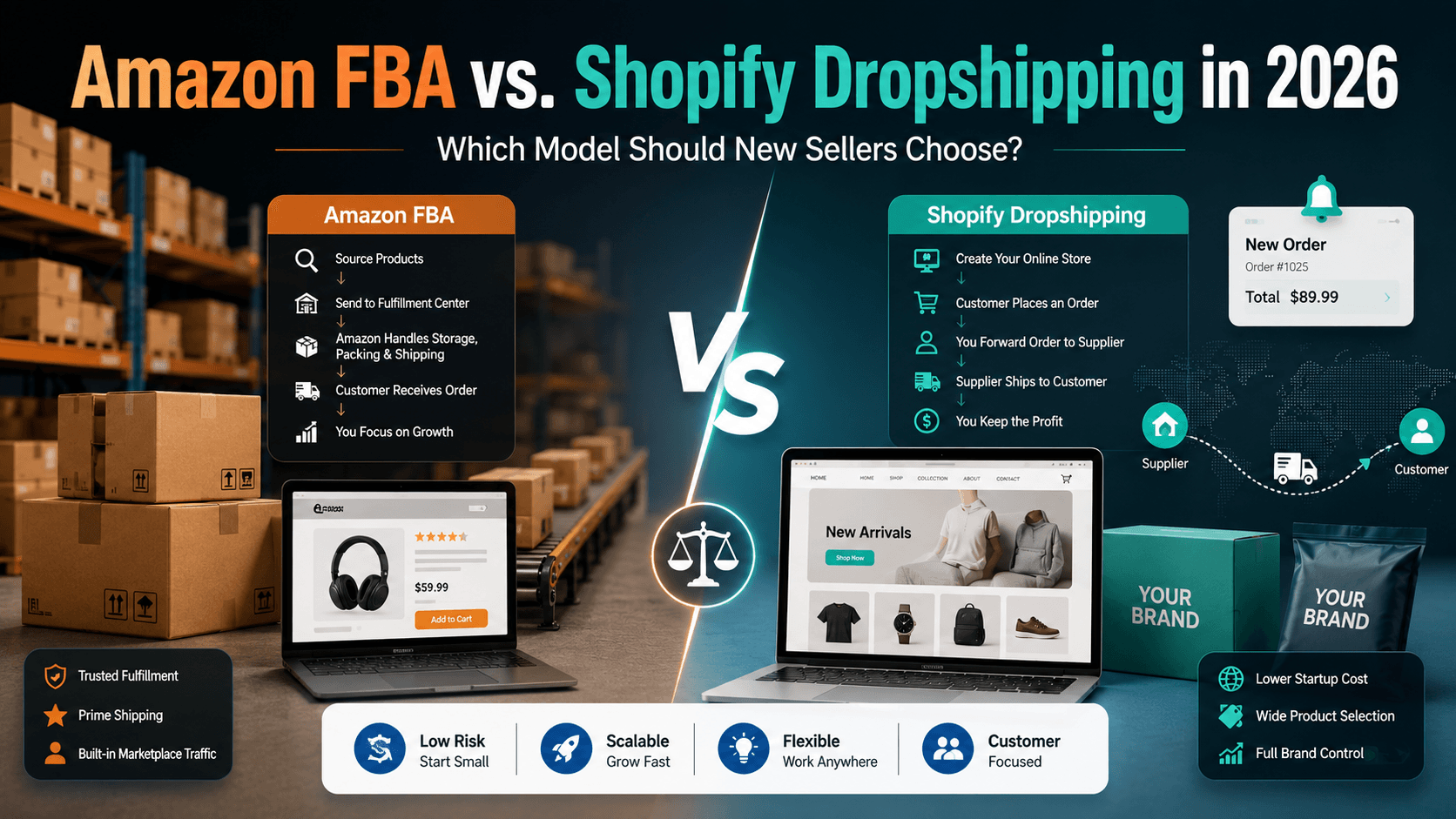
Temu can help sellers discover products, compare consumer-facing prices, study reviews, identify product variations, and observe how products are positioned. Shopify gives sellers control over the storefront, offer, content, customer experience, pricing, and long-term brand.
A more sustainable Temu-to-Shopify strategy therefore uses Temu primarily as a product discovery and early validation environment, then gradually replaces marketplace dependency with a more controlled sourcing and fulfillment structure when a product proves that it can sell.
What Does Temu to Shopify Dropshipping Actually Mean?
The phrase can be misleading because it sounds like a simple technical workflow: find a Temu product, add it to Shopify, receive an order, and have the product sent to the customer.
That is only one possible approach, and it is not necessarily the strongest long-term model.
For a Shopify seller, Temu can play several roles. It can reveal product ideas, provide consumer reviews, show different variations of the same item, indicate price pressure, and help sellers understand how products are presented to mainstream buyers.
Shopify then provides a separate environment where those ideas can be tested through different audiences, content, bundles, positioning, and pricing. The strategic value is therefore less about copying products between two websites and more about using one platform to reduce uncertainty before investing heavily in another.
Why Shopify Sellers Pay Attention to Temu
Traditional supplier marketplaces show sellers what factories and traders are offering. Temu adds another layer because it shows products inside a consumer-facing marketplace where customers are already purchasing, reviewing, comparing, and complaining about products.
That distinction matters. A product may look attractive in a supplier catalog but receive poor customer feedback once real consumers use it. Temu reviews can reveal recurring complaints about size, material, durability, packaging, functionality, or differences between the photographs and the actual item.
Those complaints can sometimes be more useful than positive reviews. If customers like the concept but repeatedly criticize one weakness, the product idea may still be viable if a better supplier or specification can solve that weakness.
Temu can therefore become one input in product research, alongside competitor stores, social content, search behavior, supplier data, advertising creatives, samples, and actual Shopify test results.
Temu Demand Is Not Proof of Shopify Demand
One of the easiest mistakes is assuming that a Temu bestseller will automatically become a successful Shopify product.
The audiences are different. Temu customers are already inside a marketplace known for aggressive pricing and broad product selection, while Shopify customers may arrive from TikTok, Meta, Google, influencers, organic content, or other channels without knowing the store beforehand.
That means a Shopify seller often has to create trust before the product itself can convert.
A product selling for $8 on Temu does not automatically become a viable $29.99 Shopify offer. The Shopify version needs enough perceived value to justify its price after advertising, payment processing, shipping, refunds, customer service, and other operating costs are considered.
Temu can provide a useful demand signal. Shopify still has to validate whether your particular offer can sell profitably.
Step 1: Look for Problems and Use Cases, Not Just Bestsellers
Browsing bestseller lists is easy, but bestseller status alone provides very little competitive advantage because other sellers can see the same products.
A better approach is to look for products with an obvious use case. The customer should be able to understand what the product does and why it matters without reading a long explanation.
Products that solve an irritating problem, improve convenience, organize something, save time, support a hobby, or create a visible transformation can provide stronger starting points for Shopify testing.
Reviews can then help refine the idea. If customers repeatedly praise the concept but criticize weak packaging, uncomfortable materials, inaccurate sizing, or an unreliable component, those complaints reveal what a stronger version of the product would need to improve.
This turns marketplace research into something more useful than simply copying a bestseller.
Step 2: Check Whether the Product Can Support Shopify Economics
Temu pricing can create unrealistic expectations.
A seller may see a product at a very low retail price and assume the difference between that price and a potential Shopify selling price represents profit. In reality, the calculation also needs to include sourcing, international shipping, payment processing, advertising, packaging, refunds, reshipments, apps, and customer support.
Customer acquisition can easily become the largest variable.
If the complete cost of acquiring and successfully delivering an order leaves very little contribution margin, the product is weak even if the original purchase price appears exceptionally low.
This matters even more as low-cost product dropshipping becomes harder to sustain through price differences alone. Customers can compare products quickly, while advertising costs, delivery expectations, and service requirements continue to affect the economics of each order.
The objective should therefore be a sustainable offer, not simply the largest possible markup over a marketplace price.
Step 3: Study Negative Reviews Before Choosing a Product
Positive reviews tell sellers why customers like a product. Negative reviews often reveal whether the product can actually support a business.
Patterns matter more than isolated complaints.
If one customer dislikes the color, that may not mean much. If dozens of customers report that the zipper breaks, the product may have a structural weakness. If buyers repeatedly say the item is smaller than expected, the problem may involve the product itself, inaccurate dimensions, or the way it is presented.
Recurring complaints about material quality, missing accessories, confusing instructions, inconsistent colors, weak packaging, short battery life, or misleading photographs can become useful supplier requirements later.
Instead of asking another factory for the same product at a lower price, the seller can look for a version that addresses the weaknesses customers have already identified.
Step 4: Rebuild the Product Offer for Shopify
Copying a Temu product title, photographs, description, and price into Shopify gives customers very little reason to purchase from the independent store.
The Shopify offer needs context.
A strong product page should make clear who the product is for, what problem it solves, how it works, what is included, which variation is being sold, and what customers should expect after ordering.
Visuals should answer practical questions rather than simply make the page attractive. Dimensions, materials, installation, product variations, usage scenarios, and limitations should be easy to understand whenever they influence the purchase decision.
Bundles can also change the economics. A low-priced individual product may be difficult to advertise profitably, while two or three related products that solve the same problem can create a stronger offer and increase average order value.
The objective is not to disguise the original product. It is to create a clearer and more complete customer proposition.
Step 5: Make the Shopify Store Different From a Marketplace Listing
Customers arriving at an independent store evaluate more than the product itself. They notice the domain, visual consistency, product photography, policies, delivery expectations, reviews, contact information, checkout experience, and overall credibility of the business.
This is where the difference between marketplace arbitrage and brand building begins.
A store does not need expensive custom boxes from its first order, but the customer experience should feel intentional. Consistent colors, clear product information, better images, instructions, inserts, labels, or simple packaging changes can gradually make a validated product less interchangeable with the original marketplace listing.
As sales become more predictable, product and packaging branding can extend into custom labels, branded bags or boxes, inserts, product modifications, and more consistent presentation. The investment becomes easier to justify once the underlying product has already demonstrated real demand.
Step 6: Order a Sample Before Scaling Advertising
Marketplace reviews can reduce uncertainty, but they cannot replace your own sample.
The sample should be evaluated from the customer's perspective. Does the product look like the photographs? Does it feel cheap when held? Are the dimensions accurate? Is the packaging adequate for international transportation? Are the instructions understandable? Does the product continue working after repeated use?
The answers affect more than quality control.
A physical sample can reveal better advertising angles, missing information for the product page, potential customer questions, packaging weaknesses, and likely reasons for refunds.
Having the actual product also makes it possible to create original content rather than relying entirely on supplier media that competing stores may already be using.
Step 7: Test the Shopify Offer With Controlled Risk
The objective of the first advertising campaign should not be maximum scale. It should be learning whether the offer works.
Sellers need to understand whether customers click, whether the product page converts, which creative angle performs best, what questions buyers ask, how frequently orders are refunded, and whether the margin remains acceptable after fulfillment.
A product can receive strong click-through rates and still fail commercially because the selling price is too low or the conversion rate is weak. Another product may attract fewer clicks but generate much stronger purchase intent.
Early testing should therefore produce evidence rather than encourage immediate inventory or advertising expansion.
Only when several parts of the system begin working together should the seller increase investment significantly.
Can You Fulfill Shopify Orders Directly From Temu?
Using a consumer marketplace as the permanent backend of a growing Shopify business creates several dependencies.
Inventory availability can change. Product listings may disappear. Pricing can move. Packaging may not match the experience promised by the Shopify store, and the seller has less control over how individual orders are processed.
These limitations may be manageable during very small-scale testing, but their impact becomes larger as order volume increases.
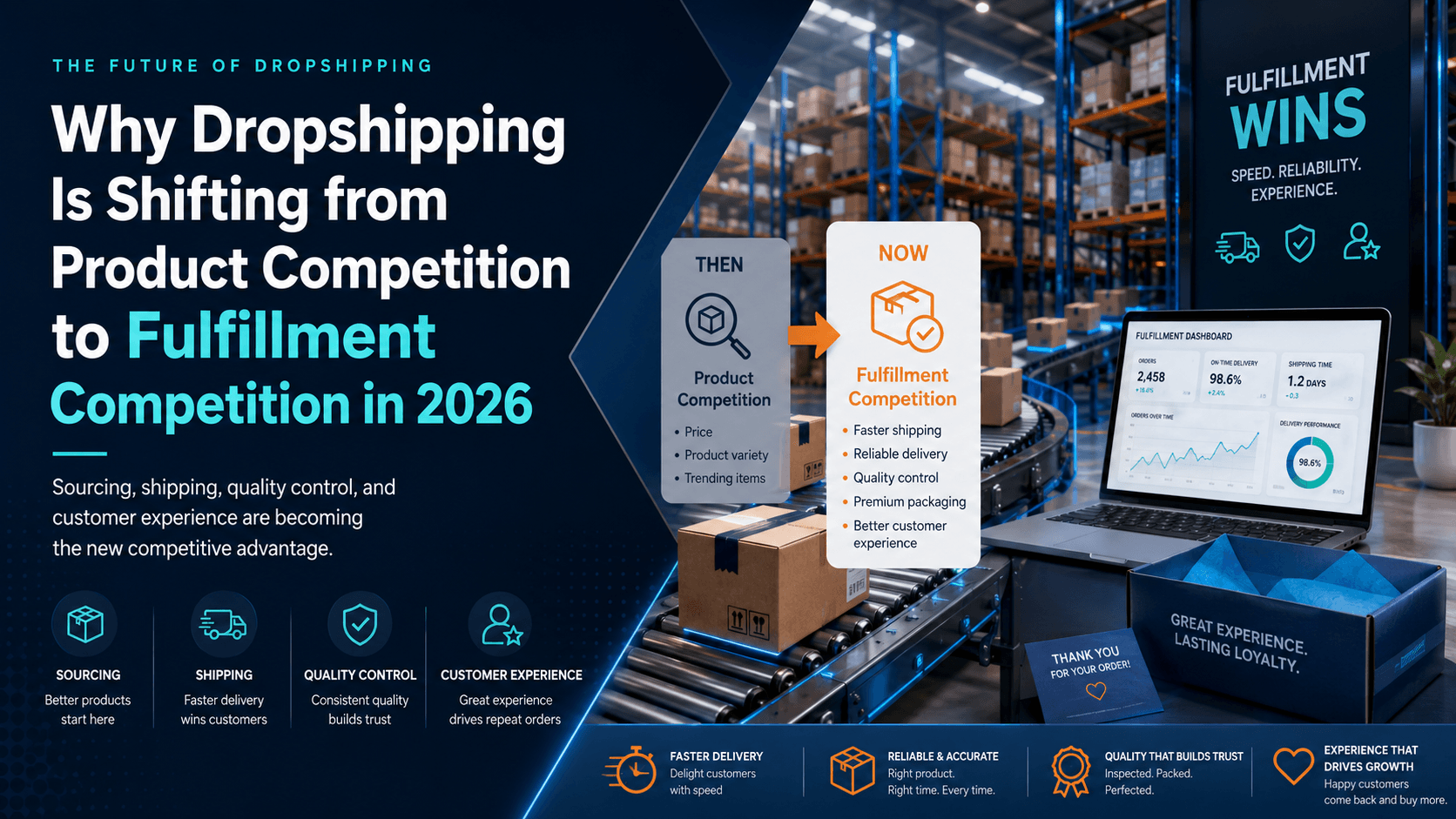
The underlying issue is that early testing and long-term scaling require different things from a supply chain.
During testing, flexibility is valuable because the seller does not yet know which products will survive.
During scaling, consistency becomes more important because the seller already knows which products are generating revenue.
When Should You Stop Depending on Marketplace Fulfillment?
There is no universal daily order threshold.
The transition becomes worthwhile when inconsistency begins costing more than the convenience of purchasing products one order at a time.
The same SKU may begin selling consistently, while supplier stockouts start interfering with advertising. Packaging differences may create customer complaints, better pricing may become important, or the seller may need more predictable processing times.
At this stage, the product has moved beyond simple testing and the backend should change with it.
The same transition appears when a growing store develops a more structured dropshipping supply chain, where supplier backups, inventory buffers, quality control, warehouse capacity, and automation become increasingly important as daily order volume rises.
Move From Marketplace Product to Stable Supplier
Once a product has been validated, the seller has much more useful information than at the beginning.
You know which variation customers prefer, approximately how many units sell each day, which complaints appear repeatedly, which creative angles convert, and how much landed cost the business can realistically support.
That information makes supplier selection more precise.
Instead of asking for the same product at a cheaper price, sellers can specify materials, colors, dimensions, accessories, packaging, quality requirements, expected volume, and replenishment speed.
The objective has changed. During discovery, access to variety is useful. During scaling, repeatability and consistency become more valuable.
Do Not Replace Temu With Another Single Point of Failure
Moving away from marketplace fulfillment does not mean choosing one factory and assuming the supply-chain problem is solved.
Core products become more vulnerable to disruption as sales increase because one supplier problem can affect a larger number of customers.
The primary supplier should therefore work from clear product specifications. A backup source should be tested before an emergency occurs, and both should be capable of meeting the quality standards customers already expect.
Small inventory buffers can also become useful when demand is predictable. They reduce the impact of temporary supplier stockouts without requiring the seller to purchase months of inventory.
The objective is not to build the largest possible supply chain. It is to remove unnecessary uncertainty from products that already generate revenue.
Temu and Shopify Compete on Different Advantages
Temu is extremely strong at product variety and price comparison.
A small Shopify store usually cannot win by becoming a smaller version of Temu. It needs a different reason for customers to purchase.
That advantage may come from specialization around one audience, better product explanation, a carefully selected collection, stronger original content, useful bundles, customer support, improved packaging, or a more coherent brand experience.
Price can still matter, but it should not be the only reason to buy.
If customers see the same product, photographs, description, packaging, and overall experience elsewhere at a much lower price, the independent store has created very little defensible value.
Which Temu Products Are Better for Shopify Testing?
Products with obvious visual use cases are generally easier to test because advertising can communicate their value quickly.
Home organization products, selected pet accessories, beauty tools, travel accessories, hobby products, simple automotive accessories, and visually demonstrable household products can all provide potential starting points.
The category itself does not guarantee success.
A product still needs manageable shipping dimensions, acceptable quality risk, enough margin, and a use case that can support several different advertising creatives.
Products requiring exact compatibility, complicated certification, unusually expensive shipping, or difficult after-sales support deserve more caution.
The best product for testing is not necessarily the most exciting product on Temu. It is the product where demand, content, economics, and fulfillment have a realistic chance of working together.
Products That Require Extra Caution
Some products create risks that are easy to underestimate when browsing a consumer marketplace.
Complex electronics can produce compatibility and defect problems, while battery-powered products may require specific logistics channels. Cosmetics and similar products can involve ingredient, labeling, or regulatory considerations, and children's products can carry additional safety expectations.
Highly fragile products can also become much more expensive once damage and reshipments are included.
Intellectual property requires separate attention. A product being available on a marketplace does not automatically give another seller permission to use trademarks, copyrighted characters, branded designs, photographs, or other protected material in an independent store.
Product availability and resale suitability are separate questions.
Temu Prices Should Not Determine Shopify Prices
Shopify pricing should be based on the economics of the seller's own offer.
Suppose a product appears on Temu for $9. That does not mean selling it for $19 creates a $10 profit. The Shopify business may still need to pay for sourcing, international shipping, advertising, payment processing, refunds, packaging, customer service, and other operating expenses.
At the same time, charging $39 simply because another dropshipping store does so is equally weak reasoning.
The selling price needs to make sense relative to both perceived value and complete order economics.
Bundles, improved content, better product selection, clearer information, stronger presentation, and a more consistent customer experience can increase perceived value, but they do not eliminate the need for competitive awareness.
Use Customer Complaints to Improve the Next Version
One advantage of testing through Shopify is that customer feedback becomes directly useful to the business.
Questions, refunds, reviews, support tickets, and repeat purchases reveal what should change.
If customers repeatedly ask whether a product fits a particular size, the page needs better measurements. If they complain about packaging damage, the packaging needs improvement. If one accessory is repeatedly requested, it may belong in the bundle.
Product feedback can also improve supplier specifications.
If customers like the overall product but consistently dislike one material or component, the next production version can address that specific weakness.
Over time, the business begins accumulating knowledge that competitors cannot obtain simply by finding the same Temu listing.
When Does Branding Become Worth the Investment?
Branding should follow evidence rather than precede it.
During the earliest testing stage, expensive custom packaging for an unproven product can create unnecessary inventory and cash-flow risk.
Once a product generates repeatable sales, the calculation changes.
Simple inserts, labels, packaging bags, instructions, or branded cards can improve consistency without requiring full custom manufacturing. More advanced customization can follow if the product continues performing and order volume justifies the additional investment.
A logo cannot rescue a weak product. Branding becomes more valuable when it makes an already validated product less interchangeable and gives customers a more consistent experience.
A Practical Temu-to-Shopify Growth Model
During the earliest stage, the priority is discovery. Temu can expose products, prices, variations, reviews, and customer reactions without requiring a seller to commit to large inventory.
The next stage is validation. Shopify tests whether a specific product, audience, price, creative, and offer can produce orders at acceptable economics.
Once demand is proven, attention moves toward improvement. Samples, customer feedback, better product specifications, stronger content, supplier comparisons, and more consistent packaging reduce weaknesses that appeared during testing.
Scaling comes later. Supplier stability, quality control, inventory planning, fulfillment speed, and operational consistency become increasingly important as daily sales rise.
The platforms have not necessarily changed. The role each one plays in the business has.
Common Temu-to-Shopify Mistakes
One of the most common mistakes is copying rather than interpreting. A seller sees a successful marketplace product and copies the title, photographs, description, and pricing without understanding why customers are purchasing it.
Another mistake is treating the lowest visible Temu price as the true long-term sourcing cost. Consumer marketplace promotions and pricing do not necessarily represent the economics available to a growing Shopify operation.
Scaling advertising before testing the physical product creates another unnecessary risk. One hidden quality problem can become dozens of refunds once advertising volume increases.
Sellers can also wait too long to strengthen the backend. A purchasing method that works perfectly well for five test orders may become unreliable when the same product begins producing fifty or one hundred orders per day.
The supply chain should evolve with the product rather than remain fixed.
Frequently Asked Questions
Can I use Temu for Shopify dropshipping in 2026?
Temu can be useful for product discovery, price comparison, customer-review research, samples, and early testing. Sellers should separately evaluate whether direct marketplace fulfillment provides enough inventory, packaging, processing, and customer-experience control for their Shopify business.
Can I copy Temu products directly to Shopify?
A product can inspire further research, but copying marketplace content directly creates both commercial and potential intellectual-property problems. Shopify offers should use accurate information, appropriate positioning, and photographs or other media the seller has the right to use.
Is Temu better than AliExpress for product research?
The two platforms can provide different information. Temu can be useful for observing consumer-facing prices, reviews, product variations, and merchandising, while supplier marketplaces may provide different sourcing information. Neither replaces samples and actual demand validation.
Why would customers buy from Shopify if a product is cheaper on Temu?
An independent store needs to create value beyond access to the raw product. Specialization, better product information, original content, bundles, customer support, packaging, product selection, and a coherent brand experience can all contribute. If the store provides no additional value, competing against a much lower marketplace price becomes difficult.
When should I move from Temu to a direct supplier?
The transition becomes more useful once a SKU produces consistent demand and the business needs better pricing, inventory stability, product consistency, packaging control, customization, or more predictable processing.
Do I need branded packaging when testing a product?
Not necessarily. Early testing should prioritize demand, economics, and product quality. Branding can be introduced gradually after the product begins generating consistent sales.
Should I hold inventory for products discovered on Temu?
Large inventory commitments are generally unnecessary during early testing. Once demand becomes predictable, limited inventory buffers can improve processing speed and reduce the effect of supplier stockouts.
Conclusion
Temu can be valuable to Shopify sellers in 2026, but its strongest role is not simply providing access to cheap products.
It can reduce uncertainty during discovery by exposing product ideas, consumer prices, variations, reviews, and recurring customer complaints. Shopify then tests whether the seller can transform that information into an offer customers are willing to purchase.
When a product succeeds, the next stage is no longer about finding another marketplace listing. The business needs better product specifications, more stable suppliers, stronger quality control, appropriate inventory planning, improved presentation, and a customer experience that can remain consistent as order volume grows.
A scalable Temu-to-Shopify strategy therefore changes as the product matures. Use marketplace data to improve discovery, use Shopify to validate real demand, and give proven products more supply-chain and brand control as they become important to the business.