How to Use Social Media Marketing to Boost Dropshipping Sales in 2026
Social media can help a dropshipping store discover demand, demonstrate products, answer objections, and bring qualified visitors to a product page. It can also waste a great deal of time when a seller posts on every platform without a clear customer, content system, or way to connect engagement with orders.
The goal is not to collect views for their own sake. A useful social media strategy creates a measurable path from attention to product interest, from product interest to purchase, and from purchase to customer content that can support the next sale.
This guide explains how to build that path. It focuses on the decisions that matter across platforms: choosing the right channel, selecting products that can be demonstrated, producing credible content, testing ideas, improving conversion, and preparing operations before a successful campaign sends more orders than the supplier can handle.
What Social Media Marketing Should Do for a Dropshipping Store
A social account can play several roles, but each piece of content should have a primary job. Some posts introduce a problem, some demonstrate a solution, some remove doubt, and others give a ready buyer a reason to act. Confusion begins when every post tries to perform all four jobs at once.
For a new store, social media is especially valuable as a learning channel. Comments, saves, profile visits, product-page sessions, and customer questions reveal which use cases matter to the audience. That information can improve not only future content but also product titles, images, FAQs, bundles, and shipping communication.
Social media should therefore support three connected outcomes:
Demand discovery: identify products, audiences, and use cases that attract meaningful interest.
Trust building: show how the product works and address questions about quality, fit, delivery, and returns.
Conversion: move interested viewers to a suitable product page or in-platform checkout and measure what happens next.
A viral video can contribute to these outcomes, but virality is not the system. A sustainable operation can learn from an average post, reproduce a useful creative angle, and fulfil the orders when a stronger post eventually succeeds.
Choose Platforms by Buying Context, Not Popularity
The largest platform is not automatically the best platform for a particular product. A seller should consider how the target customer discovers ideas, evaluates products, and makes purchases. The same item may need a rapid demonstration on a short-video platform, a more detailed explanation on YouTube, or a search-led visual format on Pinterest.
TikTok and Instagram Reels
Short vertical video suits products whose value can be understood visually within a few moments. Transformations, comparisons, demonstrations, routines, and reactions can all make an unfamiliar product easier to evaluate.
These platforms reward a strong opening, but a strong opening does not have to be sensational. Showing the frustrating situation first, demonstrating the result immediately, or asking a highly specific question can attract the right viewer without making claims the product cannot support.
YouTube and YouTube Shorts
YouTube can support both discovery and deeper evaluation. Shorts may introduce the product, while longer videos can explain setup, compare use cases, answer common questions, or demonstrate the product over time.
This combination is useful when customers need more context before purchasing. A short clip can earn attention, while a detailed video becomes a reusable trust asset for the product page, customer support, and remarketing.
Pinterest is most relevant when the product fits planning and inspiration behaviour, such as home organisation, style, crafts, celebrations, gifts, travel, or routines. Content should show the product within an outcome the customer wants, rather than presenting an isolated catalogue image.
Because discovery may continue over a longer period, each pin should lead to a page that closely matches its promise. A packing checklist should not lead to a generic store homepage; it should lead to the relevant collection, guide, or product.
Facebook and Community-Led Channels
Facebook pages, groups, and creator communities can support discussion, customer proof, retargeting, and audience segments that are less dependent on trend-driven short video. The channel can be particularly useful when buyers want recommendations or reassurance from other people before ordering.
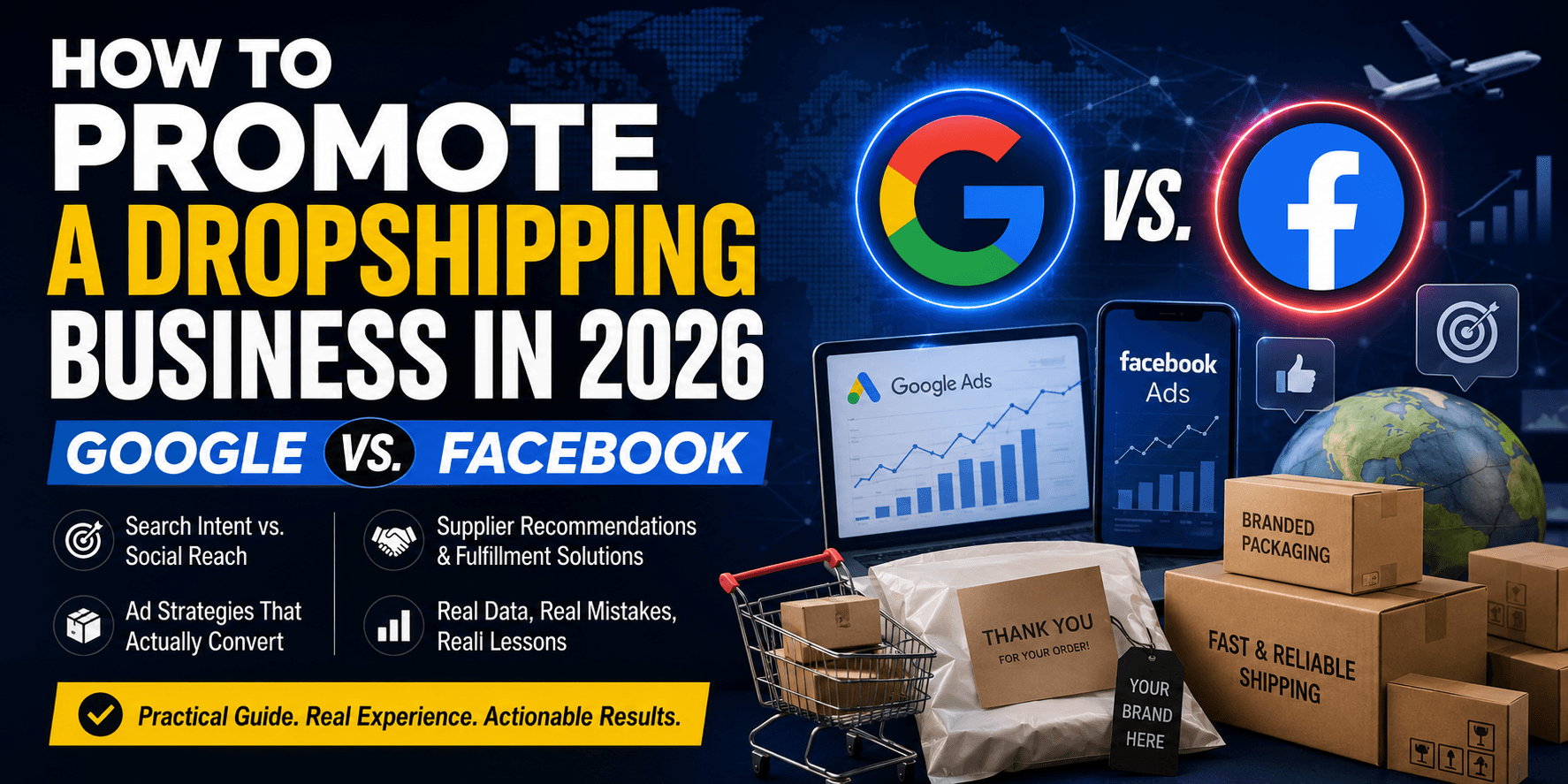
Organic social and paid acquisition should still be treated as different disciplines. When the main decision is whether to capture existing search demand or interrupt a relevant audience with a product demonstration, the site’s comparison of Google Ads and Facebook Ads for dropshipping provides the narrower paid-channel analysis without turning this article into an advertising manual.
Select Products That Can Survive Both Content and Delivery
A product may look attractive in a supplier catalogue yet be difficult to market on social media. The strongest candidates usually have a visible use case, a recognisable audience, and a result that can be shown honestly. They also leave enough margin to cover content production, payment fees, shipping, returns, and possibly advertising.
Before creating content, ask whether a viewer can understand the problem and result without a long explanation. Then examine the less visible side of the offer: variant complexity, breakage risk, product consistency, restricted shipping categories, available tracking, and the likelihood of returns.
The product should pass three tests:
Content viability: The product supports several credible demonstrations or stories without repeatedly using the same clip.
Commercial viability: The selling price leaves sufficient room after variable costs and expected refunds.
Operational viability: The correct variant can be sourced, checked, packed, and delivered consistently as demand increases.
Do not use engagement as the only evidence of demand. A curious audience may watch an unusual gadget without wanting to own it. Product-page sessions, add-to-cart behaviour, checkout completion, customer questions, cancellation reasons, and return patterns provide stronger commercial evidence.
Build a Content System Around Customer Decisions
Instead of asking what to post each day, list the decisions a customer must make before ordering. The customer must recognise the problem, understand the product, believe the demonstration, decide that the offer fits their situation, and trust the store to deliver what was promised.
That sequence produces a practical content system with several recurring categories.
H3: Problem and Use-Case Content
Problem-led content shows a situation the audience already recognises. The product enters as part of the solution rather than appearing as an unexplained object. A travel organiser can be shown during a real packing routine; a pet accessory can appear during a familiar care problem.
Specific situations usually outperform broad claims. “Organise a narrow bathroom drawer” gives the viewer more context than “the best organiser for everyone.” It also helps the seller discover which customer segment responds.
Demonstration and Proof Content
A demonstration should make the product easier to judge. Show scale, materials, movement, setup, limitations, and the result under ordinary conditions. When relevant, include close-ups and unedited sequences that make it clear what happened between the before and after views.
Supplier media can help with early research, but original assets create more control over accuracy and brand consistency. When a store needs repeatable close-ups, lifestyle scenes, variant images, or short-form footage, a planned product photography brief can produce assets for both product pages and social campaigns instead of relying on the same catalogue images used by competing sellers.
Objection and FAQ Content
Questions in comments and customer support are not interruptions to the content plan; they are source material. Size, compatibility, cleaning, materials, shipping time, setup, and returns can each become a focused post.
Answer the question directly. If a limitation exists, explain it rather than hiding it. Clear qualification may reduce low-intent clicks, but it can also reduce disappointed customers, refunds, and negative comments after delivery.
Customer and Creator Content
Customer photos, unboxings, reviews, and creator demonstrations can show the product in settings a brand team would not invent. Permission and usage rights should be agreed before customer or creator content is reused on the store, in organic posts, or in paid advertising.
Creators should be chosen for audience fit and content credibility, not follower count alone. A smaller creator whose audience closely matches the product may generate better questions, clicks, and sales than a broad entertainment account with much larger reach.
Offer Content
Offer-led posts explain why buying now or buying a particular bundle makes sense. They may present a seasonal use case, a set designed for a specific task, a legitimate stock deadline, or a clear price advantage.
Constant discounts train the audience to wait. Offers are most effective after the product’s value and trust have already been established through other content.
Create Better Social Content Without Chasing a Formula
Templates are helpful for production, but rigid formulas make every video feel interchangeable. A reliable creative brief is more useful than a list of supposedly perfect hooks.
Each brief should define the target viewer, the situation, the product promise, the proof required, the objection being answered, and the next action. It should also state what must not be claimed. This is especially important for products involving health, safety, environmental benefits, performance guarantees, or regulated categories.
Make the Opening Specific
The first scene should tell the right viewer why the content is relevant. Begin with the situation, outcome, or question rather than a logo animation. A visible result can work well, but the rest of the content must show enough evidence to support it.
Avoid copying a viral opening without understanding why it worked. The useful insight may be the customer problem, the pacing, the demonstration angle, or the audience language—not the exact words.
Show the Product in Context
Scale and function are difficult to judge from isolated product shots. Hands, rooms, bags, desks, pets, clothing, or compatible devices give the viewer reference points. Captions should reinforce information that is difficult to see, not repeat a generic sales slogan.
The landing page must continue the same story. If a video earns attention by showing use in a small apartment, the product page should immediately confirm dimensions, installation requirements, and images from a similar setting.
Produce Variations, Not Duplicates
A seller does not need a new product for every post. One viable product can support different audiences, use cases, objections, formats, creators, and offers. Changing one meaningful variable at a time makes the results easier to interpret.
For example, the same demonstration can be tested with a problem-led opening and a result-led opening. If every element changes at once, the seller may know which video won but not why.
Use a Testing Cycle That Connects Content to Revenue
A content calendar organises production; a testing cycle improves decisions. Start with a small set of hypotheses about the audience, use case, promise, and format. Publish enough variations to see patterns, then turn the strongest learning into the next group of creatives.
Track metrics by stage rather than searching for one universal number.
Attention Metrics
Reach, views, watch time, completion, and saves indicate whether the content earned and held attention. They are useful diagnostic signals, but they do not prove that the audience wants to buy.
Intent Metrics
Profile visits, product clicks, substantive comments, direct messages, and email sign-ups show that viewers want more information. Review the questions as well as the totals because a product attracting shipping and compatibility questions may require different content from one attracting price objections.
Commercial Metrics
Add-to-cart rate, checkout completion, conversion rate, contribution margin, refund rate, and repeat purchase behaviour determine whether attention produces a healthy business. Tag campaigns and creatives consistently so orders can be connected to the content that influenced them.
When a video has strong watch time but weak product clicks, the content may be entertaining without establishing a buying reason. Strong clicks with weak add-to-cart behaviour often point to a mismatch between the post and landing page. Orders followed by high refunds suggest that the claim, product quality, variant information, or delivery expectation needs attention.
Add Paid Promotion Only After the Message Has Evidence
Organic performance is not a perfect predictor of advertising results, but it can expose useful messages and creative weaknesses before a larger budget is committed. Content that attracts relevant questions, product visits, and purchases is a more rational starting point than a clip chosen only for high views.
Test multiple creatives with controlled budgets and consistent landing pages. Evaluate profit after product cost, shipping, payment fees, discounts, advertising, and expected refunds. A campaign that reports inexpensive purchases can still lose money when downstream costs are ignored.
Paid promotion should amplify a validated customer-product message. It cannot repair a confusing offer, an inaccurate page, or an unreliable supplier.
Design the Conversion Path Beyond the Post
The transition from platform to store should feel continuous. Product name, images, price, variant, promise, and use case should agree with the content that generated the click. Mobile visitors should be able to understand the offer, delivery expectation, return terms, and primary action without searching through a crowded page.
Comments and direct messages are also part of the conversion path. Prepare accurate answers for frequent questions, but do not automate replies so aggressively that every customer receives an irrelevant script. Repeated questions should feed back into new content and product-page improvements.
If the business sells through a Shopify store and one or more social-commerce channels, operational complexity grows quickly. A multi-platform store integration becomes relevant when product information, inventory, orders, fulfilment status, and tracking must remain aligned across channels; it is not necessary merely because the brand has accounts on several social networks.
Prepare Fulfillment Before a Campaign Scales
The best time to investigate stock and shipping is before a successful post creates a queue of paid orders. The seller should confirm the exact variant, inventory update process, normal processing time, tracked route, packaging method, quality-control standard, and responsibility for delivery exceptions.
These operating conditions should be recorded against the approved product specification. Product materials, dimensions, variants, packaging, or factories should not change without approval, while shipping quotations should distinguish processing time from transit time and account for both actual and dimensional weight where relevant.
The fulfilment plan also needs a clear path for inactive tracking, failed delivery, damage, loss, and sudden stock shortages. If sales become consistent, a small inventory buffer may reduce processing delays without forcing the seller to commit to a large purchase too early.
Once demand becomes predictable, a dropshipping fulfillment service can connect sourcing, quality checks, inventory, packing, shipping, and tracking with the store’s order flow. That commercial step belongs after the product and marketing message show evidence, not as a substitute for validating them.
A 30-Day Social Media Marketing Plan for a Dropshipping Store
The purpose of a 30-day plan is to create a learning rhythm, not to guarantee a viral result. Adjust the number of posts to the team’s production capacity; consistent, reviewable tests are more useful than an unsustainable posting target.
Days 1–5: Define the Market and Prepare the Offer
Choose one primary audience, one product or tightly related product group, and one or two platforms. Review customer language, competitor comments, common objections, and the situations in which the product is used.
Order and inspect a sample when possible. Confirm the product page, pricing, shipping explanation, returns, analytics, and supplier workflow before driving traffic.
Days 6–12: Produce the First Content Set
Create several pieces across problem, demonstration, FAQ, and proof categories. Use more than one opening and use case, but keep the offer consistent enough to compare outcomes.
Prepare captions and on-screen text for clarity and accessibility. Save clean source files so strong footage can be recut without downloading a compressed copy from a platform.
Days 13–20: Publish, Respond, and Diagnose
Post on a schedule the team can maintain. Respond to genuine questions, record recurring objections, and check whether visitors behave as expected after leaving the platform.
Do not declare a product successful because one attention metric is strong. Compare attention, intent, sales, margin, and customer feedback together.
Days 21–26: Create the Second Test Set
Keep the promising customer problem or use case and create new variations around it. Improve weak transitions between the content and product page. Turn common questions into direct demonstrations.
Pause ideas that repeatedly attract the wrong audience. A failed angle is useful when it prevents further production and advertising spend.
Days 27–30: Decide What to Scale
Identify the combinations of audience, use case, format, and offer that produced qualified visits and commercially sensible orders. Estimate whether the supplier and fulfilment process can handle a controlled increase.
Only then consider paid amplification, additional creators, more frequent production, or expansion to another channel. Scale one constraint at a time so quality, shipping, and customer support remain visible.
Common Social Media Mistakes in Dropshipping
Posting on Every Platform From the Beginning
Publishing everywhere can create activity without learning. Start where the customer behaviour and product format fit, then repurpose selectively after a workable message appears.
Treating Views as Product Validation
Views show distribution and attention. Validation requires stronger evidence from clicks, checkout behaviour, profit, delivery, and post-purchase feedback.
Copying Supplier or Competitor Content
Reused footage makes the store difficult to distinguish and may not accurately represent the item being shipped. It can also create rights issues. Original samples and controlled assets produce more credible claims and reusable brand material.
H3: Promising More Than the Product Can Deliver
Exaggerated results may improve a short-term click rate while increasing refunds, complaints, and negative comments. Demonstrate normal use, define relevant conditions, and remove claims that cannot be supported.
Scaling Traffic Before Operations
A surge in orders exposes weak stock information, inconsistent variants, slow processing, and missing tracking. Marketing and fulfilment should share the same product specification and delivery promise before volume increases.
Practical Decisions Before Scaling
Platform Selection
There is no universal best platform. Selection should reflect the target customer’s discovery behaviour, the product’s demonstrability, the available content format, and the platform’s ability to send qualified traffic to the intended checkout path.
Publishing Frequency
The right frequency produces enough material to test ideas without lowering accuracy or production quality. A small team may learn more from several well-planned weekly tests than from a daily volume it cannot review or sustain.
Organic and Paid Distribution
Organic content can validate messages and generate sales, but its reach may vary. Paid promotion becomes more informative after the product, creative message, landing page, tracking, and supplier workflow have shown that they work together.
Measurement Beyond Views
Product clicks, customer comments, add-to-cart behaviour, checkout completion, contribution margin, refund rate, delivery issues, and repeat purchases reveal whether attention develops into a healthy order rather than a momentary spike.
Frequently Asked Questions About Social Media Marketing for Dropshipping
Which social media platform is best for dropshipping?
There is no single best platform for every store. TikTok and Instagram Reels suit visually demonstrable products, YouTube supports deeper explanations, Pinterest fits planning and inspiration-led purchases, and Facebook can support communities, retargeting, and customer proof.
How often should a dropshipping store post on social media?
The right frequency is one the team can maintain while still producing accurate, useful content. Several deliberate weekly tests usually provide better learning than a high daily volume that cannot be reviewed or sustained.
Can dropshipping sales grow through organic social media alone?
Organic content can validate products, messages, and audiences while generating sales without immediate advertising costs. Because organic reach can fluctuate, a growing store should gradually build additional acquisition and retention channels rather than depend on one platform.
When should a dropshipping store start using paid social ads?
Paid promotion is more useful after the product, creative message, landing page, tracking, and fulfilment workflow have shown evidence that they work together. Advertising should amplify a promising offer instead of compensating for weak product-market fit or unreliable delivery.
Which social media metrics matter most for dropshipping sales?
Views and watch time measure attention, while product clicks, add-to-cart activity, checkout completion, contribution margin, refunds, and repeat purchases reveal commercial performance. The most useful analysis connects each creative to both the order and the customer experience that followed it.
Final Takeaway
Social media marketing for dropshipping works best as a connected operating system. The product gives the team credible material; the content attracts and educates the right audience; the store continues the same promise; measurement separates attention from commercial intent; and fulfilment delivers the experience the content advertised.
Start with a narrow audience, a product that can be demonstrated honestly, and a manageable content cycle. Use each post to learn, move paid budget toward evidence rather than excitement, and strengthen operations before increasing volume. That is how social media becomes a repeatable sales channel instead of a search for the next lucky viral post.