Why Scaling Stores Need 1-on-1 Dropshipping Support
Dropshipping support is easy to overlook while a store is testing a few products and processing occasional orders. At that stage, a help-center article, chat queue or supplier message may be enough. The situation changes when the same store carries several active SKUs, ships to multiple countries and needs consistent decisions across sourcing, quality control, packaging, inventory and logistics.
The value of 1-on-1 support is not simply faster replies. A dedicated contact should preserve operational context. Instead of explaining the same product specifications and shipping requirements every time a problem appears, the seller works with someone who understands which SKUs are validated, which packaging applies, where stock is held and which delivery promises were made to customers.
That continuity can reduce preventable handoff errors, but it is not a substitute for a sound system. The strongest model combines a named point of contact with written specifications, visible order data, defined escalation rules and measurable fulfillment performance.
1-on-1 Support Is an Operating Model, Not a Chat Feature
Many services provide customer support, but dedicated operational support has a narrower purpose. It connects decisions that would otherwise sit in separate conversations: a supplier changes a material, the warehouse receives a revised variant, the store updates its product page and the shipping team needs the correct declaration or packing rule. If those changes are handled independently, the customer can receive a product that no longer matches the offer.
A dedicated contact should coordinate the issue from its source to its downstream effects. The person does not need to perform every warehouse task personally. The important point is ownership: someone records the decision, confirms who must act, checks completion and communicates the result in language the seller can use.
Before choosing that model, sellers should understand the differences among marketplaces, software platforms, sourcing agents and managed providers. A neutral China dropshipping service provider comparison helps separate those roles so support promises can be evaluated against the work a provider actually controls.
Why Generic Support Starts Failing as Order Complexity Grows
Repeated explanations create inconsistent decisions
When every ticket reaches a different agent, context must be reconstructed from the beginning. One representative may approve a packaging change while another continues using the previous instruction. A dedicated contact reduces this risk by maintaining a single operational record, especially when several factories or product variants are involved.
Exceptions become more expensive than routine orders
Most fulfilled orders follow the normal workflow. The costliest problems usually sit outside it: a supplier runs out of one color, an address is incomplete, a parcel stops updating, a batch differs from the approved sample or a promotion creates more volume than expected. At scale, the ability to recognize and route these exceptions matters more than receiving a generic reply quickly.
Several channels can create one inventory problem
A Shopify store, marketplace account and social-commerce channel may all sell the same stock. Without one source of truth, overselling becomes likely. The operational logic behind one inventory pool for global sales becomes much easier to apply when one contact can reconcile storefront data, warehouse stock and replenishment decisions.
The Business Stage Where Dedicated Support Becomes Useful
There is no universal daily-order threshold. A simple store can process meaningful volume with automation and standardized products, while a highly customized store may need closer coordination at relatively low volume. The better trigger is recurring operational complexity.
Dedicated support becomes more valuable when the store has validated products, recurring orders and decisions that affect more than one function. Common signals include supplier changes that must reach the warehouse, branded materials that need SKU-level instructions, several shipping routes, inventory buffers for proven products and repeated exceptions that cannot be solved through a standard ticket.
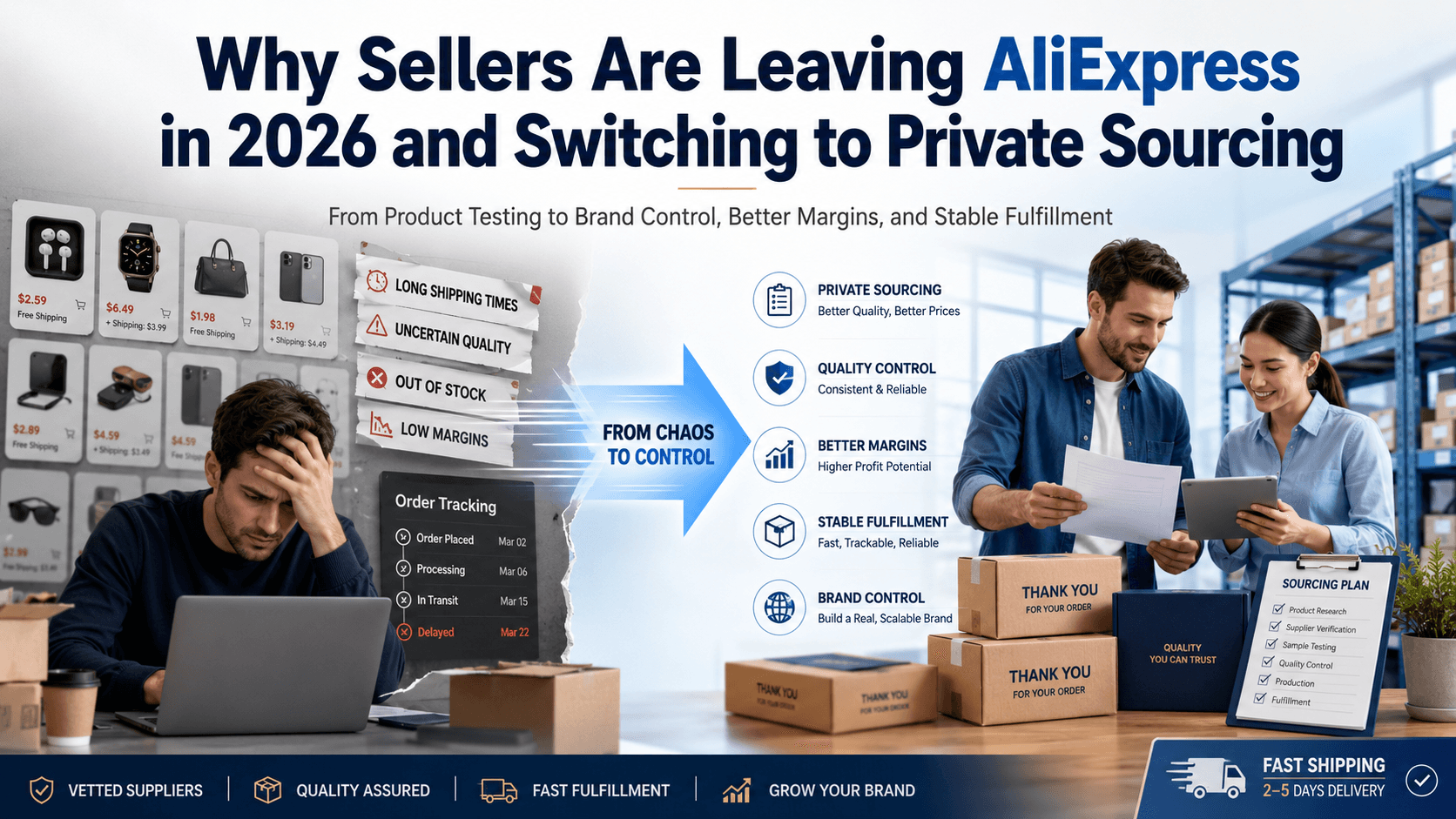
This is also the point at which sellers often consider moving beyond AliExpress for proven products. The marketplace can remain useful for testing, while stable SKUs move into a workflow with clearer specifications, quality checks, inventory planning and accountable fulfillment.
What a Dedicated Dropshipping Contact Should Manage
Sourcing context and product specifications
The support record should identify the approved supplier, product version, dimensions, materials, colors, accessories and packaging. A quotation is not enough. If a factory proposes a cheaper substitute or a component changes, the contact should flag the difference before purchasing rather than allowing the warehouse or customer to discover it later.
Quality-control instructions
Inspection should focus on the failure points that matter for the product. Apparel needs sizing, stitching and color checks. Electronics may require function, plug and accessory checks. Personalized products need order-data accuracy. The dedicated contact should make sure those standards are documented and applied to the correct SKU or batch.
Inventory and replenishment
A contact should distinguish order-by-order sourcing from stocked inventory and identify the reorder trigger for proven items. The seller still owns the commercial decision to buy inventory, but support should provide current stock, procurement lead time and supplier-capacity information before advertising is increased.
Shipping and order exceptions
The role should connect the store promise with an available logistics route. It should also define what happens when an address fails validation, tracking stalls, a parcel is returned or the destination requires different documentation. Clear escalation rules make these cases manageable without treating every delay as a new negotiation.
What 1-on-1 Support Cannot Fix
A named account manager cannot make an unprofitable product viable, create demand, remove customs rules or guarantee that every international parcel arrives on an exact day. It also cannot compensate for vague product specifications or advertising claims that the supplied item cannot meet.
Sellers remain responsible for product positioning, retail pricing, customer communication, legal review and the decision to scale. A provider should contribute operational evidence, not make unsupported commercial promises. The relationship works best when both sides know where responsibility begins and ends.
How to Evaluate a Provider Before Moving Order Volume
Start with a small operational test rather than a feature checklist. Use one or two real products, several destinations and enough orders to expose normal processing as well as at least a few exceptions. Record response quality, quotation clarity, product match, packing accuracy, dispatch time, tracking behavior and the way problems are closed.
Ask who will own the account, who covers when that person is unavailable and where instructions are stored. Confirm whether the contact can coordinate sourcing, warehouse and logistics teams or only forward tickets. Request the rules for stockouts, damaged goods, wrong variants, lost parcels and shipping-line changes. A promise of personal service is useful only when the operating process supports it.
Compare total delivered cost, not only the quoted product price. A slightly lower unit price can be erased by slower procurement, higher dimensional weight, reshipments or inconsistent quality. Support quality should therefore be judged by its effect on order accuracy, exception resolution and decision speed.
How ETdropship Uses a Dedicated-Support Model
ETdropship assigns sellers a consistent contact to coordinate product sourcing, quotations, purchasing, quality requirements, packaging, warehouse stock and international shipping. The practical aim is to keep one operational history for the store instead of separating each issue into an unrelated ticket.
New products can still be purchased after customer orders when that is the appropriate testing model. Proven products can move into small inventory buffers, and branded materials can be stored and applied according to agreed instructions. The dedicated contact helps connect those stages so a product does not have to be rebuilt from the beginning each time the store grows.
For sellers with a clear commercial need, ETdropship’s dropshipping fulfillment service covers sourcing, quality checks, packaging, warehousing, order processing, tracking synchronization and international shipping. The service page is the appropriate next step only after the seller has identified the products, markets and operational problems that require support.
A Practical Onboarding Framework
Define the operating baseline
Share active SKUs, product specifications, target markets, current order volume, store channels, existing suppliers and packaging requirements. Mark which products are experimental and which are proven. This prevents a test SKU from receiving the same inventory commitment as a stable seller.
Agree on decision rights
Document which changes require seller approval, including price increases, supplier substitutions, shipping-line changes, packaging revisions and inventory purchases. Define a practical approval channel and response window so urgent decisions do not remain ambiguous.
Set exception and reporting rules
Agree on the information included in stock updates, purchasing status and shipping exceptions. Decide when an issue should be escalated immediately and when it can be included in a routine report. A concise, predictable update is more useful than frequent messages without a clear action.
Review performance and adjust
After the first operating cycle, review order accuracy, procurement time, dispatch time, tracking quality, defects, reshipments and unresolved cases. The purpose is not to claim perfect fulfillment. It is to find recurring friction and convert each lesson into a clearer rule for the next cycle.
FAQ
What is 1-on-1 dropshipping support?
It is a managed support model in which a consistent contact maintains context across sourcing, product specifications, quality checks, inventory, packaging, fulfillment and shipping exceptions.
Do beginners need a dedicated account manager?
Not always. Beginners with a few simple test orders may be served well by standardized tools. Dedicated support becomes more useful when recurring orders and cross-functional decisions create operational complexity.
Does 1-on-1 support replace automation?
No. Automation handles repeatable data movement, while a dedicated contact coordinates decisions and exceptions. Scaling stores often need both.
How should I test a dropshipping provider?
Run a limited test with real products and destinations. Evaluate quotation clarity, product accuracy, packing, dispatch, tracking, communication and exception resolution before moving substantial volume.
Can dedicated support guarantee faster shipping?
No. Delivery depends on processing, route, destination, customs and last-mile conditions. Support can help choose suitable routes and resolve exceptions, but it should not promise outcomes it cannot control.
What information should I provide during onboarding?
Provide product specifications, active SKUs, sales channels, target markets, order volume, suppliers, packaging rules, inventory status and approval requirements.
When should a store hold inventory?
Inventory becomes more reasonable after demand is repeatable and the economics justify a buffer. New or uncertain products can remain in an order-by-order sourcing model.
Is dedicated support worth paying more for?
It can be when better coordination reduces mistakes, delays and management time. Compare the total operational outcome rather than treating the service fee or unit price as the only cost.
Conclusion
1-on-1 dropshipping support is most valuable when a store has outgrown fragmented conversations but does not want to build an internal sourcing and fulfillment team. Its advantage is continuity: one accountable contact can connect product decisions with warehouse execution and customer-facing delivery promises.
The model should still be tested and measured. Sellers need written specifications, visible data, clear approval rules and realistic performance standards. When those foundations are present, dedicated support becomes more than customer service. It becomes a coordination layer that helps a growing store operate with fewer avoidable surprises.