10 Summer Dropshipping Products for 2026: What to Test and Why
Summer product research becomes useful only when it leads to a testable offer. A seasonal item may attract attention because the weather, travel plans or outdoor routines make its purpose immediately relevant, but that does not guarantee a viable store. The selling window is shorter, competitors can copy an offer quickly and a late parcel may arrive after the customer’s need has passed.
This guide presents ten product directions that are suitable for further research rather than guaranteed winners. Each one is judged through the same three lenses: whether several credible demonstrations can be created, whether completed-order economics leave room after variable costs and refunds, and whether the exact variant can be sourced, checked, packed and delivered consistently if demand increases.
Why Summer Product Selection Needs a Different Approach
Evergreen products can survive a slow research cycle, but seasonal products have a deadline. A seller needs time to obtain samples, create content, test the offer, learn from early deliveries and scale only the variants that work. Discovering demand at the end of the season often produces expensive stock or advertising that cannot be recovered before buyer attention moves elsewhere.
Summer demand is also not the same in every market. Climate, school calendars, holiday periods, local travel habits and platform audiences change the timing and the product’s use case. Research should therefore combine several signals, including search direction, marketplace activity, current advertising, customer complaints and supplier capacity, instead of treating a viral clip as proof of demand.
A shortlist creates hypotheses; it does not approve products. Sellers who need a repeatable decision process can use cross-platform product validation to compare demand evidence with sample quality, landed contribution, compliance and fulfillment before committing meaningful budget.
1. Waterproof Phone Pouches
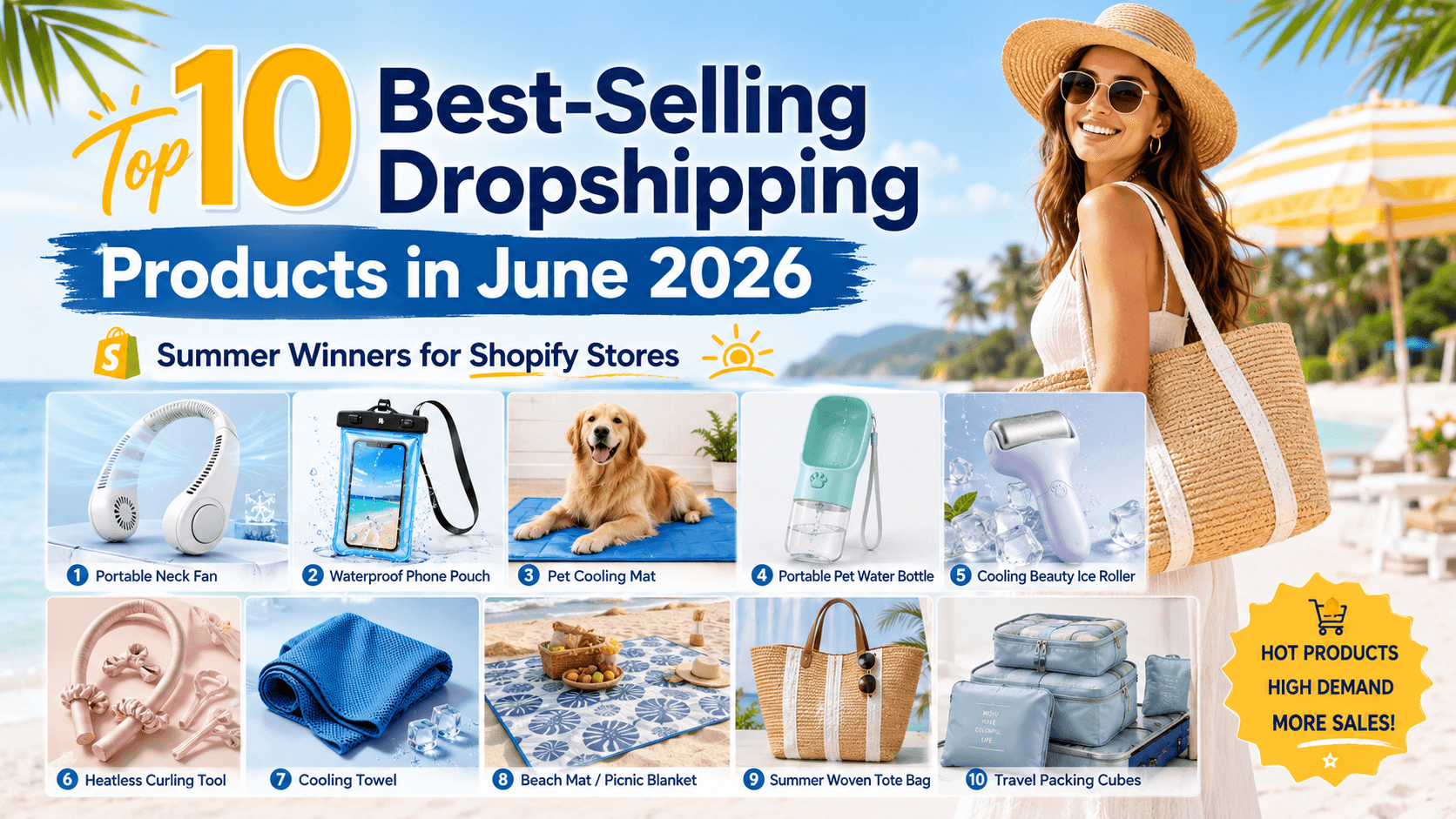
Waterproof phone pouches have an immediate summer use case around beaches, pools, water parks, kayaking and cruises. The value is easy to demonstrate because an inexpensive accessory is protecting a much more valuable device, and the product can be shown through sealing, touchscreen and carrying tests.
The weakness is that waterproof language creates a strong expectation. Test the seal construction, closure instructions, material clarity, strap attachment and supported phone dimensions using the exact unit that will ship. Marketing claims must match verified specifications, and demonstration content should never suggest protection beyond what the product can reliably provide.
Single-unit economics may be fragile because the item is inexpensive. Couple, family or travel-party bundles can raise the order value without adding much creative complexity, but the packed weight and replacement allowance still belong in the margin calculation.
2. Packing Cube Sets
Packing cubes suit summer travel while retaining usefulness for business trips, weekend breaks and holiday travel later in the year. Their strongest content angle is transformation: a disorganized suitcase becomes a clear, compressed packing system that viewers can understand without a long explanation.
Sets usually support a stronger offer than one pouch. A practical bundle might combine clothing cubes, a shoe bag, a laundry section and a small accessories pouch, provided that every component is defined accurately. Zippers, seams, fabric strength, handle attachment and claimed compression should be tested under repeated loading rather than judged from a single product photo.
Variant control matters because factories may substitute fabric weight, zipper hardware or set composition. The approved sample and purchase specification should record each component so the product page, creative and delivered bundle remain consistent.
3. Cooling Towel Multipacks
Cooling towels are compact, lightweight and easy to demonstrate in sports, hiking, gym, commuting and outdoor-work scenarios. A single towel often has limited room for paid acquisition, but multipacks can support family, team or repeated-use positioning while improving the relationship between order value and fulfillment cost.
The supplier should confirm dimensions, fabric composition, colourfastness, edge finishing and washing instructions. Avoid medical or temperature-reduction claims that the product cannot substantiate. Honest content can show preparation, feel, portability and normal use without inventing a precise performance result.
This is also a good example of content depth. The store should be able to film more than the same activation clip by showing packing, exercise recovery routines, travel bags, multi-user bundles and care. If every creative repeats one visual trick, the product may lose momentum before the selling window closes.
4. Insulated Picnic and Beach Totes
Insulated totes connect several summer occasions, including picnics, road trips, beach visits, family outings and grocery transport. They offer more room for differentiation through size, compartments, straps, closure design and exterior style than a generic low-priced cooling accessory.
Shipping economics require attention because soft bags can become bulky after packing. Obtain final carton or polybag dimensions and calculate dimensional weight before choosing the retail price. Leakage resistance, lining seams, zipper quality, handle load and ease of cleaning should be part of the sample test.
Do not imply that a bag holds food at a particular temperature for a specific number of hours unless the exact construction has been tested to support that statement. A safer offer focuses on organization, portability and everyday summer use.
5. Foldable Sun Hats
Packable sun hats fit travel, gardening, walking and outdoor-event content. They are generally lighter and less fragile than many seasonal products, and several shapes, colours and materials can support a focused accessories collection.
Fit and appearance create return risk. The product page should show head circumference, brim width, adjustment method, fold recovery and real photographs from multiple angles. If the hat is promoted with UV-protection language, the supplier must provide credible test evidence for the exact fabric and construction rather than relying on a generic material claim.
Creative testing should reflect the audience. A travel buyer may care about packability, while a gardener may care about coverage and stability. These are distinct purchase reasons and can produce several useful stories without changing the underlying product.
6. Reusable Water-Bottle Carriers
Water-bottle carriers combine a simple summer problem with a visible use case: carrying a bottle, phone, keys and small essentials during walks, festivals, sightseeing or light outdoor activities. They can be sold as an accessory rather than making performance or health promises.
Compatibility is the main operational risk. Measure the internal diameter and height, test several common bottle shapes and state what the carrier can hold. Strap length, stitching, buckle strength, pocket dimensions and colour consistency should be checked because a small mismatch can turn a broadly advertised product into an avoidable return.
The offer becomes more defensible when design, organisation or bundle composition gives the buyer a reason to choose it over a generic holder. Adding unrelated items simply to raise the price usually weakens the message; every component should belong to the same outing scenario.
7. Portable Pet Travel Bowls
Collapsible or compact pet bowls fit road trips, hikes, parks and routine walks, giving the product relevance beyond a single hot-weather event. Pet content also provides several natural demonstrations through setup, cleaning, packing, different animal sizes and travel routines.
Material documentation and care instructions are essential because the item may contact food or water. Confirm dimensions at both the folded and open positions, stability, rim finish, attachment hardware and the supplier’s ability to maintain the approved material. Avoid broad safety claims unless appropriate evidence is available for the actual product.
Size selection should reflect the intended pet rather than one universal listing. Clear capacity and dimensions help customers choose correctly and reduce the risk that a compact travel item is presented as suitable for every animal.
8. Sand-Removal Beach Bags
Mesh beach bags and sand-release totes solve a clear organization problem: carrying towels, toys and accessories while allowing loose sand to fall away. Their visual use is straightforward, and the category offers bundle opportunities with detachable pouches or wet-item compartments when those features are genuinely useful.
The product needs load testing. Inspect seam strength, handle attachment, zipper operation, mesh abrasion, pocket layout and the size of items shown in the creative. Oversized versions may look attractive but can increase dimensional shipping cost or become uncomfortable when filled.
Product photography should show the bag empty, loaded and carried. Supplier images that make a small bag appear large create immediate dissatisfaction, so scale references and exact dimensions belong near the first buying decision.
9. Solar String Lights for Outdoor Spaces
Solar string lights can support balcony, garden, patio, camping and outdoor-dining content. They are visually strong after dark and can remain relevant beyond summer, but they introduce more quality and compliance work than a textile accessory.
The exact model should be checked for weather-resistance evidence, battery type, charging conditions, cable length, light modes, connector design and operating instructions. Electrical and battery requirements vary by destination, and the seller must confirm applicable product-safety, labelling, transport and recycling obligations before listing.
Do not publish a charging time, runtime or weatherproof rating copied from a similar model. Test samples from the intended production batch and make claims only at the level the documentation and real use can support.
10. Compact Outdoor Game Sets
Small, non-branded outdoor game sets can serve picnics, gardens, beaches, campsites and family gatherings. They provide repeated content through setup, different ways to play, group challenges, storage and travel, which is stronger than a product with only one demonstration.
Choose designs that can be shipped compactly and do not copy protected brands, characters or distinctive game systems. Count every component, inspect edges and fasteners, confirm age guidance, and review any toy or children’s-product rules that apply in the target market. A missing piece can make the entire set unusable, so packing control is as important as product quality.
The best offer is usually based on a clear group occasion rather than a vague claim that everyone will love it. Defined audience and use-case language also makes content production easier and helps the store avoid competing only on price.
How to Narrow Ten Ideas to a Three-Product Test
First remove products that do not fit the target country, audience or legal capacity of the business. Then eliminate items with copied designs, unverifiable safety claims, fragile construction, unstable variants or shipping costs that destroy the intended price. Popularity cannot repair a product that fails a hard operational or compliance test.
For the remaining candidates, compare the full delivered contribution under conservative assumptions. Include product and packaging cost, chargeable shipping weight, payment fees, tax treatment, advertising, expected refunds, replacements and support. A summer item with a large gross markup can still lose money when its low price attracts costly acquisition or when lateness causes refunds.
Finally, plan several honest pieces of content for each candidate before buying traffic. Problem, setup, comparison, packing, use-case, care and customer-objection angles should reveal whether the product has enough creative life for repeated testing. A broader social media testing system can then connect those angles to landing-page behavior and completed orders instead of judging ideas by views alone.
Time the Test Before the Seasonal Window
Work backwards from the customer’s likely use date. The schedule needs room for sourcing, sample delivery, claim verification, content production, store setup, a controlled sales test and the full journey of early parcels. Scaling before real deliveries are observed means the seller is testing acquisition while guessing about fulfillment.
Month-specific lists can help identify a shorter demand window without turning every seasonal article into the same page. For sellers planning an immediate early-summer campaign, the June 2026 product shortlist provides more time-sensitive candidates, while this guide remains focused on category selection and the full summer testing process.
Stop conditions should be established before ads begin. Weak qualified traffic, poor checkout behavior, unacceptable completed-order contribution, sample inconsistency or a delivery promise that cannot be repeated are reasons to revise or stop. Continuing only because the season is advancing can magnify the loss.
Prepare the Supplier Before a Product Gains Momentum
Ask the supplier to confirm the exact variant, ready-to-ship quantity, normal processing time, daily capacity and replenishment lead time. Define approved materials, components, colour, packaging and inspection points, and require approval before a factory or specification change. A verbal statement that the product is available is not enough for a short seasonal campaign.
Shipping quotations should show actual and dimensional weight, packing dimensions, tracking coverage and the route available to each target country. The process also needs a named owner for inactive tracking, failed delivery, damage, missing parts and loss. These decisions determine whether an apparently profitable summer product can survive real orders.
If a product begins selling consistently, move gradually from order-by-order purchasing to a limited buffer for the proven SKU. Base the quantity on recent completed orders, replenishment time and the remaining season rather than a viral forecast. Seasonal inventory becomes risky quickly, so the purpose of a buffer is to protect dispatch reliability, not to speculate on demand.
Final Decision
The best summer dropshipping products for 2026 are not defined by a universal ranking. They are products with a timely buying reason, several credible demonstrations, viable completed-order economics and a supply chain that can reproduce the approved item before the seasonal need passes.
Use the ten directions in this article to create a small research list, then remove weak candidates aggressively. A controlled three-product test produces better evidence than listing every seasonal item, and one product that passes content, commercial and operational checks is more valuable than a catalogue built from trend claims.
Frequently Asked Questions
What are good summer dropshipping products for beginners?
Begin with compact, low-complexity items such as packing cube sets, cooling towel multipacks, bottle carriers or mesh beach bags. The exact choice should still pass sample, margin, compliance and delivery checks for the target market.
When should I start testing summer products?
Start early enough to receive and inspect samples, produce content, run a controlled offer test and observe real deliveries before peak demand. The correct lead time depends on the target country, product and shipping route.
Are viral summer products guaranteed to sell?
No. Viral content can reveal attention, but it does not prove purchase intent, acceptable acquisition cost, product quality, delivery performance or completed-order profit.
How many summer products should a new store test?
A focused test of roughly three well-researched candidates is usually more manageable than publishing a large seasonal catalogue. The goal is to collect comparable evidence, not to maximize listing count.
Which summer products are easiest to ship?
Lightweight, compact and non-fragile products are generally easier to handle, but final packaging and dimensional weight must still be checked. Compliance, variant complexity and replacement risk also affect operational difficulty.
Should I use bundles for low-priced summer items?
Bundles can improve order value when every component supports the same customer situation. They should not be used to hide weak economics or combine unrelated items that make the offer harder to understand.
When should I hold inventory for a seasonal product?
Consider a small buffer only after one exact SKU produces consistent completed orders and procurement time threatens dispatch reliability. Limit the quantity according to recent sales, replenishment lead time and the remaining seasonal window.
What should make me stop testing a summer product?
Stop or revise when demand evidence is weak, the sample fails, claims cannot be verified, the completed-order margin is unacceptable, the supplier cannot hold the specification or delivery cannot meet the promised window repeatedly.