Best-Selling Dropshipping Products in April 2026: What Still Works
April 2026 sat between two demand phases. Winter problems were fading in many markets, while summer demand had not yet reached its highest cost or competition. That made April useful for testing products connected to warmer weather, home organization, outdoor activity, travel, and visually demonstrable everyday problems.
The month has passed, so this page should no longer read like a prediction. Its SEO value now comes from explaining which product angles had a credible April fit, which signals were misleading, and how sellers can reuse the evidence for the next spring cycle. A product that received attention in April was not automatically a winner; it still needed workable margins, reliable delivery, clear creative, and demand that lasted long enough to recover testing costs.
This update retains the ten product categories behind the existing search intent, but it does not present them as a rigid ranking. Each product solved a different customer problem and carried a different operating risk. The better decision is to compare timing, demonstration strength, shipping profile, return exposure, and post-season usefulness.
Why April rewards pre-peak testing
April is often a preparation month. Shoppers begin responding to heat, travel, outdoor exercise, spring cleaning, and home refresh themes before those needs become fully urgent. Sellers can use that period to test creative and product pages at smaller volumes, then scale only the combinations that show real contribution before May and June competition intensifies.
Pre-peak does not mean demand is guaranteed. Weather varies by country, and a warm week can create a short spike that disappears. Search and social signals should therefore be checked by target market rather than treated as global proof. Products with several use cases are safer because the campaign can move from spring preparation to summer utility without changing the SKU.
The strongest April offers also made the customer benefit visually obvious. A neck fan turning on, a storage bag compressing, a blender preparing one drink, or cleaning gel lifting dust can be understood quickly. Visual clarity helps social content, but it must be supported by accurate specifications and an offer that remains profitable after shipping and returns.
Early-warm-weather products
Neck fans
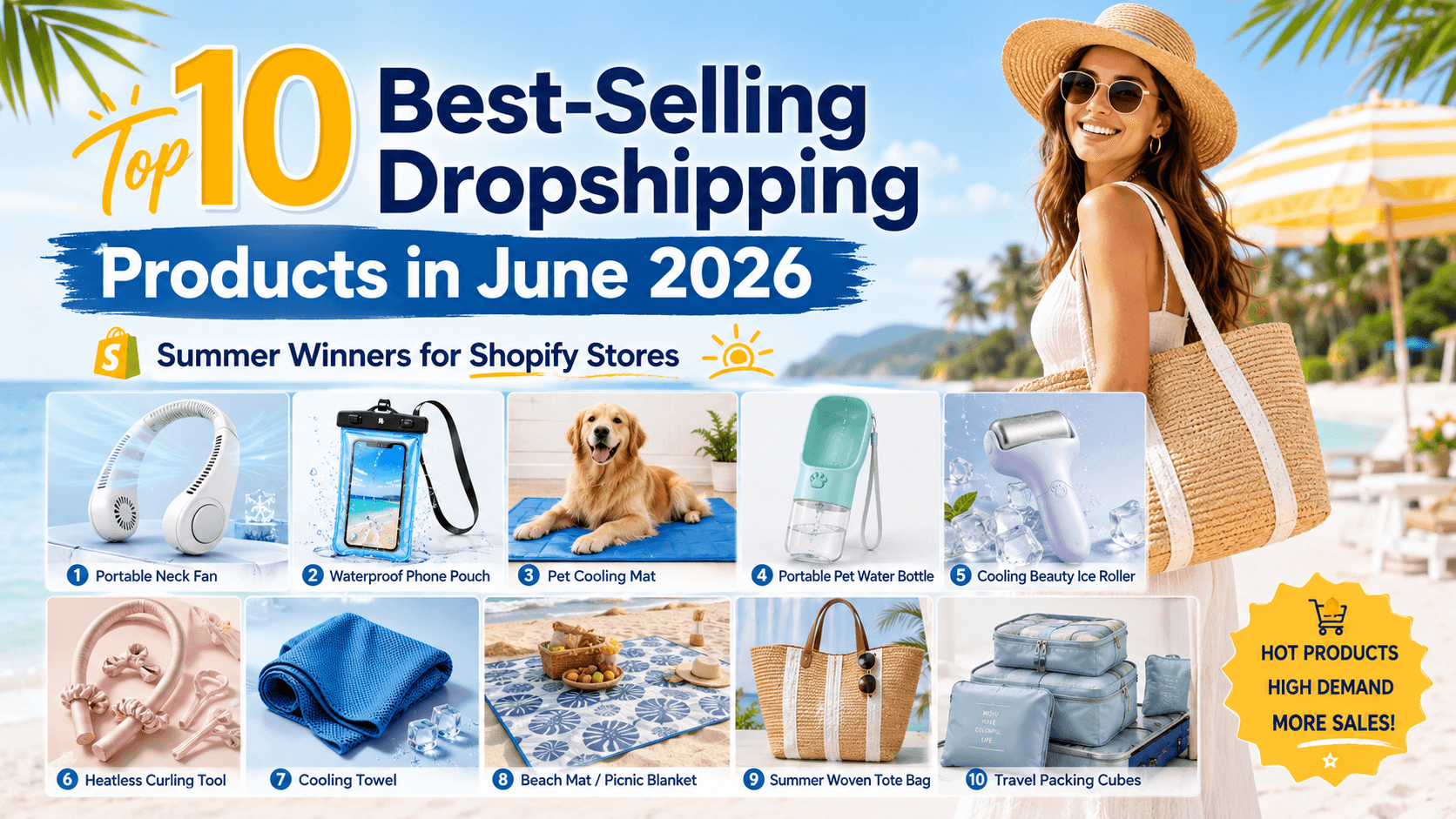
Neck fans matched the shift toward commuting, outdoor events, travel, and early heat preparation. Their appeal was immediate, but quality differences were substantial. Battery capacity, operating noise, airflow direction, charging port, weight, and hair-safety design all affected reviews. Sellers needed real samples because supplier images could not demonstrate comfort during extended use.
The category also had a clear seasonal exit risk. Demand could strengthen into summer, but a late bulk order might arrive after the best selling window. Sellers who wanted deeper category coverage could compare neck fans with other cooling products for extreme heat rather than assuming one gadget served every climate and audience.
Pet cooling mats
Pet cooling mats addressed a strong emotional need: keeping animals comfortable as temperatures rose. The product could perform well in educational content about shade, hydration, and travel, but sellers had to avoid medical promises. Material safety, puncture resistance, cleaning instructions, dimensions, and the cooling mechanism needed clear explanation.
Packed volume could make a low-priced mat unexpectedly expensive to ship. Size variants also increased return risk when customers chose based only on breed names. Product pages needed exact measurements and a photograph showing the mat with an animal of known size.
Spring organization and practical home products
Vacuum storage bags
Vacuum storage bags fitted spring cleaning, wardrobe changes, moving, and small-space organization. They were not dependent on one trend and could continue selling throughout the year. Demonstrations were strong because customers could see the volume reduction, but tests needed to show whether valves leaked and whether hand pumps or vacuum adapters were included.
Bundle design mattered more than a large claim such as “save 80% space.” Mixed sizes could make the offer easier to use, provided the exact dimensions and quantity were visible. Thin material, unreliable seals, or missing pumps would quickly turn a simple product into a refund problem.
Silicone kitchen tools
Silicone spatulas, mats, strainers, and compact food-preparation tools benefited from home-refresh content and remained useful after April. The strongest products solved one visible task instead of relying on a generic multi-piece set. Heat-resistance and food-contact claims had to be supported by supplier documentation appropriate to the destination market.
Kitchen tools often had low unit prices, so single-item paid acquisition could be difficult. A focused kit with a coherent use case could improve order value, but excessive pieces increased weight and made quality control harder. Sellers needed to inspect odor, flexibility, surface finish, and packaging cleanliness.
Portable lifestyle and home-experience products
Portable blenders
Portable blenders fit travel, office, fitness, and warm-weather drink content. The benefit was easy to film, but the category combined electrical, battery, blade, leakage, and food-contact risks. Capacity, charging time, cleaning, lock protection, and the ability to blend realistic ingredients needed honest demonstration.
This was not a product to scale from supplier footage alone. A seller had to test the exact version, verify shipping restrictions for batteries, and budget for replacements. An attractive retail price could hide poor contribution once the final package and after-sales rate were included.
LED ambient lighting
LED ambient lights were less seasonal than cooling products. They fit room refreshes, gaming setups, parties, and short-form transformation videos. Differentiation depended on installation, control method, brightness, color consistency, cable length, and adhesive quality rather than another copied image of a colorful bedroom.
Compatibility needed to be explicit. Sellers should state power requirements, app support, connector type, and whether remotes or batteries were included. Creative could generate attention, but inaccurate installation expectations produced avoidable complaints.
Phone camera lens kits
Clip-on phone lenses offered an inexpensive way to create wide-angle, macro, or stylized content. They were visually demonstrable and relevant to travel and outdoor seasons, but compatibility was not universal. Lens alignment, phone-camera layout, case thickness, edge distortion, and included clips affected results.
The product worked best when the store showed images taken with the actual kit and disclosed the phone model. Over-edited examples created unrealistic expectations. Compact size helped shipping economics, yet weak optical quality could still drive refunds.
Everyday problem-solvers with broader demand
Posture correctors
Posture correctors had evergreen demand from desk workers and students, but they carried advertising and expectation risk. Sellers should not claim to cure pain or correct a medical condition. Fit range, adjustability, comfort under clothing, and instructions for gradual use mattered more than dramatic before-and-after imagery.
Sizing had to be tested across real body types. A broad “one size fits all” claim could increase returns, while overly rigid products reduced comfort. Content should focus on support habits and product use, not guaranteed health outcomes.
Car cleaning gel
Car cleaning gel was inexpensive, satisfying to demonstrate, and suitable for vents, consoles, keyboards, and other detailed surfaces. It worked as an add-on more easily than as a standalone paid-ad hero product. Residue, odor, reusability, storage temperature, and packaging leakage needed testing.
Spring cleaning gave the product a useful context, but the SKU could remain evergreen. Sellers could improve the offer with clear use limits, since pressing gel into unsuitable electronics or porous surfaces could create complaints.
Resistance bands
Resistance bands matched renewed outdoor activity and fitness goals. They were compact and potentially bundle-friendly, yet quality and safety were central. Resistance levels needed accurate labeling, and bands had to be tested for snapping, odor, handle security, and material degradation.
The product was crowded, so an undifferentiated set competed mainly on price. Better offers paired reliable equipment with concise exercise guidance and honest resistance information. Sellers should avoid exaggerated transformation promises and confirm any material or safety documentation required by the destination market.
How to evaluate an April product without chasing rankings
Seasonal timing
Identify whether the product benefits from early spring, a short weather event, or the full summer. Define the last safe date for scaling and the post-season use case before ordering inventory. A product with reusable demand deserves a different budget from one tied to a brief temperature spike.
Contribution after the final package
Calculate margin using the actual packed dimensions, battery status, bundle contents, destination, and replacement risk. Shipping cost estimation tools are useful only when the seller enters the final package rather than the supplier's bare unit. Low unit cost does not guarantee a scalable offer.
Creative proof
The demonstration should show the real product solving one problem. It should also reveal scale, compatibility, package contents, and limitations. Views are not enough; compare checkout conversion, contribution margin, refund reasons, and customer questions across creative angles.
Operational durability
Confirm supplier consistency, quality-control points, processing time, packaging, tracking, and a replacement process before increasing volume. For mixed bundles, decide what happens if one component is unavailable. A seasonal campaign can lose its value when late delivery misses the customer’s intended use date.
A practical April-to-summer testing sequence
Begin with a small group of products that serve different customer problems. Order samples, record the final package, test the product under normal use, and produce original creative. Product pages should answer compatibility, dimensions, materials, contents, care, and realistic delivery expectations before traffic arrives.
Run controlled tests by market and creative angle. Eliminate products that attract attention without profitable checkout behavior. Increase spend only after contribution remains positive and the supplier can support the expected volume. Weather-linked campaigns should use conservative delivery cutoffs.
After April, shift viable products toward their broader summer or evergreen use cases. Neck fans and pet mats can move into heat preparation; storage bags into travel and organization; resistance bands into outdoor fitness; and camera lenses into travel content. Products that fail quality or margin tests should be removed rather than rescued with more advertising.
When a service or catalog path becomes useful
An information article should not force every reader into a fulfillment service. At the product-selection stage, the most natural commercial next step is to compare available specifications, packaging profiles, and categories in a product catalog. Sourcing or fulfillment support becomes relevant later, when the seller has evidence, target markets, and an operating requirement that a generic catalog cannot answer.
Conclusion
The best-selling dropshipping products in April 2026 were not a permanent top-ten ranking. They were a set of seasonal and evergreen opportunities that responded to warmer weather, spring organization, portable lifestyles, visual content, and everyday problems. Neck fans, cooling mats, storage bags, posture correctors, portable blenders, LED lighting, car cleaning gel, silicone tools, resistance bands, and phone lenses each required a different balance of timing, proof, margin, and risk.
For the next April cycle, start before demand peaks, test the exact product, calculate the final package, and scale only after profitable customer behavior appears. This protects the value of the original seasonal keyword without turning an expired monthly list into misleading advice.
Frequently Asked Questions
Are these still the best products to sell after April 2026?
Not automatically. Some categories, including storage bags, LED lighting, kitchen tools, car cleaning gel, resistance bands, and phone lenses, can remain useful year-round. Heat-linked products require current weather and market validation before scaling.
Why keep an April 2026 article after the month has passed?
The page can preserve its existing search signal while becoming a retrospective resource. It documents seasonal timing, product economics, operational risks, and lessons that can be reused for future spring campaigns.
Should sellers stock all ten products?
No. The categories serve different audiences and operating models. A seller should choose a small number that match the store, target market, creative ability, shipping economics, and supplier capacity.
Which April products have the strongest visual demonstrations?
Neck fans, vacuum storage bags, portable blenders, LED lighting, cleaning gel, resistance bands, and phone lens kits can all show a visible result quickly. The demonstration must use the actual product and avoid hiding limitations.
Which products carry higher compliance or return risk?
Portable blenders combine battery, blade, leakage, and food-contact issues. Posture correctors create sizing and health-claim risk. Pet cooling mats, kitchen tools, resistance bands, and phone lenses also require accurate safety, material, or compatibility information.
How early should April products be tested?
Sampling and creative preparation should begin several weeks or months before the expected demand window. Testing must leave enough time to improve the offer and scale before competition and delivery pressure rise.
Does a low product price mean the offer is profitable?
No. Sellers must include final shipping, packaging, payment fees, advertising, discounts, replacements, and returns. Low-cost products can become unprofitable when the package is bulky or the refund rate is high.
How many products should a beginner test at once?
A small, manageable group is usually better than a large catalog. The seller needs enough budget and attention to test each product’s creative, landing page, margin, supplier performance, and customer feedback.