How to Quickly Increase Profits with Personalized Dropshipping Products in 2026
The dropshipping market in 2026 is no longer as simple as finding a cheap product, uploading it to Shopify, and running a few ads. Many sellers start dropshipping by focusing almost entirely on product cost. They believe that if they can find a cheaper supplier, their profit margin will automatically improve. But after running a store for a while, most sellers realize that the real problem is not always the product cost. The bigger problem is that ordinary products are too easy to copy.
If you sell a common pet product, a simple piece of jewelry, a home accessory, a T-shirt, or a gift item, other sellers can usually find the same or similar product very quickly. Once your ads start getting attention, competitors may copy the product, use similar creatives, and sell at a lower price. In the end, you are forced to lower your price, offer free shipping, add discounts, or give away extra gifts. The order volume may still look good, but after deducting ad costs, product costs, shipping fees, refunds, and customer service expenses, the real profit may be much lower than expected.
That is why Shopify sellers in 2026 should not only focus on finding cheaper products. They also need to think about differentiation. Personalized products are one of the most practical ways to do that. Personalization does not always mean developing a complicated private mold or buying a large amount of inventory upfront. In many cases, adding a name, date, pet photo, simple design, brand label, thank-you card, gift packaging, or logo can turn an ordinary product into something that feels special. When customers feel that a product is made for them, or that it is suitable as a thoughtful gift, they become less sensitive to price.
Why Personalized Products Can Increase Profit Margins
Ordinary products mainly sell function, while personalized products sell emotion, meaning, and context. A normal mug may only sell for a low price, but if that same mug can be printed with a pet photo, a couple’s names, a family illustration, or a meaningful date, it is no longer just a drinking cup. It becomes a gift. A simple necklace may just be another accessory, but if it can be engraved with a name, birthday, anniversary date, or paired with a custom message card and gift box, it becomes a keepsake.
This is the real reason personalized products can increase profit margins. The product cost may not become much lower, but the perceived value becomes much higher. Ordinary products are easy for customers to compare with Amazon, Temu, AliExpress, or other Shopify stores. Personalized products are harder to compare directly because each order contains the customer’s own name, photo, message, or personal meaning. Sellers can also increase average order value through gift packaging, second-item discounts, product bundles, seasonal themes, and branded materials instead of relying only on the difference between product cost and selling price.
I once saw a pet collar case that showed this clearly. At first, the seller treated it as a normal pet product. The product page focused on material, waterproof features, durability, and size. The product itself was not bad, but there were too many similar pet collars on the market, so the seller found it difficult to raise the price. Later, the product was repositioned as a personalized pet collar. The seller added options for the pet’s name, phone number, color, and font. The product itself did not change much, but the way it was presented changed completely. It was no longer just a collar. It became a product with the pet’s name, a safety function for outdoor walks, and a giftable emotional value for pet owners.
After the price was increased, the seller was worried that the conversion rate would drop. But after testing, customers actually understood the value more clearly. They could immediately see why this product was different from a basic pet collar. The key was not how much the product cost increased. The key was that the perceived value became much stronger.
Beginners Should Start with Light Personalization
Do Not Start with Complicated Private Molds
Many beginners hear the word “personalized” and immediately think of complicated OEM production, private molds, private labeling, and large inventory orders. But this is not the best starting point for most new dropshipping sellers. The safer way to start is with light personalization. This means beginning with simple custom options that are easier for suppliers to handle, such as names, dates, colors, simple graphics, photo printing, thank-you cards, brand stickers, packaging bags, or gift boxes. These options usually do not require a large upfront investment, and they are much easier to test through a Shopify store.
For example, in the pet niche, personalized pet tags, pet collars, pet photo keychains, pet pillows, and pet blankets are all suitable for light personalization. Pet owners are often willing to spend money on their pets, especially when the product includes the pet’s name, photo, or a meaningful memory. Compared with ordinary pet toys, these products are easier to position as gifts and easier to show in short videos, such as a pet wearing the product, an unboxing scene, a close-up of the name, or a gift-packaging shot.
Jewelry is also suitable for light personalization. Name necklaces, birthstone necklaces, couple bracelets, pet memorial necklaces, and anniversary pendants all have strong gift potential. They are small, shipping costs are usually manageable, and the perceived value can be high. Customers often buy these products not because they simply need another necklace, but because they want to give something meaningful to their mother, partner, friend, or someone they care about. For sellers, the biggest value is not the material cost. It is the emotional meaning and gift-giving context behind the product.
Do Not Make the Customization Process Too Complicated
Some sellers try to make their products look more professional by offering too many customization options. They allow customers to choose colors, fonts, graphics, materials, sizes, packaging, cards, photo position, and text placement all at once. This may look rich and flexible, but in reality, it can reduce conversion rates. Customers may feel overwhelmed, and they are more likely to enter incorrect information.
A better approach is to make the customization process simple and clear. For a pet tag, customers may only need to enter the pet’s name and phone number, then choose a color and font. For a name necklace, they may only need to choose a font, enter the name, and decide whether to upgrade to gift packaging. For a photo mug, they may only need to upload a photo, add a short message, and select a mug color. The simpler the process, the easier it is for customers to place an order, and the less likely it is that suppliers will make mistakes.
Personalized Product Ideas for Dropshipping in 2026
Personalized Pet Products
Pet products remain one of the more stable niches in cross-border ecommerce, and personalized pet products can make the niche even more profitable. Ordinary pet products sell function, but pet products with names, photos, or memorial value sell emotion. Personalized pet tags, pet collars, pet photo keychains, pet memorial portraits, pet pillows, pet blankets, pet bowls, and leashes can all be built around the idea of “made for your pet” or “a gift for pet lovers.”
The advertising for these products should not only show the product itself. It should show the pet wearing it, the owner opening the package, the custom name detail, the pet photo print, or the product being given as a gift. Customers are not just looking at a pet accessory. They are looking at something connected to their own pet. In the pet niche, emotional connection is often more powerful than simply talking about material, size, or durability.
Personalized Jewelry and Memorial Gifts
Personalized jewelry has several advantages. It is small, shipping costs are usually low, and it naturally fits gift-giving occasions. Name necklaces, couple bracelets, birthstone necklaces, anniversary pendants, and pet memorial necklaces can all become high-perceived-value products. If you want to sell this type of product, ShineOn can be a useful supplier to research, especially for custom jewelry, message card jewelry, personalized gifts, and emotional gift products.
However, jewelry and message-card gifts are also competitive. If you simply copy the most common templates from existing platforms, you may quickly fall into price competition. A better strategy is to focus on a specific audience, such as pet owners, nurses, teachers, long-distance couples, mothers, graduates, or memorial gift buyers. The physical product may be similar, but the message card, product page angle, ad creative, and gift context can make the offer feel completely different.
Apparel, Tote Bags, and POD Products
T-shirts, hoodies, hats, tote bags, socks, aprons, baby clothes, pillows, mugs, blankets, and wall art are common print-on-demand products. They are suitable for beginners because the supply chain is mature, mockups are easy to create, and many platforms integrate with Shopify. Printful, Printify, Gelato, Gooten, CustomCat, teelaunch, Apliiq, Spreadconnect, JetPrint, and Merchize are all worth researching depending on the product type and market.
That said, apparel products should not rely only on printing a generic phrase on a T-shirt. This approach is already very competitive. The products that perform better usually combine a specific audience with a clear occasion. Instead of simply selling a T-shirt, you can sell a back-to-school teacher gift, a new mom sweatshirt, a funny pet owner T-shirt, a camping-themed hoodie, or a custom tote bag for bridesmaids. The more specific the audience, the easier it becomes to write ads, build a product page, and create emotional relevance.
I once saw a tote bag case that explains this well. At first, the seller sold ordinary printed tote bags. The price was low, and orders were unstable. Later, the seller repositioned the product as a teacher gift and bridesmaid gift, adding name personalization and gift packaging. The product itself did not become complicated, but the buying context changed completely. Teacher gifts could be promoted during back-to-school season, Teacher Appreciation events, and Christmas. Bridesmaid tote bags could be sold as multi-piece bundles, with customers buying three, five, or eight at once. A simple tote bag became a product with a clear occasion, and the average order value increased naturally.
Home Decor and Keepsake Products
Personalized home decor is also worth watching in 2026. Custom wall art, door signs, pillows, blankets, light boxes, picture frames, and floor mats are suitable for family gifts, wedding gifts, new home gifts, baby birth keepsakes, and pet memorial products. These products often have higher order values than small accessories, and the product pages can be designed with a stronger lifestyle feeling.
However, home decor products also come with risks. Products such as picture frames, ceramics, lamps, and glass items must be sampled before selling. Supplier images may look excellent, but the actual product may have color differences, weak packaging, or a higher chance of damage during shipping. If home decor is done well, the profit potential can be strong, but sellers must test real product quality, packaging strength, and shipping times before scaling.
How to Choose Suppliers for Personalized Dropshipping
POD Platforms Are Useful for Early Testing
It is usually not a good idea to rely on only one supplier for all personalized products. Different suppliers are strong in different areas. Some are better for apparel and mugs, some are better for jewelry and gifts, some are better for branded packaging, and some are more suitable for private labeling once you already have stable orders. A practical approach is to use POD platforms for early testing, then move to a more flexible supply chain later to optimize cost, packaging, and fulfillment.
If you are selling T-shirts, hoodies, hats, mugs, pillows, blankets, wall art, or tote bags, you can research platforms such as Printful, Printify, Gelato, Gooten, CustomCat, teelaunch, Apliiq, and Spreadconnect. Printful is more suitable for sellers who care about long-term product quality and brand image, especially for apparel, embroidery, hats, and home decor. Printify is suitable for testing many products and suppliers quickly because it gives sellers more flexibility. Gelato is useful for sellers targeting Europe, the United States, and other major markets where localized production may help with fulfillment. Gooten is suitable for expanding into home decor, drinkware, wall art, and multi-category POD products.
If your market is mainly in the United States, CustomCat can also be considered for apparel, hats, mugs, blankets, wall art, and home products. teelaunch is useful for niche gifts, home decor, and sellers who also sell through Etsy or WooCommerce. Apliiq is more suitable for sellers who want to make apparel feel more like a real brand, with options such as embroidery, private labels, woven labels, and hoodie details. It may not be necessary for simple T-shirt testing, but once an apparel product shows stable sales, Apliiq-style branding options can help upgrade the product line.
Niche POD Products Can Create Differentiation
If you do not want to only sell T-shirts and mugs, you can also research JetPrint, Inkedjoy, and Merchize. JetPrint is useful for testing watches, shoes, bags, jewelry, and other niche POD products. Inkedjoy is suitable for all-over-print apparel, shoes, bags, home products, and personalized gifts. Merchize can be used for apparel, home decor, accessories, pet-related products, and gift items.
The advantage of these platforms is that they offer more product variety, which can help you find items that are less common on mainstream POD platforms. The downside is that quality can vary more by product type. Shoes, watches, and bags may look good in mockups, but the real texture, sizing, packaging, and customer experience may be different. For these products, sampling is especially important. Ideally, you should also test a full delivery to your target market before scaling.
Comprehensive Supply Chain Services Are Better for Packaging and Private Labeling
If you are not selling pure POD products, and instead want to sell pet supplies, beauty tools, jewelry accessories, kitchen products, home gadgets, baby products, or storage items, you may need more than a standard POD platform. In this case, suppliers and fulfillment partners such as CJdropshipping, HyperSKU, SourcinBox, EPROLO, Sup Dropshipping, Wiio, Zendrop, and ETdropship may be more relevant.
CJdropshipping can be useful for product sourcing, regular dropshipping, and branded packaging tests. EPROLO combines dropshipping with branding services such as labels, hangtags, packing bags, tape, and gift cards. SourcinBox, Sup Dropshipping, Wiio, and Zendrop can also be useful depending on your order volume and customization needs. These types of suppliers are more suitable when you want to upgrade a regular product with packaging, stickers, inserts, labels, thank-you cards, or light private labeling.
ETdropship is also suitable for Shopify sellers who already have a product direction but do not want to handle every supplier conversation, sample order, packaging detail, quality check, and fulfillment issue by themselves. ETdropship can help with product sourcing, supplier communication, small-batch sampling, custom packaging, product labels, thank-you cards, pre-shipment quality checks, global shipping, and tracking number synchronization. Compared with a pure POD platform, ETdropship is more flexible for sellers who want to upgrade ordinary white-label products into more branded dropshipping products, especially in categories such as pet products, home goods, beauty tools, jewelry accessories, and small lifestyle products.
The key is not to choose a supplier simply because the name is popular. The key is to understand what problem each supplier solves. Use Printful, Printify, and Gelato for early POD testing. Use Apliiq, Inkedjoy, or EPROLO when apparel branding becomes important. Use JetPrint or Merchize for niche POD products. Use ShineOn for emotional jewelry gifts. Use CJdropshipping, SourcinBox, Sup Dropshipping, Wiio, or ETdropship when you want to handle sourcing, sampling, packaging, and fulfillment for regular products.
The Real Profit Often Comes from Packaging and Context
Packaging Can Change How Customers Judge the Product
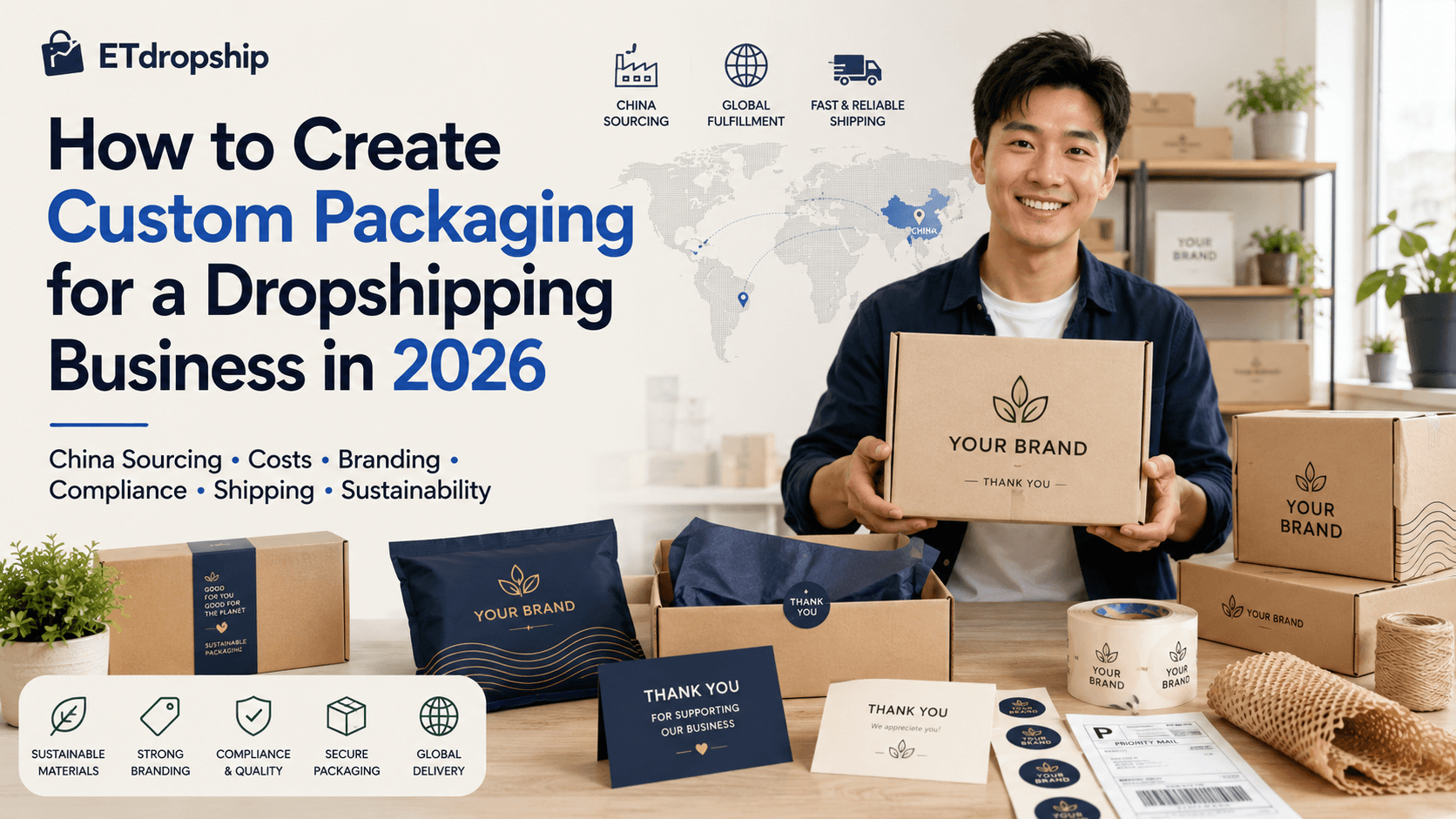
Many sellers think personalization must happen only on the product itself, but packaging can also be personalized. Brand stickers, thank-you cards, gift bags, custom boxes, product care cards, and after-sales cards do not always cost much, but they can significantly improve how customers feel when they receive the product. This is especially important for gift products because packaging directly affects whether the customer feels the product is worth paying more for.
Some regular products are difficult to customize deeply, such as beauty tools, home gadgets, kitchen items, or pet accessories. But these products can still be upgraded through packaging. I have seen sellers who originally shipped products in plain transparent bags. Customers received the product, but there was no memory point. After adding a branded thank-you card, simple packaging bag, and usage instruction card, customer reviews became more detailed. People started mentioning that the packaging looked nice, the product felt suitable as a gift, and the brand looked more professional. This also helped with ad creatives because the seller could film the unboxing process for TikTok, Instagram Reels, and Facebook ads.
Context Is More Important Than Product Specifications
A personalized product page should not only talk about material, size, and function. Customers care about whether the product is suitable as a gift, whether it fits a holiday, and whether it can express a relationship or a memory. A normal tote bag sells storage function. A personalized bridesmaid tote bag sells wedding memories. A normal mug sells daily use. A pet photo mug sells companionship. A normal necklace sells fashion. A name necklace sells meaning.
That is why product pages, ad creatives, and email marketing should be written around real occasions. Mother’s Day gifts, birthday gifts, anniversary gifts, pet memorial gifts, new home gifts, teacher appreciation gifts, and wedding party gifts all give customers a clear reason to buy. Many products fail not because the product itself is bad, but because the seller has not given customers a strong enough reason to purchase.
How Shopify Sellers Can Make the Personalized Product Process Work
Product Pages Should Remove Doubt
A personalized product page cannot be built like a basic product page with only a few images and a price. Customers need to understand how to customize the product, how long production takes, how long shipping takes, what happens if their photo is unclear, what happens if they enter the wrong name, whether returns are allowed, and whether the product is suitable as a gift. The clearer the page, the easier it is for customers to place an order, and the fewer disputes you may face later.
A good product page should explain the customization process in a simple way. For example, customers choose a color, enter a name, upload a photo, confirm the order, and wait for production and delivery. Production time and shipping time should also be separated. Do not only write a vague “7–12 days delivery.” Personalized products usually require production time. If this is not explained clearly, customers may assume the product ships immediately after ordering, which can lead to complaints, refund requests, and support pressure.
Custom Information Should Not Always Be Fully Automated
With ordinary products, a fulfillment mistake can often be fixed with a replacement. With personalized products, if a name is misspelled, a photo is printed incorrectly, or a date is wrong, the product usually cannot be resold. Someone has to absorb that loss, either the supplier or the seller. That is why sampling and order review are important.
For photo-based products, do not only test with high-resolution official images. Use ordinary phone photos that real customers may upload. This helps you understand how the final product will actually look. For higher-value personalized products, it is also better to review customer-submitted information before production. Check whether the name field is empty, whether the phone number looks abnormal, whether the image is too blurry, or whether the date format looks strange. This step may seem small, but it can prevent many customer service problems.
Return and Replacement Rules Should Be Clear
Personalized products should have clear return and replacement rules. In general, if the customer enters the wrong name or uploads the wrong photo, it is difficult to treat the order like a regular return. But if the seller or supplier makes a production mistake, the customer should receive a replacement or refund. These rules should be written clearly before the customer orders. The worst situation is when the product page is vague and customer service has to explain everything after a problem happens.
How to Increase Average Order Value with Personalized Products
Raising profit does not only mean raising the base product price. Personalized products are naturally suitable for upsells and bundles. A seller can offer standard packaging for free and charge extra for gift packaging. A single product can be sold at the normal price, while the second item receives a discount. A pet tag can be bundled with a pet collar. A name necklace can be paired with a gift box. A mug can be paired with a keychain. A baby blanket can be paired with a keepsake card.
Wedding, family, couple, pet, and holiday gift scenarios are especially suitable for multi-item purchases. Bridesmaid gifts are often bought in sets of three, five, or eight. Family mugs may be purchased for several family members at once. Couple products are often bought in pairs. Pet owners may buy a tag, collar, and keychain together. When the bundle makes sense, the average order value can rise naturally.
One important point is that sellers should not rely only on discounts. Personalized products are better suited to value-based upgrades. Instead of simply lowering the price, you can add a gift box, thank-you card, seasonal packaging, matching keychain, second personalized item, or family bundle. These upgrades feel more meaningful than a basic discount and fit the psychology of gift shopping better.
Mistakes to Avoid When Selling Personalized Products
Personalized products can be profitable, but they also come with risks. The biggest risk is an unstable supply chain. A supplier may create a good sample but fail to maintain quality in bulk orders. Production may be fast during normal periods but slow during peak seasons. Basic packaging may be fine, but gift packaging may be missed when order volume increases. Before Mother’s Day, Valentine’s Day, Black Friday, or Christmas, personalized orders can increase quickly, and suppliers may not always have enough capacity.
When a product starts showing signs of growth, you should ask the supplier how many orders they can handle per day, whether peak-season production time will increase, whether semi-finished inventory can be prepared in advance, how mistakes are handled, and whether there is a backup option. Do not wait until orders explode before solving supply chain problems. By that time, ad spend has already been paid, customers have already ordered, and any delay can hurt store ratings, cash flow, and customer trust.
Another common mistake is investing too early in large amounts of packaging and branded materials. Some sellers order custom boxes, hangtags, inserts, and inventory before the product has been validated. If the ads fail, those materials may sit unused. Personalized product branding should be upgraded step by step. At the beginning, you can test thank-you cards, stickers, and simple packaging bags. Once daily orders become stable, you can move into gift boxes, hangtags, care cards, and full branded packaging.
Copyright is another issue that sellers must take seriously. Some sellers use popular movie characters, sports team logos, celebrity images, or luxury brand elements to attract quick sales. This is risky. Personalization does not mean you can print anything. For long-term stability, sellers should build their own design style, write their own copy, and target their own audience instead of relying on copyrighted materials.
Conclusion: The Core of Personalization Is Making Customers Feel “This Was Made for Me”
In 2026, dropshipping sellers who rely only on ordinary products and low-price competition will find it harder to maintain strong profits. Personalized products are not the only solution, but they are one of the most practical ways to increase perceived value and create differentiation. They do not require every seller to build a large brand from day one, and they do not require massive inventory upfront. For most sellers, the better path is to start with light personalization, focus on one specific audience, and build a smooth process around one product first.
When an ordinary product gains a name, a story, a gift-giving purpose, and a better packaging experience, it is no longer just another item that customers can easily compare by price. Customers buy it not only because they need it, but because it feels connected to them. That connection is where the real profit of personalized dropshipping comes from. For Shopify sellers, the opportunity in 2026 is not only finding cheaper products. It is turning ordinary products into meaningful, giftable, and memorable products that customers are willing to pay more for.
FAQ:
Is personalized dropshipping suitable for beginners?
Yes, but beginners should start with light personalization instead of complicated private molds or large inventory orders. Simple options such as names, dates, colors, photos, gift cards, thank-you cards, and packaging upgrades are easier to test and easier for suppliers to handle.
What are the best personalized products for dropshipping in 2026?
Some strong options include personalized pet tags, pet collars, pet photo gifts, name necklaces, birthstone jewelry, custom mugs, tote bags, baby blankets, wall art, wedding gifts, teacher gifts, and holiday gift bundles. These products work well because they have emotional value and clear gift-giving occasions.
Do personalized products have higher profit margins than regular products?
They can have higher profit margins because customers are often willing to pay more for products that feel personal, meaningful, or giftable. However, the profit depends on product cost, customization cost, shipping cost, ad cost, refund rate, and supplier reliability.
Do I need to hold inventory for personalized dropshipping?
Not always. Many personalized products can be produced on demand through POD platforms or flexible dropshipping suppliers. However, once a product becomes stable, sellers may choose to prepare packaging materials, semi-finished products, or small inventory to improve speed and consistency.
Which suppliers are good for personalized dropshipping?
For POD products, sellers can research Printful, Printify, Gelato, Gooten, CustomCat, teelaunch, Apliiq, Spreadconnect, JetPrint, Inkedjoy, and Merchize. For jewelry and emotional gifts, ShineOn is worth researching. For regular products, packaging, sourcing, and branding, sellers can consider CJdropshipping, HyperSKU, SourcinBox, EPROLO, Sup Dropshipping, Wiio, Zendrop, and ETdropship.
How can I increase average order value with personalized products?
You can increase average order value through gift packaging, second-item discounts, product bundles, matching accessories, holiday sets, and multi-piece family or wedding packages. Personalized products are naturally suitable for bundles because many customers buy them as gifts.
What is the biggest risk of selling personalized products?
The biggest risk is supplier instability. If a supplier makes mistakes with names, photos, dates, packaging, or production time, the seller may face refunds, replacements, and unhappy customers. That is why sampling, supplier testing, order review, and backup plans are important.
Can ETdropship help with personalized dropshipping?
Yes. ETdropship can help Shopify sellers with product sourcing, supplier communication, small-batch sampling, custom packaging, product labels, thank-you cards, quality inspection, global shipping, and tracking number synchronization. This is especially useful for sellers who want to upgrade ordinary products into more branded and personalized dropshipping products.