Amazon FBA vs. Shopify Dropshipping in 2026: Which Model Should New Sellers Choose?
In 2026, cross-border ecommerce is no longer a simple game of finding a cheap product, uploading it to a platform, and running a few ads. Whether sellers choose Amazon FBA or Shopify dropshipping, the real competition now comes down to traffic acquisition, supply chain capability, fulfillment efficiency, branded packaging, and customer experience.
For many new sellers, one common question remains: should they start with Amazon FBA or Shopify dropshipping? Amazon FBA looks attractive because Amazon already has massive platform traffic and customer trust. Shopify dropshipping looks attractive because it usually requires lower upfront inventory investment and gives sellers more flexibility.
However, these two models are very different. Amazon FBA relies heavily on Amazon’s search traffic, marketplace trust, and Prime fulfillment system. Shopify dropshipping relies on independent store operations, paid ads, content marketing, and supply chain execution. Both models can be profitable, but they are suitable for different seller stages, budgets, risk levels, and long-term goals.
According to Shopify’s global ecommerce forecast, global ecommerce sales are expected to reach around $6.88 trillion in 2026, accounting for about 21.1% of total global retail sales. This shows that online consumption still has strong growth potential, but sellers are also entering a more mature and competitive market.
At the same time, platform and fulfillment costs are also changing. Amazon’s official 2026 U.S. FBA fee update shows that FBA fees will increase by an average of about $0.08 per unit. This may look small, but for low-ticket, high-volume, low-margin products, even a small cost increase can directly affect the profit model.
That is why sellers should not choose Amazon FBA or Shopify dropshipping simply based on which model is more popular. The right choice depends on your capital, product type, supply chain resources, advertising ability, and long-term business strategy.
1. Amazon FBA and Shopify Dropshipping Are Two Different Types of Businesses
Amazon FBA is more like renting a booth inside a large and mature shopping mall. Amazon provides traffic, customer trust, warehousing, and fulfillment infrastructure. Sellers are responsible for product selection, purchasing inventory, shipping goods to Amazon warehouses, optimizing listings, running ads, and managing inventory.
Most Amazon shoppers enter the platform with clear purchase intent. They search for products such as pet supplies, kitchen tools, storage products, fitness accessories, or office items. The buying behavior is often direct and search-driven.
Shopify dropshipping is more like opening your own branded store. Sellers need to build their own website, acquire traffic, create ad creatives, optimize product pages, set up payment methods, manage orders, and handle customer service. After a customer places an order, the order is fulfilled by a supplier or dropshipping fulfillment partner, who handles sourcing, quality inspection, packaging, shipping, and tracking number updates.
The biggest difference is this: Amazon FBA sellers compete inside Amazon’s platform rules for rankings, clicks, and conversions. Shopify sellers build their own traffic channels, brand image, and customer assets outside a marketplace.
In simple terms, FBA is more suitable for products that have already been validated, have stable demand, and can support bulk inventory. Shopify dropshipping is more suitable for early product testing, lower inventory risk, and gradual brand building.
2. The Cost Structure Is Different: FBA Requires Higher Upfront Investment, While Shopify Focuses More on Ad Testing
Amazon FBA usually requires higher upfront investment. Sellers need to purchase inventory first, then pay for first-mile shipping, import duties, FBA fulfillment fees, storage fees, referral fees, advertising costs, return handling, and other operational expenses. If the product does not sell well, the inventory continues to tie up capital and may create long-term storage costs and liquidation pressure.
Many beginners only calculate the difference between the product cost and the selling price. At first glance, the profit may look attractive. But once they actually start operating, advertising costs, storage fees, coupons, returns, promotions, and marketplace fees can quickly reduce the real margin.
This is especially risky for low-ticket products. If the net profit per item is only a few dollars, even a small increase in fulfillment or advertising cost can make the product much less profitable.
Shopify dropshipping has a more flexible cost structure. Sellers do not need to purchase large amounts of inventory at the beginning. They can test products through one-piece dropshipping, small-batch purchasing, or light inventory. The main costs are store building, ad testing, creative production, apps, payment processing, logistics, and supply chain service fees.
This is why many beginners prefer to start with Shopify dropshipping. The inventory pressure is lower, and the cost of testing is more controllable. However, this does not mean Shopify is easier. Shopify does not provide free marketplace traffic. Sellers must solve traffic acquisition, conversion, trust building, and repeat purchase on their own.
Therefore, the challenge of FBA is upfront capital and inventory judgment. The challenge of Shopify dropshipping is traffic generation and supply chain execution.
3. The Traffic Logic Is Different: Amazon Captures Search Demand, While Shopify Relies on Content and Branding
Amazon traffic is more search-driven. Customers usually enter Amazon with clear purchase intent. They search for keywords, compare prices, reviews, delivery speed, product images, ratings, and brand credibility. For FBA sellers, the core tasks are keyword optimization, listing improvement, review growth, ad management, account health, and inventory stability.
Shopify traffic is more content-driven and discovery-driven. Consumers may discover a product on TikTok, Facebook, Instagram, Google, Pinterest, YouTube, or through blog content. They may be attracted by the ad creative, product use case, brand story, offer, or visual presentation before visiting the store.
This means Shopify sellers cannot simply copy product images from marketplaces and expect strong sales. Whether a product can sell on an independent store often depends on whether the page looks professional, whether the ad creative explains the product clearly, whether the product benefit is convincing, whether the shipping policy looks trustworthy, and whether the brand packaging makes customers feel confident.
For example, the same pet grooming brush may sell on Amazon because customers compare price, reviews, and delivery speed. On Shopify, the same product may sell better if it is positioned as a solution for pet shedding season, pet hair control at home, or a complete pet care kit.
This is the core difference between the two models. FBA is better at satisfying existing search demand. Shopify is better at creating purchase desire and brand recognition.
4. Inventory Risk Is Different: FBA Can Lead to Stock Pressure, While Shopify Is Better for Testing
One of the biggest risks of Amazon FBA is inventory risk. Many sellers see a product selling well in a category and immediately purchase hundreds or thousands of units to send to Amazon warehouses. But if keyword ranking fails, advertising costs become too high, or product reviews are not strong enough, the inventory quickly becomes a burden.
FBA has strong advantages: fast delivery, high customer trust, and strong marketplace conversion. But these advantages only work well when the product has already been validated and the seller knows how to operate the listing and ads.
If a product has not been tested before bulk inventory is purchased, the risk can be very high.
Shopify dropshipping allows sellers to test first, then scale. Sellers can test multiple products through ads and analyze click-through rate, add-to-cart rate, conversion rate, average order value, refund rate, and customer feedback. Only after a product generates stable orders should the seller consider small-batch purchasing, branded packaging, overseas warehousing, or FBA stock.
From a practical point of view, Shopify can be used as a product testing stage before entering Amazon FBA. The data from an independent store can help sellers decide which products are worth scaling later.
A more stable path is: test demand through Shopify, improve fulfillment through the supply chain, and then move proven SKUs into FBA or overseas warehouses for scale.
5. The Profit Structure Is Different: FBA Is Better for Scale, While Shopify Is Better for Brand Premium
Amazon FBA is more volume-driven. The platform has massive traffic and strong customer trust. If a product ranks well, sales can grow quickly. Amazon’s 2025 small business report showed that more than 75,000 independent sellers exceeded $1 million in sales in the Amazon store, and third-party sellers remain an important part of the Amazon ecosystem.
However, FBA also has a clear problem: intense product similarity and frequent price competition. On Amazon, customers can quickly compare similar products. If your product has no clear differentiation, you may have to compete with lower prices, higher advertising spend, or more reviews. Over time, this can reduce profit margins.
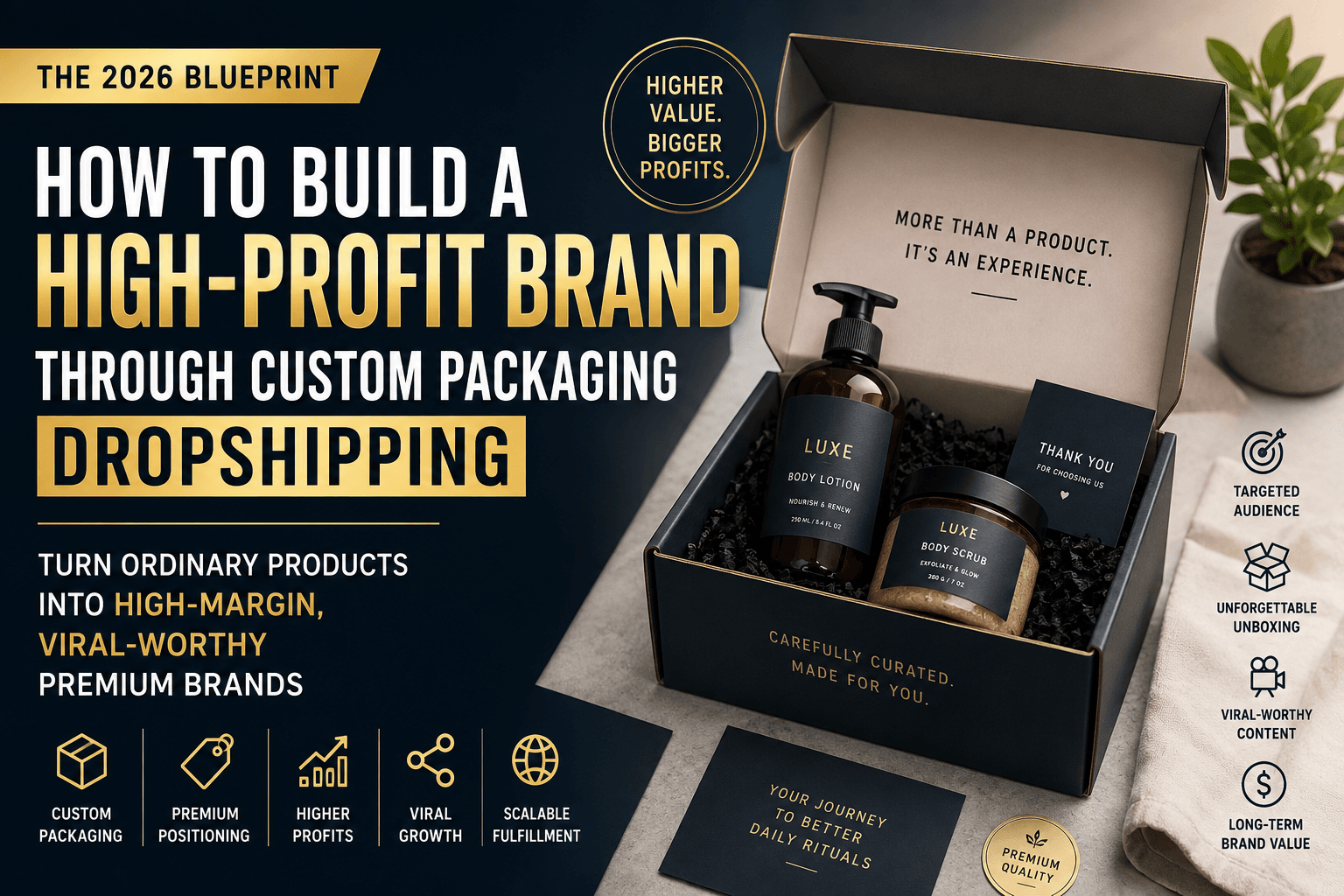
Shopify dropshipping has more room for brand premium. The same product can feel completely different depending on packaging and presentation. If it comes in a plain transparent bag, customers may see it as a cheap generic item. If it comes with a brand logo, custom packaging, a thank-you card, instructions, bundled accessories, and a professional product page, customers may be willing to pay a higher price.
Shopify’s Q1 2026 financial results showed that Shopify merchants reached $100.743 billion in GMV, with strong revenue growth. This indicates that the independent store ecosystem remains active and strong.
However, higher profit on Shopify does not happen automatically. Sellers need ad testing ability, landing page optimization, supply chain control, and customer service capability. If sellers simply move generic marketplace products to Shopify with poor pages, slow shipping, weak packaging, and poor support, stable conversion will be difficult.
6. Brand Assets Are Different: FBA Relies on Marketplace Traffic, While Shopify Builds Customer Assets
On Amazon, many consumers remember Amazon more than the individual seller’s brand. Even if a product sells well, customer data, repeat purchase communication, email marketing, and customer relationships are still limited by the platform.
Sellers can improve brand presence through Brand Registry, A+ Content, and Amazon Brand Stores, but they are still operating inside Amazon’s ecosystem.
Shopify’s advantage is that customer assets belong to the seller. Sellers can collect customer emails, purchase history, ad data, repeat purchase behavior, average order value, and customer preferences. Later, they can build email marketing, member discounts, bundle offers, holiday campaigns, subscription products, and brand content.
This is why dropshipping in 2026 is becoming more brand-focused. In the past, many sellers only cared about finding cheap products. Now, more sellers are paying attention to packaging, quality inspection, product consistency, after-sales experience, and repeat purchase.
A generic product can become a branded product through better packaging. This does not mean sellers must start with complicated customization. In the early stage, branding can begin with logo stickers, thank-you cards, instruction cards, branded bags, custom paper cards, and product labels. Once orders become stable, sellers can upgrade to custom boxes, private-label products, small-batch OEM, or ODM.
7. Which Sellers Are Better Suited for Amazon FBA or Shopify Dropshipping?
If you have enough capital, can accept inventory risk, have found a product with stable demand, and are willing to study Amazon rules, keywords, ads, and review operations, Amazon FBA may be more suitable for you.
FBA is better for standardized products with clear demand, moderate size, low return rates, and the ability to support bulk inventory. Examples include home tools, kitchen products, pet supplies, storage items, fitness accessories, and office products.
If you have limited capital, are still testing products, or want to build your own brand, customer data, and repeat purchase system, Shopify dropshipping may be more suitable.
Shopify dropshipping is better for products with strong visual appeal, clear use cases, content marketing potential, and branding opportunities. Examples include pet care products, travel organizers, beauty tools, fitness accessories, gift items, home cleaning products, and office desk accessories.
Mature sellers do not necessarily choose only one model. A more reasonable path is to test products and ad creatives through Shopify first, then improve supply chain and branded packaging. Once certain SKUs become profitable and stable, sellers can move them into Amazon FBA or overseas warehouses for larger-scale growth.
8. Recommended Dropshipping Products for 2026
1. Pet Supplies
Pet products are still suitable for dropshipping testing in 2026, especially lightweight products with clear functions and easy-to-shoot usage scenarios. Examples include pet grooming brushes, pet cleaning gloves, portable pet water bottles, leash accessories, pet storage bags, interactive toys, and cat or dog care products.
The advantage of this category is that customer pain points are clear and ad creatives are easy to produce. Pet shedding, outdoor walking, pet bathing, and grooming are all easy for consumers to understand.
Sellers can also create product bundles such as pet care kits, dog walking kits, or cat cleaning kits to increase average order value.
However, beginners should avoid pet products with complex electronic functions, medical claims, or high certification requirements. It is better to start with low-risk, lightweight, non-medical pet products.
2. Travel Organizers and Lightweight Outdoor Accessories
Travel organizer products are suitable for Shopify ad testing and later brand building. Recommended products include compression packing cubes, toiletry bags, cable organizers, passport holders, luggage tags, foldable backpacks, outdoor bottle holders, and small camping accessories.
These products are usually lightweight, shipping costs are manageable, and the use cases are easy to explain. Sellers can create short videos showing luggage before and after organization, cleaner business travel packing, or travel essentials packed into one bag.
If sellers later move into branding, travel organizer products are suitable for logos, hang tags, packaging bags, and bundle sets. A single product can gradually develop into a travel organization brand or a commuter lifestyle brand.
3. Home Cleaning and Storage Products
Home cleaning and storage products are always suitable for ecommerce because they often show clear before-and-after results. Recommended products include gap cleaning brushes, reusable lint removers, kitchen storage racks, bathroom organizers, closet storage bags, desktop organizers, and small cleaning tools.
These products work well in short videos. A cleaning brush removing dirt from a kitchen gap or a storage rack making a table look cleaner can show value within seconds.
However, this category is also highly competitive. Sellers should not simply list a generic product. They should look for better materials, improved design, more complete bundles, or specific customer positioning, such as small apartments, renters, pet owners, or office workers.
4. Fitness Accessories
Fitness products are suitable for dropshipping, but beginners should avoid large equipment at the beginning. Better options include resistance bands, yoga accessories, Pilates tools, massage balls, foam rollers, gym storage bags, fitness gloves, wrist supports, knee supports, and jump ropes.
These products are relatively small, have clear use cases, and can be marketed around home workouts, office stretching, yoga training, and running recovery.
Sellers should avoid exaggerated health or medical claims. Instead of saying a product “treats pain” or “corrects disease,” use safer wording such as “support daily training,” “comfortable for home workouts,” or “help organize your workout routine.”
5. Beauty Tools and Personal Care Accessories
Beauty and personal care products can perform well on independent stores, but beginners should avoid liquids, creams, and complicated skincare formulas because these products involve ingredients, compliance, certification, and after-sales risks.
Better entry-level products include makeup brush cleaners, makeup organizers, LED makeup mirrors, hair clips, heatless curling tools, nail tool storage, face-washing headbands, and travel makeup bags.
This category is highly suitable for visual packaging. If the packaging looks refined, the product page has a premium feel, and the photos and videos are professional, the product can support a higher selling price.
Sellers can also position these products as gifts, such as travel makeup organizer sets, vanity organization sets, or holiday gift sets.
6. Phone, Computer, and Office Accessories
Remote work, content creation, and desk organization continue to create product demand. Recommended products include phone stands, laptop stands, cable organizers, keyboard cleaning tools, mouse pads, laptop sleeves, small desk lamps, and desktop storage boxes.
These products can be positioned toward students, remote workers, content creators, and office employees. The product does not need to be complicated, but the use case must be clear.
The downside is that competition is intense. Sellers should choose products with better design, better materials, or more complete bundles instead of relying only on low prices.
9. Recommended Dropshipping Suppliers in 2026
When choosing a supplier, sellers should not only look at product price. Real profitability depends on overall fulfillment capability, including sourcing speed, quality inspection, packaging ability, logistics speed, tracking number updates, after-sales support, order exception handling, and branding support.
1. ETdropship: Suitable for Shopify Sellers Who Want Branding and Long-Term Supply Chain Support
ETdropship is suitable for Shopify sellers who are no longer satisfied with ordinary platform dropshipping and want a more stable supply chain. It provides product sourcing, purchasing support, quality inspection, branded packaging, warehousing, global shipping, and after-sales support. It also emphasizes dedicated support for handling order issues, logistics problems, after-sales requests, and disputes.
For Shopify sellers, ETdropship is especially suitable in the following situations: the store has already started receiving orders, but ordinary suppliers are not stable enough; the seller wants to add logos, stickers, packaging bags, custom cards, or instruction cards; the products need pre-shipment inspection; or the seller wants order syncing, tracking number updates, and after-sales support.
When a store grows from 20 orders per day to 100, 300, or more, the supply chain can no longer rely only on temporary sourcing. At this stage, sellers need a fulfillment partner that can work with them long term and reduce uncertainty in purchasing, packaging, logistics, and after-sales service.
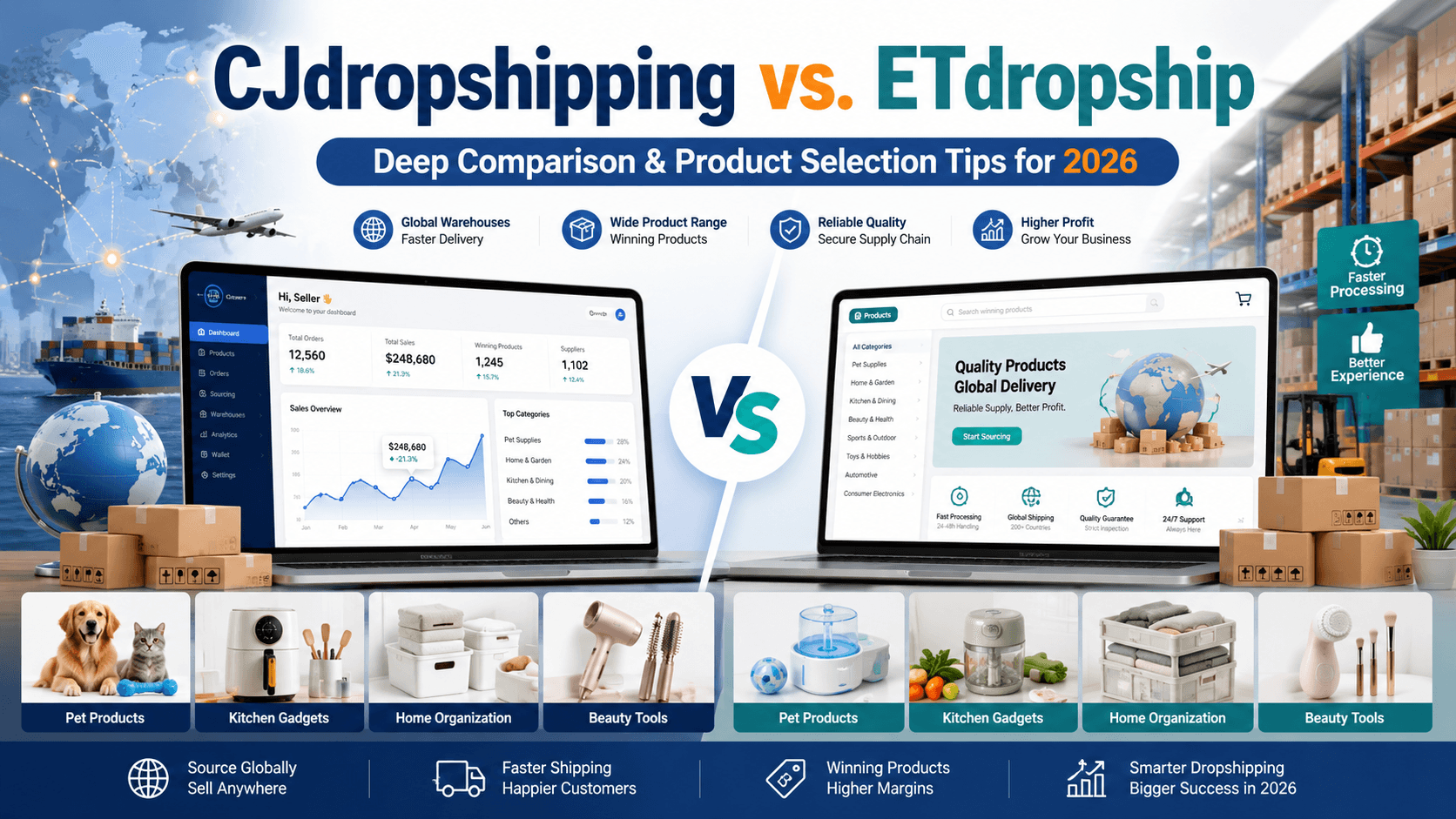
2. CJdropshipping: Suitable for Beginners Who Want to Find Products and Test Markets Quickly
CJdropshipping is a common one-stop dropshipping platform that covers product sourcing, supplier resources, POD, and cross-border fulfillment services. Its website emphasizes sourcing agent resources and global procurement services.
It is suitable for beginners who want to find products quickly, import products, and test the market. If a seller has just started a Shopify store and does not yet have a stable supply chain, CJdropshipping can be used to test lightweight products.
However, if the seller later wants deeper branded packaging, special quality inspection, or customized service, the specific product and service requirements need to be discussed and evaluated further.
3. DSers: Suitable for AliExpress Product Testing and Early Order Automation
DSers is more suitable for beginners who rely on the AliExpress ecosystem. It helps sellers optimize supplier selection, place bulk orders, sync orders, and simplify basic fulfillment. DSers also describes itself as a tool for AliExpress dropshipping and supplier optimization.
If sellers are still testing products, DSers can help verify market demand quickly. However, its limitations are also clear: product similarity is high, and packaging and quality control depend heavily on individual suppliers. For sellers who want to build a long-term brand, DSers is more suitable as an early testing tool rather than the final supply chain solution.
4. Spocket: Suitable for Sellers Who Value U.S. and European Suppliers and Faster Delivery
Spocket focuses on connecting sellers with global suppliers, especially those looking for U.S. and European product sources. Its website states that it helps merchants discover products from global suppliers and automate dropshipping.
Spocket is suitable for sellers targeting the U.S. or European markets who are willing to accept higher product costs in exchange for a better delivery experience. It is often used for home, gift, fashion accessory, and beauty accessory products.
However, sellers need to calculate margins carefully because local U.S. or European supplier costs are usually higher than China-based supply chains.
5. Printful and Printify: Suitable for POD Custom Products
If sellers want to sell custom T-shirts, hats, canvas bags, mugs, phone cases, posters, or similar products, they can consider POD platforms such as Printful or Printify. These platforms are suitable for content brands, designer brands, community brands, and gift-focused stores.
The advantage of POD is that sellers do not need to hold inventory in advance. Products are made after orders are placed. The disadvantage is that unit costs are higher, and profit depends heavily on design, branding, and traffic.
POD is not suitable for low-price competition. It is more suitable for sellers with a clear style and target audience.
10. Real Experience from the Front Line: The Real Difference Between FBA and Shopify Dropshipping
From our experience serving Shopify sellers, many beginners underestimate the impact of supply chain execution on profit. At the beginning, most sellers only focus on product price. They believe that if they find a cheap supplier and run ads, they can make money.
But once orders start coming in, the real problems are often not about whether there are orders. The bigger problems are whether product quality is stable, whether shipping is on time, whether tracking numbers update properly, whether customers are willing to wait, and whether after-sales issues can be handled quickly.
We have worked with Shopify sellers who initially used AliExpress or ordinary marketplace suppliers. When daily orders were low, the problems were not obvious. But once orders grew to dozens or even hundreds per day, issues such as slow logistics, out-of-stock items, wrong shipments, damaged packaging, and delayed tracking updates became much more serious.
At that point, ads were still spending money, but customer service was constantly dealing with shipping questions, refund requests, and complaints. Profit could easily be consumed by after-sales costs.
By comparison, Amazon FBA problems are more concentrated in the early decision-making stage. Many sellers see a product selling well on Amazon and immediately purchase hundreds or thousands of units to send to FBA warehouses. But if product selection is wrong, keyword ranking fails, or advertising costs become too high, inventory quickly becomes pressure.
FBA’s advantage is fast delivery and strong marketplace trust, but only when the product has already been validated.
Shopify dropshipping is better for early testing, but it does not mean low entry barriers automatically lead to easy profit. We have seen stores where the product itself was good and ads could generate orders, but because the packaging was too basic, shipping was too slow, and customer support was weak, the customer experience was poor and repeat purchases remained low.
On the other hand, some sellers started improving packaging when they reached only 20 or 30 orders per day. They added branded stickers, thank-you cards, instruction cards, and custom packaging bags. Although the cost per order increased slightly, customer trust and brand experience became much stronger.
This is especially true for pet products, travel organizers, beauty tools, fitness accessories, and gift products. These categories are highly suitable for branding. Plain packaging sells a product. Custom packaging sells a brand experience.
For example, the same storage bag may look like a cheap generic product if it is packed in a transparent bag. But if it comes with a branded paper card, individual packaging, product instructions, and an after-sales card, customers are more likely to accept a higher price.
11. A Real Service Case: Supply Chain Problems Become Bigger When Orders Grow
We once worked with a Shopify seller selling accessory products. At the beginning, the seller used ordinary marketplace suppliers. The product cost was low, but the packaging was very basic and tracking updates were unstable.
When the store had only 20 to 30 orders per day, customer complaints could still be handled manually. Later, when ads started performing well and orders grew close to 100 per day, the problems became much more serious.
Customers frequently asked about shipping. Some orders were delayed because the supplier ran out of stock. Other orders had slow tracking updates or inconsistent packaging. At that stage, the growth brought by advertising did not fully turn into profit. Instead, it increased customer service pressure and refund risk.
Later, we helped the seller reorganize the supply chain. We fixed several hot-selling SKUs with more stable suppliers and added simple pre-shipment quality inspection. At the same time, we added branded stickers, thank-you cards, and consistent packaging bags.
The cost per order increased only slightly, but the customer experience improved and after-sales issues decreased.
This case shows that dropshipping should not stay forever at the stage of finding the cheapest supplier. Once a product starts generating stable orders, supply chain upgrades and branded packaging directly affect profit and store longevity.
Many stores do not fail because they have no orders. They fail because the supply chain cannot keep up after orders grow. Out-of-stock products, shipping delays, rough packaging, abnormal tracking updates, and slow after-sales responses slowly consume the profit created by advertising.
In contrast, sellers who improve their supply chain early, build branded packaging, and improve customer experience are more likely to generate long-term profit, even if they are not the cheapest option in the market.
12. Recommended Paths for Sellers at Different Stages
Beginner Stage: Test First, Do Not Blindly Stock Inventory
If you are just starting in cross-border ecommerce, it is not recommended to purchase large inventory for FBA immediately. A more stable approach is to use Shopify dropshipping to test the market first.
You can choose three to five lightweight products, such as pet products, travel organizers, home cleaning products, beauty tools, fitness accessories, or office accessories. Test each product with ads and monitor click-through rate, add-to-cart rate, conversion rate, average order value, and refund rate.
At this stage, do not start with complicated customization or expensive packaging. The main goal is to find products with real demand, workable ad performance, and customers willing to place orders.
Stable Order Stage: Upgrade the Supply Chain and Packaging
Once a product starts receiving stable orders, sellers should stop relying only on temporary suppliers. At this stage, sellers need to pay attention to purchasing stability, shipping speed, quality inspection, packaging consistency, and after-sales response.
This is when a fulfillment service provider such as ETdropship can help connect product sourcing, purchasing, inspection, branded packaging, global shipping, and tracking number updates. Sellers can then spend more time on advertising, page optimization, content, and customer growth.
Branding can also start in a low-cost way. Sellers can begin with logo stickers, thank-you cards, instruction cards, branded packaging bags, and custom paper cards. Once orders are more stable, they can upgrade to custom boxes, product labels, small-batch inventory, and OEM or ODM products.
Scaling Stage: Move Core SKUs into FBA or Overseas Warehouses
When a SKU is already profitable, ad data is mature, the refund rate is controllable, and customer feedback is positive, sellers can consider moving it into Amazon FBA or overseas warehouses.
The advantage is faster delivery, better customer experience, and access to Amazon marketplace search traffic. At this stage, entering FBA is no longer blind inventory stocking. It is a decision based on real Shopify order data.
Which products sell, which countries convert best, what customers care about most, and why customers request refunds are all useful data points that help reduce FBA inventory risk.
Therefore, a more stable path is: test products through Shopify, improve fulfillment through supply chain optimization, increase brand premium through packaging, and finally use FBA or overseas warehouses for scaling.
13. How Should Sellers Combine Amazon FBA and Shopify Dropshipping?
In 2026, mature sellers should not treat Amazon FBA and Shopify dropshipping as two opposing choices. They should treat them as tools for different business stages.
Shopify is suitable for product testing, customer data collection, branded packaging, and repeat purchase development. Amazon FBA is suitable for scaling mature products through marketplace traffic and Prime delivery.
For example, a seller can first test a pet cleaning product through Shopify. If the ad data is stable and customer feedback is good, the seller can then improve packaging and fulfillment through a supply chain partner. Once daily orders become stable, the seller can move the core SKU into Amazon FBA.
This strategy avoids blind inventory investment in the early stage while still allowing the seller to use Amazon’s platform traffic later.
The combination is more stable than relying on only one channel. The independent store builds customers and brand value. Amazon expands sales volume. The supply chain partner supports sourcing, inspection, packaging, and fulfillment.
14. Conclusion: FBA Is Better for Scaling, While Shopify Is Better for Testing and Branding
In 2026, there is no absolute winner between Amazon FBA and Shopify dropshipping. The right choice depends on the seller’s stage.
Amazon FBA is suitable for sellers with enough capital, validated products, and willingness to study platform operations and inventory management. Its advantages are platform traffic, customer trust, and fulfillment efficiency. Its disadvantages are higher upfront investment, inventory risk, platform restrictions, and price competition.
Shopify dropshipping is suitable for sellers who want to test products with lower inventory risk, build a brand, and own customer data. Its advantages are flexibility, lower inventory pressure, brand-building potential, and ownership of customer assets. Its disadvantages are the lack of marketplace traffic and the need for advertising, page optimization, supply chain, and customer service capabilities.
From real front-line experience, beginners are usually better off testing products through Shopify dropshipping first instead of heavily investing in FBA inventory from the beginning. Once the product is validated, sellers can work with a fulfillment partner such as ETdropship to improve sourcing, quality inspection, branded packaging, and global shipping. Finally, stable and profitable SKUs can be moved into Amazon FBA or overseas warehouses for scale.
The future of dropshipping is no longer just product selection. It is competition in supply chain capability, branding, fulfillment, and customer experience. Sellers who can test products with lower risk, deliver orders through a stable supply chain, and improve customer experience through better packaging will have a stronger chance of building long-term profit in the 2026 cross-border ecommerce market.
FAQ:
1. Should beginners choose Amazon FBA or Shopify dropshipping in 2026?
If your budget is limited, Shopify dropshipping is usually a better starting point because it does not require large inventory investment at the beginning. It is more suitable for testing products and markets. If your product has already been validated and you have enough capital and inventory management ability, then Amazon FBA can be considered.
2. Is Shopify dropshipping easier than Amazon FBA?
Not necessarily. Shopify dropshipping has lower inventory pressure, but it does not provide marketplace traffic. Sellers need to handle advertising, store conversion, logistics, customer service, and brand trust on their own. It is not simply easier; the risk structure is different.
3. What is the biggest risk of Amazon FBA?
The biggest risk is incorrect inventory judgment. If a product is not validated before bulk inventory is purchased, sellers may face slow sales, high storage fees, ad losses, and liquidation pressure. FBA is better for scaling proven products, not for blind inventory investment.
4. What products are suitable for Shopify dropshipping?
Suitable products are usually lightweight, have clear use cases, are easy to promote with ad creatives, and can support branded packaging. Examples include pet supplies, travel organizers, home cleaning products, beauty tools, fitness accessories, office accessories, and gift products.
5. When should dropshipping sellers start branded packaging?
Sellers should consider basic branded packaging once a product starts receiving stable orders. Early branding can begin with logo stickers, thank-you cards, instruction cards, and branded packaging bags. Once orders become more stable, sellers can upgrade to custom boxes, product labels, and small-batch OEM or ODM.
6. What type of sellers is ETdropship suitable for?
ETdropship is suitable for Shopify sellers who have already started receiving orders and want to improve supply chain stability, branded packaging, quality inspection, and after-sales support. It is more suitable for sellers moving from ordinary dropshipping toward long-term brand operations.
7. Is the best strategy to use both Shopify and Amazon?
For many sellers, yes. A more stable path is to test products and ad data through Shopify first, then improve supply chain and packaging, and finally move mature SKUs into Amazon FBA or overseas warehouses for larger-scale sales.