Why Product Branding Is No Longer Optional for Dropshipping in 2026
Over the past few years, many dropshipping sellers followed a simple growth formula: find a trending product, list it quickly on a Shopify store, launch Facebook, TikTok, or Google ads, and scale as long as the advertising numbers worked.
That model used to work because the market was less crowded, consumers were becoming more comfortable with cross-border online shopping, and advertising costs were not as tight as they are today. But by 2026, the logic of dropshipping has changed. Sellers who still rely only on “finding winning products, selling the same items as everyone else, and competing on low prices” will find it increasingly difficult to maintain profit margins.
The sellers who can build long-term stores are already moving from ordinary dropshipping to branded dropshipping.
Branding is no longer something only large sellers need to consider. It has become an important way for small and medium-sized sellers to increase average order value, reduce product sameness, improve repeat purchases, and avoid price wars. For Shopify sellers in 2026, product branding is no longer a choice. It is becoming one of the most important factors that determines whether a store can survive and grow.
1. The Low-Price Product Model Is Losing Its Advantage
The biggest advantage of traditional dropshipping was that sellers could start with very little upfront investment. They did not need to hold inventory, build warehouses, or invest heavily in production. As long as they could find a supplier, list products on a store, and generate orders through advertising, they could start selling.
But the problem is that low entry barriers also mean weak competitive barriers.
Once a product becomes popular on TikTok, Facebook, or Instagram, many sellers can copy it quickly. Product images can be reverse-searched. Ad creatives can be copied. Landing pages can be recreated. Even product descriptions and comment section strategies can be imitated. In the end, the market often turns into a direct price war.
Consumers are also better at comparing products than before. They compare prices, delivery times, reviews, return policies, and brand credibility across multiple platforms. For dropshipping sellers, this means one thing: if your product is only a generic item with no brand identity, customers can easily leave before placing an order, and even if they buy once, they may never come back.
They will remember the product, but they will not remember your store.
2. Rising Advertising Costs Are Forcing Sellers to Build Brand Value
Many beginners think the biggest costs in dropshipping are product cost and shipping cost. In reality, customer acquisition cost is often the factor that puts the greatest pressure on profit.
In competitive ecommerce categories, getting one new customer can be expensive. If a seller is offering a low-priced, unbranded product at $19.99 or $29.99, the profit margin can become very thin after product cost, shipping cost, advertising cost, payment fees, platform fees, refunds, and customer service issues.
Once CPM increases, conversion rate drops, or logistics become unstable, a product that looked profitable can quickly become unprofitable.
This is where branding becomes valuable. Branding is not simply printing a logo on a package. It gives the product a stronger reason to be priced higher.
For example, a generic storage bag may only sell for $12.99 if it comes in a plain plastic bag with supplier images. But if the same product has consistent brand visuals, custom packaging, clear usage scenarios, bundle options, instruction cards, and after-sales support, it may be positioned at $24.99 or even higher.
Customers are not only paying for the physical product. They are paying for a more trustworthy and complete shopping experience.
3. Consumers Are More Open to Private Label and White Label Products
Many sellers worry that customers will not buy from a brand they have never heard of. This concern made sense in the past, but the market has changed.
Consumers today are more willing to try private label, white label, and independent brands, as long as the product looks reliable, the price is reasonable, the quality is stable, the packaging feels professional, and the product solves a real problem.
This is a major opportunity for dropshipping sellers.
Branding does not have to start with expensive product development. Sellers do not need to create custom molds or order thousands of units at the beginning. A more realistic approach is to start with light branding.
This can include branded packaging bags, thank-you cards, stickers, instruction manuals, product labels, hang tags, bundle sets, branded product page design, and after-sales cards. Once a product starts generating stable orders, sellers can gradually upgrade to product logos, color customization, material changes, size improvements, and OEM or ODM development.
The key question in 2026 is not whether you are already a big brand. The real question is whether you are running your products with a brand mindset from the beginning.
4. Branding Is Not Decoration. It Is a Profit Structure Upgrade.
Many sellers misunderstand branding. They think branding only means creating a logo and adding a custom package. In reality, meaningful branding has several layers.
4.1 Product-Level Branding
Product-level branding does not always mean deep customization at the beginning. It can start with color, size, material, bundle structure, functional details, and usage instructions.
For example, a generic pet toy can easily be copied if it is taken directly from a supplier. But if a seller redesigns the color combination, packaging style, pet age positioning, gift set structure, and usage instructions for a specific market, the product becomes more recognizable. It is no longer just another generic item.
4.2 Packaging-Level Branding
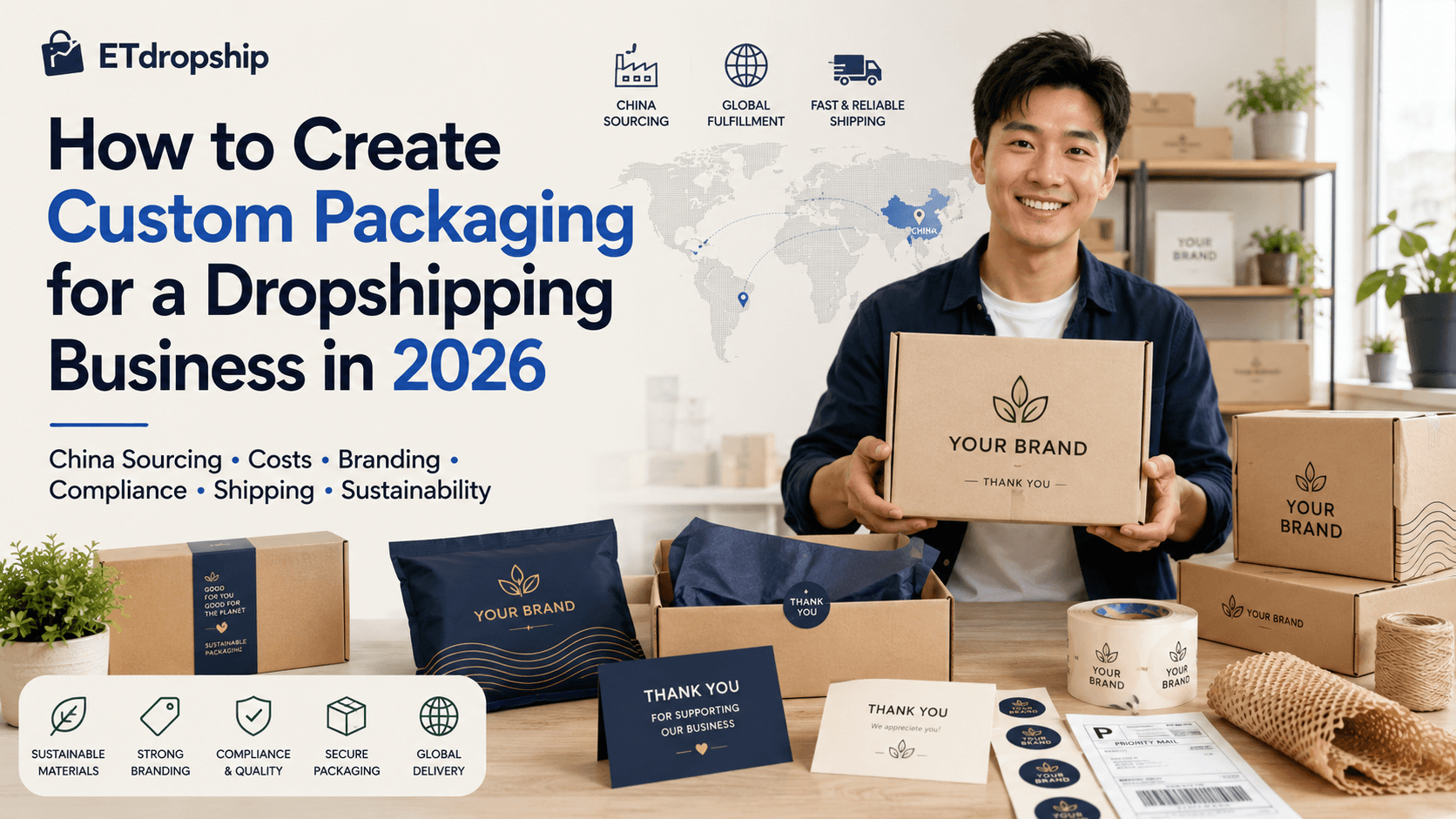
Packaging is not only used to protect the product. For ecommerce sellers, packaging is often the customer’s first physical impression of the brand.
A product sent in a plain plastic bag creates a very different feeling from a product delivered with a branded package, thank-you card, instruction card, and after-sales card. The first feels temporary. The second feels like it comes from a real brand.
Packaging does not need to be expensive, but it should be consistent. Branded stickers, inserts, packaging bags, hang tags, instruction manuals, thank-you cards, QR codes, and after-sales cards can all become part of the brand experience.
4.3 Product Page Branding
Many dropshipping product pages look too similar to supplier pages. They have a few images, some basic specifications, and short selling points. This makes it difficult to build trust.
A branded product page should be more specific. It should explain who the product is for, what problem it solves, how to use it, how to care for it, and how it differs from ordinary alternatives.
For example, a generic seller may simply list a product as a “resistance band.” A branded seller will explain whether it is suitable for home workouts, rehabilitation stretching, glute training, travel fitness, beginner use, or advanced resistance training. The seller may also offer usage guidance and bundle options.
The more specific the content is, the easier it is for customers to believe that the store is serious about the product.
4.4 Fulfillment-Level Branding
Branding does not only happen on the product page. It also happens during shipping and after-sales service.
Delivery speed, tracking updates, packaging condition, customer service response, damaged product replacement, and delay handling all influence how customers judge a brand.
For dropshipping sellers, this means they cannot simply raise prices and expect higher profit. They need to create a better product, better packaging, better fulfillment, and better customer support so that customers feel the price is justified.
5. Without Branding, Sellers Become Too Dependent on One-Time Orders
The biggest problem with unbranded dropshipping is that sellers have to buy new customers every day.
A customer clicks an ad, enters the store, and buys once. The product has no brand mark. The package has no brand identity. The thank-you card has no brand message. The email content has no personality. A few days later, the customer may not even remember which store they bought from.
The next time they need a similar product, they will search again on Amazon, TikTok Shop, Google, or another independent store.
This is why many stores have sales but no real business asset. When ads stop, orders stop. When competitors copy the product, profit disappears. When platform rules change, growth becomes difficult.
The purpose of branding is to turn each order into more than a single transaction. Each order should help build customer memory. If customers remember your packaging, product name, service experience, after-sales card, and brand style, they are more likely to return, recommend the product, search for your brand, or respond to email marketing.
An unbranded product may generate short-term sales. A branded product has the potential to build long-term customer value.
6. AI Shopping Will Further Eliminate Undifferentiated Products
In 2026, the way consumers discover products is also changing. In the past, product discovery mainly relied on keyword search. In the future, more shopping decisions will be influenced by AI recommendations and conversational shopping tools.
When AI helps consumers compare products, it is more likely to recommend products with complete information, clear reviews, trustworthy branding, stable logistics, and detailed product pages. If your product only has a basic title, supplier images, and a low-price message, it may easily be replaced by a more complete branded product.
This means branding is not only about impressing customers. It is also about making your products easier to recognize in future search, recommendation, advertising, and AI-driven shopping environments.
7. Which Dropshipping Products Are Most Suitable for Branding?
Not every product is suitable for deep branding from the beginning. Products that are more suitable for branding usually have several features: customers are willing to pay for a better experience, the product has repeat purchase or bundle potential, it is suitable for content marketing, and its perceived value can be improved through packaging and visual presentation.
Beauty tools, skincare accessories, pet products, fitness accessories, home storage products, kitchen gadgets, travel products, socks, fashion accessories, bags, holiday gifts, baby products, and light outdoor products are all suitable for light branding.
For example, bags are easy to compare if they are sold as generic products. But if a seller can add embroidery, printing, hand-drawn patterns, branded hang tags, custom packaging bags, gift cards, and a consistent color series, the product can become part of a brand collection. Customers are not just buying a bag. They are buying a style and an identity.
Pet products are another good example. Many sellers only sell a single toy, collar, or grooming tool. A better approach is to create a branded set: a pet toy, custom packaging, a branded thank-you card, usage suggestions, and seasonal versions. This can increase average order value and make the product more suitable for TikTok videos, Instagram content, and email marketing.
8. Recommended Dropshipping Suppliers for Building a Brand in 2026
For sellers who want to build a branded dropshipping business, supplier selection should no longer be based only on price. It is more important to check whether the supplier supports product sourcing, quality inspection, branded packaging, white label products, labeling, inserts, warehousing, order syncing, tracking number updates, and after-sales support.
8.1 ETdropship: Best for Shopify Sellers Upgrading from Ordinary Dropshipping to Branded Fulfillment
ETdropship is suitable for sellers using Shopify, WooCommerce, TikTok Shop, Etsy, or independent ecommerce stores, especially those who do not want to only ship generic products but want to gradually build their own brand.
Its core value is not just shipping. It provides China-based supply chain support, including product sourcing, purchasing coordination, quality inspection, branded packaging, warehousing, worldwide shipping, and tracking number synchronization.
For beginner sellers, ETdropship is suitable for starting with light branding, such as thank-you cards, branded stickers, instruction manuals, packaging bags, product labels, and small-batch packaging customization. Sellers do not need to begin with heavy OEM or ODM development, and they do not need to hold large amounts of inventory at the start. They can first test the market with existing products, then gradually upgrade packaging and product customization based on order data.
For sellers with stable orders, ETdropship becomes more valuable. Once a store grows from dozens of daily orders to hundreds, the biggest challenge is no longer finding products. The real problems become supply chain stability, delivery consistency, product quality, and after-sales issue handling.
At this stage, branding is no longer just a packaging issue. It becomes a supply chain management issue.
ETdropship is suitable for categories such as pet products, home products, fitness accessories, beauty tools, bags, socks, holiday gifts, light customization products, and white label products. For Shopify sellers who want to build a long-term brand store, it can be used as a long-term China supply chain partner.
8.2 CJdropshipping: Best for Beginners Testing Products and Basic Custom Packaging
CJdropshipping is a familiar platform for many new sellers. Its advantages are a large product catalog and a systemized platform, making it suitable for early-stage sellers who want to test different product directions quickly.
For sellers who are just starting branding, CJdropshipping’s custom packaging service can be an entry-level option. Sellers can test simple branding elements such as custom packaging bags, thank-you cards, stickers, or inserts before investing in deeper product customization.
CJdropshipping is more suitable for the testing stage and basic branding stage. If a seller is not sure whether a product can sell long term, they can first test the product through CJdropshipping and then add simple branding elements to improve the store’s professional image.
However, CJdropshipping is still a platform-based supplier. If a seller later wants deeper product customization, exclusive supplier negotiation, more detailed quality inspection, or stronger product information protection, they may need a more flexible sourcing agent or branded fulfillment partner.
For beginners, CJdropshipping is valuable because of its low entry barrier. For mature sellers, it is better used as one testing channel rather than the final form of a complete brand supply chain.
8.3 HyperSKU: Best for Sellers with Existing Order Volume Who Care About Fulfillment Stability
HyperSKU is more suitable for ecommerce sellers who already have a certain order volume. It focuses on sourcing, custom branding, and global fulfillment, helping ecommerce sellers simplify purchasing and fulfillment operations.
For branded sellers, HyperSKU’s advantage is its relatively mature fulfillment process. Branding is not only about packaging. It is also about whether shipping is stable, tracking is clear, and order processing is efficient.
If a product has good packaging but slow delivery, unclear tracking, or poor response time, customers will still not have a good brand impression.
HyperSKU is more suitable for Shopify stores that have already tested their products and advertising model and are now focusing on delivery stability and customer experience. It may not always be the lowest-cost option, but it is suitable for sellers who value efficiency, scalability, and fulfillment reliability.
8.4 SourcinBox: Best for Sellers Who Need China Sourcing and Private Label Services
SourcinBox is suitable for sellers who want to use China-based supply chains for private label products, white label products, or custom packaging. It works more like a sourcing agent plus fulfillment service rather than only a product platform.
For many Shopify sellers, the most difficult part is not finding a product link. The real challenge is communicating customization requirements with suppliers, confirming samples, checking quality, arranging packaging materials, matching orders, and shipping products to customers.
SourcinBox is suitable for sellers who already have some branding awareness. For example, if a seller has confirmed that a product has stable demand and wants to add branded packaging, stickers, inserts, instruction manuals, or bundle sets, this type of supplier can be useful.
Compared with pure platform suppliers, SourcinBox is better suited for sellers who want integrated sourcing, branded packaging, and fulfillment.
8.5 Zendrop: Best for High-Volume Sellers Upgrading to Private Label
Zendrop is suitable for dropshipping sellers targeting Western markets, especially those who want to manage fulfillment through a systemized platform. Its custom packaging and private labeling services are more suitable for high-volume sellers.
This means Zendrop may not be the best choice for beginners who want to start deep private labeling immediately. However, it can be a good option for sellers who already have stable order volume and want to upgrade to a more branded operation.
If a seller already has daily orders and wants to move from ordinary dropshipping to more professional branded fulfillment, Zendrop can be considered. But if the seller is still testing products, it is better to start with lower-cost light branding rather than investing too much into customization at the beginning.
8.6 Printful: Best for POD Brands, Apparel, and Custom Gifts
If a seller wants to sell T-shirts, hoodies, hats, tote bags, mugs, home decor, or personalized gifts, Printful is a strong option. It operates through the print-on-demand model, meaning sellers do not need to produce inventory in advance. When a customer places an order, Printful produces and ships the product.
Printful is suitable for sellers with strong design ability. If your store depends on graphic design, IP-style products, holiday gifts, personalized products, or apparel branding, Printful can help reduce inventory pressure.
However, Printful is not suitable for every category. If you sell electronic accessories, pet products, home gadgets, or general white label products, a comprehensive supply chain service provider may be more suitable than a POD platform.
8.7 Printify: Best for Low-Cost POD Testing and Packaging Inserts
Printify is another common POD platform. It is suitable for sellers who want to test different suppliers, products, and markets at a relatively low cost. Compared with Printful, Printify usually offers more supplier choices and more flexible pricing ranges.
For branding, Printify supports packaging inserts for eligible orders. Sellers can use these inserts to include thank-you messages, review requests, discount codes, QR codes, or social media information.
Printify is suitable for sellers who are just starting a POD brand, especially those testing T-shirts, mugs, posters, home items, and gift products. Its main value is not deep product transformation, but helping sellers quickly validate designs, ad creatives, and niche markets.
8.8 Gelato: Best for Localized POD Brands Targeting Western Markets
Gelato is more suitable for posters, wall art, custom gifts, creative products, and certain POD categories. Its main feature is a global local production network, which can help shorten delivery distance and improve delivery experience in some markets.
Gelato is a good fit for sellers who care about design and localized fulfillment. For example, wall art, art prints, gift cards, branded creative products, and eco-focused product lines may work well with Gelato.
It is not necessarily suitable for every ordinary dropshipping category, but for design-driven brands, it is a supplier worth considering.
8.9 Trendsi, Apliiq, and Contrado: Best for Apparel, Designer Products, and High-Value Custom Categories
If a seller wants to build a brand around clothing, socks, bags, hats, or accessories, supplier selection must be more careful. Apparel branding is not only about product images. Sellers must pay attention to sizing, fabric, hang tags, neck labels, care labels, packaging, and return experience.
Trendsi is more suitable for women’s fashion, boutique-style stores, and fashion Shopify sellers. It can be a good choice for sellers who want to build a branded boutique instead of a generic clothing store.
Apliiq is more focused on apparel brands and streetwear. It is suitable for T-shirts, hoodies, hats, embroidery patches, woven labels, and other apparel branding details. It is better for sellers who want to build a real clothing brand rather than simply sell basic printed shirts.
Contrado is more suitable for high-value design products, such as designer apparel, home goods, art products, custom fabrics, bags, and personalized gifts. It is not ideal for low-price viral product stores. It is better suited for premium, designer, or personalized gift positioning.
9. How Sellers at Different Stages Should Start Branding
9.1 Daily Orders 0–20: Start with Light Branding
For new stores, the most important task is market validation. At this stage, sellers should not rush into custom molds or large inventory purchases.
They can start with light branding, such as consistent store visuals, optimized product pages, a simple brand logo, thank-you cards, stickers, custom packaging bags, or supplier-assisted labeling. The goal is not to look luxurious. The goal is to make customers feel that the product comes from a real brand, not a temporary product store.
9.2 Daily Orders 20–100: Add Packaging and Product Bundles
Once a product starts generating stable orders, sellers can begin improving packaging and bundle structures.
For example, a single item can be turned into a two-piece set, three-piece set, family set, travel set, gift set, or audience-specific SKU. At this stage, sellers can test custom boxes, branded instruction manuals, product labels, and after-sales cards.
Sellers can also include answers to common customer questions in the instruction card, such as usage methods, cleaning tips, care instructions, and customer support contact details. This improves the brand experience and reduces customer service pressure.
9.3 Daily Orders 100–500: Move into Product Micro-Customization
Once order volume becomes stable, sellers can discuss deeper product changes with suppliers. These may include color adjustments, material changes, size improvements, accessory changes, logo placement, packaging structure, or even exclusive product versions.
At this stage, the supplier’s capability becomes very important. Ordinary suppliers may only ship products, but branded dropshipping requires product sourcing, purchasing communication, sample confirmation, quality inspection, packaging customization, inventory management, global shipping, and after-sales support.
Suppliers such as ETdropship, SourcinBox, and HyperSKU are more suitable for helping sellers upgrade from ordinary dropshipping to branded fulfillment. Sellers can start with small-batch testing and gradually increase customization based on order data.
9.4 Daily Orders 500+: Build a Branded Supply Chain System
Once a store reaches more than 500 orders per day, branding can no longer rely only on packaging. Sellers need to manage stable inventory, safety stock, quality inspection standards, logistics route planning, peak-season inventory, return policies, product iteration, and multi-market compliance.
At this stage, branding becomes a supply chain management capability. The seller who can ship more reliably, handle exceptions faster, and protect product information better has a stronger chance of keeping long-term profit.
10. What to Check When Choosing a Branded Dropshipping Supplier
First, check whether the supplier supports small-batch branding. Many beginners think branding always requires thousands of units, but that is not always true. Early branding can start with thank-you cards, stickers, packaging bags, hang tags, instruction manuals, and product labeling. Higher MOQ is usually required for molds, exclusive materials, complex processes, deep OEM or ODM, and special packaging structures.
Second, check whether the supplier can provide quality inspection. Once a branded product is priced higher, customers expect more. If product quality is unstable, branded packaging may actually increase disappointment. Sellers should choose suppliers that can check color, quantity, specifications, packaging, and visible defects before shipping.
Third, check whether the supplier can manage packaging materials. Branding should not be handled randomly order by order. Packaging materials, product SKUs, and order systems need to match correctly. For example, one product may require a specific packaging bag, one bundle may require a specific instruction card, and one market may require an insert in a different language.
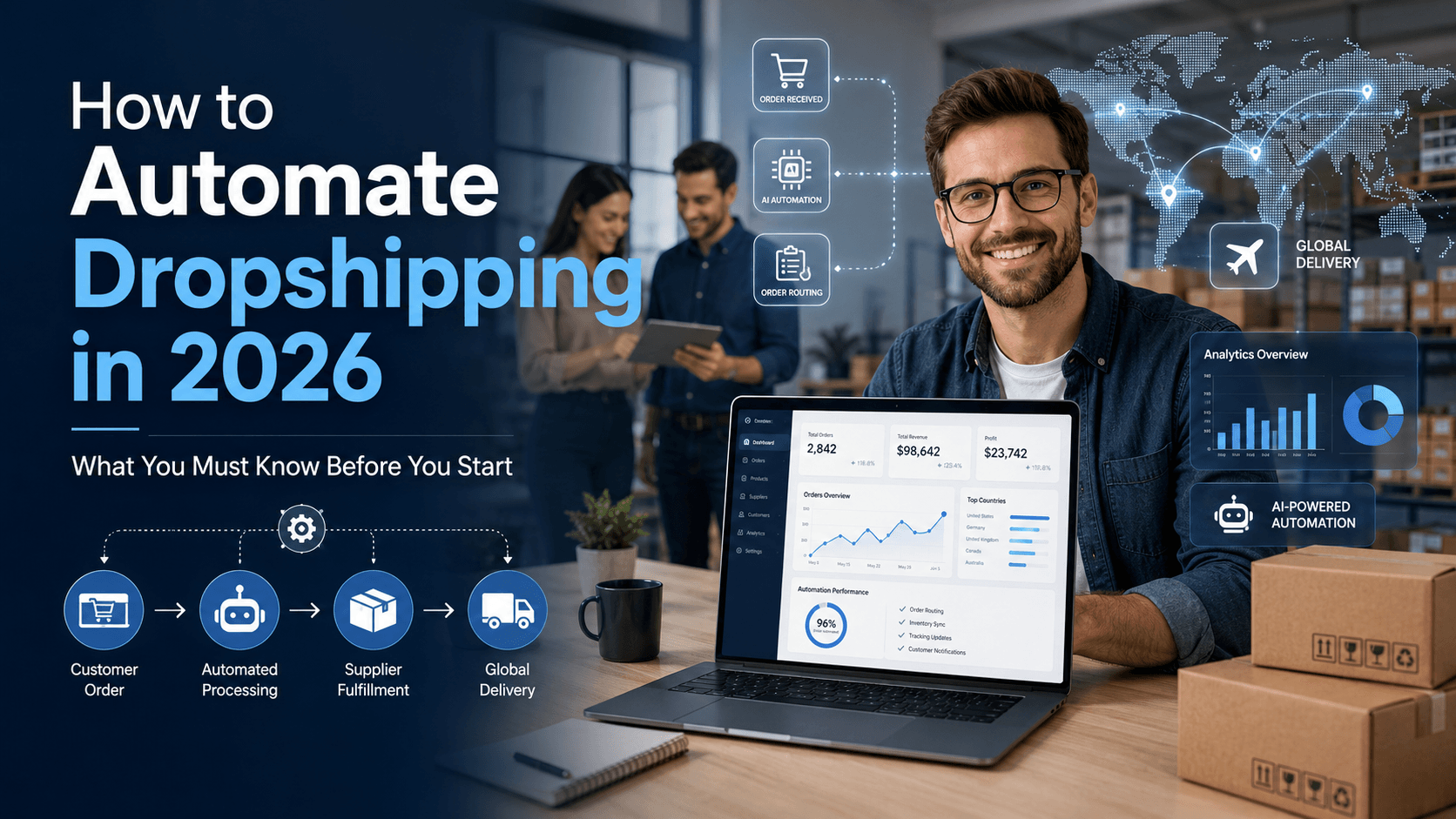
Fourth, check whether the supplier supports order syncing and tracking number updates. Branded sellers should not spend too much time manually placing orders or copying tracking numbers. Shopify sellers should choose suppliers that can sync orders automatically, handle fulfillment, and send tracking numbers back to the store.
Fifth, check whether the supplier is willing to protect your product information. Many branded sellers worry that their winning products will be shared with other clients. A long-term supply chain partner should respect customer product data and business privacy instead of recommending one client’s best-selling products to others.
11. Common Branding Mistakes Dropshipping Sellers Should Avoid
The first mistake is investing too heavily before validating the market. Many beginners customize thousands of units too early, only to find that the product does not perform well in advertising. A better approach is to test with existing products or light customization first, then upgrade based on data.
The second mistake is improving packaging but ignoring product quality. Packaging can increase perceived value, but if the product experience is poor, quality is unstable, or shipping is slow, branded packaging may make customers even more disappointed.
The third mistake is using vague brand positioning. Many stores write phrases like “premium quality,” “best product,” or “high-end design,” but the page does not show specific materials, usage scenarios, size details, comparison images, or real reviews. A brand is not built with adjectives. It is built with details.
The fourth mistake is ignoring after-sales service. Branded products usually sell at higher prices, so customers expect better service. If shipping is delayed, products are damaged, sizing is wrong, or customer service does not respond, the brand image will be damaged quickly.
The fifth mistake is changing products too often without building a product series. A real brand does not sell pet toys today, kitchen tools tomorrow, and fitness products the next day. Sellers can test different products, but once they find a direction that works, they should build a series around a specific niche.
12. In 2026, the Core Competition in Dropshipping Will Be Branded Fulfillment
Future dropshipping competition will no longer be only about product selection or advertising. It will become a competition of product, brand, supply chain, and fulfillment experience.
Ordinary sellers ask whether a product can go viral. Mature sellers ask whether the product can become a series, support branded packaging, increase average order value, generate repeat purchases, and be fulfilled consistently through a reliable supply chain.
If you only sell the same products as everyone else, you will always be waiting for the next winning product. If you start building a brand, you have the opportunity to turn one winning product into a long-term asset.
For Shopify sellers in 2026, product branding is no longer something to consider only after the store becomes large. It should be planned from the first batch of orders. Sellers can start with a logo, a thank-you card, a packaging bag, and a consistent brand visual style. Once a product becomes stable, they can move into custom packaging, product customization, SKU series development, and long-term supply chain management.
The opportunity in dropshipping has not disappeared. The entry standard has changed. In the past, sellers competed on who could find products first. Now, sellers compete on who can turn products into brands.
The sellers who survive will not always be the cheapest sellers. They will be the sellers customers can remember, trust, and buy from again.
FAQ:
1. Do dropshipping sellers really need branding?
If a seller is only testing products for the short term, deep branding may not be necessary at the beginning. But if the goal is long-term growth, higher profit margins, better customer trust, and less dependence on advertising, branding is almost unavoidable. At minimum, sellers should start with branded packaging, thank-you cards, consistent visuals, and improved product pages.
2. Does branding require a high MOQ?
Not always. Many suppliers can support small-batch branding, such as stickers, packaging bags, thank-you cards, instruction manuals, hang tags, product labels, and bundle sets. Higher MOQ is usually required for custom molds, special materials, complex production processes, and deep OEM or ODM customization.
3. Should beginners start with product branding or packaging branding?
Beginners should usually start with packaging branding and page branding. Once a product starts generating stable orders, they can move into product logos, custom colors, material adjustments, size improvements, and functional customization. This reduces risk and allows sellers to use advertising data to validate demand first.
4. Which products are most suitable for white label or private label dropshipping?
Beauty tools, pet products, fitness accessories, home storage products, kitchen products, travel products, bags, socks, holiday gifts, baby products, and light outdoor products are all suitable. These categories often have strong visual presentation, packaging upgrade potential, and bundle-selling opportunities.
5. Which suppliers are suitable for building a branded dropshipping business?
For general branded dropshipping, sellers can consider ETdropship, CJdropshipping, HyperSKU, SourcinBox, and Zendrop. For POD products, Printful, Printify, and Gelato are strong options. For apparel, accessories, and design-focused products, Trendsi, Apliiq, and Contrado can be considered.
The best supplier depends on the seller’s category, order volume, customization needs, and supply chain requirements.
6. What type of seller is ETdropship suitable for?
ETdropship is suitable for Shopify sellers who want to upgrade from ordinary dropshipping to branded fulfillment. It is especially useful for sellers who need China supply chain support, product sourcing, purchasing coordination, quality inspection, branded packaging, warehousing, global shipping, and tracking number synchronization.
It is a good fit for stores that want to start with small-batch testing and gradually move into white label products, custom packaging, and product micro-customization.
7. What is the biggest difference between branded dropshipping and ordinary dropshipping?
Ordinary dropshipping focuses mainly on finding products and shipping orders. Branded dropshipping focuses more on product differentiation, packaging experience, content presentation, after-sales service, customer trust, and repeat purchases.
Ordinary dropshipping earns profit from one-time transactions. Branded dropshipping aims to build long-term brand assets and customer lifetime value.
8. Can branded dropshipping still be done without holding inventory?
Yes. Sellers can start with light branding without holding large inventory. For example, they can use branded inserts, stickers, packaging bags, or supplier-managed packaging materials. As orders become more stable, they can move into small-batch inventory, custom packaging stock, and deeper product customization.
9. What is the first branding step for a new Shopify dropshipping store?
The first step is to create a consistent brand identity across the store. This includes the store name, logo, product page style, product descriptions, email templates, packaging inserts, and after-sales message. After that, sellers can add simple physical branding elements such as thank-you cards, stickers, and packaging bags.
10. Is branded dropshipping only suitable for high-ticket products?
No. Branding can also work for affordable products if the product has strong use cases, good packaging potential, bundle opportunities, or repeat purchase potential. However, branding is especially valuable when sellers want to raise perceived value, improve customer trust, and avoid direct price comparison.