Why Dropshipping Is Shifting from Product Competition to Fulfillment Competition in 2026
For many years, dropshipping sellers focused most of their energy on product selection. If a seller found a new, eye-catching product, built a landing page, created a few strong TikTok, Facebook, or Google ads, and tested the right audience, there was a real chance to scale quickly. In the early stage of dropshipping, the business often felt like a race to discover the next winning product before everyone else.
But by 2026, the logic of the industry has changed.
Products are still important, but relying only on “finding a winning product” is no longer enough to build a sustainable advantage. The same product can be discovered quickly by competitors. The same ad angle can be copied. The same supplier link can be found. Product research tools, ad libraries, TikTok trends, Amazon best-seller lists, AliExpress trend data, and Shopify store tracking tools have made product information much more transparent than before.
Today, what really determines whether a dropshipping store can grow from 20 orders a day to 100, 300, or even 500 orders a day is not only the product itself. It is the fulfillment capability behind the store: stable sourcing, reliable inventory, quality inspection, predictable shipping times, order tracking, custom packaging, return handling, and fast support when something goes wrong.
This is why dropshipping in 2026 is shifting from product competition to fulfillment competition.
Product Information Gaps Are Disappearing
In the early days of dropshipping, the biggest advantage was often speed. A seller who discovered a trending product before others could quickly build a store, launch ads, and capture the first wave of demand before the market became crowded.
That advantage is much weaker now.
Sellers can use ad spy tools, product research platforms, TikTok trend lists, Amazon Best Sellers, AliExpress trend pages, and Shopify store monitoring tools to discover similar products very quickly. Once a product starts gaining attention, many sellers can copy the product page, ad creatives, pricing strategy, landing page structure, and even the same sales angle within a short time.
This means product selection is still the entry point, but it is no longer a strong moat.
If a product has no supply chain advantage behind it, the seller is left competing on surface-level factors: better ads, lower prices, higher ad budgets, or more aggressive promotions. In the end, this often leads to thinner margins, more refunds, weaker customer experience, and a business that is difficult to scale.
In 2026, a dropshipping seller should not only ask, “Can this product sell?” The better question is, “Can this product be fulfilled reliably at scale?”
Product selection brings in the order. Fulfillment decides whether that order becomes profit, a refund, a bad review, or a payment dispute.
Customers Care About Delivery Experience, Not Just the Product
For customers, the buying experience does not end when they place an order. In many ways, the real customer experience begins after checkout.
Customers care about practical details: when the product will ship, whether tracking information is available, why the parcel has not updated for several days, whether the product quality matches the website, whether the packaging feels professional, and whether the seller can solve problems quickly when delays, damage, wrong sizes, or incorrect colors happen.
These may look like back-end issues, but they directly affect conversion rates, refund rates, reviews, PayPal disputes, credit card chargebacks, and even the long-term safety of payment accounts.
DHL eCommerce reported in its 2025 delivery and returns insights that many global shoppers will avoid buying from an online retailer if they do not trust the delivery provider. It also highlighted that free and reliable delivery remains a major factor in improving the online shopping experience.
This is especially important for dropshipping sellers. The biggest weakness of traditional dropshipping is not that sellers cannot find products. The real problem is that many sellers cannot control the fulfillment process. A store may generate strong sales from ads, but if the supplier runs out of stock, ships slowly, uses unstable logistics, or sends poor-quality packaging, customer service problems will appear very quickly.
Consumers do not lower their expectations just because a store uses dropshipping. They see a branded online store, so they expect a brand-level shopping experience.
Shipping Speed Is Becoming Part of Conversion
In the past, many dropshipping sellers could accept shipping times of 10 to 20 days or even longer. If the product was attractive enough, some customers were still willing to wait.
That is much harder in 2026.
Customers are becoming less patient, and larger e-commerce brands have trained consumers to expect faster and more transparent delivery. Shopify has also discussed how many brands are now aiming for two-to-three-day domestic delivery in major markets such as the United States. This does not mean every dropshipping seller must offer two-to-three-day shipping, but it does show the direction of the market.
If your competitor can provide clearer delivery timelines, faster dispatch, more stable tracking updates, and fewer delivery problems, while your store still relies on slow and unpredictable economy shipping, customers will naturally prefer the competitor, even if the product looks similar.
Shipping speed also affects advertising performance indirectly. A product may convert well at the beginning, but if customers later experience long delays, missing tracking updates, or poor support, refunds and negative reviews will start to damage the business. Advertising platforms may not directly measure every fulfillment problem, but customer feedback, store reputation, reviews, and payment disputes all influence long-term performance.
Fulfillment is no longer something that happens after the sale. It is part of the sales engine itself.
Returns and Customer Support Are Eating Into Low-Quality Dropshipping Profits
Many new sellers calculate profit too simply. They look at product cost, shipping cost, ad spend, and selling price. For example, if a product costs $6, shipping costs $5, and the selling price is $29.99, the margin may look attractive at first.
But real e-commerce operations include many hidden costs.
Shipping delays create refunds. Unstable quality creates reshipments. Wrong sizes or colors create customer service issues. Payment disputes create extra losses. Customer support takes time and labor. Returned goods may not be easy to resell, especially in cross-border dropshipping.
This is even more obvious in categories such as clothing, shoes, beauty products, home goods, pet products, accessories, and customized products. Customers are more sensitive to material, size, color, packaging, and user experience in these categories.
According to NRF and Happy Returns’2025retail returns report, online returns remain a major challenge for e-commerce businesses, and free returns continue to influence customer purchase decisions. For dropshipping sellers, this is a warning: if quality control, shipping accuracy, packaging, and after-sales support are weak, refunds and returns can quickly erase profit.
At 10 orders per day, a few customer complaints may still be manageable manually. At 300 orders per day, the same operational weakness can become a serious business risk.
Large Platforms Are Raising Fulfillment Standards
Fulfillment competition is not only happening among small and medium-sized sellers. Major platforms and large companies are also raising the standard for the entire industry.
In 2026, Amazon continued expanding its logistics and supply chain services for external businesses. Its supply chain services cover warehousing, ocean freight, road transport, rail, air freight, and broader logistics support. This shows that fulfillment infrastructure is becoming a core competitive advantage, not just an internal operational function.
This sends a clear signal to independent store owners: the future of e-commerce competition will not only be about advertising skills or product research. It will also be about supply chain efficiency, inventory planning, delivery speed, system integration, and after-sales handling.
When large platforms and established brands improve fulfillment standards, customer expectations rise at the same time. Customers do not care whether you are a large brand, a small independent store, or a dropshipping business. They care about when they will receive the order, whether the product matches expectations, and whether you can solve problems when something goes wrong.
For dropshipping sellers, relying on only one supplier, one shipping line, and one fulfillment location is becoming increasingly risky. Once the product scales, a problem in any single part of the chain can affect the entire store.
Why Fulfillment Capability Is Becoming the New Moat
Fulfillment capability is not as visible as product research, ad creatives, or website design, but it is much harder to copy.
A product page can be copied. An ad creative can be copied. A supplier link can be found. But stable supplier relationships, better purchasing prices, quality inspection standards, packaging solutions, inventory planning, order systems, shipping channel combinations, and exception-handling experience all take time to build.
Strong dropshipping sellers usually have several capabilities.
They Know Whether a Product Is Suitable for Dropshipping
Not every product is suitable for dropshipping. Products that are too cheap, too large, fragile, difficult to certify, complicated to use, difficult to ship, or dependent on unstable suppliers may not be good long-term choices, even if the front-end data looks attractive.
Mature sellers do not only look at product demand. They also evaluate sourcing stability, packaging difficulty, shipping risk, return probability, and real profit margin.
They Control Product Quality Instead of Shipping Blindly
One of the biggest problems with low-quality dropshipping is that the seller often does not know exactly what the customer will receive.
This may work for a short time, but once order volume increases, quality problems become much more visible. If every batch has different colors, materials, packaging, or accessories, customer reviews become unstable. Ads can bring orders, but quality determines whether those orders become profit.
They Turn Ordinary Products Into Branded Products
In 2026, more sellers are no longer satisfied with selling ordinary white-label products. They want to build real brands, or at least create a stronger brand impression.
Product logos, labels, hang tags, user manuals, thank-you cards, packaging bags, custom boxes, inserts, custom colors, and bundle sets can all make a product feel more professional. These details help customers feel that they are buying from a real brand instead of receiving a random item from an unknown supplier.
This is where a fulfillment partner such as ETdropship can become valuable. For Shopify sellers, the front end can focus on advertising, content, and customer acquisition, while the back end needs support with sourcing, purchasing, quality inspection, custom packaging, warehousing, global shipping, tracking number updates, and after-sales issues.
They Handle Order Exceptions, Not Just Normal Shipments
Real fulfillment competition is not only about shipping normal orders. It is about handling abnormal orders well.
Address errors, delayed tracking updates, supplier stockouts, shipping disruptions, damaged products, customer address changes, split shipments, combined shipments, and temporary route changes happen all the time.
Many dropshipping stores do not fail because the product cannot sell. They fail because once order volume increases, customer service and supply chain problems overwhelm the business. A strong fulfillment system controls issues before they turn into customer complaints.
Scaling From 20 Orders to 500 Orders a Day Requires a Back-End System
At 20 orders a day, many things can still be handled manually. The supplier ships a few parcels, the seller answers a few customer questions, and stock issues can be managed through direct communication.
At 100,300, or 500 orders a day, the business becomes completely different.
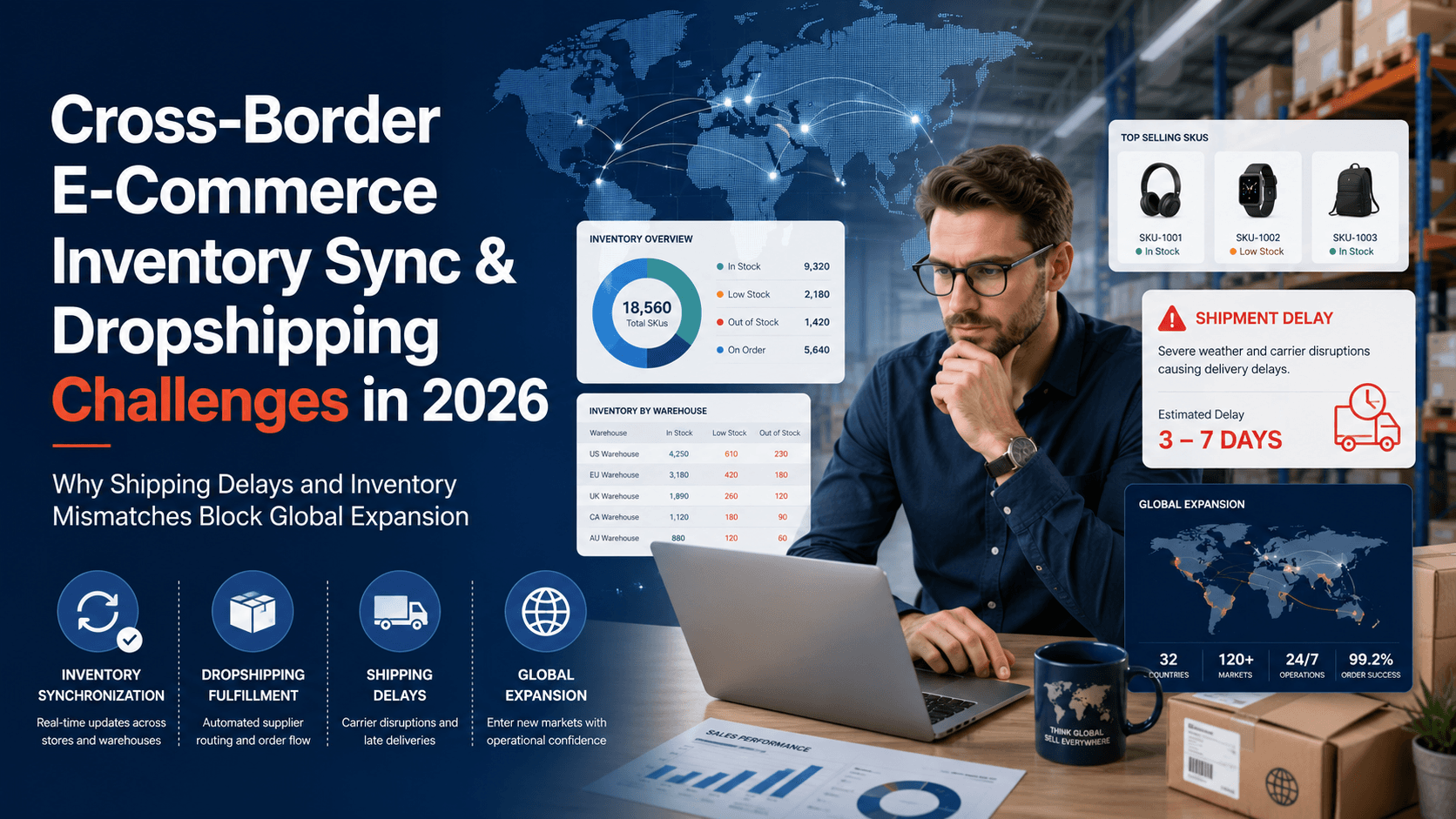
Purchasing needs forecasting. Inventory needs safety stock. Winning SKUs need to be prepared in advance. Backup suppliers become necessary. Shipping lines need to be selected by product type and destination country. Order syncing and tracking updates need automation. Customer service teams need clear order status information. Return and replacement rules need to be established. Packaging and quality inspection standards need consistency.
Without these foundations, growth becomes dangerous. Advertising does not bring profit; it brings problems the business cannot handle.
This is why many sellers feel profitable at small order volumes but start losing money when they scale. The product may still be good, but the fulfillment system cannot support the growth.
How Sellers Can Upgrade Dropshipping Fulfillment in 2026
Consider Fulfillment Difficulty During Product Selection
Sellers should not only look at product popularity. They should also evaluate whether the product is easy to source, store, inspect, package, and ship.
Weight, volume, breakage risk, certification requirements, size complexity, color options, supplier stability, and return risk all matter.
A product with strong ad performance but high fulfillment risk may not be suitable for long-term operation. On the other hand, a product that looks less “viral” but has stable supply, low return rates, good repurchase potential, and easy branding may be better for building a sustainable business.
Move From One Supplier to a Supplier Network
Depending on one supplier is a common risk in dropshipping. It may be acceptable during the early testing phase, but once a product starts generating stable sales, sellers should look for backup suppliers or work with a fulfillment partner that can compare suppliers, negotiate pricing, manage purchasing, and inspect quality.
This reduces the risk of being trapped when the original supplier runs out of stock, raises prices, or lowers quality.
Build Basic Quality Inspection Standards
Even in dropshipping, quality inspection should not be ignored. Sellers can create simple inspection standards for different product categories, including appearance, color, size, accessories, packaging, function, and damage risk.
For branded products, sellers should also check logos, labels, packaging printing, color consistency, and quantity accuracy. Customized products can create higher customer satisfaction, but mistakes are often more expensive to fix.
Decide When to Stock Inventory Based on Order Volume
Many new sellers are afraid of inventory, and that is understandable. But when a SKU is already producing stable sales, having no inventory at all can limit growth.
A more practical approach is staged inventory planning. During the testing phase, avoid inventory and move quickly. During the stable sales phase, prepare small batches to improve dispatch speed. During the scaling phase, build safety stock to reduce stockout risk.
This allows sellers to avoid heavy upfront inventory pressure while still preparing for growth.
Optimize Shipping Lines Instead of Choosing Only the Cheapest Option
The cheapest shipping option is not always the best choice. For low-ticket products, economy shipping may be acceptable. For higher-ticket products, sellers should prioritize stability, speed, complete tracking, and lower loss rates.
For major markets such as the United States, the United Kingdom, the European Union, Canada, and Australia, sellers should understand the estimated delivery time, tracking quality, loss rate, customs stability, and after-sales handling process of each route.
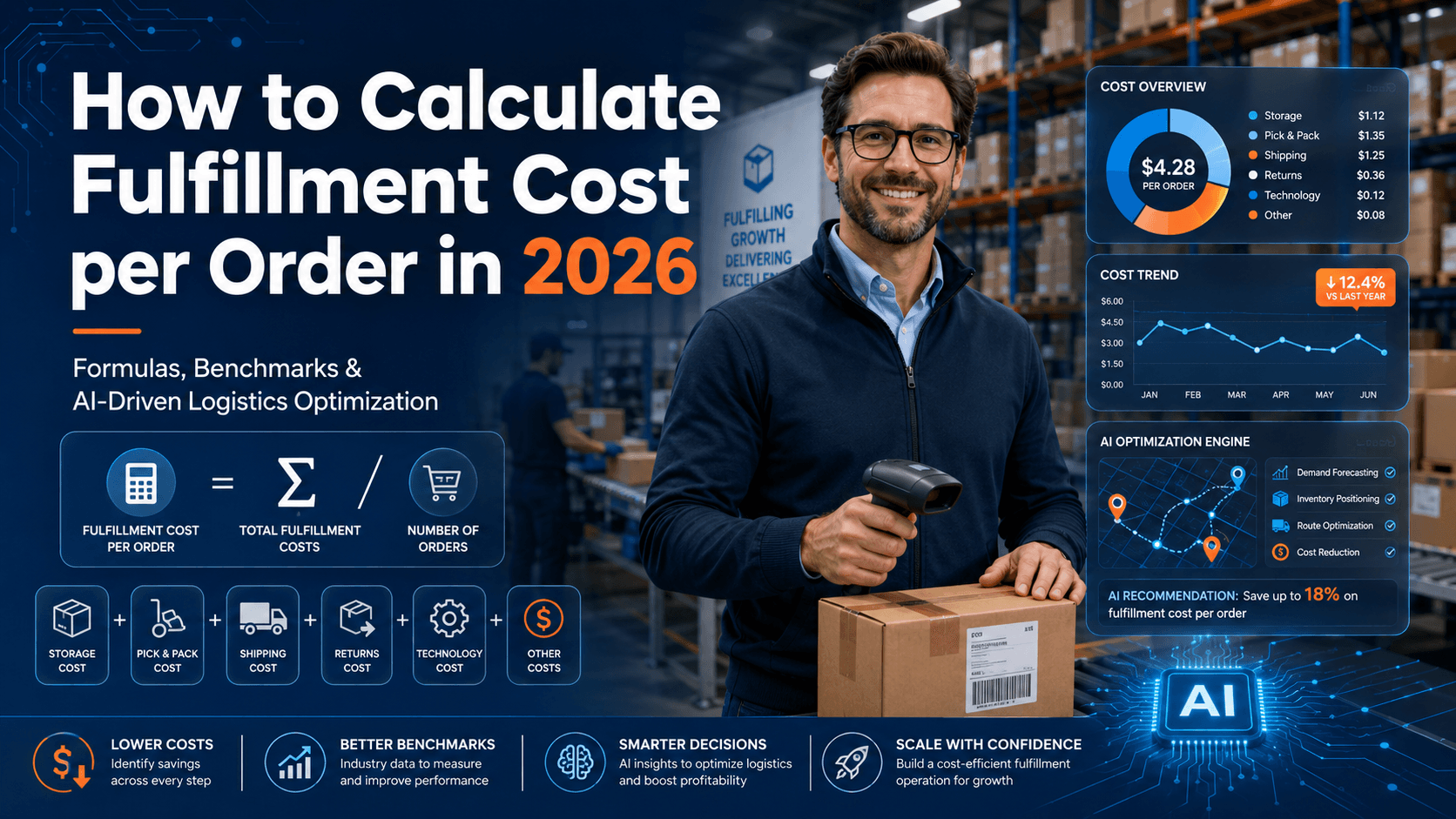
Shipping cost should not be judged only by the price per parcel. Sellers should also calculate refunds, complaints, reshipments, chargebacks, and customer service time.
Make After-Sales Rules Clear in Advance
Return policies, shipping times, order cancellation rules, address error handling, and estimated delivery timelines should be clearly explained on the store.
For dropshipping sellers, transparency is more important than overpromising. Do not promise three-to-five-day delivery just to improve conversion if the fulfillment system cannot support it. The back end will pay the price later.
Recommended Dropshipping Fulfillment Suppliers in 2026
When choosing a fulfillment supplier, sellers should not only compare shipping prices. A good fulfillment partner should help with sourcing, purchasing, quality inspection, inventory, packaging, logistics, order syncing, tracking updates, and order exceptions.
Different sellers need different types of suppliers. Beginners need low barriers and easy integration. Sellers with stable orders need better pricing, quality control, branding, and reliable shipping. Brand-stage sellers may need overseas warehouses, 3PL support, and multi-market fulfillment.
ETdropship: Suitable for Shopify Sellers Moving From Ordinary Dropshipping to Branded Fulfillment
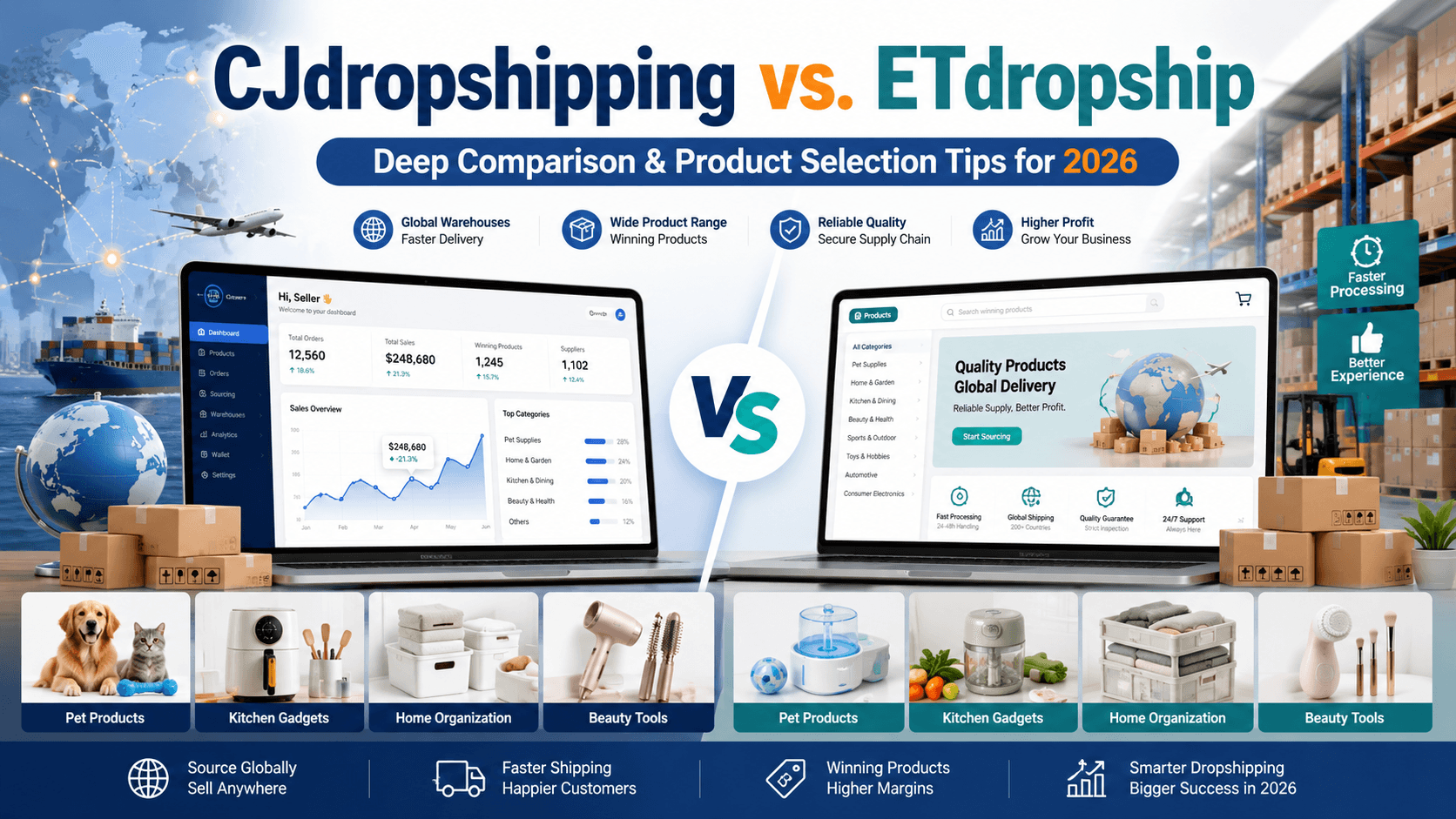
ETdropship is suitable for sellers who already have a product direction or are moving from ordinary dropshipping to branded operations. Its value is not only shipping. It can support product sourcing, purchasing assistance, quality inspection, branded packaging, warehousing, global shipping, tracking updates, and after-sales support.
For Shopify sellers, ETdropship is especially useful when a store has started to generate stable orders and wants to reduce sourcing costs, improve delivery reliability, and add brand elements such as logos, hang tags, thank-you cards, custom bags, or packaging boxes.
It is suitable for categories such as pet products, home goods, sports accessories, fashion accessories, beauty tools, gifts, white-label products, and light-customized products. Compared with directly relying on ordinary suppliers, ETdropship helps sellers make the supply chain more controllable.
CJdropshipping: Suitable for Beginners and Multi-Platform Sellers
CJdropshipping is a popular platform among dropshipping beginners. Its advantages include a large product catalog, sourcing services, order fulfillment, global warehouses, custom packaging, and multi-platform integration.
It can be useful for sellers who are still testing products and want a convenient starting point. Sellers can use it to find products, test market response, import products into Shopify, and process early orders.
However, once a seller has a stable winning product, it is better to go beyond public product listings and start negotiating pricing, setting inspection standards, and planning inventory.
HyperSKU: Suitable for DTC and Branded Dropshipping Sellers
HyperSKU is more focused on Shopify and DTC sellers. It provides sourcing, custom branding, and global fulfillment services.
For sellers who want to build a long-term brand instead of only testing short-term winning products, HyperSKU can be a strong option. It is suitable for stores that care about customer experience, stable fulfillment, clear order processing, and basic branded packaging.
SourcinBox: Suitable for Sellers Looking for Chinese Manufacturing Resources and One-on-One Service
SourcinBox combines the role of a dropshipping agent and sourcing supplier. It helps sellers connect with Chinese manufacturers and handle product sourcing, warehousing, private label services, quality inspection, and order fulfillment.
This type of service is useful for sellers who already have product links, images, or sample requirements and want a more flexible supply chain than standard platform-based sourcing.
Zendrop: Suitable for Sellers Who Want a Platform-Based Tool to Start Quickly
Zendrop is more like an all-in-one dropshipping software platform. It is suitable for beginners or small to medium-sized sellers who want to list products quickly, process orders, and automate fulfillment.
Its strength is ease of use. Sellers can use it to test products and build a basic fulfillment workflow. However, for sellers moving into branded operations, it is still important to evaluate product cost, logistics stability, customization ability, and after-sales support.
Fulfillman: Suitable for Sellers Needing China Sourcing, Branding, and Product Photography
Fulfillman provides China sourcing, global fulfillment, dropshipping, branding services, and product photography.
It is suitable for sellers who want to combine sourcing, packing, shipping, and product content creation in one supply chain system. If a seller frequently needs product photos, different product tests, or light branding, Fulfillman can be considered.
ShipBob: Suitable for Brands With Inventory and Local Fulfillment Needs
ShipBob is more suitable for DTC brands that already have stable sales, clear SKUs, and a willingness to stock inventory in advance. It supports fulfillment in markets such as the United States, the United Kingdom, the European Union, Canada, and Australia.
For beginner dropshipping sellers, ShipBob may not be the lightest option because it is closer to a 3PL warehouse fulfillment model. Sellers usually need to send inventory to its warehouses first. But once a store has stable daily orders, clear SKUs, and strong repeat purchase potential, local warehousing can improve delivery experience and reduce customer complaints.
ShipMonk: Suitable for DTC Brands That Need 3PL Warehousing and Automated Fulfillment
ShipMonk is another 3PL provider used by more mature brands. It focuses on warehousing, picking, packing, inventory management, DTC fulfillment, B2B fulfillment, kitting, and seasonal volume handling.
It is a better fit for stores with stable products, predictable inventory, and clear target markets. It is not usually the best option for sellers who are still testing products.
Avasam: Suitable for Sellers Targeting the UK Market
Avasam is suitable for sellers who want to focus on UK-based dropshipping. It provides verified UK suppliers, automated order processing, inventory syncing, multi-channel selling, and support.
If your target market is mainly the United Kingdom and you want products shipped from local UK suppliers, Avasam is worth considering. Its strength is local supply and faster domestic delivery, but sellers still need to evaluate product range, pricing, and branding flexibility.
Spocket: Suitable for Sellers Looking for US and EU Suppliers
Spocket is suitable for sellers targeting the United States and Europe who want to source from local suppliers and improve delivery speed.
It is useful for categories such as home goods, gifts, beauty, and lifestyle products. However, sellers should note that product costs may be higher than Chinese supply chain options, so profit margins need to be calculated carefully with advertising costs.
Printful and Printify: Suitable for Print-on-Demand Products
For sellers working with T-shirts, hats, tote bags, mugs, posters, phone cases, home decor, and other custom printed products, Printful and Printify are more suitable.
Their biggest advantage is low inventory pressure. Sellers can create custom designs and sell without holding stock in advance. They are especially suitable for creators, designers, niche brands, and gift businesses.
The downside is that product costs are often higher, so sellers need to calculate margins carefully, especially when paid advertising costs are high.
How Sellers Should Choose Fulfillment Suppliers at Different Stages
If you are just starting dropshipping, platform-based tools such as CJdropshipping, Zendrop, Avasam, Spocket, and Printify may be easier to use. They help you test products quickly and understand the basic order fulfillment process.
If you already have stable orders and want better purchasing costs, quality inspection, packaging, and shipping reliability, suppliers such as ETdropship, HyperSKU, SourcinBox, and Fulfillman may be more suitable. At this stage, sellers should stop looking only at product listing prices and start building supply chain standards.
If your store has entered the brand stage, daily orders are stable, SKUs are concentrated, and the target market is clear, overseas 3PL providers such as ShipBob and ShipMonk may become useful. At this stage, the goal is not only cheaper shipping, but faster delivery, lower after-sales risk, and better brand experience.
In simple terms, the testing stage needs low barriers and fast product listing. The stable sales stage needs better sourcing, quality inspection, and shipping control. The scaling stage needs inventory planning, overseas warehousing, branded packaging, and efficient after-sales handling.
Fulfillment Competition Does Not Mean Small Sellers Have No Opportunity
Many small sellers feel pressure when they hear the term “fulfillment competition.” It may sound like only large brands can compete. But this is not true.
Fulfillment competition does not mean every small seller must build overseas warehouses, global logistics networks, or large operations teams from day one. It means sellers should stop treating supply chain management as a temporary back-end task.
Small sellers can still compete by choosing products that are easier to fulfill, finding reliable long-term suppliers, testing logistics and quality during the product testing phase, preparing small inventory once a product becomes stable, adding light branding elements such as inserts, labels, and packaging, using systems to sync orders and tracking numbers, and working with professional partners for sourcing, inspection, and shipping.
This is more stable than blindly chasing winning products, and it is more suitable for building a long-term e-commerce business.
Conclusion: Future Dropshipping Is Not Only About Selling the Product
Dropshipping still has opportunities in 2026, but those opportunities no longer belong only to sellers who can find products, copy pages, and run ads. The sellers who survive and grow are the ones who improve both front-end marketing and back-end fulfillment.
Product selection decides whether you can enter the market. Fulfillment decides whether you can stay in the market.
Selling a product is only the first step. Whether the customer receives it on time, whether the product meets expectations, whether the customer leaves a positive review, whether refunds and disputes stay under control, and whether the customer is willing to buy again all determine whether the store can generate long-term profit.
Dropshipping is shifting from product competition to fulfillment competition not because the industry is dying, but because the industry is becoming more mature. In the past, sellers made money from information gaps. In 2026, sellers make money from operational capability.
The sellers who can manage sourcing, quality inspection, inventory, logistics, packaging, after-sales support, and order systems will have a much better chance of building a sustainable dropshipping business.
FAQ: Dropshipping Fulfillment Competition in 2026
Why is dropshipping no longer only about product selection in 2026?
Because product information gaps are becoming smaller. Sellers can now use ad libraries, product research tools, social media trends, and store tracking tools to discover similar products quickly. A product that starts trending can be copied by many competitors within a short time. The real difference comes from sourcing cost, quality control, shipping speed, packaging experience, and after-sales handling.
Should beginners use a platform or a private fulfillment agent first?
Beginners can start with platforms because they are easier to use, have many products, and require less operational experience. After a product starts generating stable sales, sellers can move to a fulfillment agent or supply chain partner for better pricing, inspection, packaging, and inventory planning.
When should a seller move from ordinary suppliers to a professional fulfillment provider?
When a seller starts receiving stable daily orders, or when a SKU has been selling consistently for several weeks, it is time to consider a professional fulfillment provider. At that stage, relying only on ordinary suppliers may lead to stockouts, price changes, slow dispatch, unstable quality, and weak after-sales support.
Do dropshipping sellers need overseas warehouses?
Not always. During the testing stage, overseas warehouses are usually not necessary because they create inventory pressure. Overseas warehouses become more useful when a product has stable sales, a clear target market, and controlled return rates. At that stage, local inventory can improve delivery speed and customer experience.
How can sellers judge whether a fulfillment supplier is reliable?
Sellers should check whether the supplier supports order syncing, provides real tracking information, offers quality inspection, supports custom packaging, handles order exceptions, provides sample testing, gives clear quotations, and responds quickly. Sellers should not rely only on promises. Real test orders are necessary.
Is the cheapest fulfillment supplier always the best choice?
No. The cheapest supplier may use slower shipping, weaker tracking, poor packaging, or limited after-sales support. Sellers should calculate total cost, including refunds, reshipments, complaints, PayPal disputes, chargebacks, and customer service time. A good fulfillment supplier helps improve order success rates, not just reduce the shipping price.
How many orders are needed before using custom packaging?
During the testing phase, sellers can start with low-cost brand elements such as thank-you cards, stickers, or simple labels. Once a product has stable sales, sellers can consider custom bags, boxes, manuals, hang tags, or product logos. Minimum order quantities, sample fees, production time, and replenishment cycles should be checked before starting.
What type of seller is ETdropship suitable for?
ETdropship is suitable for Shopify sellers who already have a product direction and want to move from ordinary dropshipping to branded fulfillment. It is especially useful for sellers who need China sourcing, purchasing support, quality inspection, white-label products, custom packaging, warehousing, global shipping, and tracking number updates.
Can one store use multiple fulfillment suppliers?
Yes. Many mature sellers use different suppliers for different purposes. For example, they may use a platform supplier for product testing, a professional fulfillment agent for stable winning products, a factory for custom products, and an overseas warehouse for mature SKUs. This reduces risk, but it also requires better SKU management and customer service communication.
What is the difference between POD platforms and regular dropshipping fulfillment suppliers?
POD platforms are mainly used for print-on-demand products such as T-shirts, hats, mugs, posters, tote bags, and phone cases. They are good for custom designs and low inventory risk, but product costs are often higher. Regular dropshipping fulfillment suppliers are more suitable for physical product sourcing, inspection, packaging, and global shipping.
What is the most important standard when choosing a fulfillment supplier in 2026?
The most important standard is fulfillment stability. Sellers should focus on whether the supplier can source products consistently, inspect quality, ship reliably, update tracking numbers, and handle abnormal orders quickly. In 2026, dropshipping competition is more mature, and stable delivery is one of the biggest factors in long-term profitability.
Can fulfillment capability affect ad performance?
Yes. Fulfillment happens after the sale, but it affects reviews, refunds, repeat purchases, payment disputes, and brand trust. If shipping is slow, product quality is poor, or customer service is weak, the store may still get orders at first, but long-term profit will suffer. Mature sellers analyze fulfillment data together with advertising data instead of looking only at front-end conversion rates.