How to Choose Lingerie Dropshipping Suppliers and Products in 2026
Many beginners start dropshipping by looking for “winning products.” They find a lingerie item with nice photos, a low price, and some sales history, then upload it to a Shopify store and start testing ads. This method may work for some simple gadgets or low-risk products, but lingerie is a much more sensitive category.
Lingerie is worn close to the body, so customers notice product quality immediately. The fabric, waistband, stitching, stretch, color, fit, and packaging all affect the customer’s first impression. If a regular product is slightly disappointing, the customer may simply not buy again. But if lingerie has poor sizing, rough fabric, weak stitching, or unprofessional packaging, it can quickly lead to refunds, complaints, and bad reviews.
That is why the key to lingerie dropshipping in 2026 is not finding the cheapest supplier. The real goal is to find suppliers that can provide consistent quality, stable stock, private packaging, clear size information, and reliable fulfillment. Lingerie should not be treated as a short-term product. It is better suited for stores that want repeat customers, stronger trust, and long-term brand value.
Start with the Right Product Direction
Many lingerie stores fail not because the market is too small, but because the product direction is wrong from the beginning.
A common mistake is choosing products that are too complicated too early. Structured bras, strong shapewear, highly detailed sizing products, or styles that are difficult to advertise can be challenging for new sellers. These products require better customer service, stronger supplier control, and more careful product pages.
For beginners, it is usually better to start with everyday, comfortable, and easier-to-fit products. Good starting points include seamless underwear, wireless comfort bras, sports bras, light shapewear shorts, pajama sets, cotton basic underwear, and soft loungewear.
Seamless underwear is one of the most beginner-friendly options. It is lightweight, easy to ship, suitable for bundle sales, and has repeat-purchase potential. Instead of selling one piece at a time, sellers can offer three-packs or five-packs in basic colors such as black, nude, white, light gray, and soft pink.
Wireless comfort bras are also worth testing, especially for stores focused on daily comfort, homewear, and light support. Compared with more structured bras, they are easier for beginners to manage, but the size chart still needs to be clear.
Sports bras can work well because the marketing angle is more natural. They can be shown in yoga, home workout, walking, travel, and casual lifestyle scenes. The key is to check the shoulder straps, lower band, support level, breathability, and stretch recovery.
Pajamas and loungewear are often easier for beginners than direct lingerie products. They are easier to advertise, easier to show in lifestyle content, and suitable for gift campaigns, seasonal promotions, and cross-selling.
Light shapewear shorts and seamless shaping shorts can also have good margins, but sellers need to be careful. The product should focus on comfort, smooth outfit appearance, and daily wear. Avoid products with extreme compression or unclear sizing.
A Realistic Example: Turning Seamless Underwear into a Repeat-Purchase Product
One Shopify seller targeting Western markets originally sold general women’s fashion. Later, they wanted to add a product line with better repeat-purchase potential. They started testing seamless underwear and pajama sets. The product photos looked good, and the price seemed profitable, but the first test did not perform well.
The first issue was the product page. It only listed S, M, and L, without enough waist, hip, or fit guidance. Customers chose sizes based on guesswork, and many later contacted customer service because the fit was not what they expected.
The second issue was the selling format. The product was sold as a single piece, so the average order value was too low. Once ad costs increased slightly, the profit margin became weak.
The third issue was packaging. The supplier used basic transparent packaging with no brand feel and limited privacy. The product itself was not terrible, but the overall customer experience felt too ordinary.
The seller later made a few practical changes.
They changed the offer from single-piece sales to three-packs and five-packs. They also replaced random color options with more useful daily colors: black, nude, white, and gray. This made the buying decision easier and improved the average order value.
They rebuilt the size guide with clearer waist and hip measurements and added a simple recommendation: customers between two sizes should choose the larger size for a more comfortable fit. This helped reduce sizing-related complaints.
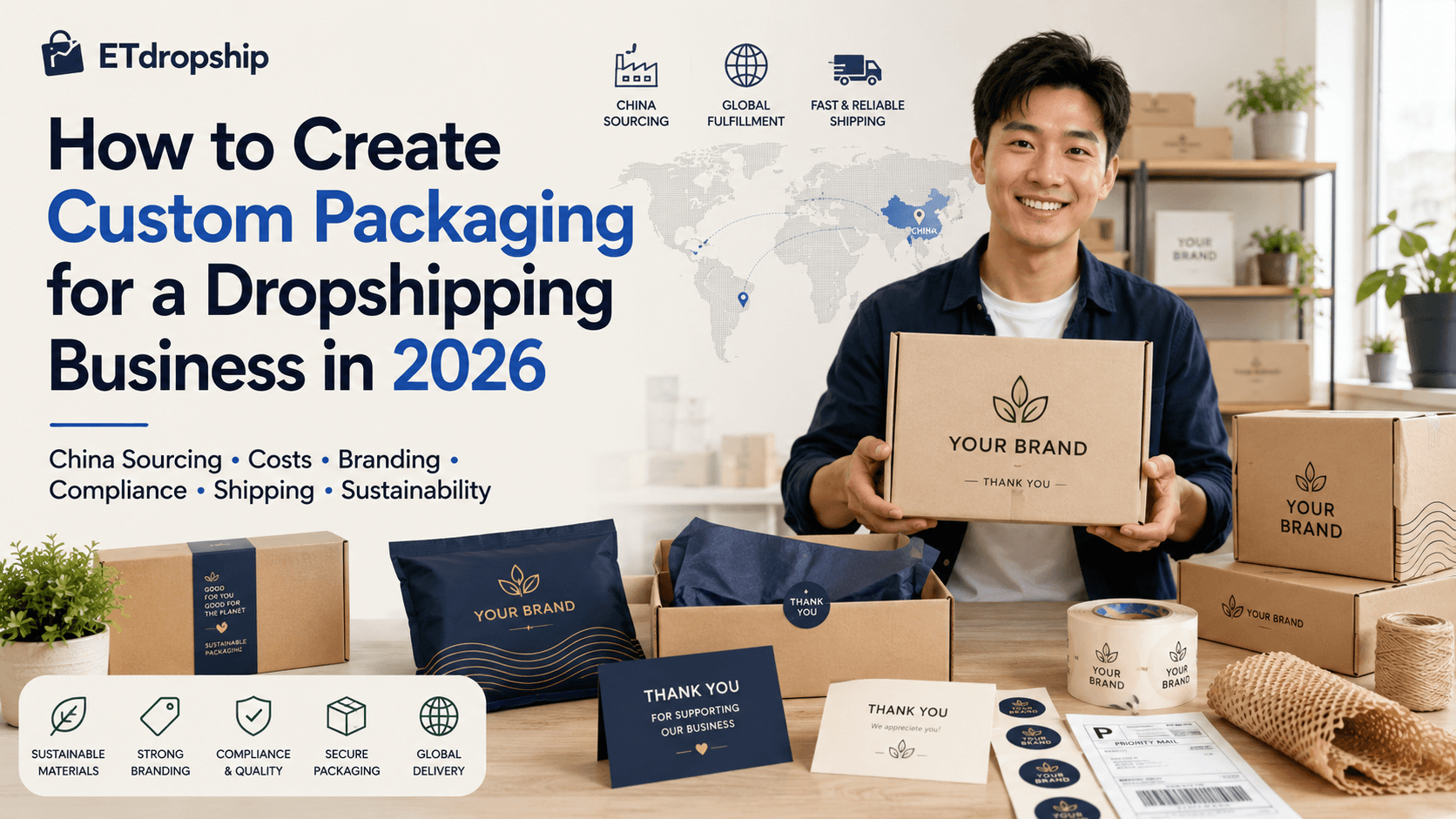
They also upgraded the packaging to a cleaner private bag, added a simple brand sticker and a thank-you card, and kept the outer package discreet. The product did not become a luxury item, but the customer experience became much closer to a real brand.
This product did not become successful because of aggressive advertising or exaggerated product claims. It improved gradually through better bundling, clearer sizing, improved packaging, and more stable fulfillment. For lingerie dropshipping, this kind of improvement often matters more than simply finding a cheaper supplier.
Recommended Suppliers for Different Stages
There is no single “best” supplier for every lingerie store. The right supplier depends on your stage.
In the testing stage, sellers need fast product access, easy integration, and low order requirements. CJdropshipping, EPROLO, AliExpress, and Alibaba can be useful at this stage.
CJdropshipping is suitable for early product research and basic fulfillment. It can be used to test seamless underwear, basic lingerie, pajamas, light shapewear, and sports bras. The main advantage is convenience. The main risk is product quality inconsistency, so samples should be checked before serious advertising.
EPROLO is better for sellers who want to build some brand feel early. It is more suitable for products such as pajamas, basic lingerie, women’s innerwear, loungewear, and light branded products. It can also support customized packaging, labels, hang tags, and gift cards, which is useful for sellers who want to move beyond a generic dropshipping store.
AliExpress and Alibaba are useful for product research, trend discovery, and price comparison. They are good places to find ideas, but they are not always ideal for long-term direct fulfillment. Product quality, shipping time, packaging, and after-sales support can vary a lot. A better approach is to use them for research, then work with a sourcing agent or fulfillment partner to find more stable supply.
For sellers targeting the United States, United Kingdom, Canada, Australia, or Europe, platforms such as Spocket, Trendsi, Syncee, and Modalyst may be worth considering.
Spocket is better for sellers who want products with a Western market style and potentially better local shipping options. It can be useful for pajamas, loungewear, basic lingerie, women’s comfort apparel, and lifestyle products. Costs are usually higher than China-based suppliers, so the product positioning needs to support a higher selling price.
Trendsi is more suitable for women’s fashion, pajamas, loungewear, light lingerie, and lifestyle-based product lines. It works better for stores that want to look like a women’s lifestyle brand rather than a low-price lingerie store.
Syncee is more like a supplier marketplace. It can be useful for finding suppliers in the United States, Canada, the United Kingdom, the European Union, Australia, and other regions. It is not always the best place to find the lowest price, but it can help sellers discover niche brands, loungewear suppliers, pajama suppliers, and women’s fashion products.
Modalyst is more suitable for boutique-style stores, higher-ticket fashion products, and more design-focused product lines. It may not be the best choice for low-cost seamless underwear, but it can work for stores positioned around premium, giftable, or lifestyle products.
Once a product starts selling consistently, the supplier strategy should change. At that stage, the priority is no longer finding more new products. The focus should be quality control, stable inventory, better packaging, faster fulfillment, and reliable after-sales support.
For this stage, HyperSKU, Zendrop, EPROLO, or private sourcing and fulfillment agents such as ETdropship can be more suitable.
HyperSKU is useful for sellers who already have some order volume and want better sourcing, quality checks, custom branding, and global fulfillment. It can help optimize the supply chain once a product has proven demand.
Zendrop is suitable for sellers who want more automated fulfillment, private labeling, and custom packaging options. It can work for basic lingerie items, giftable products, bundles, and light branded products.
ETdropship or similar private sourcing and fulfillment services are better for sellers who want long-term brand development. Lingerie requires close attention to fabric, sizing, color consistency, packaging, inventory, quality inspection, and customer service. Platform suppliers can be helpful for testing, but one-on-one sourcing and fulfillment support becomes more valuable when a seller wants custom packaging, product inspection, private labels, and stable shipping.
Product Recommendations by Store Positioning
One of the biggest mistakes in lingerie dropshipping is choosing products too randomly. A store that sells seamless underwear, pajamas, shapewear, socks, storage bags, swimwear, and unrelated accessories can quickly feel like a general store.
A better approach is to choose products based on store positioning.
For a comfort basics store, the main products can be seamless underwear, wireless bras, cotton underwear, and basic color multipacks. The product page should focus on comfort, soft fabric, daily wear, clear sizing, and bundle offers.
For a women’s loungewear lifestyle store, the main products can be pajama sets, soft loungewear, camisole sleepwear, light innerwear, socks, and storage bags. This positioning works well with suppliers such as Spocket, Trendsi, Syncee, and Modalyst. It also gives more room for gift campaigns and branded packaging.
For a sporty comfort store, the main products can be sports bras, high-waisted workout shorts, yoga tops, light support bras, and seamless underwear. The content can focus on home workouts, yoga, walking, travel, and active daily routines.
For a light shapewear store, the main products can be light shaping shorts, seamless shaping shorts, high-waisted smoothing shorts, and outfit-friendly undergarments. The copy should stay realistic and focus on comfort, smooth outfit appearance, and everyday wear. Avoid exaggerated claims.
Do Not Customize Too Early
Many sellers hear that lingerie is good for branding and immediately want custom labels, hang tags, packaging bags, gift boxes, or even OEM production. The idea is not wrong, but the timing matters.
Before a product has been tested, heavy customization is risky. At that stage, you do not yet know if customers like the product, whether the sizing works, which colors sell best, or whether the fabric will receive positive feedback. Ordering too much custom inventory too early can create cash flow pressure.
A better path is to test with existing products first. After a product shows signs of conversion, add light branding such as a brand sticker, thank-you card, or simple custom packaging bag. These upgrades are relatively low-risk.
Once the product sells steadily, then it makes sense to consider sewn-in labels, hang tags, gift boxes, custom colors, small-batch customization, and eventually OEM or ODM production.
Lingerie branding should be built step by step. It does not need to be fully customized from day one.
Pajamas and Loungewear Are Easier Entry Points
For beginners who worry about ad restrictions around lingerie, pajamas and loungewear can be a better entry point.
Pajama sets, camisole sleepwear, soft homewear, and lightweight loungewear are easier to present in lifestyle content. They can be marketed around home comfort, travel, gifting, weekends, and seasonal changes. The ads can look natural without overemphasizing the body.
Some sellers originally plan to sell lingerie directly, but later find that pajama sets test more smoothly. Pajamas can become the main product while seamless underwear, soft bras, socks, and storage bags become cross-sell items. This makes the store feel more like a women’s home lifestyle brand rather than a single-product lingerie shop.
This path is beginner-friendly. The content is easier to create, the product pages are easier to write, and the customer acceptance is broader. After the store builds trust, it becomes easier to expand into seamless underwear, wireless bras, and light shapewear.
Product Pages Should Feel Honest
Lingerie product pages should not sound too exaggerated. Customers mainly want to know whether the product is comfortable, whether the size is accurate, whether the fabric is soft, whether it feels tight, whether it changes after washing, whether the package is private, and how long delivery takes.
For example, a seamless underwear product description can say:
“This seamless underwear is made with soft stretch fabric for daily wear, lounging, commuting, and light activity. The smooth edge design helps reduce visible lines under outfits, while the basic color set makes it easy to match with everyday clothing. Please choose your size based on waist and hip measurements. If you are between two sizes, we recommend choosing the larger size for a more comfortable fit.”
This type of copy is not aggressive, but it builds trust. For lingerie, realistic product descriptions often reduce after-sales problems. Size guidance should be especially clear. Hiding sizing details may increase short-term conversions, but it usually leads to more refunds and complaints later.
A Practical 90-Day Testing Plan
For a new store, the first 90 days should be simple and controlled.
During the first 30 days, focus on product research and samples. Choose a few directions such as seamless underwear, pajama sets, sports bras, and light shapewear shorts. Pick one or two products from each direction and check the sample quality, size accuracy, fabric, stitching, packaging, and supplier response.
From day 31 to day 60, begin small-budget testing. Watch the click-through rate, add-to-cart rate, conversion rate, and customer questions. Do not only look at sales. Customer questions about sizing, material, delivery, or fit are useful signals for improving the product page.
From day 61 to day 90, improve the supply chain around the products that show real potential. This may include finding a better supplier, improving packaging, rewriting the size guide, creating bundles, and preparing more stable shipping options. At this stage, services such as HyperSKU, Zendrop, EPROLO, or private sourcing agents like ETdropship can become more useful.
This approach keeps the business controlled. Test first, improve fulfillment second, and build branding third. For most new sellers, this is safer than heavy customization or uploading too many products at once.
Conclusion
Lingerie dropshipping still has strong potential in 2026, but it requires more careful execution than many other dropshipping categories.
The stores that last are not the ones that keep chasing random trending products. They are the ones that build around stable products, clear sizing, comfortable materials, private packaging, reliable shipping, and repeat purchases.
Beginners can start with seamless underwear, pajama sets, sports bras, wireless comfort bras, and light shapewear. In the early stage, platforms such as CJdropshipping, EPROLO, Spocket, and Trendsi can help with testing. In the middle stage, suppliers such as HyperSKU, Zendrop, or private sourcing agents can help improve fulfillment. In the later stage, sellers can gradually add custom packaging, labels, hang tags, and deeper supply chain cooperation.
Lingerie is not the easiest dropshipping category, but it is a category worth taking seriously. With the right products, reliable suppliers, professional packaging, and honest product pages, a simple dropshipping product can gradually become a repeat-purchase brand.
FAQ:
Is lingerie dropshipping suitable for beginners?
Yes, but beginners should avoid overly complicated products at the start. Seamless underwear, pajama sets, sports bras, wireless comfort bras, and light shapewear are better starting points.
Which suppliers are good for testing lingerie products?
CJdropshipping, EPROLO, Spocket, and Trendsi are useful for early testing. CJdropshipping is suitable for product research and basic fulfillment. EPROLO is better for light branding and packaging. Spocket and Trendsi are more suitable for Western-market styles, women’s fashion, pajamas, and loungewear.
Should I order samples before selling lingerie?
Yes. Lingerie is a close-to-body product, so photos are not enough. Samples help you check fabric quality, stretch, stitching, sizing, color accuracy, and packaging.
What are the best lingerie products for dropshipping?
Good starting products include seamless underwear, wireless comfort bras, sports bras, pajama sets, soft loungewear, cotton underwear, and light shapewear shorts.
Is shapewear a good dropshipping product?
Light shapewear can be a good product, but beginners should avoid products with extreme compression or complicated sizing. The product page should focus on comfort, smooth outfit appearance, and daily wear instead of exaggerated claims.
How can I increase the average order value for lingerie products?
Bundles work well. Three-packs, five-packs, color sets, pajama sets, matching sets, gift packaging, and cross-sells such as socks or storage bags can help increase order value.
When should I start custom branding?
Start after the product has shown stable demand. Begin with simple branding such as stickers, thank-you cards, or custom packaging bags. Move to sewn-in labels, hang tags, gift boxes, and OEM production only after sales are more stable.
Is pajama dropshipping easier than lingerie dropshipping?
In many cases, yes. Pajamas and loungewear are easier to advertise, easier to present in lifestyle content, and often better for beginners. They can also help introduce related lingerie products later.
What should I check when choosing a lingerie supplier?
Check sample quality, size charts, stock stability, packaging options, shipping time, tracking updates, quality inspection, return handling, and whether the supplier supports branding or custom packaging.
Can lingerie dropshipping become a real brand?
Yes. Lingerie has strong repeat-purchase potential. With stable quality, clear sizing, private packaging, and reliable fulfillment, a store can gradually move from basic dropshipping to a branded product line.