How to Start Dropshipping in the UK in 2026: A Practical Beginner Guide
The UK remains an attractive ecommerce market, but mature online shoppers compare stores quickly. A product can attract attention and still fail if the page feels unfamiliar, delivery charges appear late, the return policy is unclear, or the customer receives an unexpected tax or customs request.
A beginner therefore needs more than a product and an advertising account. The launch has to connect product selection, UK-facing store content, VAT treatment, delivery expectations, returns, supplier control, and cash flow. Dropshipping reduces the need to buy inventory before testing demand, but it does not remove the seller's responsibility for the customer experience.
Choose a Narrow UK Customer Problem First
Starting with hundreds of unrelated products makes every part of the business harder. Each category needs different creative material, product knowledge, margins, suppliers, compliance checks, and customer support. A narrow use case gives early tests a clearer audience and makes the store easier to trust.
Sellers with limited capital can use the same discipline described in the guide to starting dropshipping with little to no upfront inventory cost: research freely, order samples selectively, and delay larger commitments until the offer produces useful evidence. The objective is not to pretend the business is free; it is to spend in the order that reduces the most uncertainty.
A focused UK launch might begin with compact home-organisation products, pet travel accessories, practical car accessories, selected beauty tools, or another clearly defined problem. Avoid choosing a category only because the total market looks large. The product still needs a demonstrable benefit, a viable delivered cost, manageable return reasons, and enough differentiation to avoid competing only on price.
Validate the Product Before Building a Large Store
Create a shortlist rather than importing an entire supplier catalogue. Compare the factory price, packaged dimensions, chargeable weight, delivery route, selling price, likely advertising cost, defect risk, and whether the product can be explained through original content. Remove products whose economics depend on unrealistically low returns or perfect advertising performance.
Order the exact version that customers will receive. Check processing time, packaging, material, dimensions, accessories, instructions, tracking activation, and delivery. A UK product page should use the measurements, terminology, spelling, currency, plug type, and expectations appropriate to the intended buyer. Supplier photographs should not substitute for verifying the physical item.
Build a UK-Facing Store That Removes Uncertainty
Trust comes from consistency rather than decorative design. The product page, cart, shipping policy, return policy, contact details, checkout, confirmation email, and tracking information should tell the same story. Display prices and charges clearly, use natural UK English, explain what is included, and avoid claims that the sample or documentation cannot support.
Delivery wording must reflect the real route rather than the fastest result from one test. If processing normally requires two days and transit usually requires seven, the page should not advertise three-day delivery. Customers are more likely to accept a reasonable timetable that is stated before payment than a shorter promise that repeatedly fails.
Understand UK VAT Before Accepting Orders
UK VAT cannot be reduced to one rule or a single registration threshold. The correct treatment depends on where the goods are located at the point of sale, whether the seller sells directly or through an online marketplace, the customer's status, and the value and composition of the consignment.
For goods outside the UK that are sold directly to UK consumers in consignments with an intrinsic value of £135 or less, HMRC guidance generally requires VAT to be collected at the point of sale. When an online marketplace facilitates a qualifying sale, the marketplace may be responsible for collecting and accounting for VAT. Consignments above £135 normally follow import VAT and, where applicable, customs-duty rules at import. Goods already located in the UK can follow a different treatment.
The £135 test applies to the total consignment rather than each item viewed separately. Northern Ireland may also require different analysis from Great Britain. Before launch, the seller should document the sales channel, stock location, consignment value, importer arrangement, invoice flow, and who accounts for VAT. Professional UK tax advice is appropriate when the facts are unclear.
Plan Returns Before Writing the Policy
UK online and distance-selling rules generally give consumers 14 days after delivery to tell the seller they want to cancel, subject to exceptions. After notifying the seller, the customer generally has another 14 days to return the goods. The store must also handle faulty, misdescribed, or unsuitable goods according to applicable consumer law; a policy cannot remove statutory rights.
A practical dropshipping operation must decide where returns go, who issues instructions, who pays return postage in each scenario, how the item is inspected, and when the refund is released. If every return must travel internationally, the cost may exceed the product value. That risk belongs in the margin calculation before the product is advertised.
Choose Delivery Based on the Promise You Can Maintain
A carrier should be evaluated by destination coverage, tracking quality, customs handling, claim procedures, chargeable-weight rules, restricted products, and consistent transit performance. The broader framework for choosing a dropshipping logistics company is more useful than selecting a route only because its headline price is low.
For cross-border orders, decide whether the customer could be asked to pay VAT, duty, or a handling fee on arrival. Unexpected charges increase refusals and support tickets. The store, checkout, shipping method, commercial invoice data, and carrier arrangement must align; changing the wording on the product page cannot fix an unsuitable customs setup.
Use test orders to more than one UK postcode and measure processing time separately from transit time. Record when tracking becomes active, whether delivery attempts are clear, and how exceptions are handled. Publish a delivery range that the operation can meet consistently, including busy periods.
Treat Content as Product Validation
Short-form video can help a beginner test whether UK customers immediately understand the product. Useful content shows a real situation, the product in use, its scale, and a credible result. Comments, saves, product questions, profile visits, and add-to-cart behaviour can reveal more than raw views.
Content should not compensate for a weak offer by exaggerating performance. If the product requires long explanation, has no visible advantage, or creates repeated compatibility questions, the seller may need a different angle or a different product. Original content also reduces dependence on supplier media used by many competing stores.
Calculate Profit With Returns and Tax Included
Gross margin based only on selling price minus supplier price is misleading. The complete calculation should include the product, domestic purchasing costs, inspection, packaging, international delivery, VAT or import treatment, payment fees, advertising, refunds, reshipments, return handling, software, and customer support.
Cash flow deserves separate attention. Platforms can delay payouts while suppliers, carriers, refunds, and advertising still require payment. A store may show accounting profit and still be unable to fulfil new orders. Keep operating room for existing customer obligations rather than committing all available cash to traffic.
Scale Fulfillment Only After the Product Is Stable
Per-order purchasing preserves flexibility during testing, but it can become slower and less predictable as volume grows. A product is ready for deeper operational investment when demand repeats, the supplier maintains specifications, delivery performance is measurable, return reasons are understood, and the margin can support improvement.
Stable UK sales may justify a small buffer rather than an immediate large purchase. A shared inventory pool for cross-border sales can help a seller allocate proven stock across markets while preserving visibility, but only when SKU data, order routing, and replenishment rules are reliable.
A UK warehouse can shorten local delivery and make returns easier, but it introduces storage, receiving, inventory, and tax questions. Compare the expected conversion and service improvement with the complete additional cost. Inventory should follow evidence from real orders, not an optimistic forecast.
Keep the UK Strategy Distinct but Connected to Europe
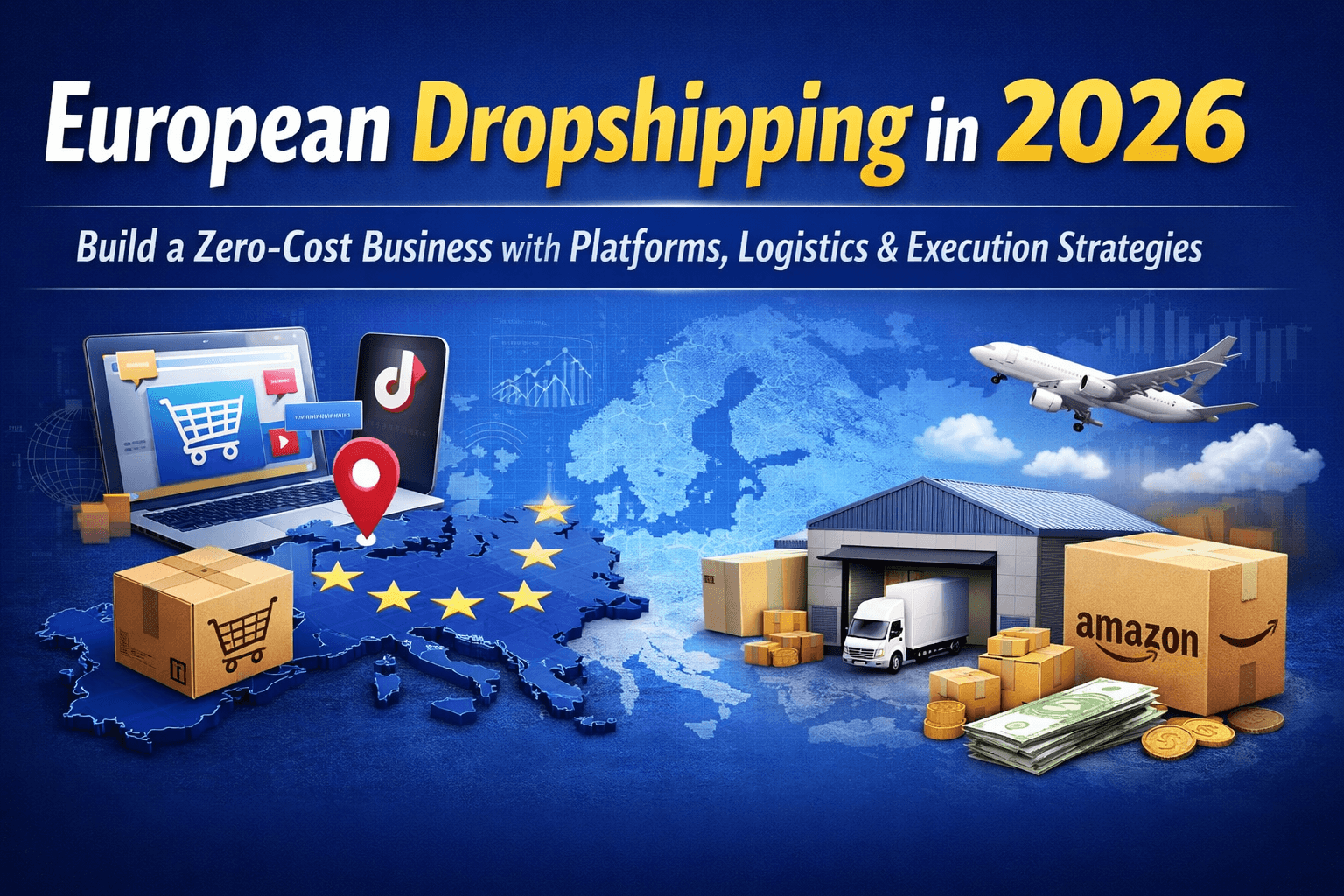
The UK is geographically close to EU markets but is not part of the EU VAT and customs system. Sellers comparing expansion options can use the broader European dropshipping guide for regional planning, while maintaining separate UK tax, customs, return, and delivery workflows.
Do not copy an EU checkout or fulfilment setup and assume it works unchanged in the UK. Product compliance, importer responsibilities, VAT collection, customs data, consumer information, and available delivery routes should be checked for the actual product and selling arrangement.
A Practical Launch Sequence
Begin with one customer problem and a small product shortlist. Compare real delivered economics, order samples, and create UK-facing content. Build only the store pages required to explain the offer clearly. Confirm VAT, customs, consumer information, returns, and delivery before accepting meaningful traffic.
Place test orders, then launch with controlled content or advertising. Review conversion, customer questions, delivery exceptions, returns, and contribution margin. Improve sourcing and fulfilment only after the data shows that the product deserves additional investment. This sequence keeps the business flexible without treating customer obligations as optional.
Frequently Asked Questions
Is dropshipping legal in the UK?
Yes, dropshipping is a business model rather than a prohibited activity. The seller must still comply with applicable company, tax, customs, product, advertising, data-protection, and consumer requirements.
Do overseas dropshippers need to register for UK VAT?
It depends on the transaction. Stock location, sales channel, customer type, consignment value, and whether a marketplace facilitates the sale all matter. Direct sales of qualifying overseas goods in consignments of £135 or less commonly require point-of-sale VAT treatment. Check current HMRC guidance for the exact arrangement.
What does the £135 UK VAT limit mean?
It generally refers to the intrinsic value of the total consignment, not each individual product. Different rules may apply above the threshold, to excise goods, to goods already in the UK, or to marketplace sales.
Do UK customers have 14 days to return online purchases?
For many distance sales, customers generally have 14 days after delivery to notify the seller that they wish to cancel, then another 14 days to return the goods. Exceptions and separate rights for faulty goods apply.
Is a UK warehouse required?
No. Cross-border fulfilment can be used during testing. Local inventory becomes worth evaluating when stable demand makes faster delivery, consolidated stock, or local return handling valuable enough to justify the additional cost and obligations.
Which products are easier for UK beginners?
Products with a clear use case, compact packaging, manageable compliance risk, reliable quality, and enough margin after delivery and returns are easier to test than bulky, fragile, ingestible, or technically complex products.
How fast should UK dropshipping delivery be?
There is no universal time. The seller should use a tracked route and publish a realistic range based on actual processing and transit tests. Consistency and clear pre-purchase disclosure matter more than an unsupported headline promise.
Can one store sell to both the UK and EU?
Yes, but the business should not treat them as one tax and customs market. Separate checkout, VAT, customs, product, return, and delivery requirements may apply.
Conclusion
Starting dropshipping in the UK in 2026 is less about launching the largest catalogue and more about building a controlled path from product evidence to reliable delivery. A narrow offer, accurate UK-facing content, workable margins, correct VAT treatment, clear returns, and tested logistics create a stronger foundation than traffic alone.
Keep inventory light while uncertainty is high. Once a product produces repeatable demand and acceptable customer outcomes, strengthen the supplier, delivery route, return handling, and inventory position in that order. The purpose of dropshipping is to learn before making large commitments—not to postpone responsibilities after customers have paid.