Dropshipping in Romania for Beginners: A Practical 2026 Guide
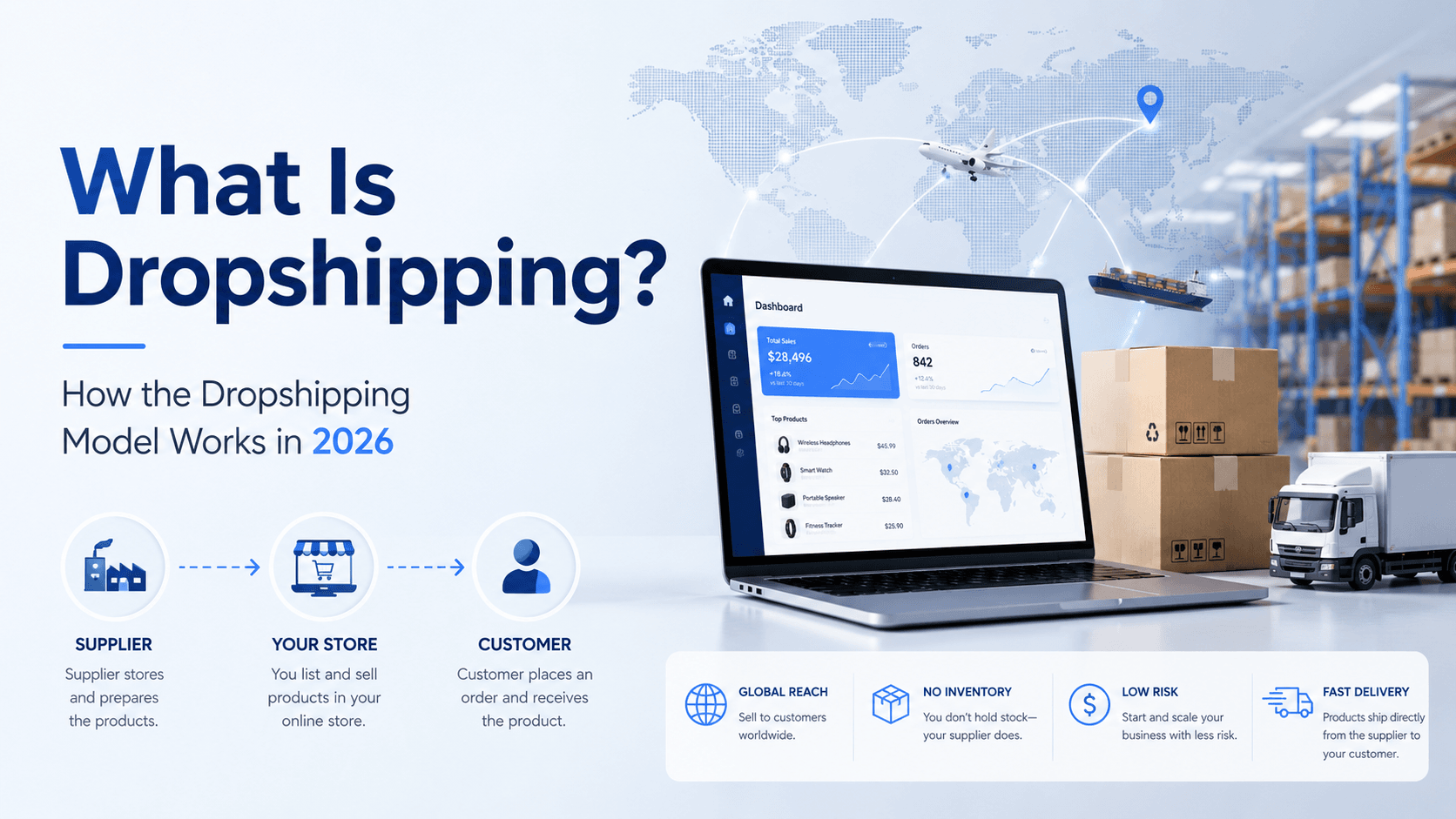
Romania can be a useful market for a focused ecommerce business, but it should not be sold as an effortless “zero-cost” opportunity. A store can avoid buying large inventory before demand is proven, yet it still needs samples, accurate product pages, payment processing, customer support, tax planning, delivery testing, and a budget for refunds or failed orders. The advantage of dropshipping is controlled exposure, not the absence of cost or responsibility.
A Romania-specific plan should account for Romanian-language communication, prices that customers can understand, EU consumer rules, local payment preferences, cash-on-delivery risk, and the real cost of delivering from the supplier to the customer. The store remains responsible for the offer even when another company packs and ships the order.
Define a Narrow Romanian Customer and Use Case
Do not begin with “Romania” as if it were a product niche. Begin with a specific customer, problem, and buying situation. A compact organizer for apartment living, a practical car accessory, a pet-cleaning tool, or a seasonal household product gives the store a clearer proposition than a catalogue of unrelated viral items. The same clarity helps advertising, organic content, product-page structure, and customer support.
A new site is also more likely to earn search traffic from a useful long-tail topic than from broad phrases such as “best products” or “dropshipping.” Build product and informational pages around a real use case, compatibility issue, maintenance problem, or local buying concern. This reduces keyword competition and prevents the country guide from competing with the site’s general dropshipping articles.
Select Products With Content, Commercial, and Operational Tests
Every candidate should pass three connected tests. The content test asks whether the benefit can be shown clearly in a photo or short demonstration. The commercial test asks whether the selling price can cover the complete order cost. The operational test asks whether the correct variant can be sourced, checked, packed, delivered, and supported without unacceptable variation.
Small, durable products with a clear everyday use are generally easier to test than fragile glass, liquids, complicated electronics, products with health claims, or apparel with difficult sizing. An impulse-friendly video is not enough. If the parcel is expensive, the material changes between batches, the instructions are unclear, or the return cost is disproportionate, attention may turn into complaints instead of profit.
Localize the Decision Path, Not Only the Homepage
Romanian customers may understand English, but comprehension is not the same as purchase confidence. Translate the parts that affect the decision first: product title, core benefit, size and material details, compatibility, price, delivery estimate, payment explanation, return conditions, order confirmation, tracking messages, and customer-service replies. Machine translation should be reviewed by a fluent speaker before advertising.
Localization also includes currency and tone. If checkout charges in a currency different from the price customers first see, explain the final billing clearly. Avoid unnatural urgency, exaggerated discounts, and claims that sound copied from a supplier. A concise Romanian explanation of what arrives, when it arrives, and what happens if there is a problem can contribute more trust than decorative badges.
Set Up VAT and Import Handling Before Scaling
Romania is part of the EU VAT and consumer-protection framework. The tax treatment depends on where the seller is established, where stock is held, how goods reach the customer, the value of the consignment, and whether a marketplace is involved. Cross-border EU distance sales may use the One Stop Shop, while the Import One Stop Shop can apply to eligible imported consignments up to the scheme’s value limit. These systems simplify reporting; they do not remove the need to determine the correct treatment.
Show the customer the total payable price, including taxes and unavoidable charges, before the order is placed. Do not copy an old VAT rate or assume that every product uses the standard rate. Romania changed important tax rules recently, and rates or product treatment can change again. Confirm the current rate and registration position with official sources or a qualified adviser for the actual business.
For direct imports, agree who is responsible for customs information and charges. Product description, value, quantity, origin, classification, and supporting documents must be accurate. A low freight quote is not a complete landed-cost plan if the customer later receives an unexpected tax or clearance request.
Build COD as an Operating Process, Not a Checkout Toggle
Cash on delivery can reduce a customer’s hesitation about paying an unfamiliar store, but it also changes cash flow and risk. The order may be refused at the door, the address may be incomplete, the customer may be unreachable, or the parcel may return after outbound and return transport have already been incurred. COD revenue is not earned when the order form is submitted; it is earned only after successful delivery and settlement.
Confirm the customer’s name, telephone number, complete address, county, locality, postal code, selected variant, total amount, and expected delivery window before dispatch. For unusual quantities, high-value orders, repeated failed customers, or inconsistent contact details, use manual review. Confirmation should be short and respectful, not a sequence of promotional messages.
Track COD confirmation rate, dispatch rate, first-attempt delivery, refusal, non-contact, return-to-sender cost, settlement delay, and net contribution by product and campaign. If a creative produces many unconfirmed orders, the problem may be low-quality demand rather than the courier. If refusals cluster around long delivery times, the offer and fulfillment promise need attention.
Offer Online Payments Without Creating Checkout Friction
A Romania-focused store should not assume that COD is the only trust mechanism. Card and wallet payments can improve cash flow and reduce delivery refusal risk, but the checkout must explain the merchant, price, taxes, shipping, and refund process clearly. Use established payment providers, secure account access, sensible fraud review, and a billing descriptor customers can recognize.
The detailed guide to secure payment setup for dropshipping stores covers gateway selection, 3D Secure, fraud checks, evidence retention, disputes, and honest shipping policies. Those controls are useful alongside COD because the two payment paths create different risks and should not be measured as one blended conversion rate.
Compare COD and prepaid orders by completed delivery and retained contribution, not checkout conversion alone. A campaign that generates fewer prepaid orders may be more valuable than one that produces many COD forms followed by refusals. Payment method is part of the operating model, so it should be tested together with delivery speed, product price, and customer segment.
Validate the Exact Supplier and Product
Send every supplier the same written specification: materials, dimensions, colour, included accessories, packaging, available variants, processing time, inventory updates, replacement responsibility, and supported shipping routes. Order the exact sample customers will receive. Review workmanship, smell, finish, instructions, electrical or moving parts, packaging strength, and whether the item matches the listing.
AliExpress can be useful during early tests because it reduces commitment, but a marketplace listing does not guarantee stable inventory or consistent production. The practical signs that it is time to move beyond AliExpress include repeat orders, unreliable stock, price changes, inconsistent packaging, slow issue resolution, and the need for a controlled specification. Upgrade only the products that have earned the investment.
A backup supplier is helpful only if its version has also been sampled. Replacing the factory, material, dimensions, or packaging without approval can turn one product listing into several inconsistent products. Record the approved sample and permitted tolerances before volume makes emergency substitution more likely.
Price From the Completed Order
The margin is not retail price minus factory price. Start with the amount collected from a successfully delivered order, then subtract product cost, packed shipping, VAT and duties borne by the seller, payment fees or COD handling, platform and app charges, advertising or content cost, discounts, refusals, returns, reshipments, chargebacks, and customer support. Fixed costs such as accounting and software still remain after contribution is calculated.
Run separate scenarios for prepaid and COD orders. For COD, include confirmation labour, failed-delivery probability, return transport, and the time before funds are settled. For direct international shipping, include volumetric weight and route variability. A product with an attractive unit margin can become unprofitable when refusals or bulky packaging are added.
Bundles can improve average order value when the products belong together, but the final parcel must still be tested. Adding one item may change the chargeable weight or carton size enough to remove the benefit. Base pricing on measured parcels and completed-order data rather than supplier estimates alone.
Create a Delivery Promise From Real Test Parcels
The customer-facing delivery estimate must include supplier processing, warehouse handling, international transport, customs, local handoff, and final delivery. Do not advertise the carrier’s best transit time as the full order timeline. Send test parcels to representative Romanian destinations and record payment-to-dispatch time, tracking activation, customs events, first delivery attempt, and successful receipt.
Use a clear delivery range and explain when tracking normally begins to update. For COD orders, provide the amount due and the expected handoff process. For prepaid orders, proactive confirmation and tracking reduce uncertainty. The goal is not to promise the fastest possible day; it is to make a promise the selected route can repeatedly support.
Treat Delivery and Returns as One System
EU distance-selling rules generally provide consumers with a 14-day withdrawal period after delivery for most online goods, subject to exceptions and required information. The store should state the return window, item condition, exclusions, return destination, who pays return postage, and how refunds are issued. Personalized, hygiene-sensitive, or other exempt products need careful product-specific review rather than a blanket “no returns” statement.
A return address must be operational. Sending low-value goods internationally may cost more than replacement or refund, while COD refusals create a different reverse-logistics process. Decide in advance how the business handles refusal, damage, incorrect items, loss, delayed parcels, and products that do not match the approved specification.
When a parcel stalls or fails, a documented shipping exception process gives support staff clear checkpoints for contacting the carrier, requesting evidence, updating the customer, and choosing reshipment or refund. This prevents every delayed order from becoming an improvised decision.
Use Content to Qualify Demand Instead of Inflating It
Short-form video can work when the product demonstrates a real problem and result, but Romania should not be reduced to a claim that every purchase begins on TikTok. Search, social platforms, marketplaces, referrals, and retargeting can serve different buying situations. Choose the channel according to whether customers already search for the solution or need to see the use case first.
Test several honest creative angles without changing the underlying offer. Show scale, materials, setup, limitations, and the result customers can reasonably expect. Monitor qualified visits, completed checkouts, confirmed COD orders, successful deliveries, refund reasons, and contribution. Views and submitted forms are weak signals if customers do not accept the parcel.
Scale Only After the First Fulfillment Cycles Are Complete
Do not move inventory or sharply increase advertising after one successful day. Review several completed delivery cycles and confirm that the same variant stays available, quality matches the sample, processing and delivery meet the published range, COD refusal is understood, and contribution remains positive after returns and support.
When demand becomes repeatable, negotiate stable specifications, add a tested backup source, and consider a small buffer for proven variants. Better sourcing or regional inventory should solve a measured constraint such as stockouts, dispatch delay, high freight cost, or missed delivery expectations. It should not be added merely because the store reached an arbitrary order count.
If the operating model later expands into nearby markets, use separate localization and economics rather than copying the Romanian setup. The existing Hungary dropshipping guide is a useful example of how VAT, language, payments, delivery, and product fit need to be recalculated for another Central or Eastern European market.
Frequently Asked Questions
Is dropshipping legal in Romania?
Dropshipping is generally a legal fulfillment model, but the seller must follow applicable business, VAT, customs, consumer, product-safety, privacy, advertising, and platform rules. The exact obligations depend on the seller, product, stock location, and transaction structure.
Can I start Romania dropshipping with no inventory?
Yes, products can be fulfilled after an order is received, but the business still needs funds for samples, store operation, marketing, order payment timing, returns, failed deliveries, and support. “No inventory” does not mean “no cost.”
Should a Romanian dropshipping store offer cash on delivery?
COD may be useful for some customers and products, but it is not automatically required or profitable. Confirm orders, model refusal and return costs, and compare completed-order contribution with prepaid transactions.
Should prices be displayed in Romanian lei?
Displaying familiar local pricing can reduce confusion. The store should clearly show the final amount, currency, taxes, delivery charges, and any unavoidable fees before purchase, especially if settlement or the payment provider uses another currency.
Does IOSS apply to every parcel sent to Romania?
No. IOSS is designed for eligible distance sales of imported goods within its consignment-value limit and has specific conditions. The correct VAT and import process depends on the order, seller, marketplace, and shipping arrangement.
How long should delivery to Romania take?
There is no universal number. Measure the actual route from order placement through processing, customs, local delivery, and receipt, then publish a realistic range. Predictability and accurate updates are more valuable than an unsupported best-case promise.
Do Romanian customers have a right to return online purchases?
EU distance-selling rules generally provide a 14-day withdrawal period for most online goods, with exceptions and information requirements. Sellers should verify the exact rules for their products and provide an operational return process.
When should I use an EU warehouse?
Consider regional inventory after a specific SKU shows repeatable demand, stable quality, acceptable return or refusal rates, and predictable replenishment. Inventory should solve a measured delivery or cost problem, not precede product validation.
Conclusion
Dropshipping in Romania for beginners works best as a controlled market test, not a promise of effortless sales. Choose a narrow use case, localize the decision path, determine VAT and import handling, compare COD with prepaid payments, verify the exact product, calculate completed-order contribution, and publish a delivery and return process that can actually be operated.
The first success metric is not traffic or submitted orders. It is a successfully delivered order that matches the listing, leaves positive contribution after payment and after-sales costs, and gives the business reliable evidence for the next decision. Scale only when that result repeats.