Best White Label Dropshipping Suppliers for Shopify in 2026: Upgrade from Basic Dropshipping to a Branded Business
In 2026, Shopify dropshipping has entered a new stage. In the past, many sellers could simply find a low-cost product from AliExpress, Temu, or a general dropshipping platform, upload it to their Shopify store, and promote it through Facebook Ads, TikTok Ads, or Google Ads. But the market has changed. Consumers are now better at identifying ordinary dropshipping products, advertising costs are higher, and relying only on cheap products or temporary winning products is no longer enough to build a long-term business.
For Shopify sellers who want to build a sustainable independent store, white label dropshipping is becoming increasingly important. White label dropshipping is not just about selling a product. It is about making the customer feel that the product belongs to your brand. In Shopify’s own content about branded dropshipping, Shopify also emphasizes that sellers should look for suppliers that can provide custom packaging, branded inserts, and consistent product quality.
In other words, if Shopify sellers in 2026 are still only focused on “finding products, uploading listings, running ads, and waiting for orders,” they will easily fall into intense competition. The real opportunity is to turn ordinary products into branded products, and to turn a basic package into a complete unboxing experience.
What Is Shopify White Label Dropshipping?
Shopify white label dropshipping means selling products under your own brand through a Shopify store, while a third-party supplier handles product production, sourcing, warehousing, packaging, and shipping. After a customer places an order on your Shopify store, the supplier ships the product directly to the customer, while the product, packaging, label, manual, or insert card can carry your brand identity.
The biggest difference between ordinary dropshipping and white label dropshipping is whether the customer can feel that they are buying from a real brand.
Ordinary dropshipping usually works like this: after a customer places an order, the supplier ships the product in generic packaging. The product has no logo, and the package does not include a branded card, instruction manual, or after-sales guide. After receiving the product, the customer may feel that it is just a generic item, or even suspect that it came from a low-cost marketplace.
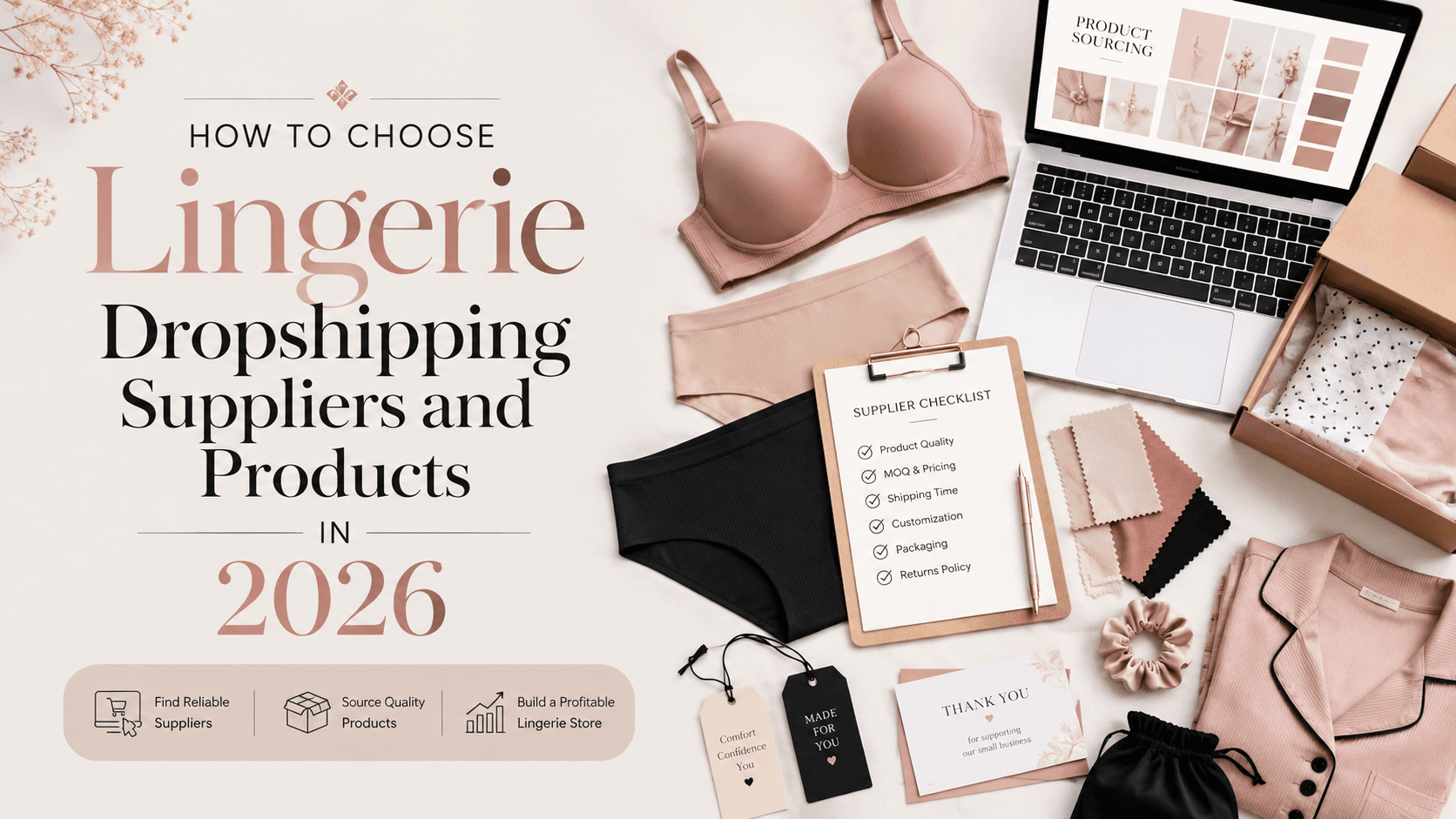
White label dropshipping is different. When the customer receives the product, they may see your brand name, brand colors, logo, thank-you card, instruction manual, custom packaging bag, or custom packaging box. This not only increases trust, but also helps customers remember your store.
For Shopify sellers, the value of white label dropshipping mainly comes from four areas. First, it makes the product look more professional. Second, it reduces the cheap feeling often associated with ordinary dropshipping. Third, it helps the store build brand assets. Fourth, it creates a foundation for repeat purchases, email marketing, membership programs, and customer retention.
Why Shopify Sellers Need White Label Dropshipping More in 2026
1. Ordinary Winning Products Are Easier to Copy
Today, most product research tools, ad spy tools, and competitor analysis tools are already very advanced. Once a product starts selling well, other sellers can quickly discover it. They can use similar creatives, similar landing pages, and similar pricing to compete with you.
If your product has no brand differentiation, customers will only compare price, shipping time, and reviews. As a result, profit margins become thinner and thinner.
White label dropshipping helps you build a brand barrier beyond the product itself. Even if the product is similar, your packaging, brand story, instruction manual, after-sales experience, and customer communication can create a different impression.
2. Rising Advertising Costs Require Higher Conversion Rates and Average Order Value
Unlike Amazon, a Shopify independent store does not automatically come with marketplace trust. When customers enter your website, they judge whether they should buy based on your visual design, product page, reviews, shipping policy, return policy, and brand presentation.
If your product page looks ordinary and the packaging has no brand identity, customers may hesitate, which lowers your conversion rate. On the other hand, if your product page shows branded packaging, unboxing photos, branded cards, clear usage instructions, and after-sales support, customers are more likely to believe that your store is a serious brand.
The purpose of white label dropshipping is not only to make the package look better. It is to make your product easier to sell at a higher price.
3. Customers Care More About the Shopping Experience
Consumers in 2026 are not only buying products. They are also buying the experience. This is especially true for categories such as pet products, beauty and skincare, clothing accessories, home products, gifts, sports equipment, and baby products. Packaging and branding can strongly influence the customer’s first impression.
For Shopify sellers, this is exactly why white label dropshipping matters. You can use thank-you cards, discount codes, usage instructions, after-sales cards, and social media follow prompts to turn one order into a starting point for future repeat purchases and brand interaction.
Key Standards for Choosing a Shopify White Label Dropshipping Supplier in 2026
1. Whether the Supplier Truly Supports Brand Customization
Some suppliers say they offer “white label” service, but what they actually provide is only unbranded shipping. This can prevent customers from seeing supplier information, but it is not true branding.
A white label supplier suitable for Shopify sellers should at least support services such as product logos, brand labels, hang tags, custom packaging bags, custom packaging boxes, branded inserts, thank-you cards, instruction manuals, after-sales cards, barcode labels, SKU labels, and carton labels.
If the supplier is more advanced, they may also support custom product colors, materials, sizes, styles, accessories, light customization, OEM, or ODM development. For Shopify sellers who want to build a long-term brand, this deeper supply chain capability is very important.
2. Whether It Is Suitable for Small-Batch Testing
Traditional factories often require high MOQs for white label production. For example, they may require 500 units, 1,000 units, or even more. For new Shopify sellers, holding a large amount of inventory from the beginning can be very risky.
A better white label supplier for Shopify sellers should allow sellers to start with light customization. For example, you can begin with branded cards, stickers, packaging bags, and hang tags. After orders become stable, you can upgrade to product logos, custom packaging boxes, or product structure improvements.
White label dropshipping should not require heavy investment from day one. It should be a gradual upgrade process.
3. Whether It Can Connect with Shopify and Process Orders Automatically
If a supplier cannot connect with Shopify, the seller has to manually export orders, send them to the supplier, and upload tracking numbers. This may be manageable when order volume is low, but once orders increase, wrong shipments, missing shipments, delayed tracking updates, and after-sales issues become much more common.
A strong Shopify white label dropshipping supplier should ideally support automatic order syncing, inventory syncing, fulfillment status updates, and tracking number uploads. This allows sellers to focus more on product selection, advertising, content, customer service, and brand building instead of handling repetitive order spreadsheets every day.
4. Whether It Has Quality Inspection Capabilities
The biggest risk in white label dropshipping is not that the product costs slightly more. The real risk is unstable product quality. When customers receive the product, they remember your brand, not the supplier behind it.
That is why pre-shipment quality inspection is important. This is especially true for clothing, beauty tools, electronic accessories, pet products, home products, and gift items. Size, color, packaging condition, accessory quantity, and appearance all need to be checked.
Without quality inspection, sellers may face more refunds, negative reviews, complaints, and PayPal disputes. In the long run, this can affect ad accounts, payment accounts, and brand reputation.
5. Whether It Can Handle After-Sales and Order Exceptions
A good white label supplier does not only ship products. It also helps solve problems, such as delayed packages, tracking numbers with no updates, incorrect customer addresses, damaged products, wrong items, missing items, returns, replacements, and order cancellations.
Many new sellers only look at product price and ignore after-sales support. In reality, after-sales efficiency directly affects customer satisfaction and store performance. A supplier that can help handle abnormal orders quickly is often more valuable than a supplier that is only slightly cheaper.
Best Shopify White Label Dropshipping Suppliers in 2026
1. ETdropship: Best for Shopify Sellers Who Want to Build Branded Products Through the China Supply Chain
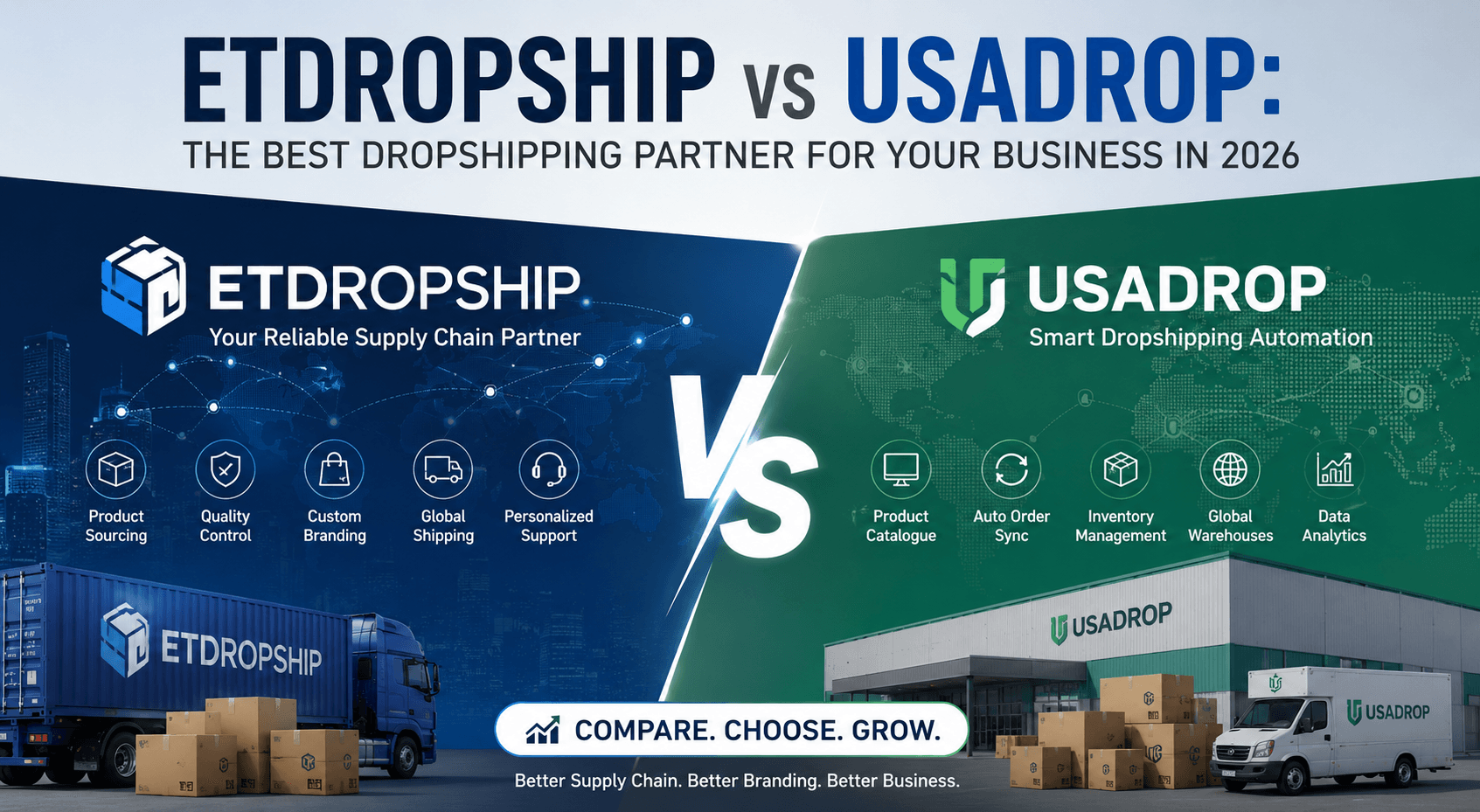
ETdropship is more suitable for Shopify sellers who are not satisfied with ordinary dropshipping and want to source products from the China supply chain, reduce procurement costs, and gradually upgrade to branded fulfillment. ETdropship provides product sourcing, procurement, order processing, custom packaging, global shipping, Shopify order synchronization, customer support, custom packaging, labeling, logo design, factory sourcing, and custom production support.
For Shopify sellers, the value of ETdropship is not simply “helping you ship products.” It is closer to a complete supply chain partner. Many sellers use general dropshipping platforms in the early stage to test products. Once their ads begin to generate data, they often face several problems: product costs are not low enough, packaging has no brand identity, supplier communication is inefficient, quality inspection is unstable, and no one helps handle order exceptions. At this stage, relying only on an automation app is no longer enough.
ETdropship is more suitable for helping sellers upgrade from ordinary dropshipping to white label branded dropshipping. You can start by testing existing products. Once a product has stable orders, you can gradually add branded cards, product labels, custom packaging bags, custom packaging boxes, instruction manuals, thank-you cards, logo printing, or light customization services.
This model is suitable for many categories, including pet products, home products, sports accessories, beauty tools, clothing accessories, gifts, baby products, electronic accessories, and travel products. Especially when sellers need flexible factory sourcing, price comparison, sampling, quality inspection, and after-sales support, a supply chain service provider can be much more useful than a simple product-import app.
ETdropship is suitable for sellers who already have a Shopify store, want to reduce sourcing costs, need product sourcing, need custom packaging, want to build their own brand, and want support with procurement and fulfillment details.
2. Supliful: Best for Supplements, Coffee, Skincare, and Wellness Brands
Supliful is a typical white label dropshipping platform, especially suitable for Shopify sellers who want to sell supplements, skincare, coffee, and wellness products. Supliful offers ready-to-brand products, U.S. fulfillment, and a model that does not require inventory or minimum order quantities.
The advantage of Supliful is its low startup barrier. Sellers do not need to develop formulas with factories from scratch, and they do not need to hold inventory in the beginning. You can choose products from the platform, design your own brand label, connect your Shopify store, and start selling.
Supliful is especially suitable for sellers with strong content marketing skills. For example, if your brand positioning is related to fitness, healthy eating, lifestyle, pet wellness, coffee culture, or skincare, Supliful can help you quickly test a white label product line.
However, this type of product also requires extra attention. Supplements, food, skincare, and health-related products all have compliance requirements in different countries. Sellers need to be careful with ingredient descriptions, label rules, advertising claims, and product benefits. Do not make exaggerated claims or promise medical results.
Supliful is suitable for Shopify sellers who want to build a wellness brand, coffee brand, skincare brand, supplement brand, or lifestyle product brand with low inventory risk.
3. Blanka: Best for Beauty, Skincare, and Cosmetics White Label Brands
Blanka is more suitable for Shopify sellers who want to sell beauty, skincare, and cosmetics products. Blanka supports private label beauty, skincare, and cosmetics products, and sellers can sell single branded products without minimum order quantities or order fees.
For sellers who want to enter the beauty niche, Blanka’s advantage is its category focus. Beauty products are highly suitable for brand visuals, short-form video content, influencer seeding, and gift scenarios. Products such as lip gloss, mascara, blush, skincare items, beauty tools, men’s skincare, and subscription boxes can all be marketed around a clear brand position.
However, white label beauty is not as simple as putting a logo on a product. Customers care about ingredients, texture, packaging quality, skin type suitability, shade presentation, and real reviews. Sellers should order samples and test them before deciding to promote the products long term.
Blanka is suitable for Shopify sellers who want to build beauty, cosmetics, skincare, women’s consumer goods, gift sets, or social media-driven brands.
4. Printful: Best for High-Quality POD Apparel, Accessories, and Home Products
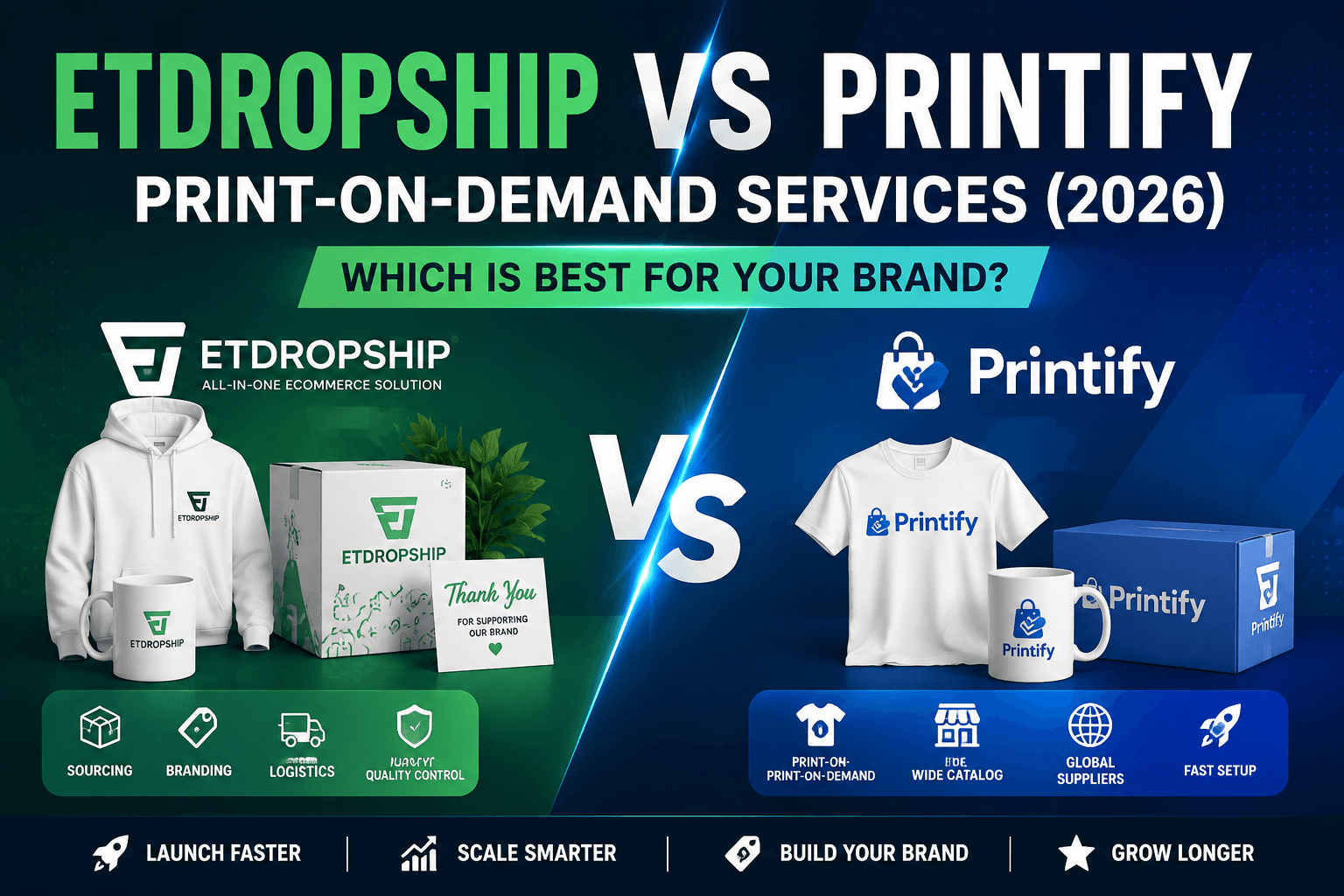
Printful is one of the most commonly used print-on-demand suppliers among Shopify sellers. It supports custom printed and embroidered products without upfront costs or inventory. Printful prints, packs, and ships products under the seller’s brand.
Printful is suitable for design-driven brands. If you have your own graphics, IP, community, content account, art style, or clothing brand concept, you can use Printful to sell T-shirts, hoodies, hats, wall art, blankets, accessories, and home products.
The advantage of Printful is that its system is mature, product quality is relatively stable, and Shopify integration is convenient. It is suitable for beginners who want to quickly start a POD brand. But it also has a limitation: many sellers use the same basic products. Your real competitiveness comes from your design ability, brand story, visual style, and audience.
Printful is suitable for designers, content creators, clothing brands, art stores, gift stores, and community-based brands.
5. Printify: Best for More POD Product Options and Global Supplier Selection
Printify is another popular Shopify POD platform. It offers a large number of products, and sellers do not need to hold inventory or handle production and shipping themselves. Printify also has a global network of print providers, making it easier for sellers to reach different markets.
Printify’s advantages are wide product selection, flexible supplier selection, and competitive pricing options. Sellers can choose print providers based on product cost, production location, delivery speed, and provider ratings.
However, because Printify has many suppliers, sellers need to test samples more carefully. Different print providers may have different print quality, fabric feel, color accuracy, packaging, and shipping experience. Before running ads, sellers should order samples of their main products and main sizes.
Printify is suitable for Shopify sellers who want to sell multiple POD product categories, cover several countries, and test different suppliers.
6. Apliiq: Best for Sellers Who Want a Real Apparel Brand Feel
Apliiq is more focused on apparel branding than ordinary POD platforms. It can remove manufacturer labels and sew in the seller’s own branded labels, making the product look more like a real retail apparel brand.
This is valuable for sellers who want to build streetwear brands, fitness apparel brands, lifestyle clothing brands, creator merchandise, or niche fashion labels. A clothing brand is not only about printing a graphic. It also includes neck labels, hang tags, embroidery, fit, fabric, packaging, and overall style.
If you are only testing simple T-shirts, Printful or Printify may already be enough. But if you want customers to feel that you are building a real apparel brand rather than a basic POD store, Apliiq is a better fit.
Apliiq is suitable for Shopify sellers focused on streetwear, fitness clothing, creator merchandise, niche clothing brands, and apparel details.
7. CJdropshipping: Best for Multi-Category Products and Custom Packaging
CJdropshipping is a general dropshipping platform suitable for Shopify sellers who want to test products across multiple categories. CJdropshipping supports custom branding and packaging options, such as adding logos, inserts, or custom boxes to improve brand recognition and customer experience.
The advantage of CJdropshipping is its wide product range. It is suitable for new sellers who want to start with ordinary product testing and gradually upgrade to branded packaging and brand elements. It can serve as a transition between ordinary dropshipping and branded dropshipping.
However, as a general platform, execution quality may vary depending on the product, supplier, and warehouse. Sellers should confirm packaging MOQ, packaging inventory, shipping time, return rules, and sample testing before using it long term.
CJdropshipping is suitable for new or growing sellers who want to test multiple categories, have limited budgets, need Shopify integration, and want to gradually add branded packaging.
8. HyperSKU: Best for Sellers with Some Order Volume Who Want to Optimize Their Supply Chain
HyperSKU is more focused on product sourcing, custom branding, and global fulfillment. It provides sourcing, custom branding, and fulfillment services to help ecommerce sellers grow.
HyperSKU is suitable for Shopify sellers who already have some order volume and want to further optimize procurement costs and fulfillment experience. Compared with a simple product import tool, it is better for sellers who need supply chain support, product optimization, and packaging upgrades.
If you have already validated a product through ads and have stable daily orders, your next step should be improving procurement cost, shipping time, packaging experience, and refund rate. Service providers like HyperSKU are suitable for this stage of supply chain upgrading.
HyperSKU is suitable for sellers who already have stable orders, want to optimize costs, need branded packaging, and want better fulfillment efficiency.
9. Zendrop: Best for Automation, Branded Packaging, and the U.S. Market
Zendrop is a common dropshipping platform used by Shopify sellers. It supports private labels, custom packaging, design tools, and mockups. Its private labeling and custom packaging services may include branded boxes, logo printing, and other packaging designs.
Zendrop is suitable for sellers who care about automation and branded packaging, especially Shopify stores targeting the U.S. market. It can help sellers reduce the uncertainty often associated with traditional AliExpress-style dropshipping.
However, sellers should also note that custom packaging and private labeling usually require specific conditions or further communication with the platform. Do not promise fully customized packaging on your store before confirming MOQ, cost, and production time.
Zendrop is suitable for Shopify sellers targeting the U.S. market, focusing on automation, using branded packaging, and wanting to reduce the ordinary dropshipping experience.
10. Gelato: Best for Global POD, Local Production, and Gift Brands
Gelato is more suitable for global print-on-demand and local production. It works well for sellers of wall art, posters, apparel, gifts, creative products, photo books, cards, and branded merchandise.
For Shopify sellers selling to multiple countries, Gelato’s advantage is that products can be produced closer to the customer’s location, reducing uncertainty caused by long-distance cross-border shipping.
Gelato is not necessarily suitable for all types of white label products, but it is very suitable for design-driven brands and sellers targeting multiple global markets. For example, if you sell art prints, custom gifts, or branded merchandise to the United States, the United Kingdom, Germany, France, and Australia, a localized POD network can be more flexible.
Gelato is suitable for Shopify sellers selling art products, wall art, creative gifts, POD apparel, custom gifts, and products across multiple countries.
How Shopify Sellers at Different Stages Should Choose
Beginner Sellers: Start with Light Customization and Avoid Heavy Investment
If you are just starting Shopify, it is not recommended to invest heavily in product molds, deep customization, or large inventory from the beginning. A more reasonable approach is to first select a product with market potential, test the ad data through a normal supply chain, and then gradually add light branding elements.
In the early stage, you can start with branded cards, thank-you cards, stickers, packaging bags, instruction manuals, and after-sales cards. These are relatively affordable, but they can significantly improve the customer experience.
After the product has stable daily orders, you can consider product logos, custom packaging boxes, hang tags, product colors, materials, or functional improvements.
Growing Sellers: Focus on Cost, Packaging, and Logistics Optimization
If your Shopify store already has stable orders, you should not only focus on finding more products. You should focus on optimizing your supply chain.
You need to review several key areas: whether product sourcing costs can be reduced, whether shipping time is stable, where customer complaints are concentrated, whether the refund rate is too high, whether packaging affects brand perception, and whether the supplier can handle abnormal orders quickly.
At this stage, supply chain service providers such as ETdropship, HyperSKU, CJdropshipping, and Zendrop become more valuable. They can help sellers improve profits through product sourcing, procurement, packaging, shipping, and after-sales support.
Brand-Focused Sellers: Choose Suppliers That Can Support Long-Term Customization
If your goal is not a short-term winning product but a long-term DTC brand, supplier selection should be more careful.
You need more than a supplier that can simply ship products. You need a partner that can support brand upgrades, including sampling, packaging, quality inspection, inventory management, order fulfillment, after-sales support, and long-term product development.
Brand-focused sellers should prioritize these questions: Can the supplier support product iteration? Can it control quality consistently? Can it store your packaging inventory long term? Can it protect your product information? Can it help you develop new products? Can it maintain shipping speed as order volume increases?
Complete Shopify White Label Dropshipping Workflow
## Step 1: Define Your Brand Positioning
Before doing white label dropshipping, do not start by asking, “Which product is cheap?” First, define who your brand serves.
Are you serving pet owners, fitness enthusiasts, young mothers, office workers, outdoor lovers, or consumers who care about home aesthetics?
The clearer your brand positioning is, the more consistent your product selection, packaging style, ad creatives, and website copy will be.
For example, a pet brand can emphasize safety, durability, and cuteness. A sports brand can emphasize performance, lightness, and professionalism. A home brand can emphasize beauty, organization, and lifestyle quality. A beauty brand can emphasize cleanliness, refinement, and daily usability.
Step 2: Choose Products Suitable for White Labeling
Not every product is suitable for white label dropshipping. In the early stage, avoid products that are too heavy, fragile, complicated after sale, high-risk in compliance, or likely to have a high return rate.
Products suitable for white label testing usually have these characteristics: moderate size, enough profit margin, easy to show in real-life use cases, suitable for short videos, able to gain value through packaging, and suitable for repeat purchases or gift scenarios.
Good categories include pet products, sports accessories, home products, beauty tools, travel accessories, clothing accessories, office products, gift sets, and light smart products.
Step 3: Contact Suppliers and Confirm White Label Capabilities
When contacting suppliers, do not only ask, “Can you do white label?” You should ask more specific questions.
For example:
Can you print a logo on the product?
Can you change the packaging bag?
Can you customize the packaging box?
Can you add thank-you cards and instruction manuals?
What is the MOQ for packaging?
How long does sampling take?
How long does fulfillment take after a formal order is placed?
Does custom packaging need to be stocked in advance?
How do you handle damaged products received by customers?
Can tracking numbers be automatically synced back to Shopify?
The earlier you clarify these questions, the fewer problems you will face later.
Step 4: Order Samples First
You should always test samples for white label products. You need to check not only the product itself, but also the packaging and shipping experience.
After receiving the sample, pay attention to product quality, material, color, size, smell, packaging protection, logo clarity, print color difference, instruction manual, accessories, and whether the product is easily damaged during shipping.
Many sellers fail not because the product has no demand, but because they did not test samples in advance. If you only discover poor packaging, product defects, or weak logistics after scaling ads, you may waste a lot of ad budget.
Step 5: Design Branded Packaging and Inserts
Branded packaging does not need to be very complex in the beginning. You can start with simple but consistent visual elements.
You can first prepare your brand logo, brand colors, thank-you card, usage instructions, after-sales contact card, discount code card, and social media follow prompt. After order volume becomes stable, you can upgrade to custom packaging boxes, dedicated packaging bags, product labels, and hang tags.
Packaging design should match your product price. Low-ticket products are not suitable for overly expensive packaging, because it may reduce profit margins. High-ticket products need better packaging experiences to support the price.
Step 6: Connect Shopify and Set Up the Fulfillment Process
After confirming the supplier, you should automate the order process as much as possible.
The ideal process is this: after a customer places an order on Shopify, the order automatically syncs to the supplier’s system. The supplier handles procurement, quality inspection, packaging, and shipping. After shipment, the tracking number is automatically sent back to Shopify. The customer receives the shipping notification, and abnormal orders are handled by both the seller and supplier.
If the supplier does not yet have a complete app, you can still use an ERP, API, or spreadsheet workflow. But as order volume increases, you should standardize the process as soon as possible.
Step 7: Optimize Product Pages and Ad Creatives
A white label product page should not only describe product features. It should show brand value.
Your product page should include use cases, packaging display, brand story, customer reviews, material details, shipping information, after-sales promise, unboxing photos, and FAQ.
Ad creatives should also reflect your brand identity. Do not only use supplier images. You can shoot sample videos, unboxing videos, before-and-after comparisons, usage scenarios, and customer feedback. This makes your ads look more like a real brand instead of copied product content.
Step 8: Upgrade Customization Depth Based on Data
White label dropshipping is not completed in one step. It is a gradual upgrade process.
Stage 1: Test ordinary products.
Stage 2: Add branded cards, stickers, and packaging bags.
Stage 3: Add custom packaging boxes, instruction manuals, and hang tags.
Stage 4: Add product logos, colors, materials, or accessory adjustments.
Stage 5: Develop OEM or ODM products.
The advantage of this process is lower risk. You will not invest heavily in inventory before market validation, and you will not remain stuck with generic packaging after the product is already selling well.
Common Mistakes Shopify Sellers Make with White Label Dropshipping
1. Starting with Too Much Customization
Many sellers want full custom packaging, product logos, exclusive accessories, and bulk production from the beginning. This is risky. The better approach is to validate the product first, then gradually increase the level of branding.
2. Not Calculating Packaging Costs
Custom packaging adds extra costs, including packaging box cost, printing cost, packaging inventory cost, warehousing cost, and possibly higher dimensional weight for shipping. If you do not calculate these in advance, you may find that packaging consumes too much of your profit.
3. Not Testing Logistics in Advance
Beautiful packaging is useless if it is easily damaged during shipping. During sample testing, always check the package condition after real transportation.
4. Ignoring After-Sales Policies
Once a white label product has problems, customers will contact your brand. Sellers must confirm damaged products, wrong shipments, missing items, returns, replacements, and refund rules with the supplier in advance.
5. Inconsistent Brand Visuals
White labeling is not just adding a logo. Your website, product pages, packaging, inserts, emails, ad creatives, and social media content should all be consistent. Otherwise, customers may feel that the brand is not professional.
Conclusion: Where Is the Opportunity in Shopify White Label Dropshipping in 2026?
In 2026, the core opportunity in Shopify white label dropshipping is not finding the cheapest product. It is turning ordinary products into products with brand identity, customer experience, and repeat purchase value.
If you are a beginner, platforms such as Supliful, Blanka, Printful, Printify, and CJdropshipping are suitable for testing. If you want to build an apparel brand, you can focus on Printful, Printify, and Apliiq. If you want to sell global POD and gift products, Gelato is also worth considering. If you already have a Shopify store and want to reduce sourcing costs through the China supply chain, build branded packaging, improve quality inspection, and optimize fulfillment efficiency, supply chain service providers such as ETdropship and HyperSKU are more suitable for long-term development.
A successful Shopify brand does not only sell products. It makes customers remember, trust, and buy again.
FAQ: Shopify White Label Dropshipping
1. Is Shopify white label dropshipping suitable for beginners?
Yes, but beginners should not start with complicated customization. A better approach is to first choose a low-MOQ or no-inventory model and test whether the product has market demand. After the ad data becomes stable, you can gradually add branded cards, packaging bags, product labels, and custom packaging boxes.
2. What is the difference between white label dropshipping and ordinary dropshipping?
Ordinary dropshipping usually uses generic products and generic packaging, so customers do not feel strong brand identity. White label dropshipping allows sellers to add brand elements to the product, label, packaging, manual, thank-you card, or insert, making the product feel like it belongs to an independent brand.
3. Does white label dropshipping require inventory?
Not always. Some platforms support no-inventory or print-on-demand models, especially POD platforms and some white label platforms. However, if you want custom packaging, product logos, or deeper customization, you may need to produce and store some packaging or product inventory in advance. It depends on the supplier’s MOQ and customization method.
4. When should Shopify sellers start white labeling?
If you have not validated the product yet, you should test it first. If the product already has stable orders, good ad data, and positive customer feedback, you can begin light customization. In general, once a product has consistent orders, it is worth considering branded packaging and white label upgrades.
5. What is the usual MOQ for white label dropshipping?
MOQ varies greatly depending on the supplier and the type of customization. Branded cards, stickers, and simple packaging bags usually have lower MOQs. Product logos, custom packaging boxes, exclusive accessories, or product structure adjustments usually require higher MOQs. Sellers should confirm the exact MOQ, cost, and production time with the supplier before working together.
6. What products are best for Shopify white label dropshipping?
Suitable products include pet products, sports accessories, home products, beauty tools, clothing accessories, gifts, travel products, office products, and light smart products. These products can gain more value through packaging, brand storytelling, and use-case presentation.
7. Can white label dropshipping increase profit margins?
Yes, but only if your product positioning, packaging, ad creatives, and customer experience work together. White labeling alone does not automatically increase profit. The real value comes from brand perception, trust, differentiation, and the customer’s willingness to pay a higher price.
8. Do white label products always need a logo printed on the product?
No. In the early stage, you can start with packaging and inserts, such as branded thank-you cards, instruction manuals, after-sales cards, stickers, and packaging bags. After orders become stable, you can consider printing a logo on the product or doing deeper customization.
9. What type of Shopify seller is ETdropship suitable for?
ETdropship is more suitable for Shopify sellers who want to source products from the China supply chain, reduce procurement costs, create branded packaging, handle quality inspection, and ship globally. It is especially suitable for sellers who already have a product direction and want to upgrade from ordinary dropshipping to branded fulfillment.
10. Is white label dropshipping suitable for selling on both TikTok Shop and Shopify?
Yes. Many sellers use TikTok for content and short-video traffic, while using Shopify as their brand website and repeat purchase channel. Branded packaging can strengthen customer recognition and help future repeat purchases through email, social media, and retargeting.