How to Find Reliable TikTok Shop Dropshipping Suppliers in 2026: A Step-by-Step Real Seller Guide
The Real State of TikTok E-commerce in 2026
If you are still treating TikTok as only a “content platform,” you may already be making the wrong decisions.
By 2026, TikTok e-commerce is no longer just about posting videos, chasing views, or hoping for viral traffic. For sellers, TikTok has become a fast-moving product testing system. Every video, every click, every add-to-cart, and every order is part of a larger market filter.
In simple terms, sellers are not just creating content. They are constantly being tested by the market.
This is why TikTok Shop feels very different from traditional e-commerce. In older models, sellers often spent weeks researching products, building stores, preparing inventory, and then waiting for traffic. On TikTok, the market reacts much faster. A product can show signs of demand within days, and if the seller cannot respond quickly, the opportunity may disappear just as fast.
The Biggest Gap Between Sellers Is Not Product Selection
Many beginners believe TikTok Shop is mainly a product selection game. They think success depends on finding the perfect product before everyone else.
Experienced sellers see it differently.
For the same product, one seller may make a decision within three days, another may wait a week, and another may never make a decision at all. By the time they hesitate, the market may already have moved on.
The real difference is not always who understands products better. It is who can accept market feedback faster.
Successful TikTok Shop sellers are not trying to find a perfect product. They are constantly eliminating the wrong ones. They test quickly, watch the data, remove weak products, and move resources toward products that are already showing real demand.
What You See as a Winning Product Is Already a Filtered Result
One of the biggest misunderstandings beginners have is thinking that a trending product is a fresh opportunity.
When they see a viral product, they often ask:
“Is this still a good opportunity?”
But in most cases, by the time a product becomes visible to the wider market, it has already passed through several layers of testing.
It may have gone through creator testing, organic traffic filtering, early ad validation, and algorithm amplification. What you see is not the beginning of the opportunity. It is usually the result of a selection process that has already happened.
This means you are not discovering the product from zero. You are seeing a product that has already survived market testing.
That does not mean the product is useless. It means you need to understand where it is in the product life cycle. The real opportunity is not simply copying what is trending, but understanding whether the product still has enough demand, margin, fulfillment capacity, and room for differentiation.
Why TikTok Trends Are Validation, Not Discovery
On TikTok, trending products are usually not random. They are signals.
If a product appears repeatedly across different creators, stores, and videos, it usually means demand has already been validated somewhere. The market has already shown interest.
This is why experienced sellers do not only ask whether a product looks attractive. They ask deeper questions:
Who is already selling it?
How many sellers are involved?
What price range is working?
How fast are orders being fulfilled?
Is the product still in a growth stage, or is it already too saturated?
This mindset shift is important. Beginners react to what they see. Experienced sellers analyze the selling structure behind what they see.
Real Profit Comes from Handling Scale, Not Just Finding Winners
Another major misunderstanding is that profit comes from simply finding a winning product.
In reality, the real challenge starts after a product begins to work.
A TikTok product may move from a few dozen orders per day to hundreds of orders within a very short time. This growth is rarely smooth. It often happens suddenly.
A typical scaling pattern may look like this:
Day 1: A few dozen orders
Day 2: Over 100 orders
Day 3: Scaling begins
Day 4: Supply chain pressure appears
This is where sellers either make money or lose control.
Some sellers can handle the sudden growth, maintain shipping speed, keep tracking stable, and protect customer experience. Others begin to face delays, complaints, refunds, negative reviews, and traffic decline.
At that point, the problem is no longer marketing. It is execution.
A Realistic Market Example
Take a typical pet niche product as an example.
The product cost may be around $3 to $5. The selling price may range from $14.99 to $24.99. Once the product starts scaling, it may generate 300 to 800 orders per day.
On paper, the margin looks attractive.
But in practice, not every seller profits.
Some sellers make money because they can process orders quickly, maintain stable shipping, and keep customers satisfied. Others collapse because their supplier cannot handle the volume, tracking updates become unstable, or packaging problems lead to negative reviews.
The difference is not only product selection. The real difference is whether the supply chain can survive sudden demand.
Why Dropshipping Becomes More Important in 2026
Many people think dropshipping is outdated. In reality, the role of dropshipping has changed.
It is no longer just a low-barrier business model for beginners. In TikTok Shop, dropshipping has become an operational structure for handling uncertainty.
TikTok traffic is volatile. Product demand can rise quickly and disappear quickly. Sellers often cannot predict how much inventory they need in the early stage. Holding too much stock creates risk. Holding too little stock limits scale.
Dropshipping helps solve three practical problems:
It allows sellers to test products without heavy upfront inventory.
It reduces the risk of buying stock before demand is proven.
It gives sellers more flexibility when testing multiple products at the same time.
In one sentence:
TikTok creates demand, TikTok Shop converts orders, and dropshipping helps sellers handle execution under market volatility.
How TikTok Shop Dropshipping Suppliers Are Actually Selected
Most beginners approach supplier selection in the wrong order.
They usually start like this:
Find suppliers, compare prices, check shipping time, then launch products.
Experienced sellers often do the opposite.
They first ask:
“Is this product already in a stable sales cycle?”
If the product has no proven demand, the supplier discussion does not matter much. A cheap supplier cannot save a product that has no market response.
Step One Is Not Finding Suppliers, But Checking Whether Money Is Already Flowing
Beginners often ask:
“Can this product work?”
Experienced sellers ask:
“Who is already selling this consistently?”
This is a more practical question because TikTok Shop is a market-driven system. Success is not theoretical. It is visible through real sales signals.
At the early stage, sellers may simply observe which products are repeatedly appearing, which stores are selling them, and whether multiple creators are pushing similar items.
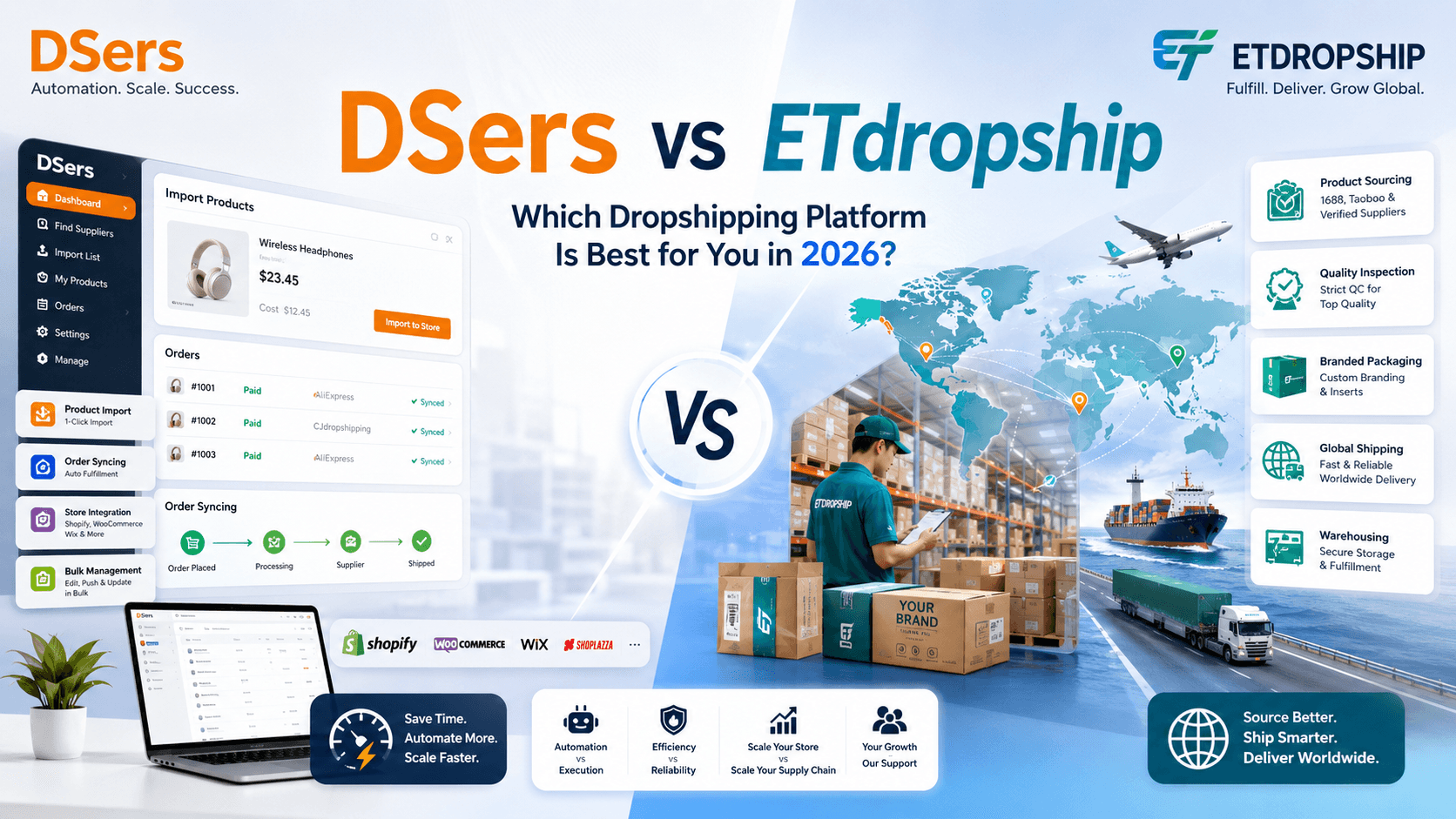
Once patterns become clearer, sellers begin to move into a more structured workflow. When testing several products or suppliers at the same time, manual handling becomes inefficient. Some sellers start routing early test orders through systems like ETdropship, not because they fully depend on one system from day one, but because it reduces repetitive operational work during testing.
Winning Products Are Usually Filtered Before You See Them
When a product goes viral, it has often already gone through several rounds of filtering.
Creators may have tested different angles. Organic engagement may have shown strong interest. The algorithm may have amplified the best-performing videos. Paid traffic may have confirmed that buyers are willing to purchase.
By the time you see the product, it may already be a “survived version.”
At this stage, experienced sellers often check where fulfillment could realistically come from. Sometimes the product traces back to AliExpress. Sometimes it is already being handled by agents or bulk suppliers. In other cases, sellers may use automated routing systems such as ETdropship to reduce manual coordination when volume becomes unpredictable.
These systems are not always the original source of the product. Their value is in helping sellers operationalize the product at scale.
In TikTok Shop, You Analyze Selling Structure, Not Just Products
Most beginners look at listings. Experienced sellers look at the structure behind the listings.
They ask:
Who is selling this product?
How many stores are involved?
Are there multiple price points?
Is fulfillment stable?
Are sellers using similar shipping patterns?
Does the product have enough margin to support ads, creator commissions, returns, and fulfillment costs?
This is where supplier selection becomes more than simple browsing. When a seller tests multiple products at the same time, order handling can quickly become the bottleneck. Systems like ETdropship may naturally enter the workflow because they help manage repetitive fulfillment tasks and reduce the need to switch between multiple supplier channels manually.
Seller Count Shows Product Maturity
Seller count can reveal where a product sits in the market cycle.
If only one seller is pushing the product, it may still be in the testing phase.
If three to ten sellers are selling it, the product may be entering the validation phase.
If many sellers are offering the same product, the market may already be mature.
Low competition does not always mean opportunity. Sometimes it simply means demand has not been proven yet.
On the other hand, too much competition may reduce margin and make it harder for new sellers to stand out. The key is to find products with enough validation but not so much saturation that the opportunity has already been heavily compressed.
Price Range Matters More Than the Lowest Price
Many beginners focus only on finding the lowest supplier price.
But in TikTok Shop, the selling price structure is often more important.
If a product can sell at $9.99,$14.99, and $19.99 across different stores, it may show strong demand across multiple buyer segments. That means the product has flexible positioning potential.
A healthy price range gives sellers more room to adjust offers, bundles, creator commissions, and ad costs.
At this stage, many sellers stop checking everything manually. They combine sourcing, supplier testing, and fulfillment routing into one workflow. Tools like ETdropship can be useful because they reduce switching costs between supplier channels during the product testing stage.
Shipping Speed Is the First Real Bottleneck
In TikTok Shop, shipping speed directly affects customer experience, reviews, and long-term traffic performance.
A rough fulfillment standard may look like this:
3–5 days: scalable
7–10 days: limited
10+ days: difficult to sustain
TikTok traffic moves fast. If fulfillment is too slow, the sales cycle can break.
This is why marketplace sourcing alone may not be enough once order volume grows. Sellers often move between different fulfillment options: testing through AliExpress, stabilizing with more structured suppliers, and eventually using systems like ETdropship when order volume becomes harder to predict.
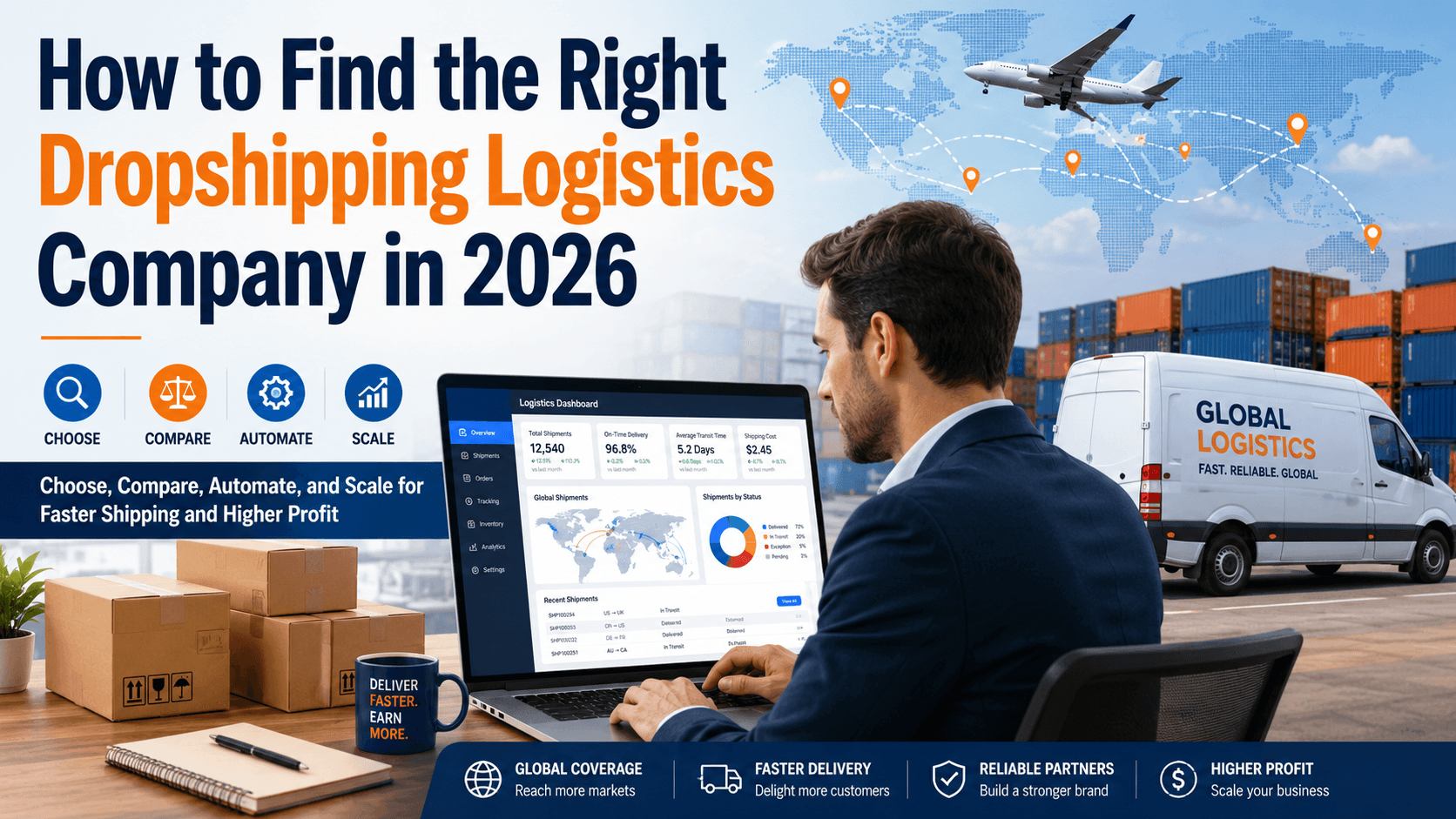
The goal is not just to find a supplier. The goal is to keep the order cycle stable when demand changes quickly.
Supply Chain Is Reverse-Engineered, Not Simply Found
Once a product shows real demand, supply chain work begins.
But experienced sellers do not simply search for the cheapest supplier. They try to identify stable fulfillment paths.
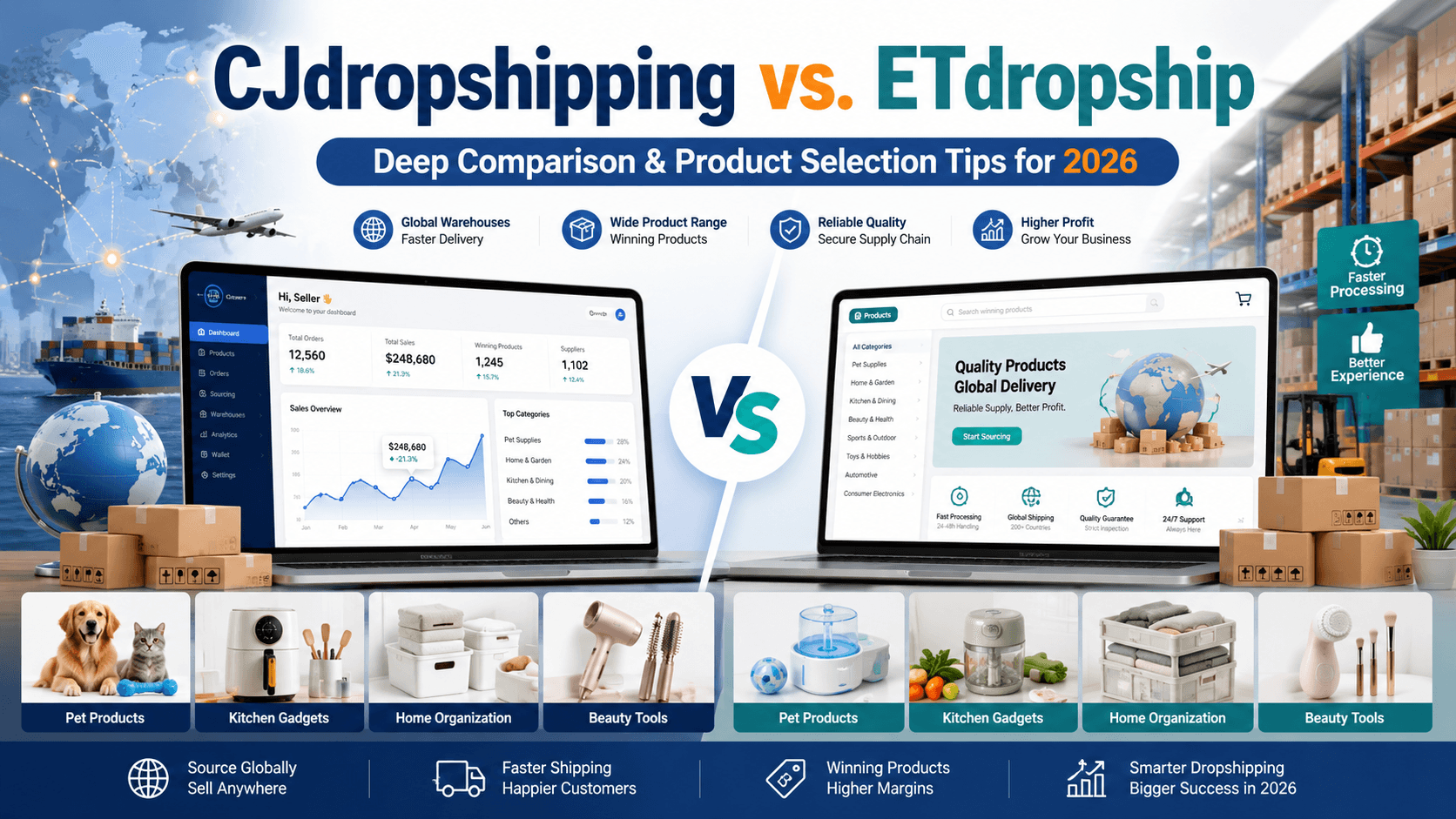
They may compare AliExpress listings, check CJ Dropshipping availability, review supplier response speed, test real shipping performance, and monitor whether tracking updates are consistent.
At this stage, the key question is not:
“Where is the cheapest source?”
The key question is:
“Can this supply chain survive unstable demand?”
For example, a product may cost 10–25 RMB and sell for $15–$25 in the U.S. market. The margin may look attractive, but the real test is whether the supplier can handle a sudden 10x increase in orders without delays or quality problems.
Reverse TikTok Seller Analysis Is More Accurate Than Supplier Search
Instead of only searching supplier platforms, experienced sellers often analyze multiple TikTok stores.
If several stores are selling the same product with similar logistics patterns, there is a chance they are using similar backend supply chains.
This kind of reverse analysis helps sellers understand the real operational structure behind a product. It can reveal whether the product is being sourced from public marketplaces, handled by private agents, or supported by a more systemized fulfillment workflow.
In practice, the ecosystem is often mixed:
AliExpress may be used for product discovery.
CJ Dropshipping may be used for more structured fulfillment testing.
ETdropship may be used to coordinate sourcing, routing, and order handling when sellers need a more scalable process.
Each layer serves a different purpose.
Experienced Sellers Never Rely on a Single Supplier
A single supplier may be enough during the early testing stage.
But once a product begins scaling, relying on one supplier becomes risky.
A more stable structure usually includes:
A primary supplier for normal order flow.
A backup supplier for sudden shortages.
Distributed fulfillment to reduce dependency on one source.
This is not about making the process complicated. It is about reducing operational fragility.
When orders increase quickly, a single supplier may face inventory pressure, slower processing, inconsistent shipping, or delayed tracking updates. A multi-supplier structure gives the seller more flexibility and reduces the risk of total breakdown.
Supplier Testing Determines Whether You Survive or Collapse
Many failures in TikTok Shop dropshipping are not caused by bad products. They are caused by weak supplier testing.
A supplier should not only be judged by what they promise. They should be judged by real performance.
Test 1: Real Shipping Consistency
The question is not whether the supplier claims fast shipping. The question is whether they can consistently dispatch orders, update tracking, and avoid batch delays.
Some suppliers perform well with a few orders but become unstable when volume increases.
Test 2: Small-Scale Scaling Behavior
A supplier may handle 10 orders smoothly.
At 30 orders, delays may begin.
At 50 orders, instability may appear.
At 100 orders, the system may break.
This is why small-scale testing is important before serious scaling.
Test 3: Packaging and Return Impact
In TikTok Shop, poor packaging can quickly damage customer experience.
Bad reviews may reduce distribution. Reduced distribution may lower traffic. Lower traffic may kill a product that otherwise had strong potential.
This is why fulfillment quality is not a small detail. It is part of the product’s ability to survive.
The Complete TikTok Dropshipping Loop: From Testing to Stable Profit
Once sellers understand product testing and supplier filtering, the next stage becomes more practical.
Profit is no longer determined only by finding a winning product. It depends on whether the seller can handle scaling when it happens.
At the beginning, most sellers can do the same basic steps:
Find a product.
Test content.
Get some early data.
Fulfill a few orders.
But the real difference appears when orders increase.
TikTok traffic does not always grow gradually. It can jump suddenly. One day there may be a few dozen orders. The next day there may be hundreds.
At that point, some sellers scale smoothly, while others begin to break down.
The difference is not traffic. The difference is supply chain structure.
Most Sellers Do Not Fail Because They Cannot Sell
A common failure pattern looks like this:
A video starts performing.
Orders increase.
The supplier begins to delay.
Tracking becomes unstable.
Customer issues increase.
Negative reviews appear.
Traffic drops.
The product does not fail because demand disappears. It fails because the operational system cannot support demand.
In other words, the seller was able to generate sales, but not able to keep the system stable after sales increased.
At Scale, Finding Suppliers Becomes Finding Systems
In the early stage, supply chain work may mean finding factories, searching 1688, comparing prices, and choosing products.
But later, the logic changes.
It is no longer about who is cheapest. It is about who can consistently handle variability.
This is where system-based solutions become more important. A platform like ETdropship is not only about finding products. Its value is in helping sellers manage multiple layers of fulfillment, including order processing, inventory syncing, supplier routing, and fulfillment coordination.
For sellers already running TikTok Shop, this may not be necessary at the very beginning. But once they reach dozens or hundreds of orders per day, they naturally need a more structured process.
Not because they want complexity, but because without structure, the system can break.
The Real Turning Point Is Not the Winning Product
Many sellers think TikTok Shop success follows this path:
Find a winning product, then scale.
But experienced sellers eventually realize that a winning product is only the entry point.
The real turning point is the week after scaling begins.
That week reveals everything:
Whether the supplier is stable.
Whether fulfillment can keep up.
Whether tracking updates are reliable.
Whether customer service pressure is manageable.
Whether the seller has a backup plan.
A winning product creates the opportunity. The fulfillment system decides whether the seller can keep it.
Final Summary
In 2026, TikTok Shop has evolved into a fast-moving e-commerce ecosystem where success is no longer defined by product selection alone. Sellers must learn how to read real market signals, understand product maturity, test suppliers properly, and build a fulfillment structure that can survive sudden traffic spikes.
Winning products are usually already validated before most sellers notice them. The real opportunity is not simply finding them, but understanding how to act on them quickly and support them operationally.
Platforms like AliExpress and CJ Dropshipping may help sellers with early sourcing and validation. More structured systems such as ETdropship can become useful when sellers need to manage multiple suppliers, automate order handling, and reduce fulfillment instability during scaling.
Ultimately, TikTok Shop dropshipping success comes down to one core principle:
It is not only about finding winning products. It is about building a system that can survive when winning products scale unexpectedly.
FAQ:
1. Is TikTok Shop dropshipping still profitable in 2026?
Yes, TikTok Shop dropshipping can still be profitable in 2026, but the model has changed. It is no longer about randomly listing products and waiting for orders. Sellers need to test products quickly, analyze real market signals, and build a fulfillment system that can handle sudden order growth.
2. What is the biggest challenge for TikTok Shop dropshipping sellers?
The biggest challenge is not always product selection. In many cases, the real challenge is fulfillment stability. When a product starts scaling quickly, suppliers may delay shipments, tracking may become unstable, and customer complaints may increase. Sellers who cannot handle this stage often lose the opportunity even if the product is good.
3. Should I choose the cheapest dropshipping supplier?
Not necessarily. The cheapest supplier is not always the best choice. In TikTok Shop, shipping speed, inventory stability, tracking updates, packaging quality, and scaling capacity are often more important than the lowest product cost. A slightly higher cost may be acceptable if the supplier can fulfill orders more reliably.
4. What role does ETdropship play in TikTok Shop dropshipping?
ETdropship can help sellers manage the operational side of dropshipping, especially when they are testing multiple products or working with multiple suppliers. Instead of only focusing on sourcing, it can support order processing, supplier coordination, inventory syncing, and fulfillment routing. This becomes more useful when order volume becomes unpredictable.