How to Find Reliable Dropshipping Footwear Suppliers in 2026
Footwear has always been a category worth long-term attention for ecommerce sellers. Unlike short-cycle viral products that depend heavily on temporary trends, shoes are closely connected to daily travel, work environments, seasonal demand, fashion preferences, and family consumption. Sneakers, walking shoes, slippers, sandals, non-slip work shoes, indoor winter slippers, kids’ shoes, insoles, and shoe care accessories can all be developed into stable product lines around different customer needs.
For Shopify sellers, footwear also has a clear advantage: it offers more branding potential than many ordinary small products. When customers receive a pair of shoes, they do not only look at the product itself. They also notice the shoe box, packaging, size instructions, wearing experience, and overall quality. Once a footwear product becomes stable, sellers can gradually add brand stickers, shoe bags, thank-you cards, size cards, custom shoe boxes, product logos, and exclusive colors.
However, footwear dropshipping is not suitable for rough product listing. Compared with phone cases, accessories, storage bags, and other small products, footwear places higher demands on the supply chain. Inaccurate sizing, strong odor from the outsole, crushed shoe boxes, out-of-stock sizes, wrong colors, and products that do not match the photos can all directly affect customer reviews and return rates.
From a market perspective, footwear still has long-term potential. Grand View Research estimated the global footwear market at about USD 476.83 billion in 2025 and projected it to reach USD 675.56 billion by 2033, with a compound annual growth rate of around 4.5% from 2026 to 2033. The online apparel and footwear market is also growing. Research and Markets reported that this market is expected to reach about USD 449.48 billion in 2026 and grow to USD 604.41 billion by 2030.
Still, market growth does not mean sellers can simply upload products and compete on price. McKinsey’s *The State of Fashion 2026* notes that the fashion industry continues to face low growth, tariff pressure, supply chain uncertainty, and consumers who are more focused on value for money. For independent store owners, this means long-term profit in footwear does not come from cheap products alone. It depends on stable quality, clear positioning, and a more professional fulfillment experience.
Why Footwear Dropshipping Requires Stronger Supply Chain Control
Footwear is a high-experience product. Customers will try on the shoes as soon as they receive them. Size accuracy, outsole comfort, material odor, and packaging condition can immediately affect how customers judge the store.
With ordinary small products, customers may still accept simple packaging. Shoes are different. They involve comfort, appearance, sizing, and real usage scenarios. If one of these details goes wrong, after-sales issues can increase quickly.
The most common problems in footwear dropshipping usually come from four areas.
The first is sizing. Different factories use different lasts and fit standards. Even if two pairs are both labeled US 9 or EU 40, the actual fit may be different. Some shoes may be narrow, some may run small, and some may have thick soles but limited inner space. If the product page does not explain sizing clearly, customers are more likely to choose the wrong size.
The second is quality consistency. Some suppliers provide good samples, but later batches may use different materials. The outsole may become harder, the insole may become thinner, the stitching may look rougher, or the glue smell may become stronger. Once footwear quality becomes inconsistent, customer reviews can be affected very quickly.
The third is packaging. Shoe boxes are easy to crush during international shipping. If the store is positioned as a slightly more branded or premium store, a damaged shoe box can reduce the customer’s perception of value. Even when the shoes themselves are acceptable, poor packaging can still hurt the overall experience.
The fourth is inventory. Footwear has many SKUs. One style may include multiple colors and multiple sizes. Once ads start working, common sizes can sell out quickly. If the supplier does not update inventory in time, sellers may face situations where customers place orders but the selected size is already out of stock.
This is why reliable footwear suppliers should not be judged by price alone. Sellers need to check whether the supplier can provide stable inventory, real product materials, accurate size charts, sample testing, packaging solutions, and after-sales cooperation.
Start With a Clear Niche Instead of Selling Every Type of Shoe
Many new sellers want to list every type of shoe at the beginning. Sneakers, slippers, sandals, kids’ shoes, and work shoes may all seem worth testing. On the surface, this makes the store look rich in products, but in practice, operations can quickly become messy. Different footwear products require different size charts, ad creatives, packaging methods, and after-sales rules.
A better approach is to start with one clear niche. This niche should have a specific target customer and a specific use case.
Lightweight Walking Shoes
Lightweight walking shoes are suitable for daily walking, commuting, travel, and light exercise. The selling points can focus on light weight, breathability, cushioning, long-time walking comfort, and easy styling for daily outfits.
When selecting this type of product, sellers should pay attention to outsole softness, upper material, insole thickness, and real on-foot appearance. If the product is mainly sold to Western markets, the size chart must be clear. Listing only EU or CN sizes is not enough. It is better to include US, UK, and EU sizes, along with foot length in centimeters and inches. For customers with wider feet, the product page should also provide clear size guidance.
Non-Slip Work Shoes
Non-slip work shoes are suitable for restaurant, kitchen, hotel, cleaning, nursing, warehouse, and service industry workers. Customers in this category usually have a clear purchase intention. The product page should focus on outsole texture, easy-clean upper material, sole construction, and everyday work scenarios.
This type of product should not be over-promoted. Without proper certification or testing, sellers should avoid claims such as “100% non-slip.” A safer expression would be “designed with an anti-slip outsole” or “built for better grip in daily work environments.” This allows sellers to communicate the product benefit while reducing the risk of exaggerated claims.
Summer Slippers and Sandals
Summer slippers and sandals are suitable for short-form video marketing and seasonal sales. Platform sandals, beach sandals, indoor slippers, and bathroom slippers can all be tested.
For this category, appearance alone is not enough. Sellers need to check material odor, outsole flexibility, color consistency, and packaging method. Low-cost slippers often have issues such as strong smells, uneven soles, color differences, and deformed uppers. If sellers only rely on supplier photos without sample testing, customers may receive products that do not match their expectations.
Indoor Winter Slippers
Indoor winter slippers are suitable for the fall and winter market, especially for home-use scenarios in Europe and North America. This category needs early preparation. If sellers wait until the weather gets cold before looking for suppliers, they may already miss the best timing for sample testing, content creation, and ad warm-up.
For winter slippers, sellers should check whether the lining sheds, whether the outsole is anti-slip, and whether the package volume is too large. Many winter slippers are not very heavy, but they are bulky. This can increase international shipping costs. Sellers should not calculate profit based only on the product cost.
Insoles and Shoe Accessories
Insoles, heel protectors, replacement shoelaces, shoe brushes, shoe bags, and deodorizing products are better suited as add-on products. They can help footwear stores increase average order value.
For example, sneakers can be paired with cushioned insoles, women’s shoes can be paired with heel protectors, slippers can be paired with travel storage bags, and work shoes can be paired with replacement insoles. For Shopify sellers facing rising advertising costs, bundle offers can increase the value of each order and reduce profit pressure.
Do Not Rely Only on Platform Search When Looking for Footwear Suppliers
Sellers can look for footwear suppliers through 1688, Alibaba, Made-in-China, footwear wholesale markets, factory clusters, trade shows, and supply chain service providers. These channels can all be useful, but the key is not how many suppliers a seller can find. The real challenge is identifying suppliers that are suitable for dropshipping fulfillment.
Footwear supply chains often have clear regional strengths. Quanzhou in Fujian has strong resources in sneakers and casual shoes. Guangzhou updates styles quickly and is suitable for slippers, sandals, fashion women’s shoes, and seasonal products. Wenzhou has a foundation in leather shoes, business shoes, and some women’s footwear. Dongguan also has many export-oriented footwear resources.
However, being able to manufacture shoes does not mean a factory is suitable for dropshipping. Traditional factories are usually more familiar with bulk orders. Dropshipping requires single-order processing, multiple sizes, multiple colors, international addresses, label attachment, after-sales reshipment, and inventory synchronization. When screening suppliers, sellers should pay attention to whether the supplier has cross-border ecommerce fulfillment experience.
Search keywords should be specific. Instead of only searching “shoes supplier” or “dropshipping shoes,” sellers should search around actual use cases. Examples include “lightweight walking shoes supplier,” “non-slip work shoes supplier,” “wide fit sneakers supplier,” “custom logo slippers supplier,” “private label footwear supplier,” “winter indoor slippers supplier,” and “shoe insoles dropshipping supplier.”
The more specific the keyword, the easier it is to find suppliers close to the actual product direction. Sellers are not looking for a supplier with the biggest catalog. They are looking for a partner that can support the long-term sale of a specific product line.
Recommended Footwear Dropshipping Suppliers and Platforms
Footwear suppliers are not all the same. Different stages of business require different types of platforms or service providers. Early-stage sellers may need fast product sourcing and testing. Sellers with stable orders may need better fulfillment, quality inspection, inventory synchronization, and branded packaging. Since footwear has many sizes, many SKUs, and higher after-sales sensitivity, supplier selection should match the seller’s current stage.
ETdropship: Suitable for Shopify Sellers Who Need China-Based Sourcing and One-Stop Fulfillment Support
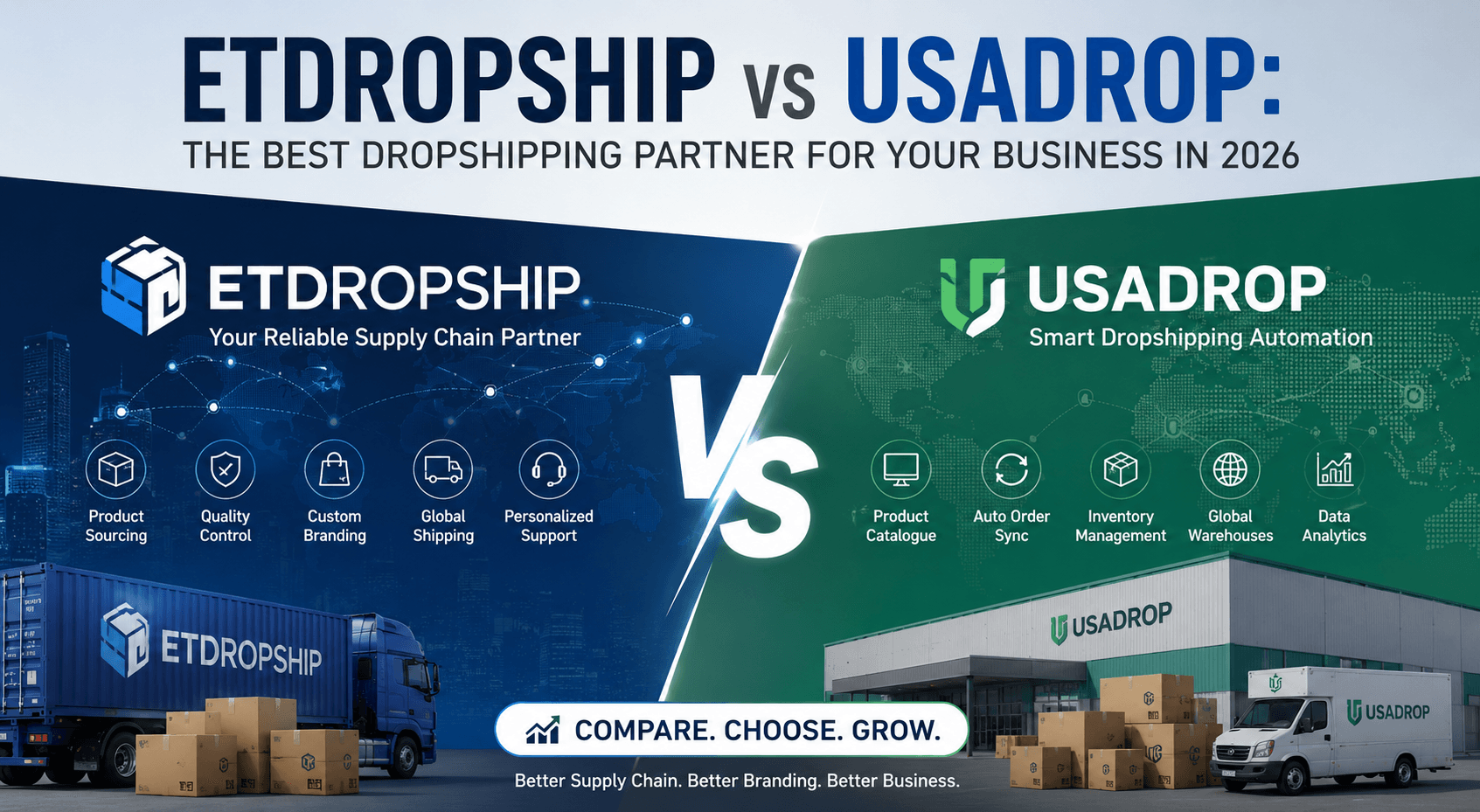
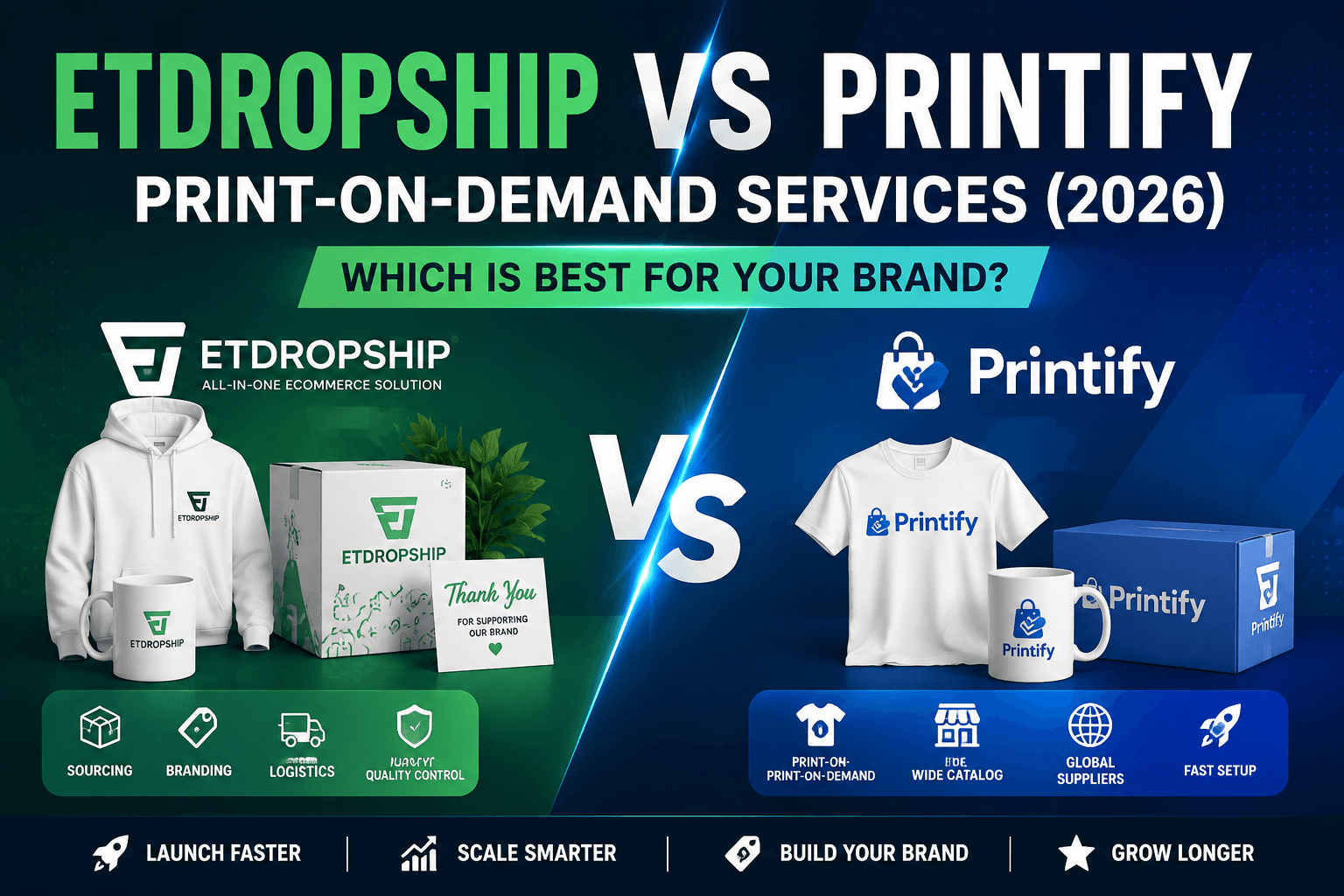
ETdropship is suitable for Shopify sellers who want to source footwear products from China and need one-stop fulfillment support. Its value is not limited to product sourcing. It also supports procurement communication, quality inspection, branded packaging, warehousing, global shipping, and after-sales support.
For footwear sellers, this type of service is especially useful for managing sizing, packaging, inventory, and order issues. Once a footwear product starts generating stable sales, sellers often consider brand upgrades such as shoe box stickers, thank-you cards, size instruction cards, branded shoe bags, custom shoe boxes, or product logos. ETdropship can support sellers at this stage and help them gradually turn ordinary dropshipping products into a more branded product line.
For Shopify sellers, the value of ETdropship lies in reducing supply chain execution pressure. Sellers do not need to spend every day communicating with multiple suppliers, checking inventory, solving wrong-size shipments, or tracking logistics issues. Instead, they can focus more on product selection, ad creatives, product pages, and customer conversion.
CJdropshipping: Suitable for Early-Stage Sellers Testing Multiple Product Directions
CJdropshipping is suitable for sellers who want to test different product categories quickly. Its platform covers product sourcing, supply chain resources, and order fulfillment. It also promotes sourcing agent services and cross-border procurement services.
For footwear sellers, CJdropshipping can be used as a reference platform for testing slippers, sandals, insoles, indoor shoes, and basic footwear accessories at an early stage. Its advantage is broad product coverage, which allows sellers to explore different styles, price ranges, and fulfillment options before deciding which products are worth deeper sample testing.
However, footwear products should not be judged by platform images alone. Whether sellers use CJdropshipping or another platform, they should still test samples for sizing, odor, packaging, and actual workmanship. Once footwear ads start running, wrong sizes, out-of-stock SKUs, and damaged packaging can directly affect profit.
HyperSKU: Suitable for Sellers With Stable Orders Who Want Better Fulfillment and Branding
HyperSKU is more suitable for sellers who already have a certain order volume and want to improve fulfillment efficiency and brand presentation. Its public pages highlight sourcing, custom branding, fast global fulfillment, custom branded packaging, boxes, labels, inserts, inventory management, and Shopify or WooCommerce store integration.
For footwear sellers, once a product has proven stable, the next step is usually not to keep adding random new styles. It is often more important to improve fulfillment reliability and customer experience. Branded packaging, inventory management, order processing, and shipping speed all affect repeat purchases and reviews. Service providers like HyperSKU can be used as a reference option for sellers entering the branding and scaling stage.
Spocket: Suitable for Sellers Who Care More About Local US and EU Suppliers and Faster Delivery
Spocket is more suitable for sellers who focus on local suppliers and faster delivery in Western markets. Its Shopify App Store page highlights verified suppliers from regions such as the US, EU, Canada, Australia, and Brazil, and it also supports branded invoices.
For sellers mainly targeting the US or Europe, and for those who want local shipping options, Spocket can be a useful supplementary choice. However, footwear products still require careful sample testing even when they come from local suppliers. Sellers should still verify the size chart, actual fit, inventory depth, delivery time, and return policy. Faster shipping can improve customer experience, but unstable sizing can still create after-sales problems.
Check the Completeness of Supplier Information During the First Screening
In the first round of supplier screening, sellers should not contact only one supplier. A more practical method is to prepare a list of 10 to 20 suppliers, communicate with them using the same standards, and then compare their responses.
Professional suppliers usually provide more complete information, including real photos, short videos, size charts, packaging dimensions, unit weight, sample cost, inventory status, and shipping time. They may also tell sellers which sizes have deeper stock, which colors are more likely to sell out, and how long restocking usually takes.
Higher-risk suppliers often respond vaguely. They may keep saying that the quality is good, everything is in stock, and shipping is available, but they cannot provide stock by size and color, packaging dimensions, or real videos. These suppliers may seem easy to communicate with at the beginning, but once orders increase, problems can appear quickly.
Supplier communication should focus on real product photos, short videos, size charts, stock by color and size, packaging dimensions, unit weight, sample cost, sample shipping time, after-sales rules, and whether the supplier can support brand labels, shoe box stickers, shoe bags, thank-you cards, or custom packaging later.
This kind of communication helps sellers quickly distinguish between ordinary suppliers and cross-border suppliers that are suitable for long-term cooperation.
Sample Testing Is the Most Important Step in Footwear Product Selection
Footwear products should not be listed without samples. No matter how good the product photos look, they cannot show the real wearing experience, odor, outsole softness, upper quality, or packaging protection.
When testing samples, sellers should not rely on only one supplier. A better approach is to choose 3 to 5 suppliers from the initial list and test 1 to 2 core styles from each supplier. For products that may become main advertising products, sellers should test at least two common sizes. For women’s shoes, EU 37 and EU 39 can be tested. For men’s shoes, EU 41 and EU 43 can be tested. This helps sellers compare whether the shape and workmanship remain consistent across sizes.
After receiving samples, the first step is to check the packaging. The shoe box should be complete, and the outer packaging should protect the box properly. The shoes should not be deformed after shipping. Next, sellers should inspect the product details, including glue overflow, stitching, left-right symmetry, outsole odor, and whether the insole is loose. Finally, they should try the shoes on briefly and observe outsole softness, foot pressure, heel friction, walking noise, and overall comfort.
Sample testing is not just about picking a pair of shoes that looks good. It is about deciding whether the supplier has long-term cooperation value. If the seller receives samples that smell strong, feel hard, or arrive in poor packaging, customers are likely to have similar reactions.
Rebuild the Size Chart Instead of Copying Supplier Data
A large part of footwear returns comes from unclear sizing. Supplier size charts are often too simple. Some only include EU or CN sizes and do not show foot length, inches, inner length, or width suggestions. If this type of chart is copied directly to a Shopify product page, Western customers may not feel confident placing an order.
A more professional footwear size chart should include EU size, US size, UK size, foot length in centimeters, foot length in inches, inner shoe length, width suggestions, and size selection guidance.
If the sample runs slightly small, the product page can clearly state:
This style runs slightly small. If you are between sizes or have wider feet, we recommend choosing one size up.
If the fit is true to size, the page can state:
This style fits true to size. Please choose your usual size based on the foot length chart.
These details may seem small, but they are very helpful for reducing return rates. When customers buy shoes online, their biggest concern is choosing the wrong size. The clearer the product page is, the more confident customers will feel.
The Product Page Should Act Like an Online Fitting Guide
A footwear product page should not only say “comfortable,” “fashionable,” or “high quality.” These words are too general and do not answer the customer’s real concerns. Customers buying shoes care about fit, comfort, material, use case, and the actual experience after receiving the product.
A more professional footwear product page should include white-background images, on-foot images, outsole detail images, upper material images, insole images, packaging images, and short videos. Videos should ideally show outsole flexibility, on-foot appearance, upper material, and real usage scenarios. For non-slip work shoes, sellers can show outsole texture. For slippers, sellers can show outsole elasticity. For winter slippers, sellers can show the inner lining and sole details.
Product copy should be realistic and avoid overpromising. For non-slip shoes, sellers can use “designed with an anti-slip outsole.” For comfort-focused shoes, phrases such as “soft cushioned insole,” “lightweight walking design,” and “made for everyday comfort” are safer. Without professional certification, sellers should avoid claims related to treatment, correction, or medical approval.
The role of a footwear product page is to help customers make decisions when they cannot try the shoes on physically. The more realistic the images are, the clearer the sizing is, and the more specific the usage scenario is, the lower the after-sales pressure will be.
Calculate Profit Based on Full Fulfillment Cost
Footwear products may seem to have a healthy selling price, but actual profit is not always high. Sellers need to calculate product cost, international shipping cost, packaging cost, payment fees, advertising cost, discounts, return loss, and customer service cost.
For example, a pair of lightweight walking shoes may cost USD 12 from the supplier. International shipping may cost USD 7, and packaging or handling may cost another USD 1. The basic fulfillment cost is already USD 20. If the selling price is USD 49.99, the gross margin may look close to USD 30. But if customer acquisition cost reaches USD 16 to USD 20, and payment fees plus after-sales losses are included, the actual profit may only be a few dollars.
Footwear products are better suited to a model based on medium pricing, clear selling points, and low return rates. Low-priced shoes may attract clicks, but shipping and after-sales costs can quickly reduce profit. Sellers should focus more on products with clear use cases, such as long-time standing, daily commuting, summer home wear, kitchen work, or winter indoor comfort. A better product page and a more stable supply chain can then improve conversion.
Bundle selling is also a useful way to improve profit. Sneakers can be paired with cushioned insoles, slippers can be paired with travel storage bags, women’s shoes can be paired with heel protectors, and work shoes can be paired with replacement insoles. This is not just about adding more products. It helps customers feel that the purchase solution is more complete.
Inventory Management Determines Whether Footwear Products Can Scale
Footwear SKUs are more complex than those of many other products. If one style has 5 colors and 8 sizes, it creates 40 SKUs. Once ads start working, sales are usually not evenly distributed across all sizes. A few popular colors and common sizes often sell out first.
If the supplier cannot provide accurate inventory, the seller will be in a difficult position. A common situation is that ads start performing well, but black sizes 39, 40, and 41 suddenly go out of stock. The customer has already placed the order, but the supplier only then reports that the size is unavailable. The seller has to refund, replace the product, or delay fulfillment. These issues directly affect ad performance and customer experience.
During the testing stage, sellers can ask suppliers to update inventory once a week. After orders become stable, inventory updates should ideally be increased to every 2 to 3 days. Popular sizes should have early stock warnings, and sellers may negotiate with suppliers to reserve part of the inventory when necessary. For long-term main products, sellers also need to confirm whether the supplier will continue production. Clearance products should not be promoted as long-term products.
Whether a footwear product can scale depends not only on ad performance but also on whether the supplier can keep up with inventory and fulfillment.
Add Branded Packaging After the Product Becomes Stable
Footwear is highly suitable for branding. Customers notice the unboxing experience when they receive shoes. A clean and complete shoe box, a professional size card, and a branded shoe bag can make customers feel that the store is serious, not just another generic dropshipping store.
However, branded packaging should not be too heavy at the beginning. Before the product is validated, making custom shoe boxes, product logos, or exclusive colors can create inventory pressure. A safer approach is to test sales with standard packaging first. Once the product becomes stable, sellers can gradually add brand elements.
In the first stage, sellers can add brand stickers and thank-you cards. These are low-cost and easy to implement. In the second stage, they can add size instruction cards and after-sales cards to reduce customer inquiries and return disputes. In the third stage, branded shoe bags can improve the unboxing experience. Once the order volume becomes more stable, sellers can consider custom shoe boxes, insole printing, product logos, or custom colors.
For Shopify sellers, handling sourcing, supplier communication, sampling, inventory, packaging, shipping, and after-sales at the same time can become stressful. ETdropship can support footwear sellers in supply chain execution, including product sourcing, supplier communication, sample checking, basic quality inspection, branded packaging, order fulfillment, international shipping, and tracking number synchronization. This allows sellers to spend more time on product selection, ad creatives, product pages, and customer conversion instead of dealing with wrong sizes, stockouts, and logistics issues every day.
Footwear Directions Worth Testing in 2026
In 2026, new sellers may not be best suited to enter highly competitive and highly similar sneaker markets directly. Big sportswear brands already have strong recognition, and ordinary independent stores may find it difficult to build long-term profit through similar-looking designs alone. For small and medium sellers, footwear products with clear usage scenarios and easy-to-understand value are more practical.
Comfort shoes for long-time standing are suitable for nurses, restaurant workers, retail workers, warehouse workers, and similar groups. The product can focus on light weight, cushioning, and everyday work comfort without making medical claims.
Non-slip work shoes are suitable for kitchens, cleaning work, hotels, and service industries. The product page should focus on outsole texture, upper material, easy cleaning, and work scenarios.
Summer platform slippers and sandals are suitable for short-form video marketing. Sellers should focus on testing odor, outsole flexibility, color consistency, and package volume.
Indoor winter slippers are suitable for the fall and winter market. This direction requires early sample preparation and creative production. Sellers should not wait until peak season arrives before looking for suppliers.
Insoles and shoe care accessories are suitable as bundle products. They can increase average order value and make the store’s product structure more complete.
Conclusion
Finding reliable dropshipping footwear suppliers in 2026 is not about finding more suppliers. It is about identifying a supply chain that is suitable for long-term cooperation. Footwear profit is not determined by product cost alone. It is influenced by size accuracy, product quality, inventory stability, packaging protection, shipping cost, and after-sales handling.
Sellers can start with one clear niche, collect 10 to 20 suppliers for initial screening, and then choose 3 to 5 suppliers for sample testing. After the samples pass quality checks, sellers can rebuild the size chart, improve the product page, calculate full fulfillment cost, and use small-budget ads to validate real customer feedback. Once the product becomes stable, inventory management and branded packaging can be added gradually.
Footwear dropshipping is not just a simple product-listing business. It combines supply chain management with product operation. When suppliers are stable, product pages are professional, sizing is clear, and packaging is well managed, footwear can become a strong long-term category for a Shopify store.
FAQ:
Is footwear dropshipping suitable for beginners?
Yes, but beginners should not list too many styles at the beginning. Footwear has many SKUs, and sizing and after-sales issues are more complex than with ordinary products. New sellers can start by testing lightweight walking shoes, non-slip work shoes, summer slippers, winter slippers, or insole accessories.
What are the most common problems in footwear dropshipping?
Common problems include inaccurate sizing, crushed shoe boxes, out-of-stock sizes, strong outsole odor, inconsistent product quality, and slow after-sales handling. When looking for suppliers, sellers should carefully check the size chart, inventory, packaging, and after-sales rules.
Should footwear products be sampled before listing?
Yes. Footwear products should be sampled before listing. Product photos cannot show real comfort, odor, outsole softness, size accuracy, or packaging quality. Products that may become main advertising products should ideally be tested in more than one common size.
What should a footwear product page focus on?
A footwear product page should focus on the size chart, real photos, on-foot images, outsole details, upper material, use cases, and short videos. The page should help customers understand the real wearing experience and reduce wrong-size orders.
Is branded packaging suitable for footwear products?
Yes. Footwear has a strong unboxing experience. Brand stickers, thank-you cards, size instruction cards, shoe bags, and custom shoe boxes can all improve customer trust. Sellers should gradually add branded packaging after the product has stable sales to avoid high upfront customization costs.
How can Shopify sellers manage footwear supply chains more efficiently?
Shopify sellers can work directly with suppliers or use a service provider like ETdropship to handle sourcing, procurement communication, sample checking, quality inspection, packaging, shipping, and tracking number synchronization. Footwear has many details, so professional supply chain support can reduce execution pressure and help sellers focus more on marketing and conversion.