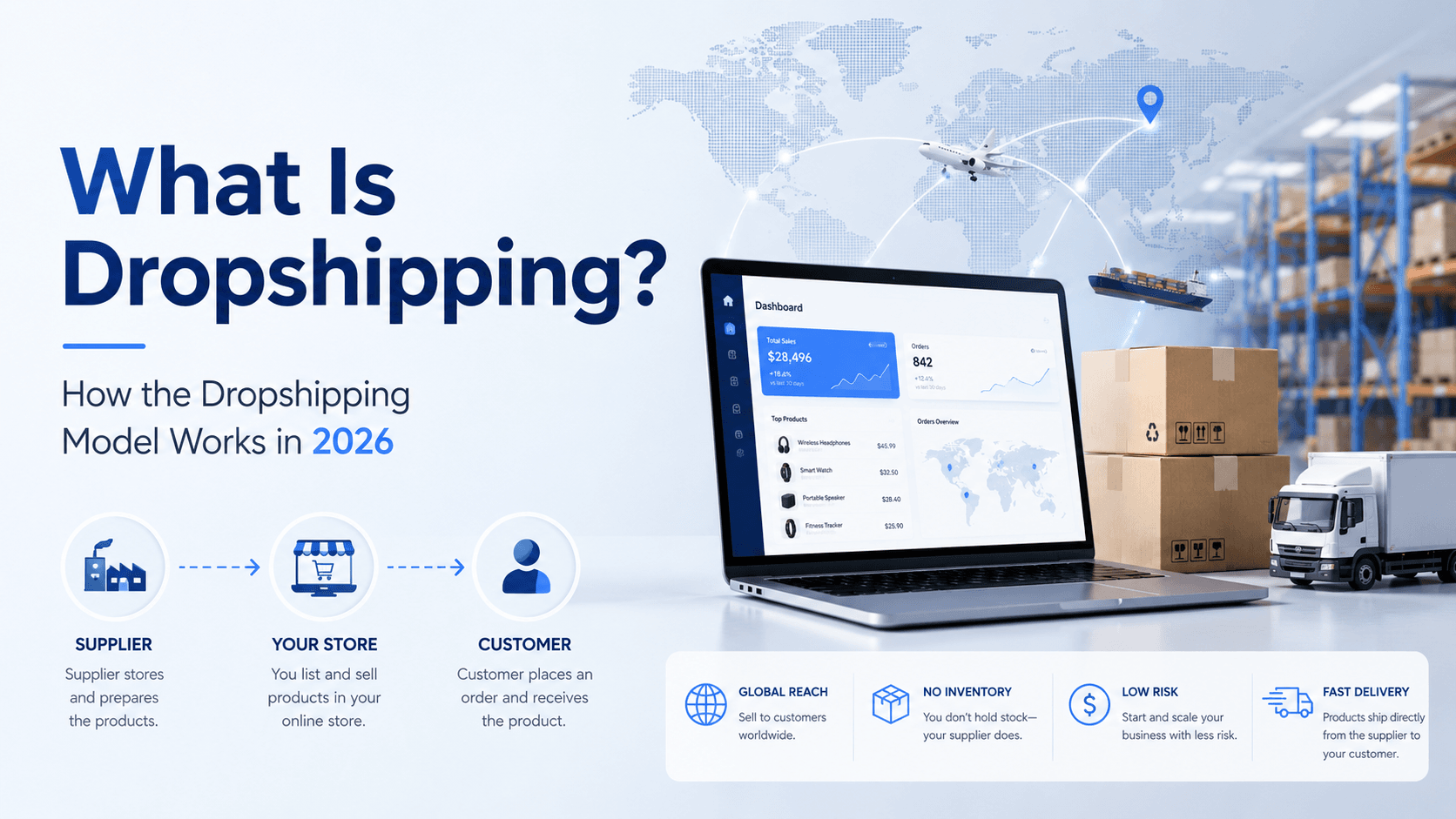
2026 Romania Dropshipping Business Guide: Zero-Cost Entry Strategy
Why Romania Is Emerging as a High-Potential Market in European E-commerce
Across most cross-border sellers, Europe is still largely associated with markets such as Germany, France, the Netherlands, and the UK. However, a clear structural shift is taking place in Eastern Europe, where Romania is quietly moving into a phase of accelerated e-commerce expansion.
According to combined data from eCommerce Europe and regional market research, Romania’s e-commerce market has now surpassed €8 billion, with annual growth consistently ranging between 10% and 15%.
However, the real value of this market is not defined by its size, but by its stage of development.
Romania is neither a mature, saturated Western European market nor an undeveloped offline economy. It sits in a transitional phase where consumers are already comfortable with online shopping, yet brand loyalty and platform dominance are still forming.
This creates a structural opening for dropshipping operators who understand early-stage market dynamics.
EU Regulatory Framework: The Structural Operating Environment Behind Romania E-commerce
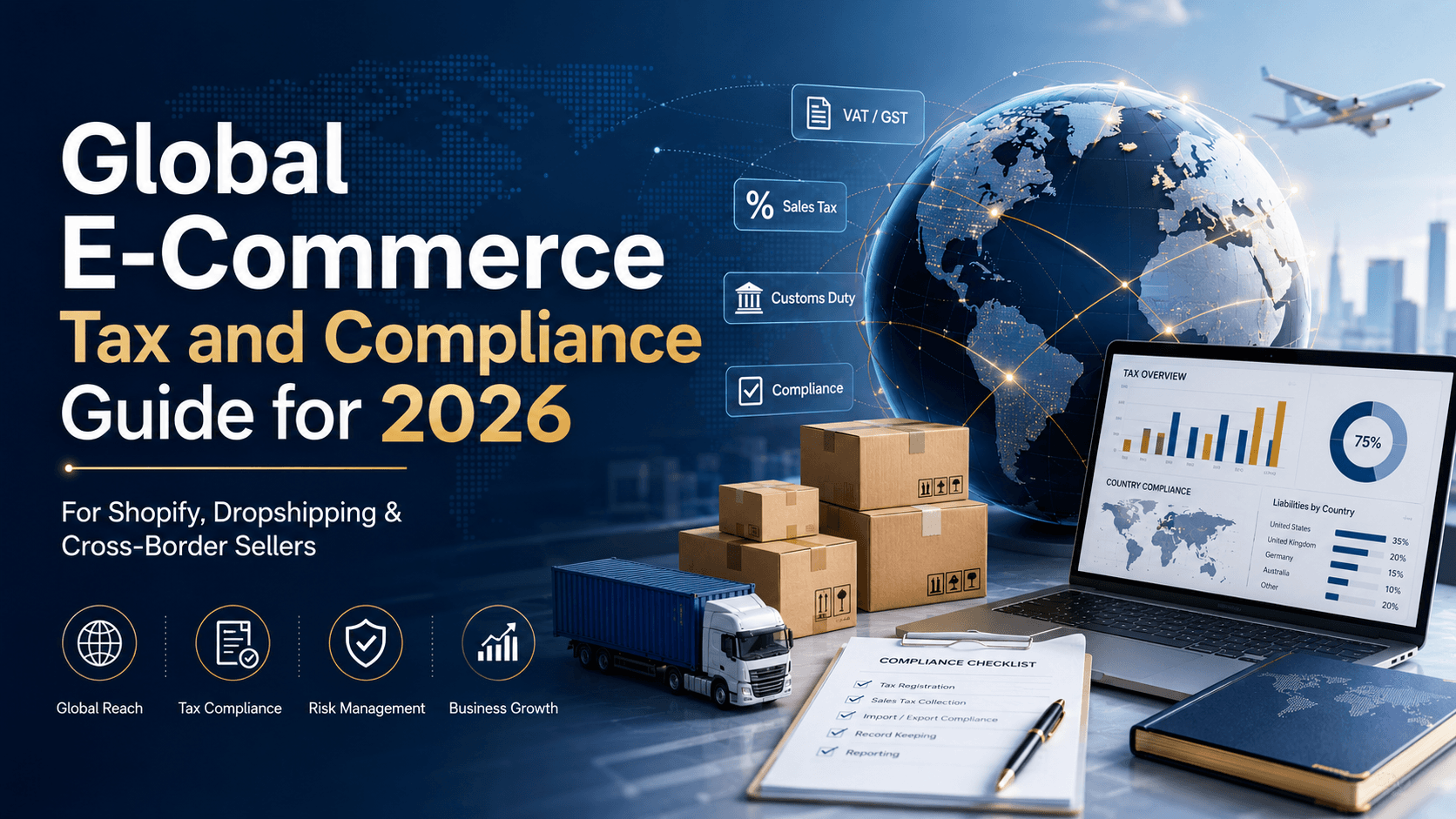
Romania operates fully under European Union regulatory frameworks, meaning its e-commerce environment is governed by standardized EU-wide compliance systems rather than isolated national rules.
Three core regulatory pillars define the operational environment:
VAT compliance under the OSS (One Stop Shop) framework
GDPR data privacy regulation standards
EU Consumer Rights Directive, including 14-day return rights
These regulations do not limit opportunity. Instead, they raise the baseline of market maturity and systematically filter out low-quality operators.
Market Growth Dynamics: From Search-Led Commerce to Content-Led Buying Behaviour
A clear behavioural shift is taking place within Romania’s digital commerce ecosystem. E-commerce discovery is increasingly moving away from search-based intent toward content-driven exposure.
Instead of actively searching on Google, consumers are now discovering products through TikTok and Instagram Reels, where purchase decisions are triggered directly by short-form content.
According to Mordor Intelligence’s European consumer behaviour analysis, mobile commerce accounts for over 65% of total online transactions in Romania, with short-form video platforms becoming the primary discovery channel.
This represents a fundamental transition from intent-based purchasing to content-triggered impulse conversion.
COD Payment Structure: The Core Trust Mechanism in the Romanian Market
One of the most distinctive characteristics of Romania’s e-commerce landscape is the continued reliance on Cash on Delivery (COD), which still accounts for approximately 25% to 40% of total transactions.
Unlike Western Europe, COD in Romania is not simply a payment method. It functions as a trust validation mechanism.
It reflects two core behavioural realities:
limited trust in online payment systems
strong preference for physical product verification before payment
For dropshipping operators, COD increases conversion rates but also introduces variability in fulfilment risk and return behaviour.
In practice, COD management becomes more important than traffic acquisition itself.
Romania is not a highly competitive e-commerce battlefield. It is a trust-transition market where consumer behaviour is still stabilising.
The opportunity does not lie in product superiority, but in three structural advantages:
lower acquisition costs compared to Western Europe
high responsiveness to content-driven marketing
relatively low brand saturation across most product categories
From Market Insight to Execution: Why Most Sellers Fail in Structured Implementation
Most sellers do not fail because they cannot find products. They fail because they apply a traditional e-commerce mindset to a market that is fundamentally driven by content behavior rather than search intent.
The common approach is always the same: build a store first, then start looking for products, and only after that begin testing demand.
In Romania, this sequence does not work.
The correct execution flow is reversed:
product validation → content validation → conversion structure → scaling
Without following this order, advertising spend becomes speculation rather than a controlled investment process.
Product Strategy: Moving from “Winning Products” to Content-Compatible Demand Design
In Romania, product selection is not about identifying trends. It is about identifying whether a product can survive in a short-form video environment.
A product only becomes viable if it can be understood within seconds, without explanation.
This removes most traditional e-commerce logic from the equation.
What matters is not category performance, but content compatibility.
Visual Problem Products (Problem-to-Resolution Format)
These products generate demand by making problems visually obvious.
Typical examples include kitchen cleaning tools, car interior detailing products, drain unclogging tools, and stain removal solutions.
These products do not rely on branding or technical explanation. Their strength comes from immediate visual transformation.
The content structure is simple and consistent:
before condition → amplified problem → instant transformation
This format consistently outperforms traditional product storytelling because users do not need interpretation—only visual proof.
Before/After Transformation Products (Comparison-Driven Value)
These include home organisation systems, wardrobe optimisation tools, and space-saving solutions.
Their value is not functional explanation, but visible transformation.
The stronger the contrast between “before” and “after,” the higher the conversion potential in short-form environments.
H3 Impulse Utility Products (Low-Friction Purchase Items)
These products typically sit in the €15–€50 range, which is ideal for COD-based markets where purchase hesitation still exists.
Examples include phone holders, car mounts, LED accessories, USB tools, and compact multifunction devices.
Their main advantage is simplicity—no explanation is required, and purchase decisions happen almost instantly.
However, they must be carefully selected due to higher sensitivity to COD return rates.
TikTok Product Validation System: Demand First, Advertising Second
In Romania, TikTok is not primarily an advertising platform. It functions as a demand validation system.
Products are not validated through paid ads, but through organic content performance.
The standard process looks like this:
multiple content variations → organic performance observation → engagement filtering → product validation → paid scaling
In this system, content structure matters significantly more than product quality.
A weak product with strong content structure can outperform a strong product with poor content execution.
Conversion Page Architecture: Why Shopify Stores Are Not the Core System
In this market, Shopify is only the infrastructure layer. The real performance driver is the landing page structure.
High-converting pages in Romania are not full e-commerce stores. They are single-product conversion environments designed to reduce decision friction.
A typical high-performing structure includes:
clear product demonstration (video-first)
problem reinforcement section
before/after comparison
social proof elements (reviews, user validation)
single focused call-to-action
The objective is not information depth, but decision compression.
Users in this market do not browse. They react.
Supply Chain Execution Model: The Real Scaling Constraint
In Romania dropshipping, scaling is constrained more by logistics than by product selection.
The supply chain typically operates in three stages.
The first stage is China direct shipping, used for initial testing. The objective here is validation, not profitability.
The second stage is hybrid fulfilment, combining direct shipping with partial regional warehousing. This stage is used to stabilise delivery performance and reduce variability.
The third stage is EU warehouse fulfilment, typically located in Poland or Germany, enabling significantly faster delivery times and more stable conversion rates.
Industry patterns consistently show that reducing delivery time from 10–15 days to 3–7 days has a direct impact on conversion rate and COD success rate.
The business is not product-driven. It is system-driven.
Success depends on whether the entire structure is aligned:
content generates demand
product is instantly understandable
landing page compresses decision time
logistics ensures fulfilment stability
Without system alignment, scaling will always remain unstable.
From Irregular Orders to Stable Revenue: The Real Scaling Challenge
The biggest challenge in Romania dropshipping is not generating sales, but stabilising them.
Most sellers are able to generate occasional orders, but they fail to build a predictable revenue system.
The issue is rarely traffic-related. It is almost always structural instability across the entire system.
In other words, the problem is not “getting customers,” but “keeping performance consistent.”
TikTok Scaling Logic: Scaling Through Structure Replication, Not Budget Increase
TikTok scaling in Romania is often misunderstood. It is not about increasing ad spend, but about replicating winning content structures.
The scaling process follows a clear pattern:
test multiple videos → identify winning structure → replicate content format → expand distribution
When scaling fails, it is usually not due to lack of budget, but because the content system cannot be consistently replicated.
Without repeatable content structures, scaling becomes unpredictable and unstable.
Facebook Role: The Stability Layer in the Conversion Ecosystem
Facebook is not a discovery channel in this model. It functions as a stabilisation system for conversions.
Its primary role is to:
retarget users who have already shown interest
convert warm audiences generated from TikTok
stabilise performance of validated products
In a healthy structure, TikTok creates demand volatility, while Facebook absorbs and stabilises that demand into consistent conversions.
Profit Model Structure: Why Revenue Alone Is Misleading
Real profitability in Romania dropshipping cannot be measured by revenue alone.
A realistic profit structure must include all operational variables:
advertising cost
COD rejection losses
logistics expenses
return rates
VAT and compliance impact
When all factors are included, a stable net profit margin typically sits between 10% and 25%.
Anything outside this range usually indicates structural inefficiencies rather than product strength or weakness.
COD System Logic: The Hidden Filtering Mechanism Behind Performance
Cash on Delivery (COD) in Romania is not simply a payment method. It is a behavioural filtering mechanism.
It increases conversion rates, but it also introduces operational uncertainty and risk.
Because of this, optimisation is not about removing COD, but about controlling the quality of users entering the system.
Effective optimisation typically involves:
pre-filtering traffic through content strategy
setting clear delivery expectations on product pages
avoiding low-value impulse-driven products
improving fulfilment reliability through EU-based logistics
The goal is not to eliminate risk, but to control the type of demand entering the funnel.
EU Warehouse Scaling: Infrastructure for Predictable Growth
EU warehousing is not simply a logistics upgrade. It is a trust infrastructure layer that directly impacts performance.
Its impact is reflected in several areas:
higher conversion rates
improved COD success rates
more stable advertising performance
stronger customer trust and reduced friction
Reducing delivery time from 10–15 days to 3–7 days does not only improve logistics efficiency. It improves the entire commercial system performance.
Multi-Country Expansion Strategy: Romania as an Entry Point, Not a Limit
Romania should not be viewed as an isolated market. It functions more as an entry gateway into Eastern European e-commerce.
Once a product and system are validated in Romania, expansion becomes a replication process rather than a reconstruction process.
Typical expansion markets include:
Bulgaria
Hungary
Greece
Poland
These markets share similar behavioural patterns, advertising costs, and content responsiveness, which allows the same system to be reused with minimal structural changes.
Final Conclusion: Dropshipping in Romania Is a System, Not a Product Business
At its core, Romania dropshipping is not a product selection game. It is a structured system that integrates multiple operational layers.
Content generates demand
Conversion architecture captures intent
Logistics execution delivers trust
Payment systems filter user quality
Profitability is determined not by individual products, but by how well these systems are controlled and aligned.