Top 10 Best E-commerce Platforms for Dropshipping in 2026: Full System Guide from Traffic to Scaling Strategy
Dropshipping in 2026 is no longer a simple model—it is a system shaped by platforms, logistics, and consumer behavior
If we look at the global e-commerce landscape in 2026, dropshipping is no longer what it used to be.
It is no longer a “low-cost side business model” or a “quick product testing method.”
Instead, it has become a structure influenced by multiple layers:
platform policies, consumer behavior, logistics efficiency, and supply chain responsiveness.
Many beginners still enter the market thinking they are simply “selling products online,” but the reality is that they are entering a system that already has rules, constraints, and competitive pressure built in.
1. Market Trends: The shift from product-driven to system-driven e-commerce
Over the past few years, global e-commerce has continued to grow.
According to Statista projections, global e-commerce sales are expected to exceed trillions in annual volume, and cross-border commerce continues to expand.
But the more important change is not the size of the market—it is the structure of competition.
In earlier years, success depended mainly on product selection and advertising.
In 2026, that logic has shifted.
Now the market rewards systems that can consistently deliver:
fast fulfillment, stable conversion rates, and predictable customer experience.
This means dropshipping is no longer just about “finding winning products,” but about building a structure that can survive platform algorithms and logistics expectations.
2. Platform Evolution: From traffic providers to ecosystem controllers
Platforms like TikTok, Shopify, Amazon, Temu, and others are no longer passive sales channels.
They now actively shape how sellers operate.
TikTok, for example, is no longer just a content platform—it behaves like a demand accelerator, where content, engagement, and fulfillment performance all influence distribution.
Amazon, on the other hand, operates as a compliance-driven ecosystem, where fulfillment speed, return rates, and seller performance directly impact visibility.
Shopify remains an independent structure, but it heavily depends on external traffic sources, making it more of a conversion system than a traffic system.
The key shift is simple:
platforms are no longer tools—they are rule systems.
3. Consumer Behavior: Faster expectations, lower patience, higher trust requirements
Consumer behavior in 2026 has changed significantly compared to earlier years.
Customers are no longer only comparing price.
They are evaluating:
delivery speed, trust signals, return convenience, and overall shopping experience.
Short-video platforms have accelerated this change.
Users now expect instant gratification:
see → click → buy → receive quickly.
This creates a direct pressure on dropshipping models, especially those relying on long shipping times or unstable supply chains.
Even small delays can affect conversion rates and ad performance.
4. Logistics Reality: The hidden factor that determines whether scaling is possible
Logistics has become one of the most critical elements in dropshipping.
In earlier years, shipping time was a flexible variable.
In 2026, it has become a performance indicator.
Delayed shipping not only affects customer satisfaction but also impacts platform algorithms and ad efficiency.
This is why many sellers gradually move away from unstable sourcing methods and start integrating more structured fulfillment systems.
At scale, logistics is no longer a back-end detail—it becomes part of the growth engine.
5. Dropshipping Model Evolution: From manual execution to system integration
Traditional dropshipping used to be very simple:
find a product → list it → run ads → fulfill orders manually.
But in 2026, that model is no longer sustainable at scale.
The modern structure looks more like a layered system:
traffic layer → conversion layer → fulfillment layer → integration layer
Each layer depends on the stability of the others.
When one layer becomes unstable, the entire system is affected.
This is why many sellers eventually transition toward structured operations where orders, suppliers, and platforms are connected into one workflow.
6. Early-stage reality: Most beginners still underestimate system complexity
Despite the evolution of the industry, most beginners still enter with a very simplified view:
pick a product, build a store, run ads, and expect sales.
In reality, the initial stage may work temporarily, but once order volume increases, fragmentation begins:
multiple platforms, different suppliers, inconsistent fulfillment speed.
This is where most failures happen—not at the product level, but at the system level.
2026dropshipping is no longer about selling products—it is about operating systems
If we summarize the current market structure in one idea, it is this:
Dropshipping is no longer a product-based model. It is a system-based operation.
Success depends less on what you sell, and more on how well your entire structure can handle:
traffic, conversion, fulfillment, and scalability.
In 2026, the real competition in dropshipping is not product selection or platform choice, but the ability to build a stable system that connects demand, execution, and logistics into one continuous flow.
In 2026, platforms are no longer competitors—they are different layers of one complete dropshipping system
If you look at the dropshipping landscape today, one thing becomes very clear:
platforms are no longer fighting against each other.
Instead, each platform plays a different role inside a larger operational system.
Some generate traffic, some handle conversion, some provide fulfillment stability, and some act as infrastructure for scaling.
So instead of ranking platforms as “better or worse,” it makes more sense to understand:
what role each platform actually plays in a real dropshipping operation.
1. Amazon: A conversion-first ecosystem built on performance control
Amazon is still one of the most stable e-commerce platforms in 2026, but its nature is often misunderstood.
It is not a traffic platform.
It is a performance-controlled conversion system.
Success on Amazon depends less on marketing and more on:
fulfillment speed, account stability, return rate control, and listing performance.
Sellers who succeed here usually already have:
stable supply chains and predictable logistics systems.
It is less suitable for early-stage testing, but very strong for long-term stable revenue.
2. TikTok Shop: A demand acceleration system driven by content velocity
TikTok Shop is fundamentally different from traditional e-commerce platforms.
It is not built around search—it is built around attention and content-driven impulse behavior.
Products can scale very quickly if content performs well, but performance is highly unstable.
In practice, TikTok Shop behaves like:
a fast-moving demand engine where visibility depends on engagement signals and fulfillment performance.
This makes it ideal for:
product testing, trend catching, and rapid validation.
But not always suitable for long-term stability unless paired with a strong fulfillment system.
3. Shopify: A conversion infrastructure dependent on external traffic
Shopify is not a traffic platform.
It is a conversion layer.
Everything inside Shopify depends on external traffic sources such as:
TikTok ads, Meta ads, Google ads, or influencer traffic.
The strength of Shopify lies in its flexibility:
full control over branding, checkout flow, and customer experience.
However, without consistent traffic input, Shopify cannot function on its own.
This is why it is often positioned as:
the “profit conversion layer” in a multi-platform system.
4. Temu: A low-cost high-volume demand channel with compressed margins
Temu operates on a very different logic compared to other platforms.
It focuses heavily on ultra-low pricing and aggressive traffic distribution.
This creates:
high exposure, high competition, and very low margin structure.
For dropshipping sellers, Temu is often used more for:
product validation and market testing rather than long-term scaling.
5. eBay: A stable long-tail marketplace with limited growth acceleration
eBay remains relevant in 2026, but its role is more supportive than dominant.
It is primarily a search-driven marketplace where buyers already have intent.
This leads to:
stable but limited growth potential.
It is often used for:
long-tail products, small catalog testing, and supplementary revenue streams.
6. Walmart Marketplace: A high-standard retail ecosystem with strict fulfillment rules
Walmart operates similarly to Amazon in terms of structure, but with even more conservative entry requirements.
It is a retail-oriented ecosystem that prioritizes:
supplier reliability, delivery consistency, and low return rates.
Because of this, it is less flexible but highly stable once established.
It is usually suitable for sellers who already have:
mature supply chains and consistent fulfillment systems.
7. Etsy: A niche emotional commerce platform driven by personalization
Etsy is not a traditional dropshipping platform.
It is a marketplace centered around:
emotion, creativity, and personalized products.
Customers here are not primarily price-driven.
They care more about uniqueness, design, and meaning.
This makes Etsy unsuitable for standard dropshipping models, but effective for:
custom products, handmade-style goods, and niche emotional products.
8. AliExpress: A supply source, not a true selling platform anymore
AliExpress still plays an important role in the ecosystem, but its function has changed significantly.
In 2026, it is mainly used as:
a product sourcing and testing layer rather than a final sales platform.
Its strengths include:
wide product variety and low cost.
However, it also comes with:
long shipping times and unstable fulfillment quality.
9. WooCommerce: A fully controllable independent store system for technical operators
WooCommerce is essentially the technical alternative to Shopify.
It provides full control over:
hosting, customization, checkout logic, and backend structure.
However, it requires more technical maintenance and operational capability.
It is usually chosen by:
teams or operators who want full ownership of their e-commerce infrastructure.
10. CJ Dropshipping: A fulfillment integration layer connecting multiple platforms
CJ Dropshipping is not a sales platform.
It functions as a fulfillment coordination system.
Its main role is to connect:
product sourcing, order processing, supplier matching, and shipping execution.
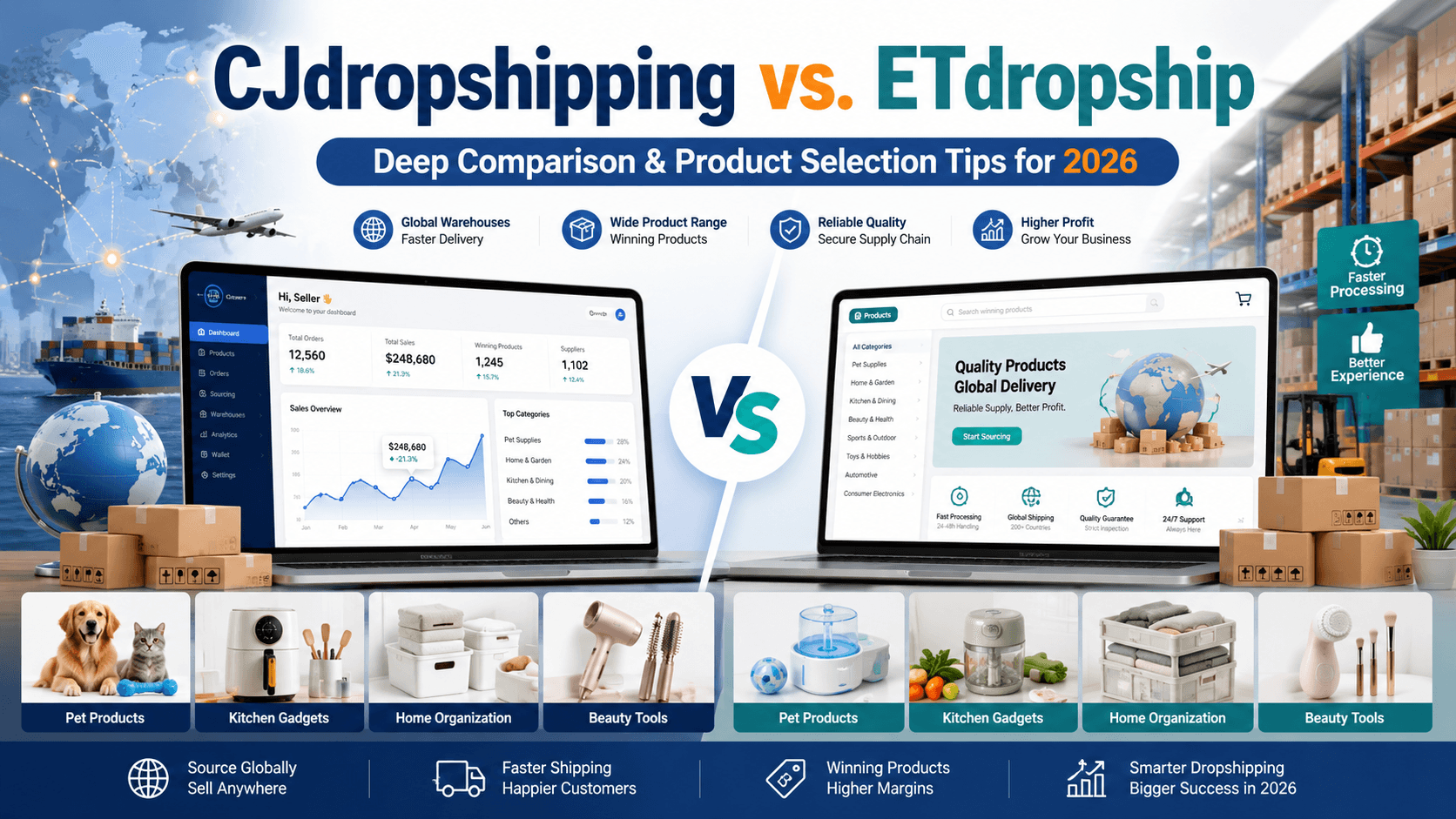
In real operations, it is often used as a backend layer that supports multiple front-end platforms such as TikTok, Shopify, or eBay.
The key value it provides is not selling—but:
standardizing fulfillment across fragmented sales channels.
In 2026, platforms are no longer the strategy—the system behind them is
If we step back and look at all 10 platforms together, a clear structure emerges:
each platform is only responsible for one part of the system.
None of them is complete on its own.
In 2026 dropshipping, success does not come from choosing the “best platform,” but from combining multiple platforms into a unified system where each layer plays its correct role: traffic, conversion, fulfillment, or infrastructure.
Dropshipping doesn’t start with choosing a platform—it truly begins when orders start getting complex
Most people who first enter dropshipping think it’s about platforms, products, or ads.
But people who have actually done it gradually realize something different:
Everything before the first real orders is just testing.
The real beginning is the moment you notice that orders are no longer coming from one place.
TikTok has orders, Shopify has orders, Amazon occasionally has a few—but they are already scattered across different systems.
At that moment, what you feel is not “success,” but:
things are increasing, but nothing is unified anymore.
Stage one is actually very simple: it’s just about getting the first order
At the beginning, the process is very loose and unstructured.
Most people simply:
see a product → build a simple page → run a small amount of traffic → check if anyone buys
There is no system yet, and there doesn’t need to be one.
Because the only real question in this stage is:
Is anyone willing to pay for this product?
If not, you change the product. If yes, you continue testing.
Things start to change after orders appear, not before
The moment things become complicated is when the first orders start coming in.
At first it’s just a few orders, but quickly you realize:
they are coming from different sources, and each one behaves differently.
Some come from TikTok, some from Shopify, and sometimes Amazon contributes a few.
Then problems slowly start to appear:
different shipping speeds, different suppliers, inconsistent logistics updates.
You don’t immediately think it’s a problem, but your daily routine changes into:
checking orders, tracking shipments, confirming fulfillment.
Platform selection actually happens at this stage—not at the beginning
Many people think platform selection happens before starting, but in reality it doesn’t.
It only becomes meaningful after orders exist.
At this stage, you start evaluating platforms in a more realistic way:
TikTok brings fast traffic but is unstable;
Shopify is controllable but requires traffic input;
Amazon is stable but has higher requirements.
So you are no longer “choosing a platform”, but deciding:
which system can actually support your current situation.
When order volume increases, the system starts to expose problems
When daily orders grow from dozens to over a hundred, things start to feel out of control.
Not because there are no orders—but because they are scattered everywhere.
Your daily work becomes:
checking orders → tracking logistics → contacting suppliers → replying to customers
At that point, you realize something important:
the business has scaled, but the system hasn’t.
The real turning point: operational problems become system problems
At this stage, many people misunderstand the situation and think it’s a marketing or product issue.
But in reality:
the problem is no longer in the front-end, but in the back-end.
Orders are not unified, supply chain timing is inconsistent, and there is no structured flow.
This leads to multiple issues at once:
delays, tracking inconsistencies, refund increases, and unstable ad performance.
The system starts forming: orders must be centralized
As order volume continues to grow, you gradually reach a point where manual handling is no longer possible.
At this stage, experienced sellers start introducing a centralized processing layer.
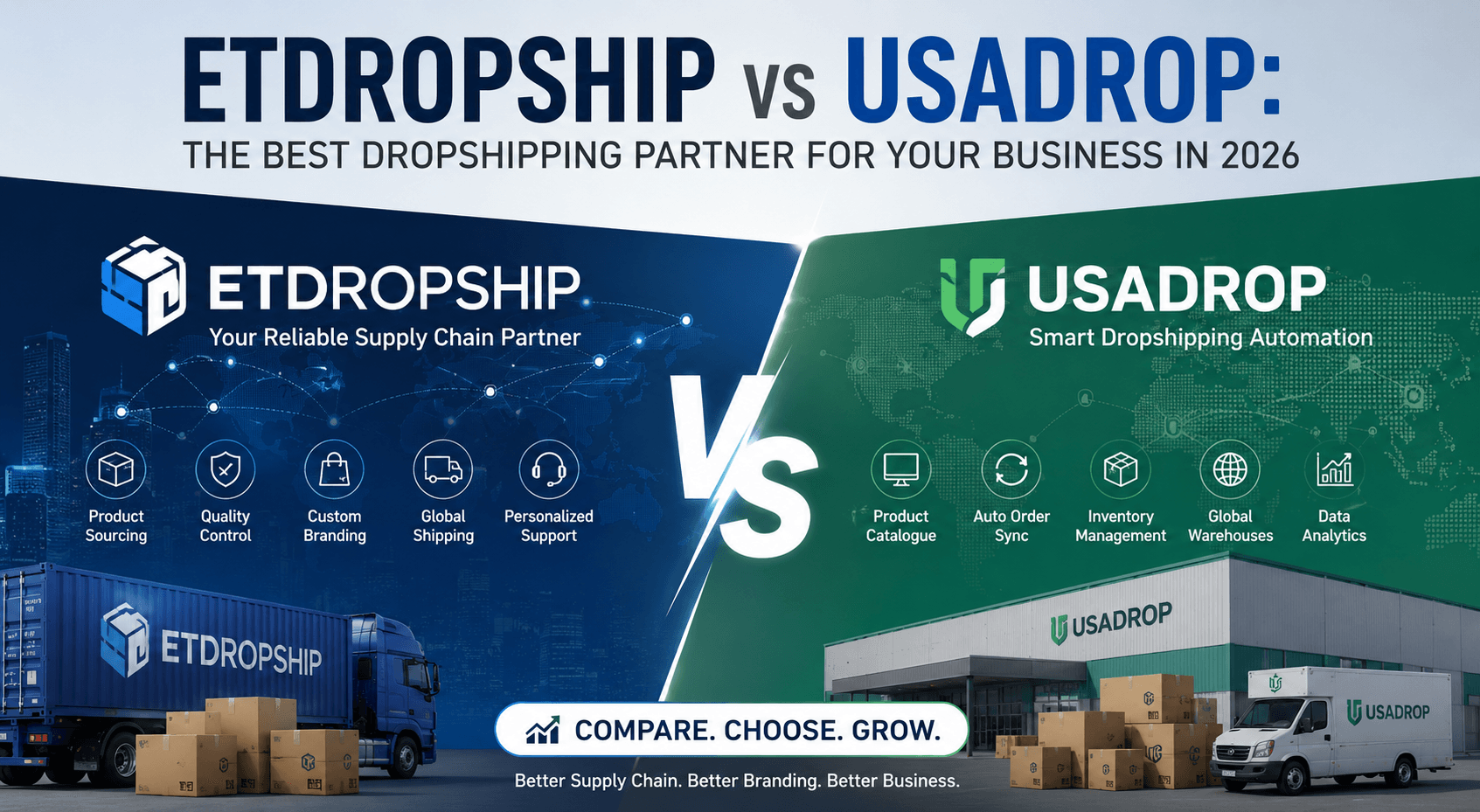
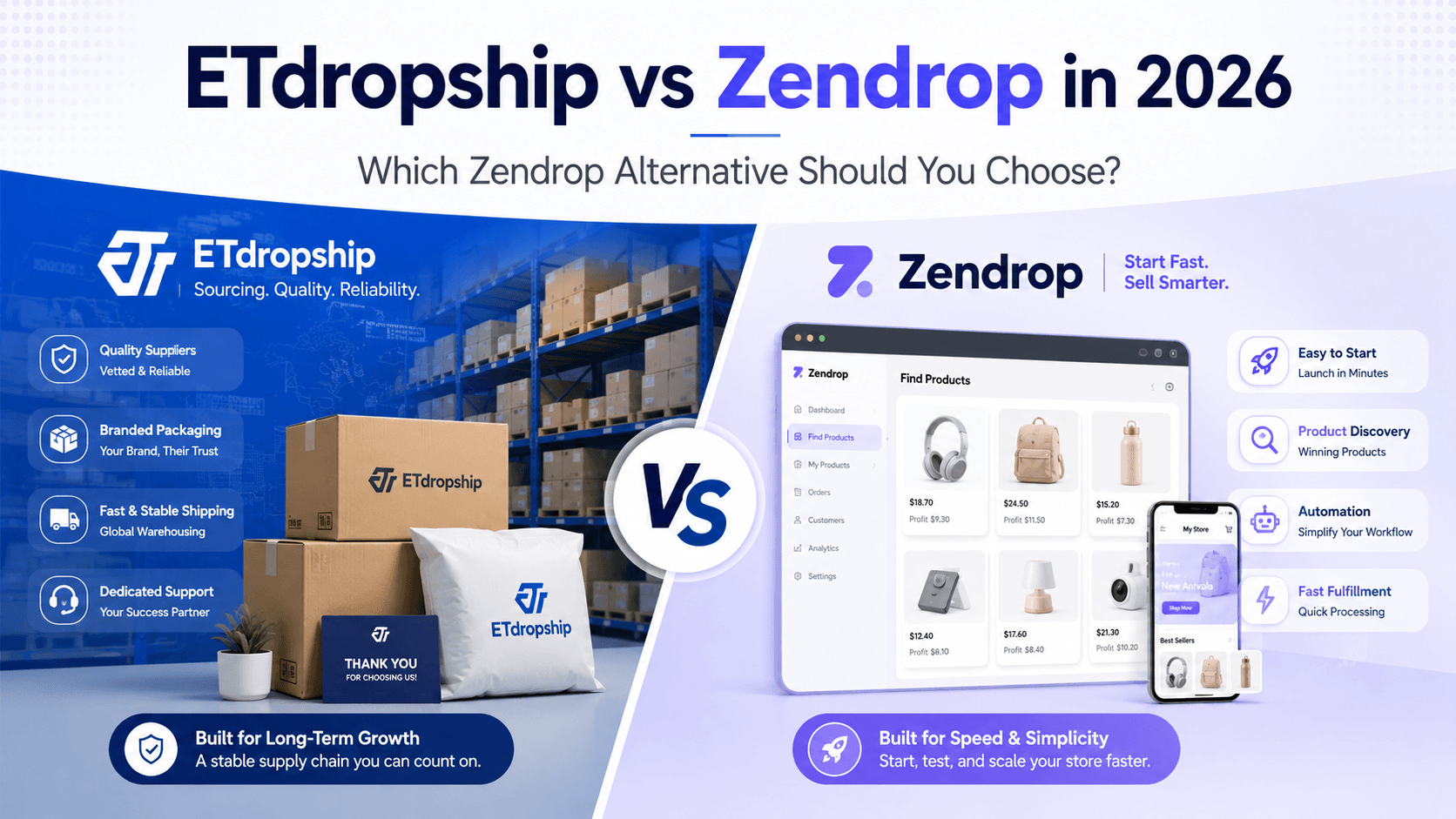
In the industry, structures like ETdropship are often used in this phase, not as a selling tool, but as an operational layer.
Its core function is simple:
to unify orders from different platforms and redistribute them to suppliers in a structured way.
The problem it solves is not sales—but something more fundamental:
how to prevent a multi-platform business from falling apart due to fragmented orders.
Once the system stabilizes, scaling finally begins
After the system becomes stable, you will notice a clear change:
ads become easier to scale.
Because:
conversion becomes stable, fulfillment becomes consistent, and data becomes reliable.
At this point, you can finally increase ad spend confidently instead of guessing.
Final conclusion: dropshipping is not about platforms—it is about building a system
If you break down the entire 2026 dropshipping process, the logic is actually very simple:
It is not a platform selection game, but a system-building process that evolves over time.
At first, you test whether products sell;
then orders start coming in, but the system becomes messy;
after that, you start choosing platforms based on system pressure;
finally, everything slowly becomes a stable operational structure.
The real dividing line in 2026 dropshipping is not which platform you use, but whether you can turn fragmented traffic, orders, and supply chains into a stable system that doesn’t break.