How Beginners Should Choose a Dropshipping Platform in 2026: A Practical Guide to Supply Chain, Fulfillment, and Scalable Execution
In 2026, dropshipping remains one of the most accessible ways to enter cross-border e-commerce. However, the idea of “low barrier” has often been misunderstood.
Many beginners believe that dropshipping success depends mainly on product selection, advertising, or website design. These factors are important, but they are only the visible part of the business. What truly determines whether a dropshipping store can survive and scale is the system behind it: platform capability, supply chain stability, and fulfillment efficiency.
In other words, you are not simply selling a product. You are selling the final experience the customer receives.
A product may attract attention. A website may complete the transaction. But if delivery is slow, tracking is unclear, or fulfillment becomes unstable after scaling, the entire business model begins to break down.
By 2026, dropshipping has clearly shifted from a light-operation model to a fulfillment-driven business.
The Core Shift: Dropshipping Is No Longer Just About Selling Products
In the early days, dropshipping became popular because it looked simple. Sellers did not need to hold inventory, purchase stock upfront, or manage warehouses. A store, a few product pages, and some ads were often enough to start testing the market.
But this logic has changed.
Today’s customers are more sensitive to delivery time, after-sales service, and order transparency. They compare online shopping experiences not only with other dropshipping stores, but also with Amazon, local retailers, and fast-shipping brands.
This means the customer’s buying decision is no longer based only on price or product design. It is increasingly influenced by one practical question:
Can I receive this product quickly and reliably?
For beginners, this is a critical point. The real challenge is not only whether you can sell the product, but whether you can deliver it consistently after the sale.
Platform Selection Is Not the Whole Business
Many beginners treat Shopify, WooCommerce, or other store-building platforms as the center of the business. This is understandable, because the storefront is the most visible part of dropshipping.
However, from an operational perspective, this understanding is incomplete.
Shopify, for example, is mainly a transaction and storefront system. It helps sellers build websites, manage products, process payments, and organize orders. But it does not directly control supplier reliability, shipping speed, product quality, packaging, or fulfillment consistency.
A dropshipping business usually includes three layers:
The first is the traffic layer, which brings visitors to the store through ads, SEO, social media, or influencers.
The second is the transaction layer, where the customer places an order and completes payment.
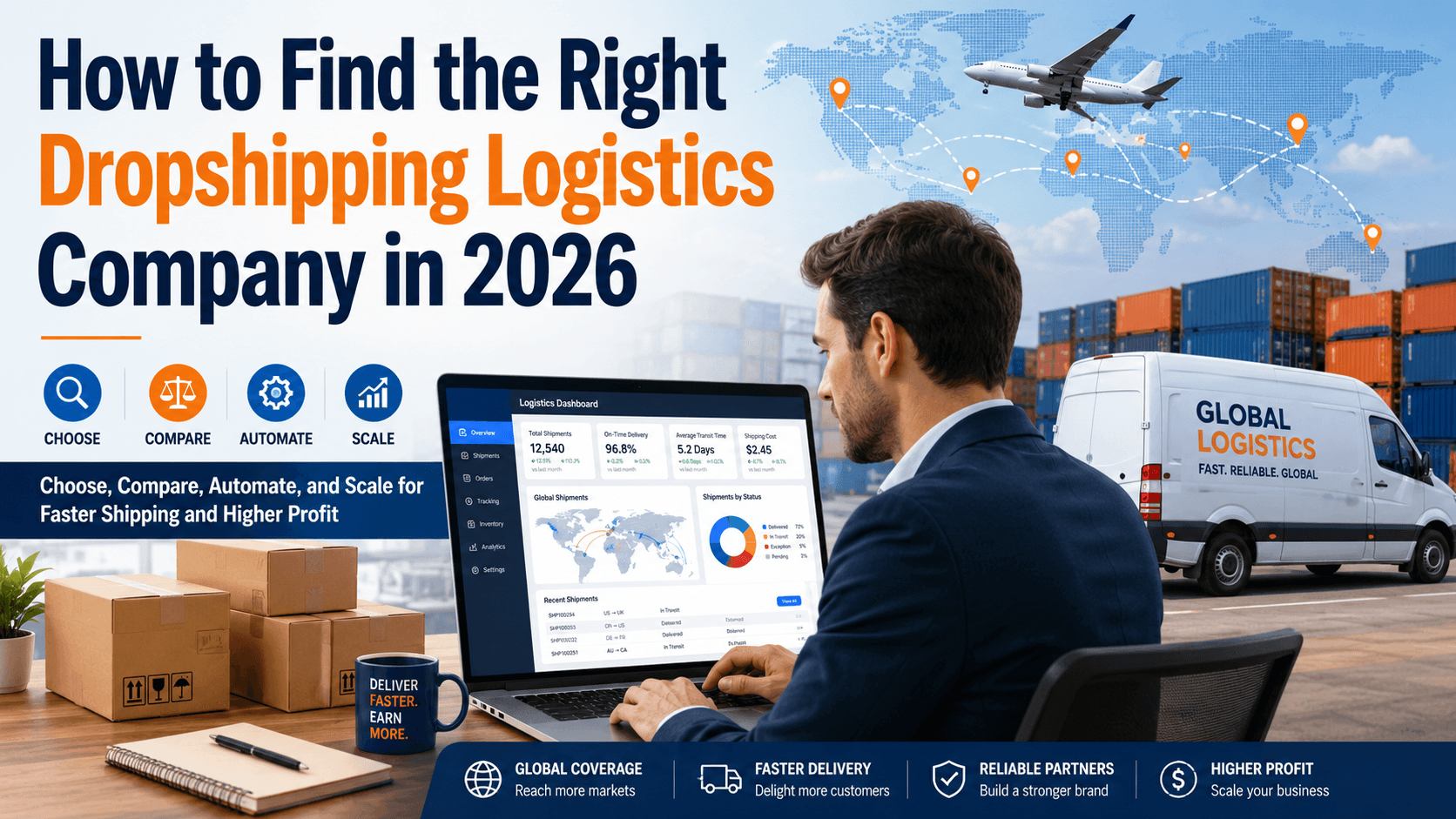
The third is the fulfillment layer, where the product is sourced, packed, shipped, tracked, and delivered.
Most beginner failures do not happen because they cannot build a website. They happen because the fulfillment layer cannot support the business once real orders begin to come in.
Why Supply Chain Stability Matters More Than Product Selection
Product selection is still important, but it is no longer enough.
In the past, some sellers could succeed by finding a trending product before others. But in 2026, the same product can produce completely different results depending on the supply chain behind it.
For example, one seller may sell a home product using a basic open supplier system with long delivery times, inconsistent stock, and unstable tracking. Another seller may sell the same product through a more organized fulfillment system with faster delivery, clearer inventory control, and more reliable order processing.
The product is the same.
The outcome is different.
This is why experienced sellers increasingly view product selection as only the starting point. The real upper limit of the business is determined by supply chain execution.
A weak supply chain can turn a winning product into a refund problem. A stable supply chain can turn an ordinary product into a scalable business.
Logistics Experience Has Become an Invisible Conversion Factor
For customers, logistics is no longer just a post-purchase issue. It has become part of the purchase decision itself.
When shoppers see estimated delivery times, tracking promises, shipping fees, or unclear fulfillment details, they immediately form expectations about the brand. If those expectations are not met, the damage goes beyond one single order.
Slow or unstable delivery can affect:
customer trust,
refund and cancellation rates,
repeat purchase rates,
and performance,
brand reputation,
and long-term profitability.
From a business perspective, logistics should no longer be treated only as an operating cost. It is part of conversion efficiency.
A faster and more predictable fulfillment experience can increase customer confidence before purchase and reduce complaints after purchase.
The Real Meaning of Choosing a Dropshipping Platform
Choosing a dropshipping platform in 2026 is no longer simply about comparing software features.
It is a system capability decision.
A platform may provide store-building tools, product import functions, payment integrations, or automation features. But if it does not help stabilize fulfillment, the seller still faces the same core risk: orders may come in, but the backend may fail to support them.
This is why beginners should not ask only:
Which platform is easier to use?
They should also ask:
Can this system support stable fulfillment?
Can it reduce supplier uncertainty?
Can it handle order growth?
Can it provide predictable shipping performance?
Can it help me scale without losing control?
The more open a platform is, the more dependent it becomes on supply chain quality. A flexible store system is powerful, but only when the fulfillment system behind it is strong enough.
Different Types of Dropshipping Supply Chain Systems
The dropshipping market is no longer a single structure. By 2026, it has become clearly layered.
1. Open Marketplace Supply Chains
AliExpress is the most common example of an open supply chain system.
Its biggest advantage is accessibility. Beginners can find many products, test ideas quickly, and start with a low budget.
However, the limitations are also obvious. Shipping times can vary, supplier quality is inconsistent, stock availability may change suddenly, and scaling can become unstable.
This type of system is useful for early product testing, but risky for long-term scaling.
2. Tool-Based Integrated Platforms
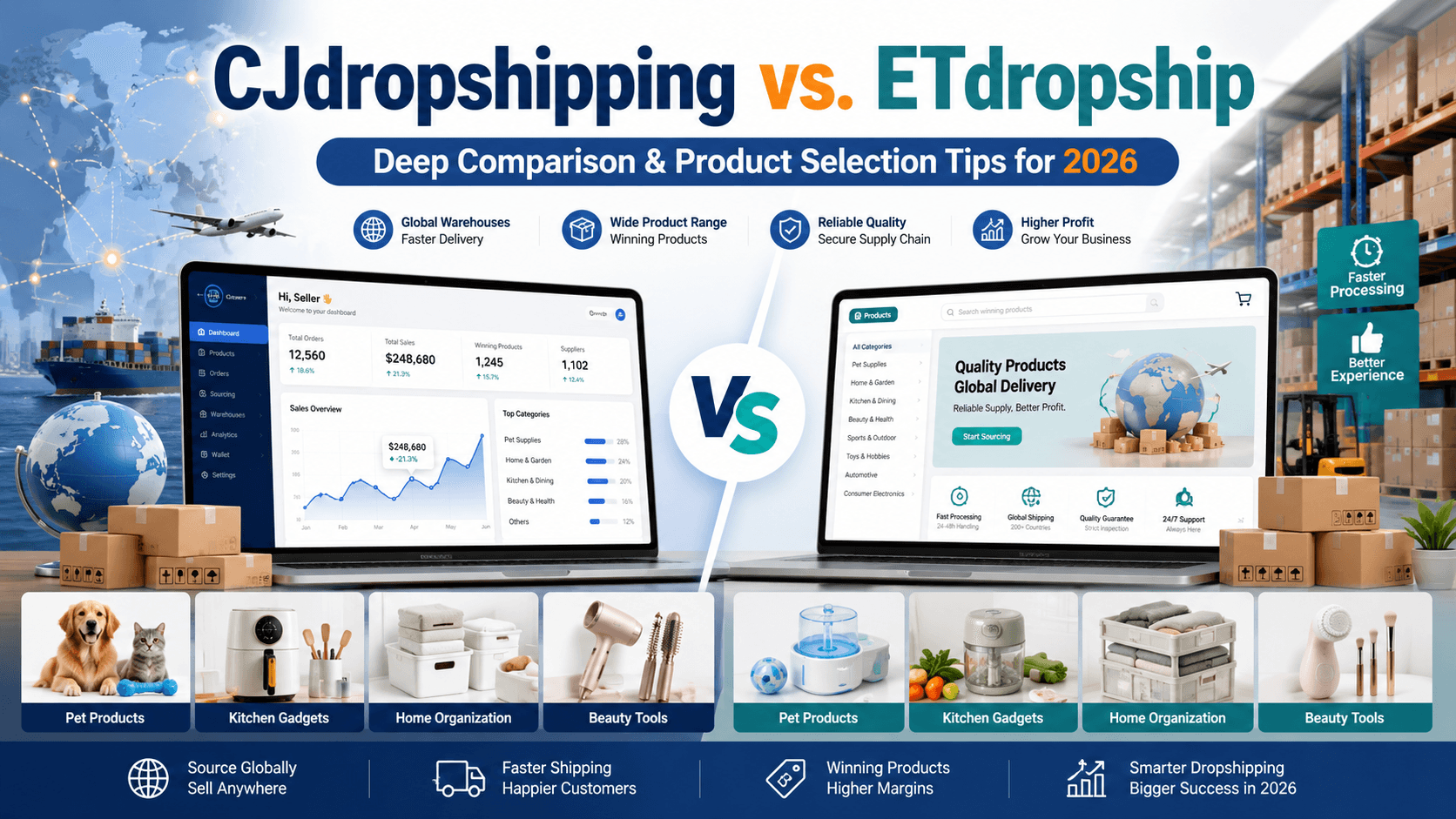
Platforms such as CJdropshipping, Zendrop, and AutoDS help standardize parts of the workflow.
They can make product sourcing, order processing, and logistics management more structured than using open marketplaces manually. For beginners, this can reduce operational complexity.
However, many of these systems still depend heavily on external suppliers and partner networks. This means they may improve workflow efficiency, but they may not fully eliminate fulfillment volatility.
3. Local Warehouse and Regional Fulfillment Systems
Local warehouse systems are especially valuable in markets such as the United States and Europe.
Their main advantage is speed. When products are already stored near the customer, delivery times can often be reduced significantly. This can improve conversion rates and customer satisfaction.
The trade-off is cost and flexibility. Local inventory usually requires more planning, better product validation, and sometimes higher upfront commitment.
4. System-Based Integrated Fulfillment Platforms
The fourth structure is becoming increasingly important: system-based integrated fulfillment.
This type of system focuses less on offering endless product choices and more on reducing uncertainty across the fulfillment process.
Systems like ETdropship represent this shift. The value is not only in sourcing products, but in creating a more controllable fulfillment path.
For beginners, this matters because the biggest risk is not usually a lack of products. It is unstable execution after orders start coming in.
Why Supply Chain Problems Can Damage Advertising Performance
Many sellers blame poor ad results on creatives, targeting, or campaign setup.
But in real operations, advertising performance is often connected to fulfillment quality.
A common failure pattern looks like this:
A product performs well during early testing.
The seller increases ad spend.
More orders come in.
Fulfillment becomes slower or inconsistent.
Refunds and complaints increase.
Ad efficiency begins to drop.
Customer experience declines.
Acquisition costs rise.
At this stage, the problem may look like an advertising issue, but the root cause is often supply chain instability.
When delivery expectations are broken, the entire business system becomes weaker. This can affect customer feedback, repeat purchases, payment disputes, and even the quality signals that advertising platforms receive.
In simple terms:
A poor supply chain can make good ads perform badly.
Why ETdropship-Type Systems Are Becoming More Important
As dropshipping becomes more competitive, beginners need systems that reduce operational risk.
This is where ETdropship-type fulfillment systems become relevant.
The purpose is not simply to provide more products. The more important value is to reduce fulfillment variance.
That means:
fewer fragmented supplier issues,
more consistent order processing,
more predictable shipping routes,
lower risk during scaling,
and better control over the customer experience.
For beginners, this can be especially valuable because early-stage sellers often lack the experience to manage multiple suppliers, negotiate shipping channels, inspect quality, and handle fulfillment problems manually.
A more stable fulfillment system gives beginners a better foundation before they start scaling traffic.
The Correct Execution Order for Dropshipping in 2026
One of the biggest mistakes beginners make is doing things in the wrong order.
Many people start by building a beautiful Shopify store, then choosing products, then running ads, and only later thinking about fulfillment.
This sequence is risky.
A more practical execution model in 2026 should look like this:
First, confirm whether the supply chain system can support stable fulfillment.
Then, select products that match the system’s fulfillment capability.
Next, build a simple but trustworthy store structure.
After that, run small-budget ad tests to validate market demand.
Only when conversion, fulfillment, and customer feedback are stable should the seller begin scaling.
The correct order is:
Stabilize fulfillment first.
Validate traffic second.
Scale last.
This sequence reduces the risk of growing too fast before the backend is ready.
What Beginners Should Look for When Choosing a Dropshipping Platform
Beginners should not choose a platform only because it looks popular, cheap, or easy to use.
Instead, they should evaluate whether the platform or fulfillment partner can support real business execution.
Important factors include:
whether products can be fulfilled consistently,
whether shipping times are predictable,
whether tracking information is reliable,
whether suppliers can handle order growth,
whether product quality is stable,
whether after-sales issues can be managed,
and whether the system can support scaling without major breakdowns.
A beginner-friendly platform is not just one that is easy to operate. It is one that reduces uncertainty.
Dropshipping Is Becoming a System-Driven Business
By 2026, dropshipping has clearly evolved.
It is no longer just a product-driven model. It is a system-driven execution model.
The winning structure is not determined only by what you sell. It is determined by how reliably you can deliver what you sell.
Traffic determines whether users enter the store.
The platform determines whether transactions can happen.
But supply chain stability determines whether the business can survive long term.
This is the real difference between short-term testing and sustainable growth.
Final Thoughts
The biggest misunderstanding about dropshipping is that it is a simple business because sellers do not need to hold inventory.
In reality, not holding inventory does not mean there is no supply chain risk. It often means the supply chain risk is hidden.
For beginners, the goal should not be to find the cheapest supplier or the most popular product as quickly as possible. The goal should be to build a fulfillment-capable system that can support real orders, real customers, and real scaling.
In 2026, dropshipping competition is no longer front-end driven.
It is fulfillment-system driven.
The sellers who continue chasing random products and switching suppliers may win occasionally, but they will struggle to build stable growth.
The sellers who build reliable supply chain systems first will have a much stronger foundation for long-term success.
In the new dropshipping environment, the real competitive advantage is no longer just product selection.
It is system control.
FAQ:
1. Is dropshipping still worth starting in 2026?
Yes, dropshipping is still worth starting in 2026, but the way it works has changed. Beginners can no longer rely only on finding trending products and running ads. A successful dropshipping business now requires a stable supply chain, reliable fulfillment, clear tracking, and a good customer experience.
2. What is the most important factor when choosing a dropshipping platform?
The most important factor is not only how easy the platform is to use, but whether it can support stable order fulfillment. A good platform or fulfillment partner should help reduce supplier uncertainty, improve delivery reliability, and support business growth after orders begin to scale.
3. Is Shopify enough to run a successful dropshipping business?
Shopify is a powerful storefront and transaction platform, but it does not solve every problem. It helps sellers build a website, process payments, and manage orders, but sellers still need a reliable supply chain and fulfillment system behind the store.
4. What is the difference between AliExpress, CJdropshipping, Zendrop, AutoDS, and ETdropship?
AliExpress is an open marketplace suitable for product testing. CJdropshipping, Zendrop, and AutoDS provide more structured tools for sourcing and order processing. ETdropship-type systems focus more on integrated fulfillment, supply chain stability, and reducing operational uncertainty during scaling.