Top 10 Best Dropshipping Suppliers in France in 2026
Choosing a dropshipping supplier for France is no longer simply a matter of finding the platform with the lowest product price. French customers can compare independent stores with Amazon, marketplaces and established European retailers quickly, so supplier decisions eventually affect much more than the cost of the product.
A supplier or fulfillment partner influences product consistency, processing time, shipping visibility, packaging, returns and the seller's ability to keep a successful SKU available after advertising begins to scale. This is why a supplier that works well for early product testing may become inefficient once the same store processes consistent daily orders.
The ten options below are therefore not interchangeable. Some are product marketplaces, some provide supplier networks, some focus more heavily on logistics and warehousing, and others are software layers that automate orders across external suppliers. The useful question is not simply “Which supplier is best?” but which operating model fits the current stage of the business.
What Should a France Dropshipping Supplier Actually Provide?
Before comparing names, define what the business needs from the supplier. A new Shopify store testing several products may prioritize low commitment, broad product availability and the ability to place individual orders, while a store with a proven bestseller may care more about consistent specifications, supplier stability and repeat procurement.
France also makes delivery performance important. The seller should know how long the product takes to become ready for dispatch, which route will be used, when tracking becomes visible and what happens when a parcel cannot be delivered. A quoted shipping time without supplier processing time gives only part of the customer experience.
Product quality should be evaluated independently as well. Similar photographs across several platforms do not guarantee that the products use the same materials, dimensions or components, which becomes increasingly important after customers begin reviewing a specific version.
Supplier, Marketplace, Agent and Fulfillment Company Are Different
Many “best supplier” comparisons mix several business models together. AliExpress is fundamentally a marketplace containing many individual sellers, while a sourcing agent searches and coordinates upstream suppliers on behalf of the ecommerce seller. A fulfillment provider may receive and ship products from several suppliers, and software such as AutoDS focuses more on automation than manufacturing.
This distinction matters because each model solves a different problem. Marketplace access helps with flexibility and product discovery, supplier sourcing increases upstream control, and fulfillment infrastructure becomes more valuable when several SKUs and suppliers need to be coordinated consistently.
A seller should therefore compare operating models before comparing individual brands.
1. CJdropshipping
CJdropshipping is commonly considered by beginners because it combines a broad product catalog with sourcing and order-fulfillment functions. It can provide a relatively simple transition from browsing a product to connecting that product with an ecommerce store, which reduces the amount of manual coordination required during early testing.
Its usefulness depends heavily on the individual SKU. Sellers should still verify the actual product, packed weight, available shipping route and stock situation rather than assuming every product in a large catalog offers identical quality or economics.
CJ can therefore be useful when flexibility matters, but a successful product should still be evaluated independently once sales become predictable.
2. Spocket
Spocket focuses strongly on connecting ecommerce sellers with suppliers, including suppliers located in Europe and other Western markets. This can be attractive for France stores where sellers want to explore products that may already have regional supply options.
The trade-off is that regional sourcing does not automatically create stronger margins. Products supplied through European networks can have higher purchasing costs than products sourced directly from China, so the seller needs to compare the complete order economics rather than delivery location alone.
Spocket is most useful when the available supplier and product match the store's positioning, not simply because the supplier happens to be located closer to France.
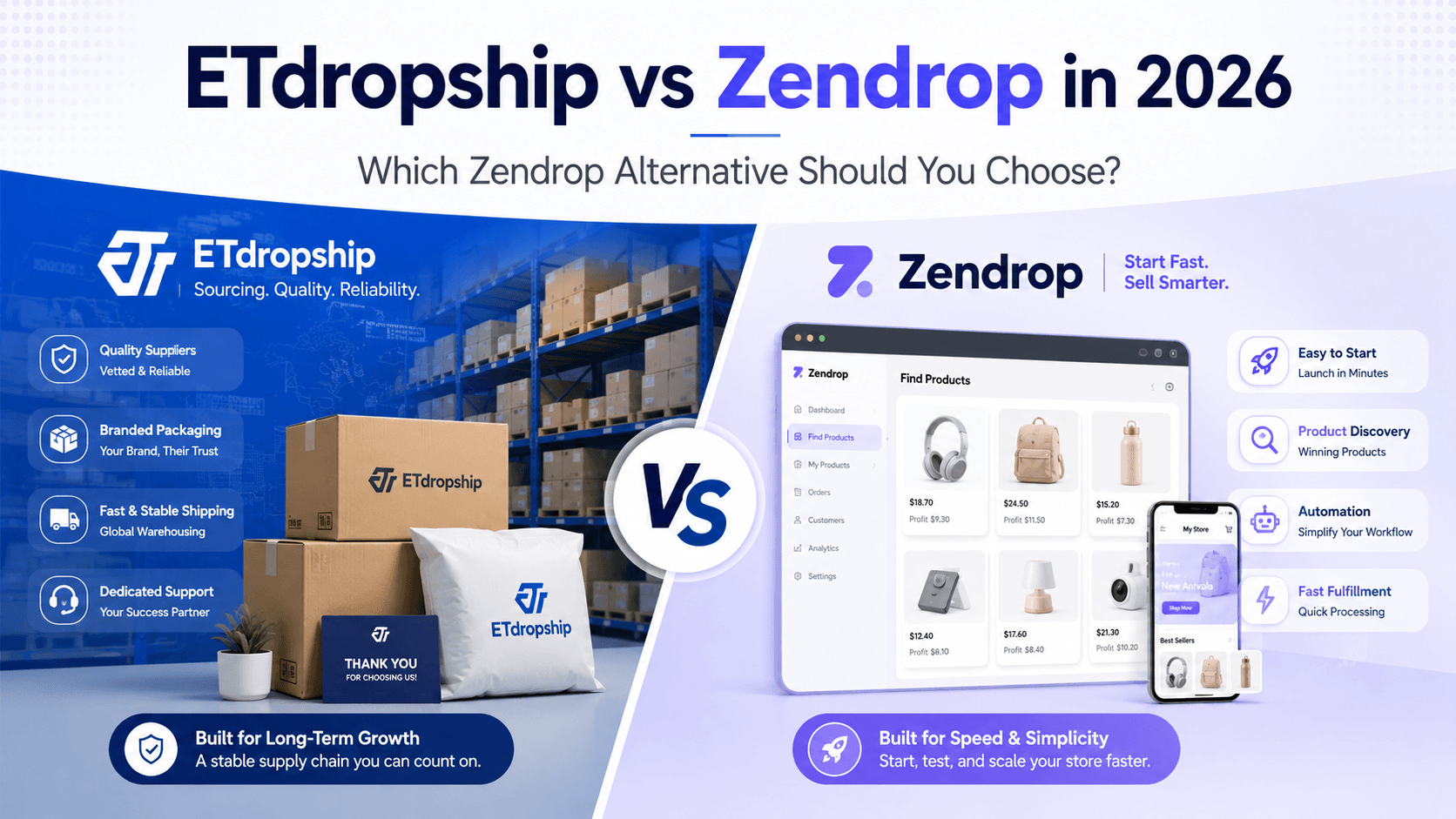
3. Zendrop
Zendrop is designed around simplifying the dropshipping workflow for ecommerce sellers and can be appealing to stores that want a more structured interface than purchasing customer orders manually from unrelated marketplace sellers.
For a beginner, workflow simplicity has real value because the seller can spend more time testing products and creatives rather than transferring every order manually. The limitations become more visible when a mature store needs specific factory access, detailed specification control or a highly customized supply chain.
Zendrop should therefore be judged according to how much upstream product control the business actually needs.
4. BigBuy
BigBuy is based in Spain and operates a large wholesale and dropshipping ecosystem serving European ecommerce markets. Its regional structure can make it relevant to sellers looking for products already positioned within an EU supply network.
For France sellers, one potential advantage is avoiding some of the long procurement process associated with purchasing each item from a supplier in China after receiving the customer order. The trade-off is that many other European sellers can access the same catalog, which can make differentiation more difficult.
BigBuy therefore fits stores that value broad EU product access and regional logistics, while stores seeking unique specifications may eventually need a different sourcing model.
5. AliExpress
AliExpress remains useful because of the enormous range of products available with relatively low barriers to entry. A beginner can investigate many niches and order individual samples without negotiating large minimum quantities.
The same flexibility creates its biggest weakness. A seller may depend on separate marketplace merchants whose stock, quality, pricing and processing performance differ significantly. Two listings showing what appears to be the same product can also represent different factories or specifications.
AliExpress is therefore better treated as a flexible product-access environment than as a guarantee of long-term supplier consistency.
6. AutoDS
AutoDS is different from a conventional supplier because its main value is automation. It can help ecommerce sellers manage product imports, pricing, stock monitoring and order workflows across supported sources.
That distinction should be clear when comparing it with an actual sourcing or manufacturing partner. Automation can reduce manual work, but it does not automatically improve the quality of the external supplier or guarantee that the product specification will remain unchanged.
AutoDS is most relevant when workflow efficiency is the bottleneck. If the real problem is inconsistent factories or poor products, a software layer alone cannot solve it.
7. Bigblue
Bigblue is a French fulfillment company, so its role differs significantly from marketplace-based dropshipping suppliers. It becomes more relevant after a seller already has products and wants inventory handled closer to European customers.
This can make sense for validated SKUs where faster regional delivery and structured warehouse operations justify holding stock. It is much less relevant when the seller is still testing dozens of uncertain products without knowing which ones deserve inventory.
The decision is therefore not whether local fulfillment is “better.” It is whether the SKU has enough proven demand to justify moving into that model.
8. ShipBob
ShipBob operates a broader third-party logistics model and is generally more relevant to businesses that already hold inventory than to pure purchase-after-order dropshipping.
Its multi-market logistics structure can become useful for brands expanding beyond France, but that same infrastructure may be unnecessary for a beginner testing a few products. A seller should evaluate inbound freight, receiving, storage and outbound fulfillment together rather than comparing only last-mile delivery speed.
ShipBob fits a different stage from a marketplace supplier, which is why ranking the two directly without considering business maturity is misleading.
9. Cubyn
Cubyn is another fulfillment-oriented option associated with the French ecommerce market. Its role is closer to structured warehousing and order fulfillment than to helping a seller browse thousands of products for early testing.
That makes it potentially useful when the product assortment is stable and stock is already available. Stores that continuously replace products and depend on supplier stock may not receive the same benefit because warehouse efficiency becomes valuable only when there is inventory to manage.
Cubyn should therefore be evaluated as an operational infrastructure choice rather than simply another catalog supplier.
10. ETdropship
ETdropship uses a sourcing-plus-fulfillment model rather than operating only as a fixed product marketplace. In practical terms, this type of model is most relevant when a seller wants a product sourced against defined requirements and then connected to QC, inventory or direct-to-customer fulfillment.
The important comparison should still be made using the same criteria applied to every other option: product specification, quotation transparency, sample quality, supplier stability, processing time, shipping performance and the level of inventory commitment required.
For a seller choosing any sourcing provider, the name of the provider matters less than whether the workflow produces consistent products and predictable delivered-order economics.
Which Supplier Type Is Better for a Beginner in France?
Beginners usually need flexibility more than maximum unit-cost efficiency. Product demand is uncertain, which means committing heavily to stock or complicated factory development can introduce risk before the store has generated useful sales data.
Catalog-based platforms and marketplace suppliers can therefore be practical during the earliest stage. The seller can test a small number of products, order samples and learn which customer problems deserve further investment.
A broader guide to starting dropshipping in France with limited upfront commitment is useful at this stage because supplier choice should match the overall testing model rather than being made independently from product validation, content and budget.
The Best Supplier Changes After a Product Becomes Successful
A product receiving occasional orders has very different supply-chain requirements from one processing dozens of orders every day. Early on, the cost of building deeper supplier control may be greater than the benefit.
Once sales become predictable, however, specification consistency and availability become more valuable. The seller may want an approved sample, clear materials, stable colors, fixed accessories, documented packaging and a supplier capable of replenishing the same version repeatedly.
This is when “find another listing if the first one disappears” stops being a good supply strategy.
When Does a Product Sourcing Agent Become Relevant?
A seller does not necessarily need a sourcing agent for every experimental SKU. The role becomes more useful when the store already knows what product specification it wants but marketplace suppliers are no longer providing enough consistency.
A product sourcing agent can compare multiple upstream suppliers against the same requirements, arrange samples and help distinguish genuine price differences from differences in materials, packaging or specification. That creates a more controlled procurement process than searching for another visually similar marketplace listing each time stock changes.
The transition should follow product evidence. Sourcing control is most valuable when inconsistency threatens a SKU that already matters to the business.
Do Not Compare Suppliers Using Product Price Alone
Suppose Supplier A quotes €7.50 and Supplier B quotes €8.30 for a product that appears identical. Choosing Supplier A immediately assumes both quotations represent the same product and service.
They may not. Materials, dimensions, packaging, defect tolerance, domestic China delivery, procurement time and included accessories can all differ. A lower quotation can simply represent a lower specification.
Supplier comparisons should therefore use one product brief whenever possible. Once suppliers quote against the same requirements, price becomes much more meaningful.
Samples Should Be Compared Against a Written Specification
A sample is most valuable when the seller knows what is being evaluated. Checking whether a product “looks good” is much less useful than confirming dimensions, material, function, accessories, packaging and any product-specific performance requirements.
Keep the approved sample or detailed records once the product begins selling. Future batches can then be compared with the version customers already received successfully.
This prevents silent supplier changes from gradually turning one successful SKU into a different product.
MOQ Should Match the Product Stage
Low MOQ is valuable during testing because flexibility reduces the financial cost of being wrong. After stable demand appears, a higher quantity can become useful if it reduces procurement cost or improves product control without creating excessive unsold inventory.
The mistake is treating MOQ as either always good or always bad. A 500-unit purchase can be irresponsible for an untested product and completely reasonable for another SKU selling dozens of units every day.
MOQ should be considered together with sales velocity, supplier lead time and the amount of capital the business can safely commit.
Shipping to France Should Be Tested With Real Parcels
A supplier saying “France delivery is fast” is not enough information. Sellers need the packed product weight, the intended shipping route, supplier processing time and realistic tracking behavior.
A useful dropshipping logistics company evaluation compares more than freight price. Processing time, tracking activation, customs performance, delivery consistency and exception handling can all influence whether the supposedly cheaper route remains cheaper after refunds and customer support are included.
Test orders are especially useful because customers experience the complete process, not the quotation spreadsheet.
Supplier Processing Time Can Be as Important as Shipping Time
A product may use a fast international line while still reaching French customers slowly because the supplier requires several days before handing it to the warehouse.
Measure order-to-dispatch separately from dispatch-to-delivery. If the first stage is consistently slow, switching international carriers may not solve the real problem.
For products that begin generating steady orders, a modest inventory buffer can eventually remove repeated supplier procurement time without requiring the seller to purchase several months of stock.
Check What Happens When a Variant Goes Out of Stock
Stockouts are particularly dangerous when products have size, color or model variations. A supplier may still have the product family available while the exact variant shown in advertising is unavailable.
The store needs a substitution rule. Automatically shipping a similar color, material or model can create more problems than delaying the order, especially when the substitute differs from the product page.
For important SKUs, sellers should know how quickly unavailable variants can be replenished and whether the supplier communicates stock changes before customer orders are accepted.
Returns and Defects Belong in Supplier Evaluation
Supplier performance does not end when a parcel is dispatched. If one supplier produces noticeably more damaged or incorrect products, those failures create customer-support and replacement costs that can erase a small product-price advantage.
Track defect reasons by SKU and supplier where possible. Repeated problems with one attachment, material or electronic component can identify a manufacturing problem before it becomes a larger review issue.
The best supplier economics are therefore based on successfully delivered products, not simply purchase price.
France Sellers Should Be Careful With Product Compliance
Different products carry different obligations, especially in categories such as electronics, children's goods, cosmetics and products making health or safety claims. A supplier saying that a product “can ship to France” does not prove that the SKU satisfies every requirement that applies to selling it.
Documents should correspond to the actual product and model. Sellers should also understand which party is responsible for the relevant information, labeling and other obligations in the final sales structure.
For beginners, simpler product categories can reduce the amount of compliance complexity introduced during early testing.
Do Not Choose a Supplier Because It Offers Everything
A huge catalog can be useful during product discovery, but catalog size becomes much less important after a winning SKU has been identified.
At that point, the seller may benefit more from one supplier that understands the product category well than from a platform offering hundreds of thousands of unrelated items.
The supplier relationship should become more specialized as the product becomes more important.
When Should You Move From Marketplace Buying to Structured Sourcing?
Three signals are particularly useful. The first is predictable sales: the same SKU is receiving enough orders that supplier changes now affect meaningful revenue. The second is specification risk: different listings produce different product quality or features. The third is economic opportunity: better upstream purchasing can create enough savings to justify additional coordination.
At that point, structured product sourcing can be used to compare suppliers, approve samples and purchase according to a defined requirement rather than continuing to depend on whichever retail or wholesale listing is currently available.
This does not mean every seller should abandon marketplaces. It means proven products can use a different supply model from experimental products.
How to Compare Two France Dropshipping Suppliers Properly
Start by sending both suppliers the same specification. Ask for the same quantity, product version, packaging requirement and destination assumptions, then separate the quotation into product cost, domestic handling where applicable, international freight and other fees.
Next, compare samples. The cheaper supplier should not win if the sample is materially worse or fails a requirement customers actually care about.
Finally, compare execution. Response quality, replenishment, packaging accuracy and real shipping performance become much easier to evaluate after several orders than during a sales conversation.
Do You Need a French Supplier?
Not necessarily.
A supplier located in France or elsewhere in the EU can offer operational advantages for some products, particularly when stock is already positioned near the customer. The trade-off may be a higher purchase price or less product customization.
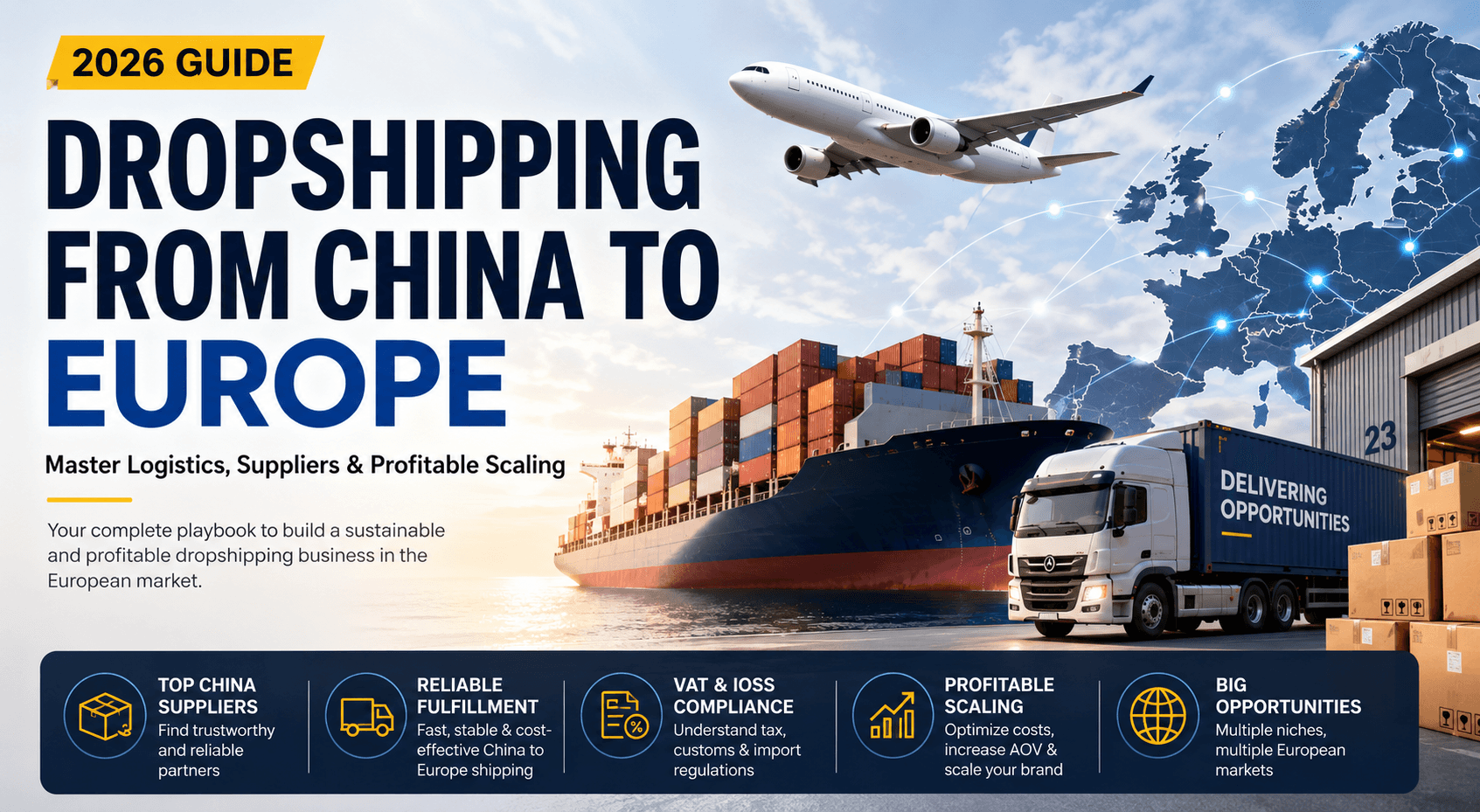
China-based sourcing can provide broader factory access and different economics but requires a well-managed cross-border fulfillment process.
The right answer depends on the SKU. A store can also use both models simultaneously, keeping some products in Europe while testing or fulfilling others directly from China.
Can One Store Use Several Suppliers?
Yes, and many growing stores eventually do. Different factories can specialize in different product categories, and one supplier may not remain the strongest option for every SKU.
The challenge is coordination. Separate suppliers can create split parcels, different packaging, inconsistent tracking and more manual work if every supplier ships customer orders independently.
Once supplier count increases, consolidation or a central fulfillment layer can become useful, but it should solve an actual operational problem rather than be added unnecessarily during early testing.
A Practical Supplier Selection Framework for France
During product testing, prioritize flexibility, sample quality and realistic landed cost. You need enough supply reliability to conduct a fair market test, but there is little reason to build an elaborate procurement structure around a product that may never scale.
During early growth, shift attention toward product consistency, replenishment and processing time. Keep records of the approved version and begin reducing dependence on unstable listings.
During mature scaling, procurement economics, QC, stock buffering and regional inventory can become more important. The supplier decision evolves because the value of the SKU to the business has changed.
Frequently Asked Questions
What is the best dropshipping supplier for France?
There is no universal best supplier. Catalog platforms can be useful for flexible testing, EU suppliers may provide regional stock advantages, and dedicated sourcing becomes more relevant after a product develops predictable demand.
Can I use China suppliers for dropshipping to France?
Yes, provided the product can legally be sold and the complete sourcing, VAT, customs and fulfillment process is suitable for the target market. Real test orders should be used to verify the actual delivery experience.
Is an EU supplier always better than a China supplier?
No. EU supply may improve some delivery scenarios, while China sourcing can provide different product access, customization and purchasing economics. The comparison should be made SKU by SKU.
Should beginners use AliExpress or a sourcing agent?
AliExpress can be useful when flexibility matters and products are still uncertain. A sourcing agent becomes more useful when a validated SKU needs more consistent upstream supply, specifications or purchasing coordination.
How should I compare supplier prices?
Compare suppliers using the same specification, quantity, packaging and shipping assumptions. Unit price alone is not a fair comparison when the products or services differ.
Should I order samples before selling in France?
Yes, particularly for products where materials, sizing, electronics, fit or appearance affect customer satisfaction. Samples also help create more accurate product pages and original content.
Do I need inventory for France dropshipping?
Not necessarily during testing. Small inventory buffers or EU stock can become useful after demand becomes predictable and the operational benefit justifies the inventory commitment.
Can I change suppliers after a product is already selling?
Yes, but the replacement product should be compared against the approved specification. Switching to a visually similar but materially different version can cause customer complaints even when the new supplier considers it equivalent.
Conclusion
The best dropshipping supplier for France in 2026 depends on what stage the product and store have reached. A platform that provides excellent flexibility during product testing may not provide enough specification control for a mature bestseller, while a structured fulfillment or warehouse solution can be unnecessarily expensive before demand exists.
This is why supplier selection should begin with the operating requirement rather than a brand ranking. Beginners need flexibility and usable samples; growing stores need consistency and replenishment; mature products need stronger procurement economics, quality control and predictable fulfillment.
France sellers should also evaluate suppliers using the complete order outcome. Product cost matters, but so do processing time, packed shipping cost, tracking, defects, returns and the likelihood that the exact product customers saw in advertising will remain available.
A strong supplier relationship is therefore not the one that produces the lowest quotation today. It is the one that provides the right level of control for the product's current stage without forcing the seller to take unnecessary inventory or operational risk.