How to Start a White Label Beauty Dropshipping Business in 2026
Beauty has always been a unique category in cross-border e-commerce. Unlike ordinary daily-use products, it does not rely only on low prices. Unlike bulky products, it is not heavily restricted by shipping costs. When consumers buy beauty products, they care about results, packaging, brand image, user experience, and real feedback on social media.
In 2026, white label beauty dropshipping still has strong potential, but the way sellers approach it has changed. In the past, many sellers could find a trending product, change the packaging, upload it to Shopify or an independent store, and test ads quickly. Today, consumers are more rational, platform reviews are stricter, and advertising costs are higher. Without clear positioning, stable supply chains, and decent packaging, it is difficult to build a long-term business.
White label beauty dropshipping is more suitable for sellers who want to build a brand. It is not simply about putting a logo on a supplier’s product. It is about turning a mature product into a branded product for a specific target audience. Product selection, packaging, compliance, content marketing, and fulfillment all affect the final result.
Understanding the Nature of White Label Beauty Dropshipping
White label beauty products are products that suppliers already have in mature formulas, basic packaging, and production systems. Sellers can add their own brand elements to these existing products, such as logos, bottle labels, outer boxes, instruction cards, thank-you cards, and set packaging.
The advantage of this model is that the entry barrier is relatively low. Sellers do not need to develop a new formula from scratch, build a factory, or invest heavily in large inventory at the beginning. With the right product and supplier, sellers can start with small-batch customization and test the market first.
However, white label does not mean careless or low-standard selling. Beauty products come into contact with the skin, lips, hair, or eye area, so consumers have higher expectations for safety and trust. If product quality is unstable, packaging looks cheap, or after-sales service is slow, it can quickly damage store reviews and brand reputation.
Sellers who are truly suitable for white label beauty should treat it as a light brand-building project, not a regular product-listing business.
Where the Opportunities Are in 2026
The beauty market is still large, but the way it grows is changing. Consumers no longer only buy from big brands. They are also willing to try niche brands with clear positioning, attractive packaging, and reasonable pricing. TikTok, Instagram, YouTube Shorts, and Pinterest give new brands the chance to be discovered, especially beauty products with strong visuals and clear use cases.
White label beauty is suitable for small and medium-sized sellers for several reasons.
First, beauty products are naturally suitable for content marketing. A lip mask, body lotion, makeup brush, or travel skincare set can be shown through unboxing videos, tutorials, before-and-after comparisons, and daily routine content. Compared with products that require long explanations, beauty products are easier to demonstrate through short videos.
Second, beauty products have repeat purchase potential. Products such as cleansers, creams, lip balms, body lotions, and hand creams can bring customers back if the user experience is good. Many ordinary dropshipping products are one-time purchases, while beauty products are more suitable for building customer lifetime value.
Third, white label beauty can increase average order value through packaging and product sets. A single product may have limited profit, but when it is turned into a care set, holiday gift box, travel kit, or beginner set, the pricing space becomes much better.
Avoid Building a Broad Beauty Store at the Beginning
Many beginners make the same mistake when starting beauty dropshipping: they sell everything. Lipsticks, face masks, false eyelashes, body lotions, perfumes, makeup brushes, and shampoos are all placed in one store. The page may look rich in products, but consumers will not understand what the brand actually stands for.
White label beauty is better suited to a focused niche.
For example, you can build a lip care brand around lip balm, lip masks, lip scrubs, and lip oils. You can also build a body care brand starting with body lotion, body scrub, hand cream, and body mist. Some sellers begin with beauty tools such as makeup brushes, beauty sponges, powder puffs, and cosmetic bags. These products are more beginner-friendly and usually involve lower compliance pressure.
When choosing a niche, do not only look at search volume and popularity. More important factors include whether the product can be branded, whether it has repeat purchase or bundle potential, whether it is easy to ship, whether it is easy to create content around, and whether the supplier can provide stable packaging and documentation.
A clear niche is much easier to build trust around than dozens of unrelated SKUs.
Choose a Low-Complexity First Product, Not a Large Catalog
The first product should match the brand promise and be practical to test. A visually attractive item is not enough if it leaks, requires unsupported claims, has unstable packaging, or cannot be reordered consistently. For most beginners, the best starting point is a product with understandable use, manageable shipping risk, documentation that the supplier can provide, and room for a bundle or repeat purchase.
Low-complexity formats may include lip care, body care, basic moisturizers, travel sets, or non-formula beauty tools. The right choice depends on the target market and supplier evidence, not on a universal ranking. Sellers comparing white label beauty product niches should separate content appeal from operational feasibility: a product can look strong on social media and still be a poor launch choice if its packaging, shelf life, claims, or documentation are difficult to control.
Formula-based products generally require more diligence than tools and accessories. Beginners should be cautious with aggressive acne, whitening, hair-growth, medical-repair, eye-area, or other high-claim products unless the supplier documentation and market-specific compliance route have been confirmed. A simpler claim such as moisturizing or cleansing can still support a strong brand when the product experience, packaging, and content are credible.
A focused launch usually needs one hero product and only a few closely related offers. A lip-care concept may begin with one core balm or mask and later add a set; a body-care concept may begin with one lotion and add a complementary scrub. This keeps the brand understandable and makes inventory, content testing, and customer feedback easier to manage.
Do Not Focus Only on the Lowest Price
The biggest risk in white label beauty is choosing a cheap product with too many problems. Leaking bottles, unstable scent, labels that peel off, damaged packaging, and inconsistent product batches can all increase after-sales costs.
Product selection should be based on shipping stability, documentation, packaging capability, and restocking consistency rather than purchase price alone.
The first is shipping stability. Common beauty product issues include leakage, breakage, deformed outer boxes, and product changes caused by high temperature. When testing samples, do not only check whether the product looks good. You also need to check whether it is suitable for cross-border shipping.
The second is supplier documentation. At minimum, you should confirm the ingredient list, volume, usage instructions, shelf life, label information, and basic testing documents. Different target markets have different cosmetic requirements, so supplier cooperation on documentation is very important.
The third is packaging customization capability. Some suppliers only support simple labeling and do not support outer boxes, insert cards, or set packaging. For a white label brand, packaging capability directly affects product value and pricing.
The final point is restocking stability. If your ads start performing well but the supplier suddenly runs out of stock, changes packaging, or delivers inconsistent batches, it can quickly lead to delayed orders and customer complaints.
How to Choose Suppliers and Dropshipping Service Providers
For white label beauty, finding a cheap supplier is not enough. You need a supply chain system that can work with you over the long term.
A suitable supplier or dropshipping service provider should support sample purchasing, small-batch customization, brand labels, outer packaging, quality inspection, warehousing, one-piece dropshipping, tracking updates, and after-sales handling. When comparing white label supplier options for Shopify, sellers should also verify who owns the formula and documentation, whether packaging components can be reordered consistently, and how batch changes will be communicated. Automatic order syncing and tracking updates can reduce manual work, but they do not replace supplier due diligence.
This is where an all-in-one dropshipping service provider such as ETdropship can be useful. White label beauty involves multiple steps, including products, packaging, warehousing, and logistics. If sellers have to communicate separately with factories, packaging suppliers, warehouses, and shipping providers, the process can become time-consuming and inefficient. A unified fulfillment service provider can connect product sourcing, procurement, quality inspection, branded packaging, order processing, and global shipping. Sellers can then focus more on product selection, website conversion, ad creatives, and repeat purchases.
However, choosing a service provider should not be based only on what they claim. It is better to start with sample orders and small-batch testing. Check product quality, packaging results, shipping time, and after-sales response before deciding on long-term cooperation.
Create a written acceptance standard before approving a supplier. It should define the approved sample, ingredient and label version, container and closure, fill volume, scent or color tolerance, packaging components, carton protection, production lead time, and procedure for defects or batch changes. This turns supplier selection into an operational decision instead of a promise-based decision.
How to Create Brand Packaging for White Label Beauty
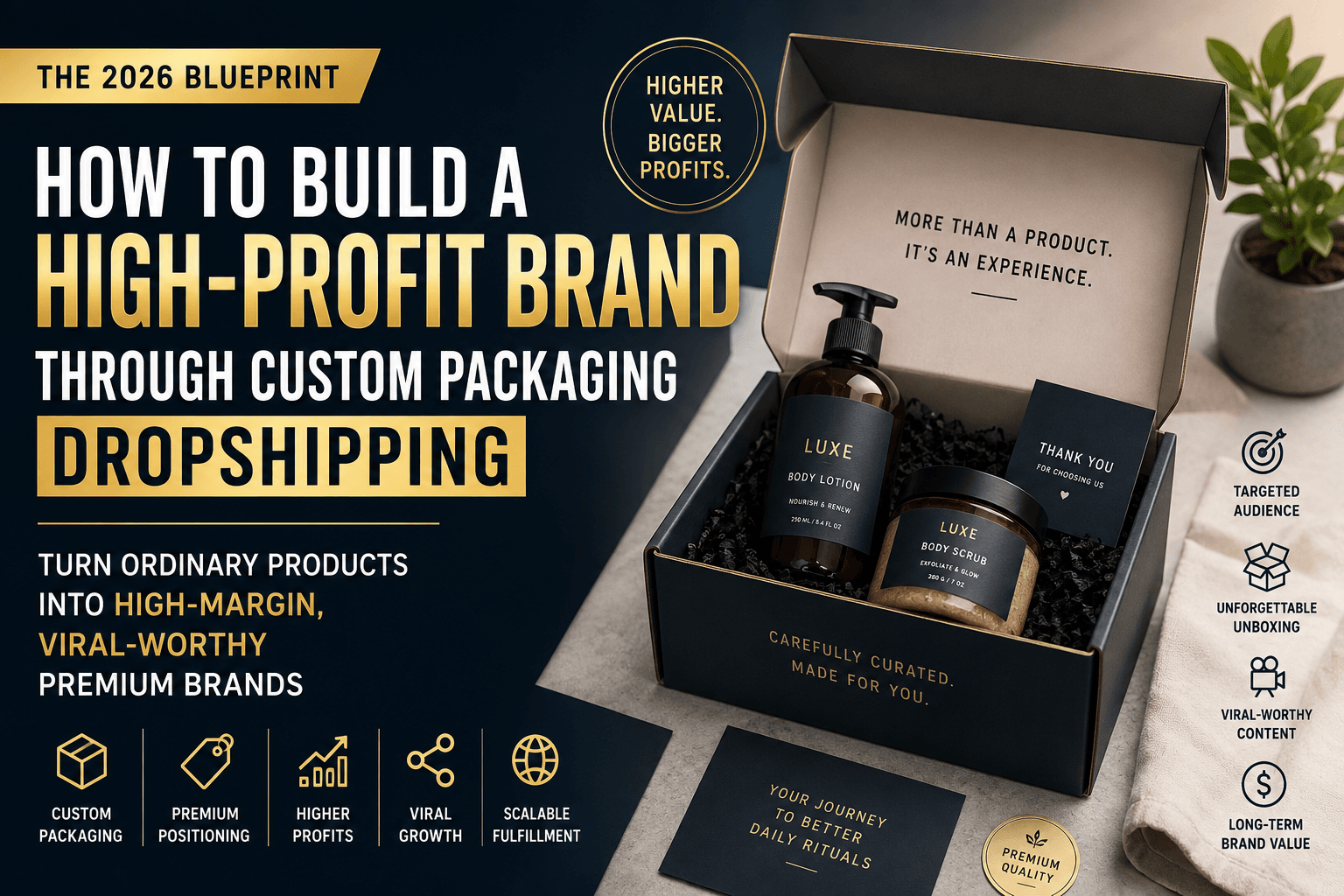
A large part of the value in white label beauty comes from packaging and brand presentation. When consumers receive the product, their first impression often comes from the outer box, bottle label, instruction card, and overall texture.
At the beginning, packaging does not have to be complicated, but it must be consistent. The brand name, logo, fonts, colors, image style, and website design should all match. Even if you are selling only a lip balm set, consumers should feel that it comes from a real brand.
Beginner-friendly private label packaging can include bottle labels, logo stickers, printed boxes, custom bags, thank-you cards, instruction cards, and set storage bags. If the budget is limited, start with the smallest packaging system that still looks consistent and provides required product information, then upgrade to outer boxes and gift sets after sales become more stable.
Packaging design should not be overloaded. Beauty products need to feel clean, comfortable, and trustworthy. For skincare products in particular, overly flashy packaging may reduce the sense of professionalism.
Compliance Should Be Considered Early
Beauty products cannot be treated like ordinary accessories. Brand compliance should be considered before packaging is printed or claims are published, because products used on the skin, hair, eye area, or lips may trigger market-specific safety, notification, labeling, and responsible-person requirements.
If you sell to the EU, you need to pay attention to cosmetic product notification, responsible person requirements, labeling information, and product safety documentation. If you sell to the UK, you also need to consider the UK Responsible Person and SCPN notification. If you sell to the United States, you need to pay attention to FDA-related requirements for cosmetic facility registration, product listing, and labeling claims.
One issue beginners often overlook is marketing compliance. Avoid using claims such as “treat,” “medical-grade,” “completely removes acne,” “permanent whitening,” “repairs skin disease,” or “hair growth” without proper legal and regulatory support. These words may imply drug or medical effects rather than ordinary cosmetic benefits, which can create higher risks later.
Safer wording should focus on daily care, moisturizing, nourishing, cleansing, improving dryness, and enhancing the user experience. This approach still communicates product value while being more suitable for long-term brand operation.
A Practical Step-by-Step Process from Zero
Define the Target Audience and Product Direction
First, decide which type of consumer you want to serve. Examples include people with dry skin, travelers, beginner makeup users, body care lovers, or gift buyers. At this stage, do not rush to find products. Clarify the brand direction first.
Once the target audience is clear, product selection becomes much easier. For example, people with dry skin may be suitable for body lotion, hand cream, lip balm, and hydrating masks. Travelers may prefer mini skincare sets, storage bags, and portable beauty tools.
Order Samples Instead of Listing Products Directly
After selecting three to five potential products, ask the supplier to send samples. When the samples arrive, check the texture, scent, packaging, labels, bottle opening, outer box, shipping condition, and actual user experience.
If the product does not photograph well, the packaging looks cheap, or it is easily damaged during long-distance shipping, do not force it into your store. Beauty products rely heavily on first impressions, and poor physical quality will hurt conversion rates.
Record the sample results in a simple go/no-go sheet. A product should not advance merely because its texture feels acceptable; it also needs usable documentation, stable packaging, a realistic delivered cost, compliant claims, and content that can be produced without misleading demonstrations.
Design Small-Batch Brand Packaging
After confirming the product, start with the smallest packaging and inventory batch that the supplier can support economically. A fixed quantity such as 100 or 300 units is not automatically correct; the decision should reflect packaging MOQ, shelf life, testing budget, expected weekly sales, and the cost of changing a label or formula later.
The packaging can begin with a basic version, including brand labels, outer boxes, thank-you cards, and instruction cards. Once the product data becomes stable, you can move into more complete gift boxes, sets, and upgraded packaging solutions.
Build a Shopify Product Page
A white label beauty product page should not only list product details. It should help consumers understand who the product is for, when to use it, how to use it, and why it is worth buying.
A complete product page usually includes product images, lifestyle images, ingredient information, usage instructions, target users, shipping policy, return policy, FAQ, and customer reviews. Beauty products especially need real images and usage scenes. Supplier images alone are not enough to build trust.
Use Content to Test the Market
After the product is launched, do not rely only on ads. Prepare short videos, unboxing photos, tutorials, comparison images, and lifestyle content. On TikTok and Instagram, beauty consumers prefer real usage experiences over hard-selling ads.
In the early stage, you can work with small creators or everyday users to create UGC content. Compared with expensive influencer campaigns, smaller creators are more suitable for testing creative angles and often produce more authentic content.
Adjust Products and Packaging Based on Data
White label beauty is not something you finish once and leave unchanged. You need to adjust based on ad data, customer reviews, return reasons, and repeat purchase behavior.
If many customers think the packaging looks too basic, you can upgrade the outer box or insert card. If customers often ask how to use the product, you need to improve the instruction card and product page. If the profit on a single product is too low, you can create bundles and add-on offers.
At this stage, do not rush to expand into too many SKUs. Stabilize one hero product first, then add related products.
How to Build Pricing and Profit Structure
White label beauty pricing cannot be based only on product cost. The calculation should include the formula or finished product, packaging components, assembly, inspection, storage, shipping, payment fees, advertising, discounts, refunds, reshipments, and the target contribution margin.
For example, a lip balm may cost only $2, but after adding labels, outer packaging, materials, shipping, and platform fees, the real cost becomes much higher. If you sell it for only $9.99, a slight increase in ad cost can eliminate your profit.
A better method is to use product bundles. A single lip balm can be used as an entry product, while three-piece sets, care kits, and gift boxes become the main profit drivers.
For example, a single lip balm can attract first-time buyers. A three-piece lip care set can increase average order value. A holiday gift box can target gift buyers. Repeat purchases from existing customers can be encouraged through email discounts.
This creates a healthier profit structure than relying only on one low-priced product.
The key number is contribution margin after variable costs, not the gap between purchase price and selling price. Calculate expected revenue after discounts, then subtract product and packaging cost, fulfillment and shipping, payment fees, expected refund or reshipment loss, and customer acquisition cost. If the remaining amount cannot support overhead and future inventory, the offer needs a higher price, a better bundle, a lower delivered cost, or a different acquisition strategy.
The Marketing Focus Should Be User Experience, Not Exaggerated Claims
Beauty product ads should not only say “high quality,” “hot-selling,” or “low price.” These words are too generic and do not persuade modern consumers.
More effective content shows real user experience. A lip mask can be shown in a bedtime routine. A body lotion can be shown after a shower. Makeup brushes can be shown in a beginner makeup tutorial. A travel set can be shown in a vacation or business trip packing scene.
Short video content can focus on unboxing, texture display, usage tutorials, lifestyle scenes, gift packaging, and customer feedback. The visuals do not need to be overly complicated, but they need to make the product feel real, useful, and trustworthy.
For new brands, UGC content is especially important. Real customer unboxing and feedback are often more convincing than the brand simply saying the product is good.
Repeat Purchases Are the Key to Long-Term Profit
The strongest advantage of beauty products is repeat purchase potential. Many sellers only focus on the first order and ignore customer retention. As a result, ad costs keep increasing and profit margins become thinner.
After a customer places an order, you can use email or SMS to continue communication. For example, send a usage guide after purchase, share care tips a few days later, and send a repeat purchase reminder based on the product usage cycle. Before holidays, you can recommend gift sets or add-on products.
If you sell body care products, you can recommend body scrubs and hand creams after customers buy body lotion. If you sell lip care products, you can recommend lip masks, lip oils, or three-piece sets. This not only increases repeat purchases but also strengthens customer memory of your brand.
Common Mistakes Beginners Make
Many white label beauty projects fail not because there is no market demand, but because the execution is too rough at the beginning.
Some sellers only look at low product prices and skip sample testing. When real orders start shipping, problems such as leakage, damaged packaging, or customer complaints appear. Some sellers spend too much on packaging but fail to calculate shipping and advertising costs properly. The store may appear to generate sales, but the actual profit is low.
Many sellers also start with too many products, which makes brand positioning unclear and supply chain management more complicated. For beginners, it is safer to focus on a small number of SKUs and test one niche clearly before expanding.
Another common problem is exaggerated marketing. Beauty products should not make unrealistic claims just to increase conversions. It may improve clicks in the short term, but it can lead to refunds, complaints, and compliance risks in the long run.
Another mistake is approving packaging before the compliance route is clear. A label redesign, responsible-person detail, warning, ingredient format, or claim change can make already printed boxes unusable. Documentation, label copy, and target-market review should therefore happen before the largest packaging commitment.
How ETdropship Supports White Label Beauty Dropshipping Sellers
For Shopify sellers who want to build a white label beauty business, supply chain execution directly affects the brand experience. Stable product sourcing, proper packaging customization, quality inspection before shipping, reliable logistics, and responsive after-sales support all influence whether customers will buy again.
ETdropship can help sellers with product sourcing, procurement quotations, sample confirmation, quality inspection, branded packaging, warehouse management, order processing, global shipping, and tracking-number synchronization. Its branding support is relevant when a seller needs to coordinate labels, boxes, insert cards, and product assembly without managing several suppliers separately. This type of model is suitable for sellers who want to test small batches before scaling.
Sellers do not need to communicate separately with product suppliers, packaging factories, warehouses, and logistics channels at the beginning. A more centralized process can help complete early-stage testing more efficiently. Once the product shows stable data, sellers can gradually improve brand packaging and inventory planning.
Of course, a service provider is only supply chain support. Whether the project succeeds still depends on product positioning, content creation, conversion pages, and repeat purchase strategy.
Conclusion
In 2026, white label beauty dropshipping can no longer be approached with a simple product-listing mindset. This model is more suitable for sellers who are willing to build a brand, test products carefully, and pay attention to packaging and customer experience.
Beginners can start with a small niche, choose one hero product, and add a few related products. In the early stage, use samples and small-batch packaging to test the market. Do not rush to hold large inventory or build an overly complicated product line.
The core of white label beauty is not just putting a logo on a product. It is about turning the product, packaging, content, fulfillment, and repeat purchase experience into one complete brand experience. With a stable supply chain, clear positioning, and packaging and content that can win customer trust, this category still has strong long-term potential for small and medium-sized sellers.
Frequently Asked Questions
Is white label beauty suitable for beginners?
Yes, but beginners should avoid starting with strong functional skincare products. It is better to begin with beauty tools, lip care, body care, or basic moisturizing products. These products are easier to test and easier to create content for.
Does white label beauty require custom packaging?
Not necessarily at the beginning, but basic brand elements are important. These can include logo labels, thank-you cards, instruction cards, or custom packaging bags. Without any brand presentation, white label products are difficult to differentiate from ordinary dropshipping products.
Do I need to hold inventory for white label beauty?
In the early stage, small-batch testing is recommended. It is not wise to hold large inventory immediately. A safer approach is to test samples and small-batch packaging first, then increase inventory after ad performance and customer feedback become stable.
Which white label beauty products are better for cross-border dropshipping?
Products that are small, lightweight, not easily damaged, less likely to leak, and easy to customize are more suitable. Examples include lip balms, lip masks, beauty tools, hand creams, body care mini sets, and travel skincare kits.
What should a white label beauty product page focus on?
The product page should explain the target users, usage scenes, instructions, ingredients, packaging contents, shipping policy, and common questions. Beauty products also need real images, usage videos, and customer feedback to build trust.
Where does the main profit in white label beauty come from?
The main profit comes from brand value, product bundles, repeat purchases, and gift packaging. A single low-priced product usually has limited profit. More stable profit often comes from product sets and repeat customers.
How can ETdropship help white label beauty sellers?
ETdropship can help Shopify sellers with product sourcing, procurement, quality inspection, branded packaging, warehousing, order fulfillment, global shipping, and tracking number synchronization. For sellers who want to start a white label beauty project with a light-asset model, it can reduce the difficulty of supply chain execution.