Dropshipping in Finland in 2026: VAT, Shipping, Payments and Practical Setup
Finland is not one of Europe's largest ecommerce markets by population, but that does not make it irrelevant for dropshipping. For the right seller, its relatively focused market can actually make product positioning, localization, logistics planning, and customer-service expectations easier to define than in a broad campaign targeting all of Europe at once.
The challenge is that Finland should not be treated as simply another English-speaking extension of a global Shopify store. Sellers need to understand Finnish VAT, EU consumer rules, cross-border import procedures, payment expectations, delivery transparency, and the economics of shipping to a geographically northern EU market.
This changes the way a store should be built. The objective is not to upload hundreds of products and hope that advertising finds buyers. A stronger approach is to select a narrow product direction, calculate the full delivered cost, make taxes and shipping clear, test the actual customer journey, and only scale products that can be fulfilled reliably.
Dropshipping can still provide the flexibility to test the Finnish market without making large inventory commitments. However, once demand becomes predictable, the backend needs to become more structured.
Is Dropshipping Legal in Finland?
Dropshipping itself is not a special legal category. It is an ecommerce fulfillment model in which the seller accepts the customer order while a supplier or fulfillment partner handles some or all of the physical product delivery.
The seller still has responsibilities toward the customer. The fact that a supplier is located in China or another country does not remove the merchant's obligations around product information, consumer rights, taxes, pricing transparency, refunds, and applicable product requirements.
For cross-border sellers, this distinction is important. Customers are buying from the store they see online, not from an invisible upstream supplier.
A Finnish customer who receives the wrong product, experiences a major delivery problem, or wants to exercise applicable consumer rights will normally deal with the seller.
That makes supplier and fulfillment performance part of the merchant's own business risk.
Finland VAT in 2026: The Number Sellers Need to Get Right
Finland's standard VAT rate is 25.5%. Finland also uses reduced VAT rates, including a 13.5% rate for certain categories from 1 January 2026, but ordinary ecommerce products commonly sold through dropshipping may fall under the standard rate depending on the product. Sellers should verify the correct classification rather than assume that one VAT rate applies to every category.
This is an important correction because older dropshipping content may still reference Finland's former 24% standard VAT rate.
For pricing purposes, VAT cannot be treated as an afterthought. If a seller determines the product price first and only later discovers how VAT affects the transaction, the apparent advertising margin may be significantly overstated.
The more useful approach is to begin with the expected customer price and work backwards through VAT, product cost, shipping, payment processing, advertising, refunds, and other variable costs.
A product is not attractive merely because the supplier quotation looks inexpensive.
How OSS and IOSS Affect Cross-Border Sales to Finland
EU ecommerce VAT rules are particularly relevant when products are sold across borders.
The One Stop Shop, or OSS, allows eligible businesses selling to consumers across EU countries to manage certain VAT obligations through one EU registration and return rather than registering separately in every member state for those covered transactions.
For goods imported from outside the EU, the Import One Stop Shop, or IOSS, was designed to simplify VAT collection for eligible distance sales of imported goods in consignments not exceeding €150. The EU also removed the old VAT exemption for imports valued below €22, meaning imported goods are generally subject to VAT.
Which system applies depends on the seller's structure, inventory location, transaction flow, marketplace involvement, and value of the shipment. Sellers should therefore avoid treating OSS or IOSS as a generic checkbox that works identically for every dropshipping store.
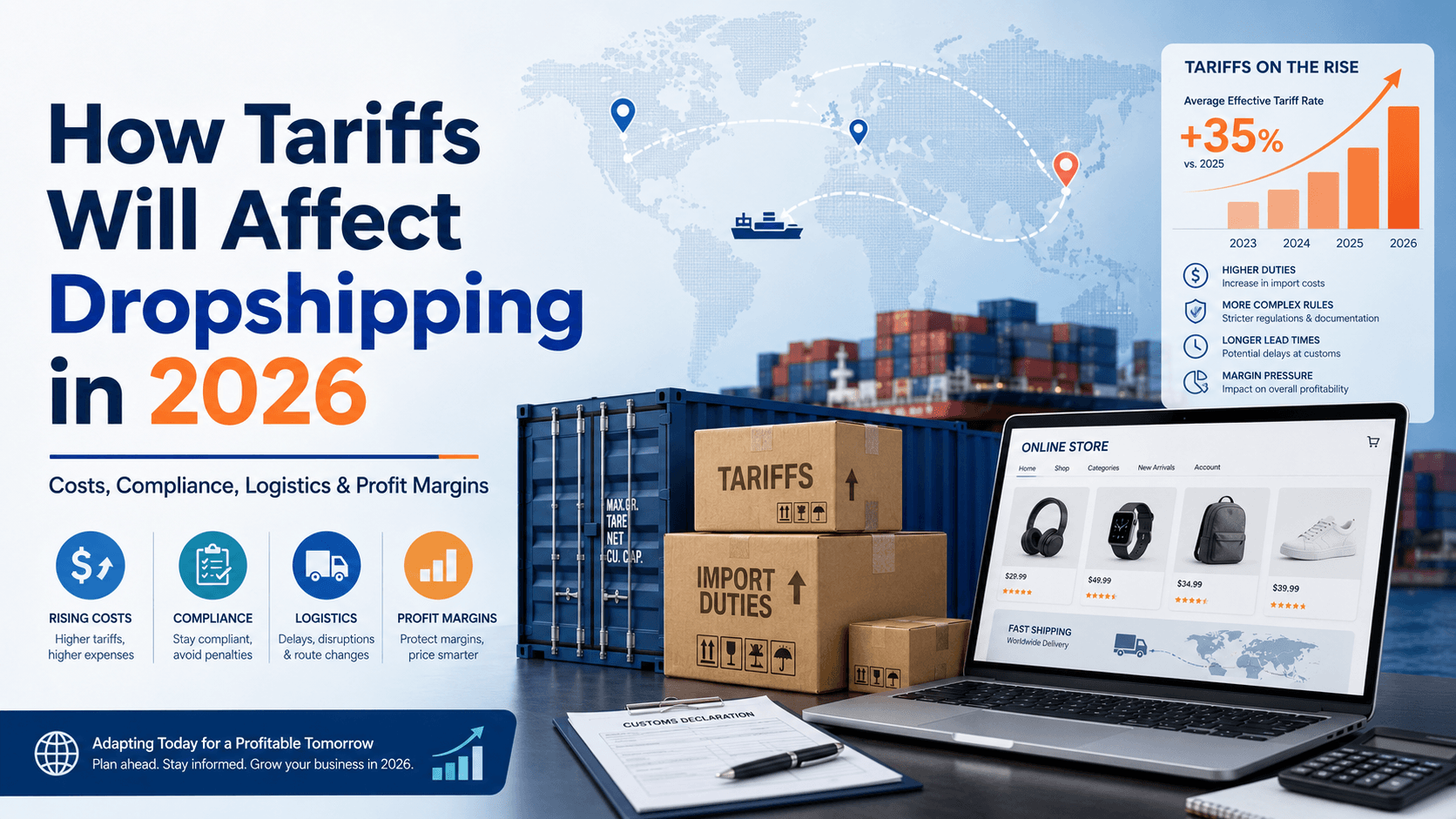
The broader relationship between VAT, customs, product compliance, and cross-border selling is covered in the global ecommerce tax and compliance guide, but Finland-specific pricing should still be checked against current Finnish and EU rules.
Do Not Build Your Finland Pricing From Supplier Cost Alone
Suppose a supplier offers a product for €8.
That number tells you almost nothing about whether the product is commercially viable in Finland.
The final order may also need to absorb international shipping, VAT, payment processing, advertising, packaging, customs-related costs where applicable, replacements, refunds, and customer-service expenses.
A product selling for €34.90 may look highly profitable if the seller compares only €34.90 with the €8 sourcing price. The real margin can become much smaller once all variable costs are included.
This is why Finland product testing should begin with landed and completed-order economics, not markup.
A seller can then determine the maximum acquisition cost the product can support before advertising becomes unprofitable.
Shopify Is a Practical Choice, but the Platform Is Not the Strategy
Shopify can be a practical option for entering Finland because it gives sellers control over product pages, pricing, localization, checkout, payment integrations, analytics, and the broader customer experience.
But choosing Shopify does not solve product-market fit.
It also does not automatically solve shipping, VAT, supplier quality, payment trust, or customer returns.
A store can be technically excellent and still fail because the product is poorly suited to the market. Conversely, a strong product can underperform if the website makes delivery, returns, or payment conditions difficult to understand.
The platform should therefore support the operating model rather than become the operating model.
For an early Finland test, a focused niche or small product range is usually easier to evaluate than a large general store because customer behavior becomes easier to interpret.
Should a Finland Store Be in Finnish or English?
A fully localized Finnish store can improve relevance, but sellers do not necessarily need to translate hundreds of pages before learning whether the product has demand.
Localization can begin with the areas closest to the purchase decision.
Product titles, primary selling points, shipping information, returns, FAQ content, checkout instructions, and important customer-service messages deserve priority.
The objective is not simply translation. It is reducing friction.
Machine-translated text that sounds unnatural can reduce trust rather than increase it, particularly when policies or product instructions become difficult to understand.
A practical testing model is to begin with the most commercially important customer-facing content, measure actual performance, and expand localization when the market proves worthwhile.
Payment Methods Are Part of Conversion, Not Just Checkout
Payment infrastructure affects more than whether the store can technically receive money.
Customers evaluate whether the checkout feels familiar, safe, and transparent.
For Shopify sellers, card payments and compatible wallet or local payment options can form the basic payment structure, but available methods should be selected according to the actual market and payment-provider eligibility.
Unexpected charges are especially damaging.
If shipping, duties, or other costs appear only at the final checkout stage, customers may abandon a transaction that initially looked attractive.
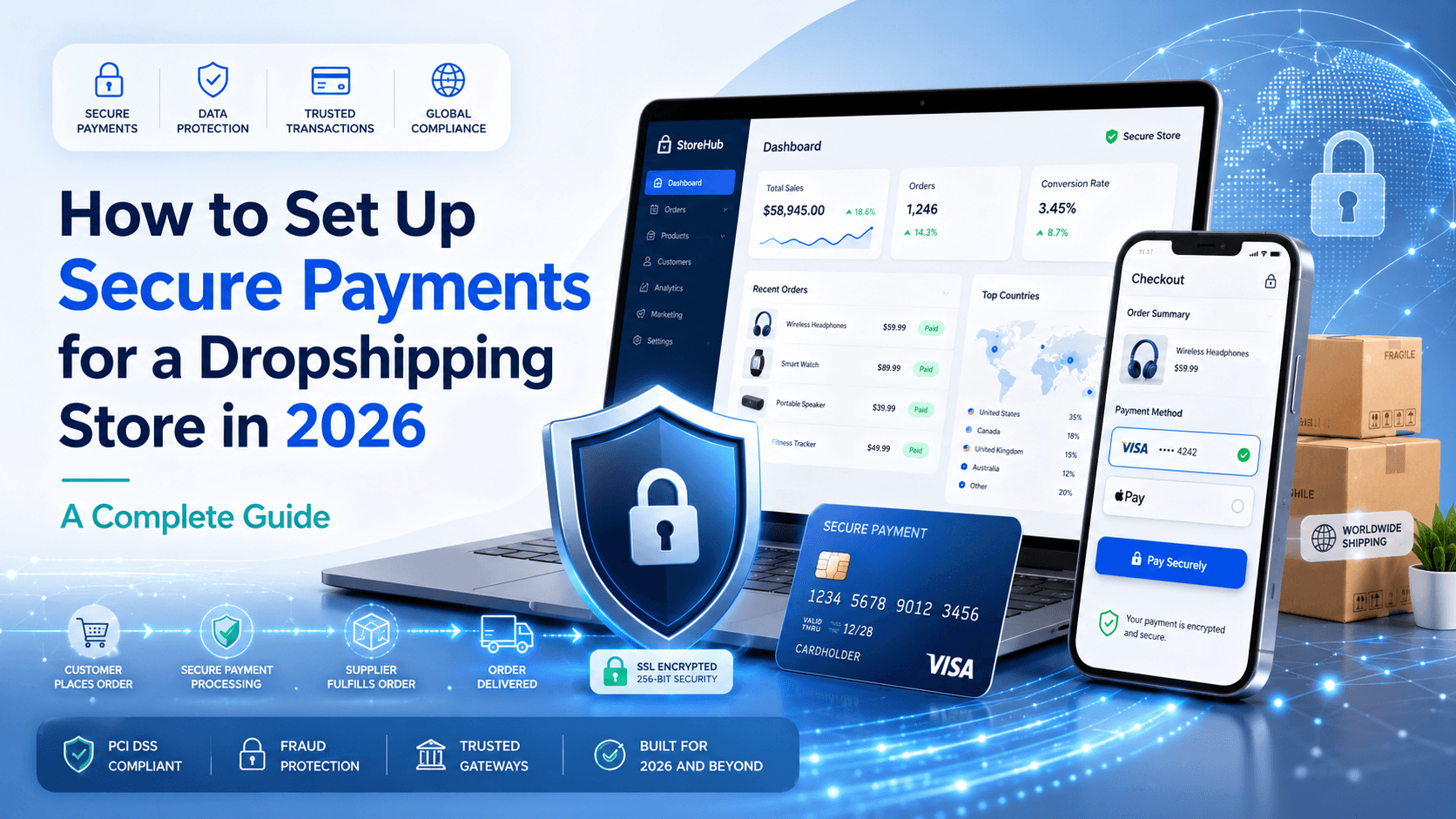
This is why payment setup should be connected with pricing and fulfillment rather than configured independently. A broader secure payment setup for dropshipping stores becomes useful when evaluating fraud control, 3D Secure, disputes, payment stability, and checkout trust.
Shipping to Finland: Predictability Matters More Than a Marketing Promise
Finland's location means sellers should test the actual logistics route rather than copying a generic “Europe delivery” estimate onto the product page.
A line that performs well to Germany or France may not produce exactly the same transit pattern into Finland.
The product also matters. Lightweight accessories, electronics, batteries, fragile goods, liquids, and oversized products can require different shipping methods or create different costs.
For each important product, sellers should know the supplier processing time, when tracking normally activates, which carrier handles the parcel, the realistic delivery range, and what happens if the shipment is delayed or lost.
A realistic eight-to-twelve-day promise that is consistently met can create a better customer experience than advertising extremely fast shipping and repeatedly missing the estimate.
DDP vs DDU Matters for Finnish Customer Experience
Cross-border sellers also need to understand who pays import-related charges and when those charges appear.
Under a DDP-style arrangement, relevant duties and import charges are handled before the parcel reaches the customer. Under a DDU-style arrangement, the customer may need to pay charges during import clearance or before delivery.
From a customer-experience perspective, surprise charges can create friction, parcel refusals, support requests, and refund disputes.
The cheapest freight quotation is therefore not always the cheapest completed-order solution.
The practical trade-offs between the two approaches are explained more deeply in the DDP vs DDU dropshipping guide. For Finland, whichever model is used should be clearly reflected in the price and delivery promise before the customer pays.
EU Consumer Returns Need to Be Built Into the Business Model
For many online distance purchases in the EU, consumers generally have a 14-day withdrawal period, subject to exceptions depending on the product and transaction. For goods, the period generally runs from delivery.
This has a direct operational consequence for dropshipping.
A seller cannot build a Finland strategy around the assumption that every shipped order is final revenue.
Returns, refunds, reverse logistics, and defective products need to be considered before scaling.
The issue becomes more important for categories such as clothing, footwear, products with complicated sizing, fragile items, and products whose appearance is difficult to communicate accurately online.
A product that converts well but creates excessive returns may be weaker than a product with slightly lower sales but much more predictable after-sales economics.
EU Customers Also Have Rights When Products Are Faulty
EU consumer rules provide remedies when goods are faulty or do not work or appear as advertised. EU rules also provide a minimum two-year legal guarantee for goods, although the exact circumstances and national implementation need to be considered.
This is another reason supplier quality should be taken seriously.
If a product fails after delivery, the seller cannot simply tell the customer to contact the Chinese supplier directly.
For a dropshipping business, product quality therefore affects legal exposure, after-sales workload, refunds, replacement costs, and brand reputation simultaneously.
This should influence product selection before advertising begins.
What Products Make Sense for Finland?
There is no universal list of “winning products for Finland.”
A stronger approach is to look for products whose characteristics match the market and can be delivered economically.
Practical household items, compact organization products, selected outdoor accessories, pet products, personal-care accessories, and products suited to seasonal conditions can all be researched, but individual demand needs to be validated rather than assumed.
The logistics characteristics of the product should be considered at the same time.
A low-cost item that is bulky, fragile, difficult to return, or expensive to ship may be a worse business than a slightly more expensive compact product.
For Finland specifically, the product should also make sense at a customer price that can absorb VAT and cross-border fulfillment without becoming obviously uncompetitive.
Seasonality Matters More Than Many Beginners Expect
Finland has pronounced seasonal conditions, which can affect both product demand and marketing.
Winter-related demand can favor certain indoor, automotive, outdoor, comfort, pet, and household products, while spring and summer create different usage patterns.
However, seasonality creates inventory risk as well.
A product that performs strongly for six weeks may become difficult to sell after the seasonal window closes.
Dropshipping is useful in this environment because new seasonal products can initially be tested without large inventory commitments.
Only after demand becomes predictable should the seller consider larger purchasing batches or regional inventory.
Do You Need an EU Warehouse to Sell in Finland?
Not at the beginning.
A new product does not automatically become more attractive simply because inventory is located in Europe.
EU inventory can reduce delivery time and simplify parts of fulfillment, but it also requires the seller to purchase and position stock before customers buy it.
That changes the risk.
During testing, cross-border direct fulfillment can preserve flexibility. After a product demonstrates stable demand, the economics can be recalculated to see whether regional inventory materially improves delivery, conversion, refund rates, or total fulfillment cost.
The decision should therefore follow order data rather than the belief that every European store needs European stock immediately.
When Does Local or EU Inventory Start Making Sense?
Regional inventory becomes more interesting when several conditions occur together.
The product has relatively stable daily sales, the supplier replenishment process is understood, customer demand is concentrated in Finland or nearby EU markets, and faster delivery provides enough commercial benefit to justify holding stock.
At that stage, inventory stops being purely a risk and can become a tool for increasing fulfillment reliability.
But the amount still matters.
The goal is not to move months of inventory into Europe based on one successful advertising campaign. A rolling inventory model based on sales velocity and replenishment time is usually more flexible.
How to Test a Product in Finland Before Scaling
Begin with the actual customer proposition rather than advertising volume.
Check competing products and realistic local pricing. Calculate product cost, shipping, VAT, payment fees, and an allowance for refunds or replacements. Then determine how much room remains for customer acquisition.
Order the product yourself before scaling.
Inspect the actual quality, packaging, dimensions, instructions, and overall customer experience. Then test the logistics route and observe processing time, tracking activity, transit time, and final delivery.
Only after those fundamentals work should traffic become the main experiment.
Advertising should validate whether customers want the offer, not compensate for a broken pricing or fulfillment model.
A Finland Product Page Needs to Answer Practical Questions Quickly
A visitor should not need to search through the website to understand the core purchasing conditions.
The product page should make the main benefit clear, show the product accurately, explain important specifications, provide realistic delivery information, and make returns or customer-service information easy to find.
If dimensions matter, show dimensions.
If compatibility matters, explain compatibility clearly.
If the product needs installation or specific usage instructions, include them before purchase.
Many dropshipping refunds originate from expectation gaps rather than outright product defects.
Reducing those gaps can improve both conversion quality and after-sales performance.
Do Not Compete Only on Low Prices
Trying to become the cheapest store can be especially difficult in European ecommerce because customers can compare products across Amazon, marketplaces, social platforms, and other independent stores.
A low price also leaves less room to absorb VAT, advertising, shipping, payment fees, and refunds.
Instead of asking how cheaply a product can be sold, sellers should ask what makes the offer worth buying from their store.
That difference can come from clearer product positioning, better content, a more useful bundle, trustworthy shipping information, improved instructions, better customer service, or eventually stronger packaging and branding.
The objective is to increase perceived value without creating claims the product cannot support.
What Should Beginners Avoid in Finland?
The first mistake is copying a generic global store and simply adding Finland to the shipping-country list.
A market-specific test should verify price, VAT, shipping, language, payment, and returns.
Another mistake is promising delivery based on the fastest shipment ever recorded rather than the typical route.
Sellers should also avoid building product margins using outdated VAT assumptions, placing large inventory orders before demand is proven, and relying on supplier photographs without ordering a sample.
Finally, compliance should not be postponed until the product becomes successful.
Fixing VAT, product, returns, or delivery problems after hundreds of customers have already purchased is much more expensive than identifying them during testing.
A Practical Finland Dropshipping Growth Path
A Finland store does not need to begin with a complex supply chain.
The early stage is about validation. Select a narrow group of products, confirm the economics, build clear product pages, test the checkout, place real sample orders, and learn how customers respond.
Once one or two products begin generating consistent sales, the business can become more structured. Supplier reliability can be improved, packaging can be refined, shipping options can be compared, and a small inventory buffer can be considered.
Regional inventory becomes relevant only after Finland or the broader Nordic/EU market produces enough predictable demand.
This gradual approach preserves the main advantage of dropshipping: capital is committed only after the business has evidence that demand exists.
Frequently Asked Questions
Is dropshipping legal in Finland?
Dropshipping can be used as an ecommerce fulfillment model in Finland, but sellers still need to follow applicable tax, consumer-protection, product, privacy, and ecommerce requirements. Using an overseas supplier does not remove the seller's responsibilities toward customers.
What is Finland's VAT rate in 2026?
Finland's standard VAT rate is 25.5%. Certain categories use reduced rates, including a 13.5% reduced rate introduced for relevant categories from 1 January 2026. The correct VAT treatment depends on what is being sold.
Can I dropship from China to Finland?
Yes, but sellers need to consider VAT, import procedures, shipping performance, product requirements, delivery transparency, and the actual landed cost of each product.
Can I use IOSS for dropshipping to Finland?
IOSS can simplify VAT handling for eligible distance sales of imported low-value goods in consignments not exceeding €150, but eligibility and implementation depend on the seller's transaction structure.
Is Shopify suitable for dropshipping in Finland?
Shopify can provide a practical independent-store infrastructure, but success depends on product-market fit, localization, pricing, payments, shipping, and customer experience rather than the platform alone.
Do I need a warehouse in Finland?
Not necessarily during product testing. Regional inventory becomes more relevant after a product demonstrates stable demand and faster local fulfillment produces enough benefit to justify holding stock.
How long should shipping to Finland take?
There is no single correct timeframe because it depends on origin, product type, supplier processing, logistics line, customs handling, and final-mile delivery. Sellers should test the actual route and advertise a realistic range rather than use a generic European shipping estimate.
Do Finnish customers have a 14-day return right?
EU distance-selling rules generally provide consumers with a 14-day withdrawal period for many online purchases, although exceptions apply to certain products and circumstances.
Conclusion
Dropshipping in Finland in 2026 is less about finding a secret product and more about getting several practical systems to work together.
The store needs a product that customers actually want, a selling price that can absorb Finland's VAT and fulfillment costs, a payment experience customers trust, realistic delivery expectations, and a supplier capable of delivering what the product page promises.
New products can still be tested with minimal inventory, which preserves the main advantage of dropshipping. Once demand becomes predictable, supply can gradually become more structured through better purchasing, controlled stock, improved logistics, or regional inventory.
The Finnish market does not require a seller to build a large operation before starting. It does require accuracy.
Correct pricing, transparent delivery, reliable products, clear customer policies, and market-specific testing are more valuable than launching quickly with assumptions copied from another country.