Top 10 Dropshipping Suppliers for Pet Products in Germany in 2026
2026 German Pet Products Dropshipping Market Overview: Trends, Consumer Structure, and the Real Logic Shift in the Market
If we look at the German e-commerce environment in 2026, the pet product sector has clearly entered a very different stage. On the surface, the market is still growing, but the way revenue is generated has already changed fundamentally.
It is no longer about finding winning products. Instead, it is about whether the entire operational system—especially fulfillment and supply chain stability—can actually support scaling in a market like Germany.
In this market, pet products are not impulse-driven items. They are long-cycle, trust-based consumption goods. This alone already changes the entire dropshipping logic compared to other regions.
Market Reality: From Product Selling to Experience Delivery
Based on long-term data from institutions such as FEDIAF (European Pet Food Industry Federation), Germany remains one of the most mature pet markets in Europe, with consistently high pet ownership rates across households, especially cats and small dogs.
However, what matters more than size is the structural evolution of the market.
Pets are no longer treated as simple consumer goods. In Germany, they are widely considered part of the family structure. Because of this, consumption behavior has shifted in several important ways:
Premiumization of pet products continues to expand
Repeat purchase behavior is highly stable and predictable
Consumers increasingly prioritize safety, consistency, and reliability over price
Trust has become the core driver behind purchasing decisions
In practical terms, this leads to a very clear conclusion:
The German pet market is no longer driven by “cheap product competition,” but by “consistent experience delivery.”
Consumer Behavior: Low Tolerance and High Trust Dependency
One of the most important characteristics of German consumers is that they are rational, but extremely sensitive to inconsistency.
There are three consistent behavioral patterns that directly affect dropshipping operations:
1. Logistics equals part of the brand experience
In Germany, delivery speed is not treated as a backend operation issue—it is part of how users evaluate the brand itself.
From actual conversion data patterns:
1–3 day delivery: perceived as local-level experience
3–5 day delivery: acceptable range, stable conversion
5+ days: significant drop in conversion performance
7+ days: advertising efficiency becomes unstable
This is one of the main reasons EU-based fulfillment has become increasingly important.
2. Pet consumption is emotional-driven rather than price-driven
In Germany, pet ownership is strongly emotional. Purchases are not made to save money, but to improve the quality of life of the pet.
This creates a very stable rule:
Safety, trust, and product reliability rank higher than pricing.
3. Stability is more important than novelty
Compared to markets like the US, German consumers are less likely to try unknown brands frequently. Once trust is established, repeat purchasing behavior becomes extremely strong and long-term.
This makes the market far more suitable for structured, repeat-driven product ecosystems rather than short-cycle viral products.
Platform Structure: Amazon, Shopify, and Local Retail Systems
The German pet e-commerce ecosystem is essentially divided into three layers:
Amazon.de: the largest traffic platform, but extremely competitive and price-transparent
Shopify independent stores: the main growth channel for dropshipping businesses
Local retail ecosystems (such as Zooplus and Fressnapf): highly trusted but closed ecosystems
For dropshipping operators, Shopify remains the most flexible entry point, but only if the fulfillment system behind it is strong enough to support consistent delivery performance.
Logistics Shift: The EU Fulfillment Standard Has Already Become the Baseline
One of the most important structural changes in Germany is logistics.
The current fulfillment system is generally divided into:
German local warehouses (fastest delivery experience)
EU warehouses (Poland, Netherlands, Czech Republic, etc.)
Direct cross-border shipping (gradually losing relevance in high-trust segments)
From multiple Shopify operational datasets, a consistent pattern emerges:
When delivery time is within 3–5 days, conversion remains stable. Once it exceeds this range, advertising efficiency starts to decline significantly.
Dropshipping Reality: From a Business Model to a Supply Chain System
In 2026 Germany, dropshipping is no longer a simple “business model” in the traditional sense.
It has evolved into:
A supply chain validation and advertising scalability system.
Sellers now use it primarily for:
Validating whether a product actually performs in the market
Testing whether paid advertising can scale profitably
Verifying whether fulfillment stability is sufficient for long-term operation
The German pet market in 2026 can be summarized in four key points:
The market is stable but highly mature
Consumers are rational and trust-driven
Logistics directly influences conversion performance
Dropshipping has evolved into a supply chain system model rather than a standalone business model
2026 Germany Pet Dropshipping Supply Chain and Top 10 Suppliers (In-Depth Operational Comparison)
When you move from theory into actual operations in the German pet market, the question stops being “which platform is popular” and becomes much more practical:
Which supply chain can actually support stable advertising and predictable fulfillment in Germany?
At this stage, suppliers are no longer just sourcing channels. They directly affect conversion rates, delivery expectations, return behavior, and even how much you can safely scale ad spend.
Below is a more realistic breakdown of the main supply chain options used in 2026, based on how sellers actually operate rather than how platforms market themselves.
1. Zoodrop — Germany Local Pet Warehouse Fulfillment System
Zoodrop represents the typical Germany-based local warehouse model, specifically optimized for pet products.
In real operations, its main value is not product selection, but delivery experience control inside Germany itself.
Most sellers use Zoodrop when they have already validated that a product works and now want to stabilize performance.
Operational characteristics:
Inventory is stored inside Germany
Delivery time is usually within 1–3 days
Tracking updates are fast and consistent
Customer experience is similar to local e-commerce stores
Where it works best:
Zoodrop is typically used when a store has already reached a stable ad performance stage and wants to reduce volatility caused by cross-border shipping delays.
Limitations observed in real use:
Product range is relatively narrow compared to cross-border platforms
Less flexibility in rapid SKU testing
Not ideal for early-stage product validation
In practice, sellers do not usually start with Zoodrop. They move into it after they already have winning products.
2. Fressnapf B2B Network — Large-Scale Pet Retail Ecosystem
Fressnapf is one of the largest pet retail chains in Germany, and its B2B ecosystem is often referenced in supply chain discussions.
Unlike typical dropshipping suppliers, this system is closer to a retail + wholesale hybrid structure.
Operational characteristics:
Extremely strong brand recognition in Germany
Wide coverage of pet product categories
High consumer trust due to offline presence
Strong alignment with German purchasing behavior
Where it works best:
This type of supply chain is most effective for sellers targeting:
Mid to high-ticket pet products
Trust-sensitive categories (food, health, care products)
Long-term brand positioning rather than short-term testing
Limitations:
Profit margins are usually lower due to retail structure
Less flexibility in pricing strategy
Not designed for rapid product testing or scaling experiments
In real dropshipping operations, this system is often treated more as a reference-level supplier ecosystem rather than a flexible scaling tool.
3. Spocket — EU Supplier Aggregation Network
Spocket is widely used in European dropshipping as a supplier aggregation platform.
Its core value is not manufacturing or warehousing, but connecting sellers to EU-based suppliers with relatively stable fulfillment.
Operational characteristics:
Supplier network mainly based in EU and US
Delivery times generally faster than cross-border Asia shipping
Integration with Shopify is relatively smooth
Suitable for structured store setups
Where it works best:
Spocket is commonly used in the growth stage, after a product has already been validated elsewhere.
It works well when:
You need more stable EU delivery
You are transitioning away from pure cross-border supply
You are trying to improve conversion consistency
Limitations:
Product catalog is not as deep as global platforms
Some categories have limited supplier coverage
Pricing can be higher compared to Asia-based sourcing
In practice, sellers often use Spocket as a bridge between testing-stage suppliers and scaling-stage EU logistics systems.
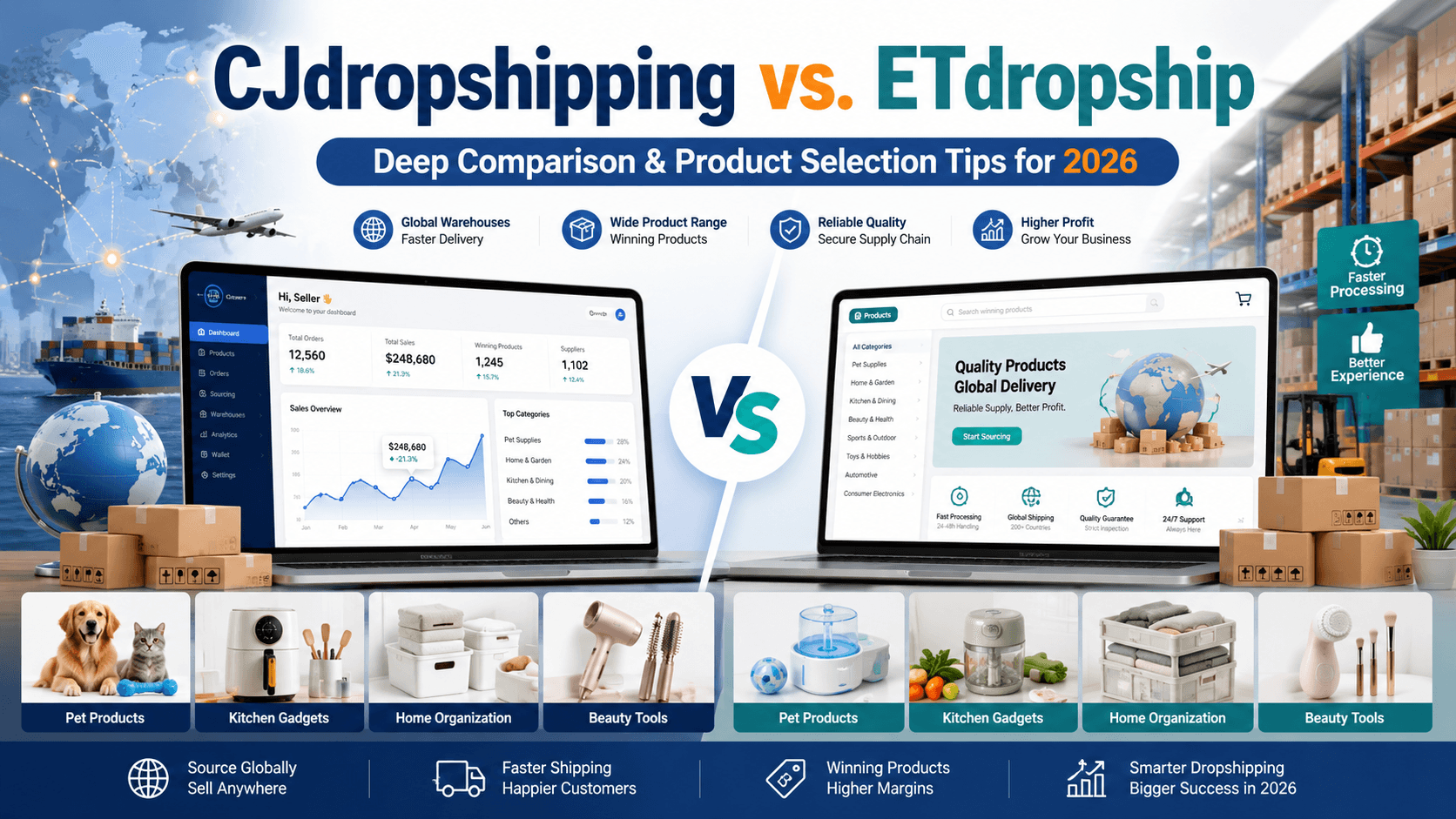
4. CJ Dropshipping (EU Routes) — Hybrid Cross-Border + EU Fulfillment System
CJ Dropshipping is one of the most commonly used infrastructure platforms in global dropshipping, including Germany.
Its EU routes are particularly relevant for sellers operating in pet products.
Operational characteristics:
Combination of China sourcing + EU warehouse fulfillment
Automated order processing system
Broad SKU coverage across multiple categories
Multiple shipping routes depending on product type
Where it works best:
CJ is typically used in:
Early validation stage (product testing)
Early scaling stage (before full EU warehouse transition)
It is especially useful when sellers want:
Faster product testing than full EU sourcing
Lower cost compared to pure EU suppliers
Automation in order handling
Limitations:
Fulfillment quality can vary depending on route
EU warehouse stock is not always consistent
Delivery speed still depends on logistics path selection
In real operations, CJ is often seen as a transition system rather than a final scaling solution.
5. ETL / Multi-Warehouse Systems
This category refers to system-level supply chain tools rather than single suppliers.
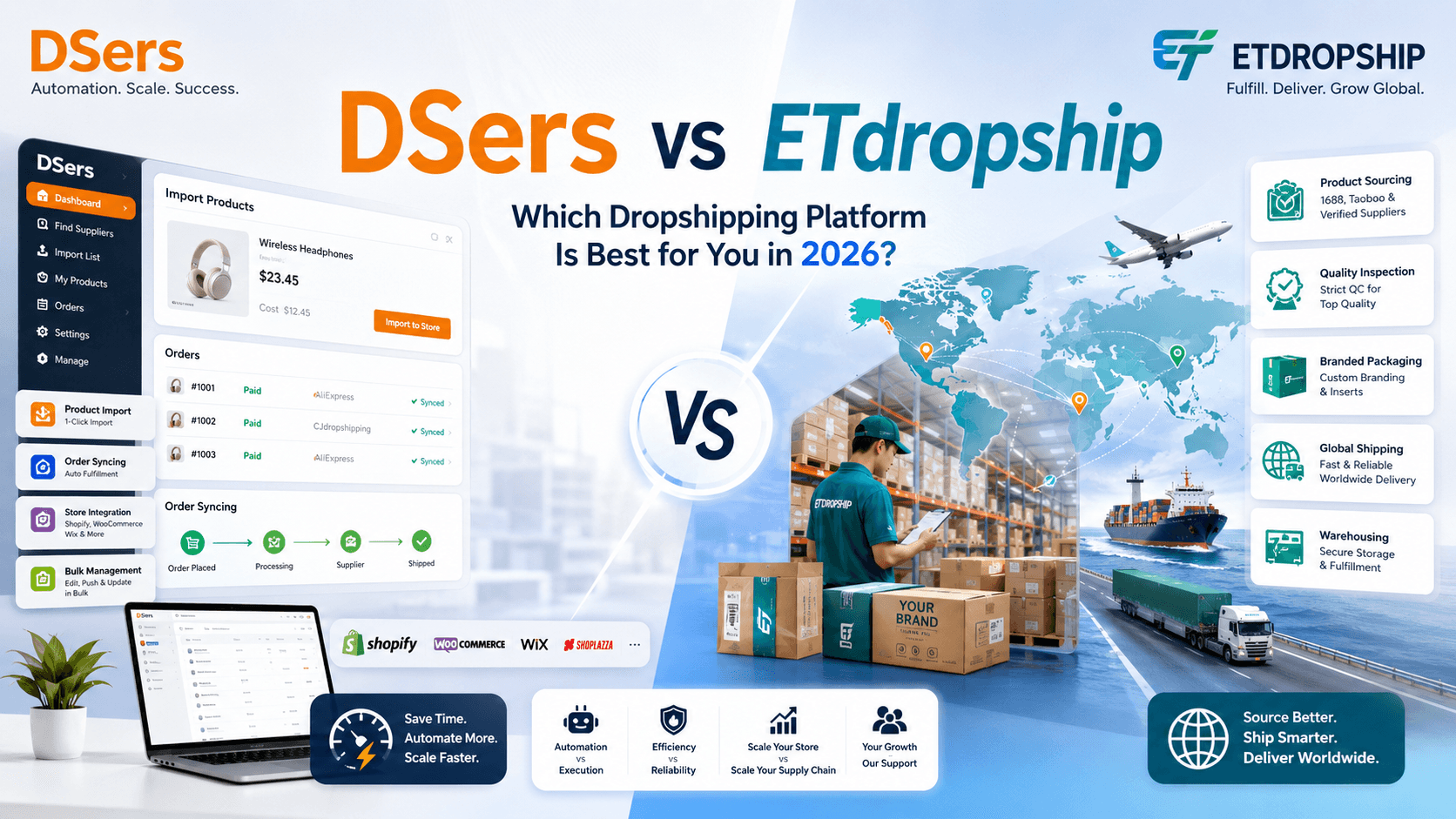
Platforms such as ETL-style systems or ETdropship-type structures are designed to coordinate multiple EU warehouses into a unified fulfillment layer.
Operational characteristics:
Multi-warehouse synchronization across EU countries
Automated Shopify order routing
Inventory balancing across different fulfillment points
Designed for scaling rather than testing
Where it works best:
This type of system is usually introduced when:
Advertising is already generating stable traffic
Single warehouse supply becomes insufficient
Sellers need to reduce fulfillment risk during scaling
Limitations:
Requires more operational experience
Not ideal for beginners with no product validation
Setup complexity is higher than simple supplier platforms
In real cases, sellers use these systems to reduce dependency on a single warehouse and stabilize delivery performance during ad scaling phases.
6. Europages — B2B Supplier Discovery Platform
Europages is not a fulfillment provider, but a B2B directory platform used to connect with manufacturers and wholesalers.
Operational characteristics:
Direct access to European manufacturers
Wide industry coverage including pet products
No built-in automation or fulfillment system
More research-oriented than operational
Where it works best:
Europages is mainly used when sellers:
Want to build long-term supply chains
Are looking for cost optimization at scale
Prefer direct factory relationships instead of intermediaries
Limitations:
No automation or integration with e-commerce platforms
Requires manual negotiation and communication
Not suitable for fast dropshipping operations
In practice, it is used more for supply chain development rather than daily operations.
7. Greenhound — Pet Food-Focused Supplier
Greenhound represents a niche supplier focused on pet food and repeat-purchase products.
Operational characteristics:
Strong focus on consumable pet products
High repeat purchase potential
Stable demand structure compared to accessories
Suitable for subscription models
Where it works best:
This type of supplier is used when sellers focus on:
Long-term customer lifetime value (LTV)
Subscription-based pet food delivery
High-frequency repeat purchase models
Limitations:
Narrow product scope
Not suitable for broad catalog testing
Less flexibility in product diversification
In real operations, this is more of a retention-driven supply chain rather than acquisition-driven one.
8. DAS FUTTERHAUS Supply System — German Retail Network
DAS FUTTERHAUS is a well-established German pet retail chain with both offline and supply chain influence.
Operational characteristics:
Strong brand trust in Germany
Stable retail supply structure
High alignment with local consumer expectations
Strong offline presence supports credibility
Where it works best:
This system is typically aligned with:
Brand-focused operations
Stable long-term product lines
High-trust pet categories
Limitations:
Less flexible for dropshipping-style testing
Lower agility in product expansion
More structured retail logic than e-commerce experimentation
9. AliExpress EU Warehouse — Entry-Level Testing Supply Chain
AliExpress EU warehouse remains one of the most commonly used entry points for dropshipping sellers.
Operational characteristics:
Extremely large SKU availability
Low entry cost for testing
EU warehouse options for faster delivery
Easy product experimentation
Where it works best:
Early-stage product testing
Validation of advertising performance
Low-risk market entry
Limitations:
Product quality inconsistency
Delivery stability depends on supplier
Not suitable for long-term scaling in Germany
In practice, it is widely used as a testing layer rather than a scaling solution.
10. TopDawg — Structured Wholesale Distribution System
TopDawg is a wholesale-focused dropshipping platform primarily used in Western markets.
Operational characteristics:
Structured catalog of wholesale products
Focus on scalability rather than testing
More standardized supply chain processes
Suitable for established stores
Where it works best:
Mid-to-large scale operations
Stores already running stable ad campaigns
Businesses focused on catalog expansion rather than testing
Limitations:
Higher operational entry requirements
Less suitable for beginners
Requires more structured store management
In 2026 Germany pet dropshipping, supplier selection is not a simple “comparison of platforms.”
It is actually a decision about:
Which stage of your business each supply chain belongs to.
Cross-border systems validate demand
EU systems stabilize scaling
Local systems ensure long-term trust and branding
The real difference is not the supplier itself, but whether the supply chain matches your operational stage.
Full Operational Workflow of Germany Pet Dropshipping
In real-world operations, success in Germany pet dropshipping is not determined by product selection alone. What actually determines whether a store can scale is whether the entire system—from store structure to advertising to fulfillment—is properly connected.
Most failures in this market do not come from “bad products,” but from broken operational chains. Either the supply chain cannot support ads, or the ads cannot align with delivery performance, or the store structure does not match user expectations.
1. Starting Stage: Structure Comes Before Product Selection
One of the most common mistakes in dropshipping is starting with product research first.
However, in the German market, especially in the pet niche, this approach is usually inefficient.
The correct sequence is different:
Before selecting any product, you first need to define:
What fulfillment system will be used
Whether the goal is testing or scaling
What delivery speed you can realistically guarantee in Germany
Whether your structure supports long-term repeat purchase behavior
Only after these variables are clear should product selection begin.
For example, a seller using a cross-border testing supply chain will naturally choose different products compared to someone already operating on EU warehouse systems. The supply chain determines the type of product that can realistically perform.
2. Shopify Structure: Building a Trust System, Not Just an Online Store
In Germany, Shopify stores are not just product pages. They function as trust-building systems.
German consumers do not respond strongly to aggressive marketing or over-designed landing pages. Instead, they evaluate whether the store feels reliable and consistent.
A typical functional structure in this market includes:
One clearly defined niche store (not multi-category)
3 to 8 core products only (avoid excessive catalog expansion)
Strong focus on real-life usage scenarios instead of product specifications
For example, instead of focusing on technical descriptions, the store should show how pets actually use the product in daily environments.
German users are much more responsive to context than to claims.
On product pages, there are several non-negotiable elements:
Delivery time must be clearly displayed
Shipping origin must be transparent (EU or local warehouse preferred)
Return policy must be simple and easy to understand
Customer support visibility must be obvious
In many cases, these trust signals matter more than discounts or promotional offers.
3. Supply Chain Integration: The Most Critical Bottleneck in Scaling
At this stage, most stores begin to diverge in performance.
The reason is simple: even if advertising performs well, without stable fulfillment, scaling becomes impossible.
The actual workflow in a stable operation looks like this:
Once an order is placed on Shopify, it is automatically synced to the fulfillment system. The order is then processed through either EU warehouses or a structured supply chain network, and tracking information is automatically sent back to the customer.
In more advanced setups, sellers introduce structured multi-warehouse systems to reduce dependency on a single supplier and distribute risk across multiple EU locations.
The purpose of this step is not cost reduction. The real goal is to eliminate unpredictability in fulfillment.
Because in the German market, unpredictability directly increases advertising cost.
When fulfillment becomes stable, several things happen simultaneously:
Conversion rates become more consistent
Advertising algorithms stabilize faster
Customer trust increases naturally due to predictable delivery
In practice, many sellers observe a significant difference in performance before and after supply chain stabilization, even if the product remains exactly the same.
4. Advertising (Meta / TikTok): Germany Responds to Realistic Content, Not Marketing Pressure
Advertising in the German pet market behaves differently compared to more aggressive markets like the US.
German consumers are generally sensitive to exaggerated marketing and prefer content that feels natural and realistic.
The most effective ad formats usually include:
Pets using the product in real environments
Home-based daily life scenarios
Calm, non-commercial storytelling styles
Highly polished or overly promotional ads often underperform.
A typical testing workflow is:
First, launch 3 to 5 creatives with small budgets. The focus is not on scaling immediately, but on observing early behavioral signals such as:
Click-through rate (CTR)
Add-to-cart rate
Early purchase conversions
If these indicators are stable, the next step is scaling budgets gradually.
If not, the issue is usually the creative itself, not the product.
5. Fulfillment and After-Sales: The Hidden Factor That Decides Long-Term Profitability
In Germany, after-sales experience is not a secondary process. It is directly tied to customer retention and brand perception.
A typical fulfillment workflow includes:
Fully automated order processing from Shopify to supplier
Real-time tracking synchronization
Clear delivery updates sent to customers
Customer support response within 24–48 hours
German consumers expect transparency. If delivery is delayed, they expect clear communication rather than silence.
Return handling is also a critical part of the system. A complicated return process directly reduces repeat purchase probability.
In many real cases, sellers discover that long-term profitability is not limited by advertising cost, but by customer retention loss caused by weak after-sales systems.
6. Real Operational Path (Typical Seller Evolution in Germany Pet Dropshipping)
A realistic seller journey in this market usually follows a predictable pattern.
In the beginning stage, most sellers start with AliExpress EU warehouses or similar cross-border supply chains. At this point, advertising performance is usually unstable, with ROAS fluctuating around low levels such as 1.2 to 1.5.
After product validation, sellers begin transitioning into EU-based supply chain systems. Delivery times become more stable, typically within 2 to 5 days. At this stage, advertising performance often improves significantly, with ROAS moving closer to 2.0 or higher.
Once operations stabilize further, sellers often introduce more structured multi-warehouse systems. This allows them to distribute orders across different EU locations and reduce dependency on a single supplier.
At this stage, the most noticeable change is not product performance, but the ability to safely increase advertising budgets without destabilizing conversion rates.
7. Core Logic of the Entire System
If the entire operational system is reduced to a single principle, it becomes very simple:
It is not what you sell that determines whether you succeed, but whether you can consistently deliver what you sell.
In the German pet market, this principle is even more important because users are highly sensitive to trust, consistency, and delivery experience.
The operational logic of Germany pet dropshipping can be summarized in three layers:
Cross-border supply chains are used for validation
EU supply chains are used for scaling
Local fulfillment systems are used for long-term stability
Ultimately, the real competition is not about product selection, but about system stability and execution consistency.
Final Conclusion
Looking back at the entire Germany pet dropshipping landscape in 2026, one thing becomes increasingly clear: this is no longer a market where success is defined by “finding good products” or “running better ads.”
The real foundation of performance has shifted into something much more structural.
It is now a system-driven market.
From a market perspective, Germany’s pet industry is already highly mature. Growth still exists, but it is no longer explosive. Consumers are stable, rational, and highly trust-sensitive. They do not respond strongly to hype or aggressive marketing. Instead, they respond to consistency—especially in delivery experience and product reliability.
This alone already changes the entire dropshipping logic.
From a supply chain perspective, the market has clearly separated into three functional layers:
Cross-border systems are still useful, but mainly for testing and validation. They help sellers understand whether a product can generate initial demand signals.
EU-based supply chain systems have become the real scaling engine. They stabilize delivery time, reduce uncertainty, and directly improve advertising efficiency by increasing user trust.
Local fulfillment systems sit at the top layer, where stability, branding, and long-term customer retention become the main focus rather than rapid experimentation.
From an operational perspective, the entire workflow has also become more structured:
Sellers no longer start with products. They start with fulfillment capability.
Stores are no longer just product catalogs. They are trust systems designed around delivery expectations.
Advertising is no longer just traffic generation. It is a test of whether the supply chain can support scale.
And fulfillment is no longer a backend process. It is part of the conversion system itself.
In practical terms, this leads to one unavoidable conclusion:
In 2026 Germany pet dropshipping, the ceiling of your business is not defined by your product selection, but by your supply chain stability.
Everything else—branding, advertising, store design—only works when the underlying fulfillment system is stable enough to support it.
So when you step back and look at the full picture, the logic becomes very simple:
Cross-border systems are for validation
EU systems are for scaling
Local systems are for stability and long-term positioning
And the real competition is no longer about who can find better products.
It is about who can build a more reliable system.