Luxembourg Dropshipping 2026: A Complete Guide to Products, Fulfillment, Logistics and Profit Strategy
Luxembourg is not usually the first country sellers think of when discussing dropshipping in Europe. Most beginners focus on larger markets such as Germany, France, Spain, Italy, or the United Kingdom because these countries have bigger populations and more obvious eCommerce demand.
However, Luxembourg should not be ignored.
Although it is a small market, Luxembourg has strong purchasing power, a high level of cross-border shopping activity, and consumers who are already familiar with buying from international online stores. For dropshipping sellers, this creates a very specific type of opportunity. It is not a market where sellers win by simply offering the lowest price. Instead, it is a market where reliability, product quality, transparent shipping, and customer trust matter much more.
In 2026, dropshipping in Luxembourg should be treated as a real supply chain business, not a quick arbitrage model. Sellers who understand how to select the right products, build strong product pages, manage fulfillment properly, and provide a reliable delivery experience will have a much better chance of building a sustainable business.
Why Luxembourg Is an Underrated Dropshipping Market
In the European eCommerce landscape, Luxembourg is often overlooked because of its small population. Large sellers usually prefer bigger markets where they can scale faster and reach millions of potential buyers. This leaves Luxembourg as a less crowded but still valuable niche market.
The advantage of Luxembourg is not volume. The advantage is quality.
Consumers in Luxembourg generally have higher purchasing power than many other markets. They are also used to buying from neighboring countries and international websites. This means they are open to cross-border eCommerce, but they also expect a professional shopping experience.
A low-quality dropshipping store with unclear shipping times, poor product images, and vague customer service will struggle. But a clean, trustworthy store with clear delivery information and practical products can perform well.
For sellers, this means Luxembourg is not a market for careless product testing. It is better suited for sellers who are willing to build a more refined operation.
The Real Logic of Dropshipping in Luxembourg
Many beginners think dropshipping is simple: find a product, import it to Shopify, run ads, and wait for orders. This basic approach may work temporarily in some markets, but it is not enough for long-term success in Luxembourg.
The real logic of dropshipping is not only selling products. It is managing the entire customer experience.
A successful seller must answer several important questions before scaling:
Can the product be delivered reliably?
Will the tracking information update on time?
Is the supplier stable enough to handle repeated orders?
Does the product page explain the value clearly?
Can the customer understand the shipping time before buying?
Is the store prepared to handle returns, refunds, or delivery questions?
These details directly affect conversion rate and customer satisfaction. In Luxembourg, where customers care about trust and reliability, these details are especially important.
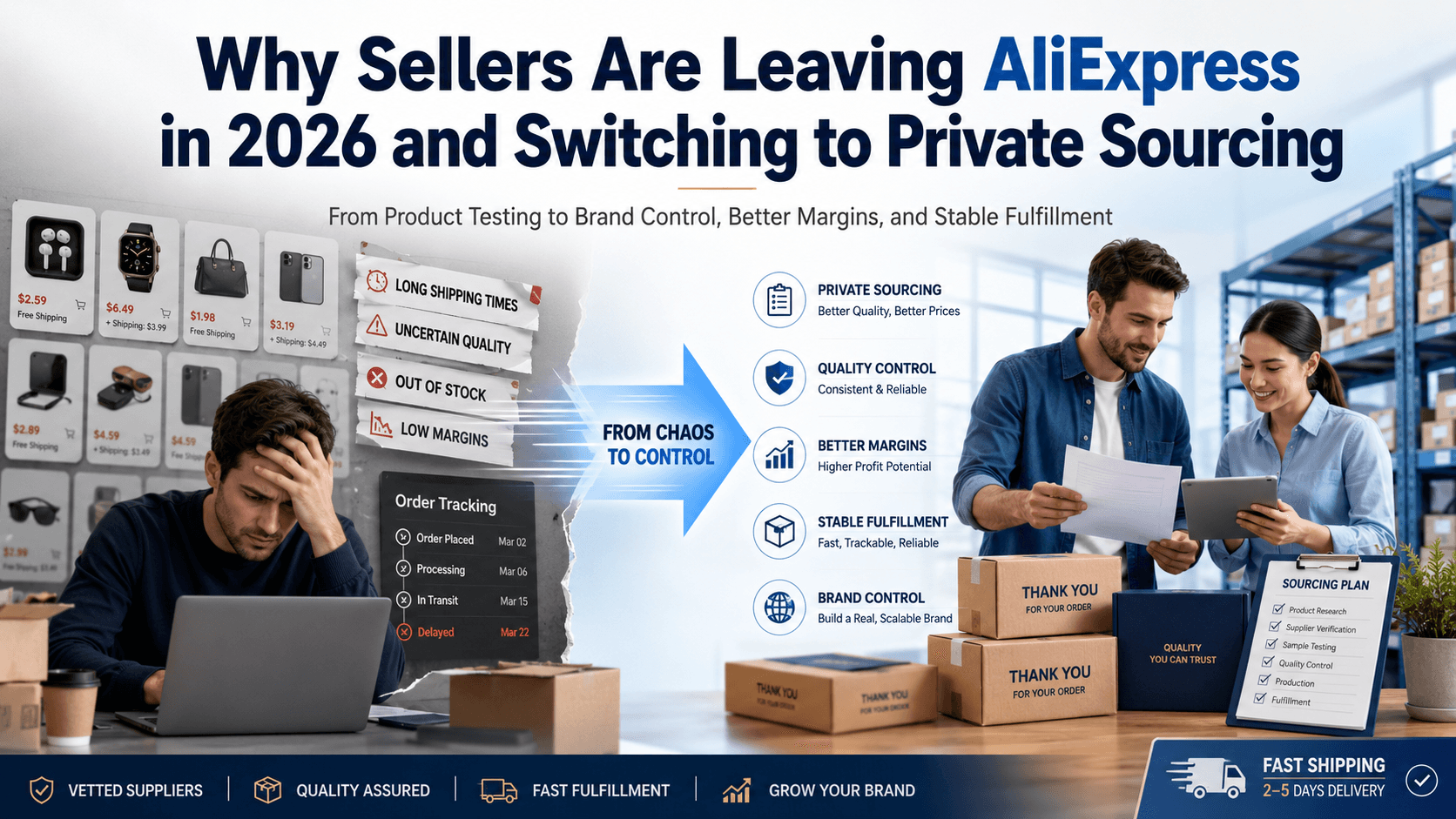
At the beginning, many sellers use platforms such as AliExpress, Alibaba, or other supplier marketplaces to test products. This can be useful because it reduces upfront cost. However, as orders increase, the weaknesses become more obvious. Shipping may become inconsistent, supplier communication may be slow, and packaging may not look professional.
This is why many sellers eventually move from basic dropshipping to a more controlled fulfillment model.
From Simple Dropshipping to a More Stable Fulfillment Model
The most common mistake beginners make is relying on the same supplier process even after the store starts getting orders.
At the testing stage, simple dropshipping is acceptable. The seller needs to test demand, validate the product, and understand whether customers are willing to buy. At this stage, keeping risk low is more important than building a perfect supply chain.
But once a product starts generating stable orders, the operational model must improve.
A better approach is to gradually move toward a hybrid fulfillment model. Under this model, sellers can still test products with low risk, but once a product proves demand, they begin working with a more stable sourcing and fulfillment solution. This may include better supplier coordination, quality checks, branded packaging, faster shipping routes, or even partial inventory in a European warehouse.
This is where a fulfillment partner can become useful. For example, sellers who want to move beyond basic supplier platforms can work with a service provider such as ETdropship to help with product sourcing, order fulfillment, packaging, tracking number synchronization, and logistics coordination. Instead of manually managing every supplier and shipment, sellers can focus more on product testing, marketing, and store growth.
The key point is not to add complexity too early. The key is to improve fulfillment once the product has proven demand.
Product Selection: Stable Demand Is Better Than Viral Products
Many dropshipping beginners spend too much time searching for “winning products.” They look for viral TikTok products, trending Facebook ads, or items that competitors are selling aggressively. While this can sometimes work, it is not always the best strategy for Luxembourg.
Luxembourg is a smaller market. A short-term viral product may not have enough room to scale, and competition can quickly reduce the margin.
A better strategy is to focus on stable demand.
Stable products are not always exciting, but they solve real problems. These products are easier to sell consistently because customers understand their value quickly.
Good product categories may include:
Home organization products
Kitchen tools
Pet accessories
Travel accessories
Small lifestyle products
Practical fitness accessories
Cleaning tools
Storage solutions
Everyday problem-solving gadgets
The best products are usually simple to understand. If a customer needs too much explanation before understanding the benefit, the conversion rate may suffer.
A good rule is this:
If the customer cannot understand the product within five seconds, the product page will have to work much harder to convert.
Products to Avoid in Luxembourg Dropshipping
Not every product is suitable for dropshipping. Some products look profitable at first but create serious operational problems later.
Sellers should be careful with products that are too heavy, too large, fragile, difficult to ship, or likely to be returned. For example, glass products may break during shipping. Clothing with complicated sizing may lead to high return rates. Electronics may create quality and compliance issues. Large home products may have expensive shipping costs.
A product with high profit margin on paper may still be a bad choice if it creates too many customer service problems.
For Luxembourg, sellers should prioritize products that are small, lightweight, easy to explain, easy to ship, and unlikely to disappoint customers after delivery.
This is why product selection must be connected with logistics from the beginning. A product is not truly good if it cannot be fulfilled reliably.
How to Test a Product Properly
Product testing should not be random. A seller should not launch ten products, spend a little money on each, and then give up if there are no immediate sales.
A better testing process is more controlled.
First, choose one product with clear demand and a practical use case. Then build a proper product page with strong visuals, clear benefits, delivery information, and trust elements. After that, run a small advertising test and watch the data carefully.
During the first few days, sellers should not only look at purchases. They should also look at clicks, add-to-cart actions, checkout behavior, and customer questions.
For example, if many people click the ad but do not add the product to cart, the product page may not be convincing enough. If people add to cart but do not purchase, the issue may be price, shipping cost, checkout trust, or delivery time. If people purchase but later ask many questions, the product page may not have explained enough information before the sale.
In many cases, the product does not fail because there is no demand. It fails because the presentation is weak.
This is one of the most important lessons in dropshipping.
Building a High-Converting Product Page
A product page for Luxembourg customers should feel clean, trustworthy, and practical. It should not look like a generic copy-paste dropshipping page.
The first section of the page should immediately explain what the product is and why it matters. The main image should clearly show the product in use. If possible, the page should include real-life scenarios, before-and-after images, or short usage demonstrations.
The product description should focus on customer benefits, not empty claims. Instead of only saying “high quality” or “premium material,” explain how the product helps the customer.
Does it save space?
Does it make cleaning easier?
Does it make travel more convenient?
Does it solve a daily frustration?
Does it help the customer save time?
The product page should also include clear delivery information. This is extremely important. Customers are more willing to wait if they know the delivery time before purchase. They are less tolerant when the store gives vague or misleading shipping promises.
A strong product page should answer three questions clearly:
What is the product?
Why should the customer trust it?
How and when will the customer receive it?
If the page answers these questions well, advertising traffic becomes much more valuable.
Fulfillment and Logistics: The Real Competitive Advantage
Many sellers think advertising is the most important part of dropshipping. Advertising is important, but fulfillment is what determines whether the business can survive after getting orders.
Poor logistics can destroy a profitable product.
If shipping is slow, tracking does not update, or customers do not know where their orders are, refund requests will increase. Even if the ads perform well, the store may still lose money because of customer complaints and disputes.
At the early stage, sellers may use standard supplier shipping. But as soon as daily orders become stable, they should improve the fulfillment process.
A more professional fulfillment setup may include:
Better supplier communication
Product quality checking
Faster processing time
More stable shipping routes
Clear tracking number updates
Custom packaging options
European warehouse options for proven products
This is especially important for sellers who want to scale from a few orders per day to consistent daily volume.
For example, after a product begins to generate steady sales, a seller may decide to prepare small-batch inventory or use a fulfillment partner to improve delivery speed. This can help reduce customer complaints, improve trust, and increase repeat purchase potential.
When Should Sellers Use European Warehousing?
European warehousing can be useful, but it should not be used too early.
Many beginners make the mistake of buying inventory before they have enough data. This creates financial risk. If the product does not sell, the seller is left with unsold stock.
A better approach is to test first, then stock later.
A product may be suitable for European warehousing if it has stable daily sales, a low refund rate, clear customer demand, and predictable supplier costs. If the product sells consistently for several weeks, it may be worth moving some inventory closer to the customer.
European warehousing can reduce delivery time and improve the customer experience. For Luxembourg customers, faster delivery can also increase trust. However, inventory should only be used for products with proven demand.
The goal is not to stock every product. The goal is to stock the right products.
Advertising Strategy for Luxembourg Dropshipping
Advertising in Luxembourg requires careful budget control. Because the market is smaller than major European countries, sellers should avoid wasting money on broad, untested campaigns.
Different platforms can work for different types of products.
Facebook and Instagram can work well for lifestyle products, home products, pet products, and products with strong visual demonstrations. TikTok may work for products that are easy to show in short videos. Google Shopping can work better for products with existing search demand. Pinterest may be useful for home, lifestyle, beauty, or creative products.
However, sellers should remember one thing:
Advertising does not fix a weak offer.
If the product page is unclear, the price is too high, or the shipping information is vague, increasing ad spend will only make the problem bigger.
Before scaling ads, sellers should check whether the product page is converting properly. They should review click-through rate, add-to-cart rate, checkout rate, purchase rate, cost per purchase, and refund rate.
If a product gets many clicks but no sales, the problem may not be the ad. It may be the offer.
Scaling from 10 Orders to 100 Orders per Day
Scaling is one of the most dangerous stages in dropshipping.
Getting 5 to 10 orders per day feels exciting, but it does not mean the business is ready for aggressive scaling. More orders bring more pressure. Sellers need to handle more tracking updates, more supplier coordination, more customer messages, and more refund risks.
Before increasing ad spend, sellers should check whether the operational system is ready.
The supplier must have enough capacity. The shipping route must be stable. Tracking information must be uploaded quickly. Customer service must be prepared. Product stock must be predictable. Refund policies must be clear.
A safer scaling method is gradual budget increase. For example, sellers can increase advertising budget by 15% to 20% per day while watching performance. If conversion rate drops or refund requests increase, scaling should slow down.
Scaling should not only focus on more sales. The real goal is more profitable and manageable sales.
Profit Model: Where Dropshipping Profit Actually Comes From
Dropshipping profit is not simply selling price minus product cost.
A real profit calculation includes:
Product cost
Shipping cost
Advertising cost
Payment processing fees
Refund cost
Platform fees
Customer service cost
Packaging cost
Among these, advertising cost is often the most unstable. A product may be profitable one week and unprofitable the next if ad costs rise.
This is why conversion optimization is so powerful.
If a product page converts at 1%, the seller needs 100 visitors to get one order. If the conversion rate improves to 2%, the same traffic can generate two orders. This can significantly reduce the effective customer acquisition cost.
Many sellers focus too much on finding a cheaper supplier. While product cost matters, improving conversion rate, reducing refunds, increasing average order value, and improving logistics can often create bigger profit improvements.
Useful methods include product bundles, quantity discounts, post-purchase upsells, clearer product images, better shipping information, and faster fulfillment.
Customer Service and Trust Building
Customer service is a major part of dropshipping success, especially in European markets.
Customers may ask about delivery time, tracking numbers, returns, product details, or order changes. If the store replies slowly or gives unclear answers, trust drops quickly.
A professional store should prepare customer service templates before scaling. These templates should cover common situations such as order confirmation, shipping updates, delayed delivery, return requests, refund questions, and product questions.
The tone should be polite, clear, and honest. Sellers should not overpromise. If delivery takes 7 to 10 business days, the store should say that clearly. It is better to set realistic expectations than to promise fast shipping and disappoint customers later.
Trust is built through consistency. If the store communicates clearly and handles problems professionally, customers are more likely to be patient when small issues happen.
Why Many Sellers Fail After Getting Initial Orders
Many sellers are able to get their first few sales, but they fail to become consistently profitable.
The reasons are usually similar.
They change products too often. They increase ad spend too early. They ignore product page optimization. They rely on unstable suppliers. They do not track real profit. They provide poor customer service. They do not improve logistics after orders start coming in.
In Luxembourg, this is especially risky because the market is smaller. Sellers cannot depend only on constant viral traffic. They need a stable system.
A successful dropshipping business is not built by one winning product. It is built by a repeatable process.
That process includes product research, testing, page optimization, fulfillment, customer service, advertising, and profit tracking.
When these parts work together, the business becomes more stable. When one part is weak, the whole system becomes fragile.
A Practical Step-by-Step Plan for Luxembourg Dropshipping in 2026
For sellers who want to start dropshipping in Luxembourg, the process can be divided into several stages.
First, choose a product category with stable demand. Avoid products that are too large, fragile, complicated, or likely to generate returns.
Second, find a reliable supplier or sourcing channel. At the beginning, the goal is not only to find the cheapest price. The goal is to find a product that can be shipped consistently.
Third, build a strong product page. Use clear images, direct benefits, transparent delivery information, and trust-building content.
Fourth, run a small advertising test. Do not scale immediately. Use the first stage to collect data and understand customer behavior.
Fifth, optimize the product page. If people click but do not buy, improve the offer, images, description, price, or shipping explanation.
Sixth, stabilize fulfillment. Once orders begin, make sure tracking information is uploaded properly and customer questions are answered quickly.
Seventh, scale gradually. Increase ad budget slowly while monitoring conversion rate, cost per purchase, refund rate, and customer feedback.
Eighth, consider better fulfillment solutions. If a product becomes stable, sellers can work with a fulfillment partner such as ETdropship or consider partial inventory to improve delivery speed and order handling.
This process reduces risk and helps sellers build a business that can last longer than one temporary product trend.
Final Conclusion: Luxembourg Dropshipping Is About Reliability, Not Shortcuts
Luxembourg is not the biggest dropshipping market in Europe, but it can be a valuable opportunity for sellers who understand how to operate properly.
This market rewards reliability, clear product value, professional presentation, and strong fulfillment. Sellers who only chase cheap products and quick profits may struggle. Sellers who build a better system have a much stronger chance of success.
In 2026, successful dropshipping in Luxembourg will depend on product selection, logistics, customer service, advertising discipline, and supply chain control.
Dropshipping is not a shortcut. It is a flexible eCommerce model that works best when treated as a real business.
For sellers who are willing to test carefully, optimize patiently, and build a reliable fulfillment process, Luxembourg can become a profitable niche market within Europe.
FAQ: Luxembourg Dropshipping 2026
1. Is Luxembourg a good market for dropshipping in 2026?
Yes. Luxembourg can be a good dropshipping market because it has strong purchasing power and consumers who are familiar with cross-border online shopping. However, sellers need to focus on reliable delivery, clear product information, and professional customer service.
2. Is Luxembourg too small for dropshipping?
Luxembourg is small, but that does not mean it has no opportunity. The market is better suited for focused, high-quality operations rather than mass-volume strategies. Sellers should choose stable products and build trust with customers.
3. What products are suitable for dropshipping in Luxembourg?
Practical products usually work better than random viral items. Good categories include home organization, kitchen tools, pet accessories, travel products, lifestyle products, and small problem-solving gadgets.
4. What products should I avoid?
Sellers should avoid products that are too heavy, fragile, oversized, difficult to ship, or likely to generate high return rates. Complicated electronics and products with unclear quality standards should also be handled carefully.
5. Can I use AliExpress for Luxembourg dropshipping?
AliExpress can be used for early product testing, but it may not be ideal for long-term scaling. Once a product has stable demand, sellers should consider more reliable sourcing, fulfillment, or warehouse solutions.
6. How can ETdropship help dropshipping sellers?
ETdropship can support sellers with product sourcing, order fulfillment, packaging, tracking synchronization, and logistics coordination. This is useful when sellers want to move beyond basic supplier platforms and build a more stable fulfillment process.