How to Start Dropshipping in the USA for Beginners in 2026
Dropshipping lets a seller offer products without purchasing deep inventory before demand is proven. When a customer orders, a supplier or fulfillment partner prepares and ships the item. That arrangement lowers inventory exposure, but the store still owns the customer promise. The seller is responsible for accurate product information, pricing, tax setup, delivery communication, refunds, disputes, and the way product problems are resolved.
The United States offers a large customer base and strong ecommerce infrastructure, but it is not one uniform market. Business registration, sales tax, product requirements, advertising costs, shipping zones, and customer expectations can vary by state and product category. A beginner therefore needs a focused offer and a controlled operating process, not a broad general store built around the largest possible keyword.
Define a Narrow US Customer and Buying Situation
Begin with a recognizable customer problem rather than the idea of selling “to America.” A travel accessory for frequent domestic flyers, a compact organizer for apartment renters, a pet-cleaning tool for shedding seasons, or a practical vehicle accessory gives the store a clearer audience than a catalogue of unrelated trending products. The buying situation guides the product demonstration, page language, price comparison, and adjacent items that may later form a collection.
A narrow position also creates realistic long-tail search opportunities. A new store is unlikely to outrank major platforms for generic terms such as “best products” or “dropshipping.” It can, however, build useful content around a specific use case, product type, customer problem, or seasonal need. The aim is to become relevant to a smaller decision before trying to become visible for an entire industry.
Choose a Business Structure and Complete the Basic Setup
US-based sellers should choose a structure suitable for their state, ownership, tax position, and risk. A sole proprietorship may be simple, while an LLC or corporation creates a separate legal structure with different filing and administrative requirements. Register the business name where required, check federal, state, and local licences or permits, open a separate business bank account, and keep reliable income and expense records.
An Employer Identification Number is a federal tax identification number used for many business purposes, and the IRS provides it directly without a fee. Not every person needs the same registrations, and a non-US seller serving American customers follows a different analysis. Use the actual entity, location, products, inventory arrangement, and sales channels when obtaining legal or tax advice instead of copying another store’s setup.
Select Products With Three Tests in Mind
A product should pass a content test, a commercial test, and an operational test. The content test asks whether its value can be shown clearly in images or short video. The commercial test asks whether the selling price can cover the complete order cost and customer acquisition. The operational test asks whether the product can be sourced, inspected, packed, shipped, and supported with acceptable variation.
For a first product, lightweight and durable goods with simple variants are easier to control than fragile items, complicated electronics, liquids, products making health claims, counterfeit goods, or products with difficult sizing. A product can receive attention and still be a poor business choice if its packed size, defect risk, compliance burden, or refund rate removes the margin.
Find and Test Suppliers Before Publishing the Offer
Compare suppliers using the same written specification. Confirm materials, dimensions, included accessories, colour, packaging, available variants, processing time, stock updates, replacement policy, and the shipping routes available to US destinations. Order the exact sample that customers will receive and keep an approved reference. Marketplace pictures and one attractive quotation are not proof of repeatable quality.
The guide to finding high-quality dropshipping suppliers explains how to compare samples, production consistency, stock reliability, communication, quality control, and problem resolution. Use that evaluation before building a store around any supplier relationship.
A backup supplier is valuable only after its product has been sampled and compared with the approved specification. If the second source changes the material, size, finish, or packaging, the store may be shipping a different product under the same listing. Document acceptable tolerances before an emergency forces a rushed substitution.
Build a Focused Store and Accurate Product Page
Shopify is widely used for independent stores because it combines hosting, checkout, product management, analytics, and integrations. WooCommerce can provide more technical control, while marketplaces may supply traffic but impose stricter listing, shipping, and account-performance rules. Select one main channel first and learn its policies rather than launching everywhere with inconsistent data.
The product page should explain the use case, dimensions, materials, compatibility, included items, care or safety information, processing time, delivery range, returns, and support contact. Use photographs or video from an approved sample whenever possible. Supplier copy often emphasizes specifications without answering the buyer’s real objections; rewrite it around the decision the customer is making.
Set Prices From the Completed Order, Not the Factory Quote
A sustainable price starts with the amount the customer pays and subtracts product cost, packed shipping, payment fees, platform and app charges, sales tax borne by the seller, import duties or fees, packaging, advertising or creator cost, discounts, refunds, chargebacks, reshipments, and customer support. What remains is contribution, not necessarily final net profit, because software, accounting, labour, insurance, and other fixed expenses still exist.
Run conservative scenarios before launch. A low-priced product may struggle to absorb customer acquisition and cross-country shipping. Bundles can improve average order value, but only when the products belong together and the combined packed parcel remains economical. Do not use an optimistic return rate or a best-case shipping quote to make an unsuitable product appear profitable.
Treat US Sales Tax as a State-by-State System
he United States does not have one national retail sales tax. Obligations generally depend on state and local rules, including where a business has physical presence and whether activity reaches an economic nexus threshold. Inventory stored in a state, employees, offices, marketplace activity, and sales volume can affect the analysis. Thresholds and registration procedures are not identical across states.
Marketplaces may collect and remit tax for transactions they facilitate under marketplace laws, but that does not automatically settle every obligation for a seller’s independent store. Track revenue and transactions by destination state, record where inventory is stored, and review exposure as the business grows. Tax software can assist after the correct registrations and rules are determined; it should not decide the legal position by itself.
Check Product Compliance and Claims Before Scaling
The compliance question begins with the exact product and customer. Children’s products, cosmetics, electronics, batteries, food-contact items, medical or health-related goods, and products subject to labelling or testing rules require closer review. The seller should obtain genuine supplier documents where applicable and confirm that the model, materials, factory, and test report actually match.
Advertising claims also create risk. Before-and-after demonstrations, performance statements, environmental claims, testimonials, and endorsements need evidence and accurate disclosure. Reviews should not be fabricated or presented in a way that misleads customers about who bought the product. A viral creative does not remove the obligation to sell the item shown and substantiate the promise made.
Calculate Import and Tariff Exposure by Product
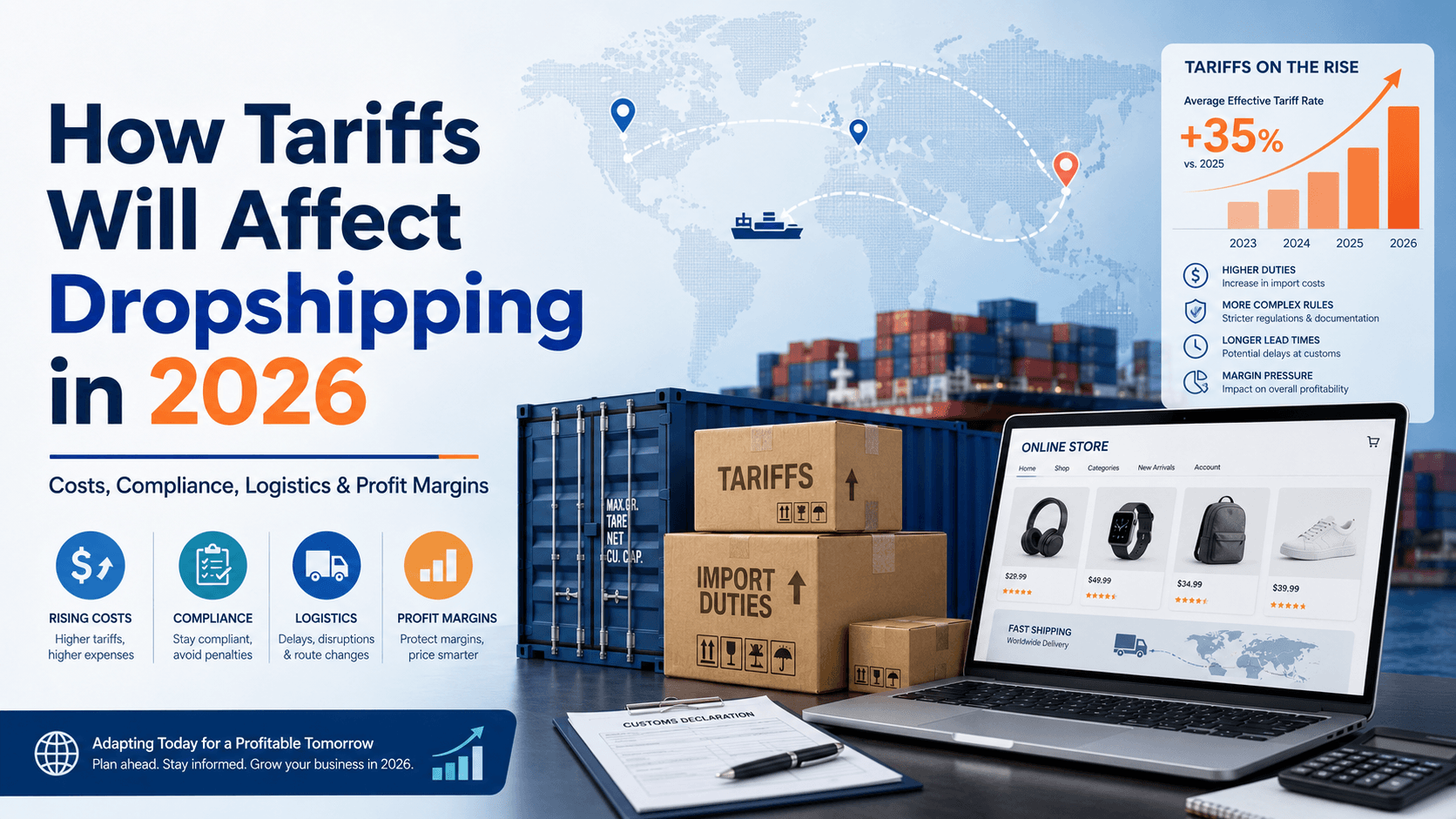
When goods enter the United States, duty and entry treatment can depend on origin, classification, value, product type, and the rules in effect at the time of import. Trade policy can change quickly, so a seller should not build pricing around an old assumption that every low-value parcel will enter on the same terms. Confirm the current route with the supplier, carrier, customs broker, and official sources.
The analysis of US tariffs and China sourcing shows how changes in import economics affect supplier comparison, landed cost, packaging, and inventory decisions. Use it as a planning layer, then verify the actual classification and current treatment for the SKU before scaling.
Product descriptions, declared values, quantities, country of origin, and supporting documents should be accurate and consistent. Under-declaration is not a legitimate cost-saving method. If duties, brokerage, or delivery charges may be collected from the customer, disclose that experience clearly before checkout rather than letting the parcel create a surprise.
Create a Shipping Promise the Supplier Can Support
A delivery estimate should include supplier processing, warehouse handling, international transit, customs, and US last-mile delivery. Test parcels to representative zones before advertising a precise range. The Federal Trade Commission requires sellers to have a reasonable basis for the shipment time they state; if no shipment time is stated, its rule generally uses 30 days, and delays require the customer’s consent or a prompt refund for the unshipped merchandise.
Operationally, the store should monitor payment-to-dispatch time, tracking activation, successful delivery, failed delivery, loss, damage, and reshipment by route. A cheap line can cost more when it produces support tickets and refunds. Publish the normal tracking sequence and give customers a clear way to report an address error or stalled parcel.
Prepare Returns, Refunds, and Disputes Before the First Sale
Write a return policy that matches the process the business can operate. State eligibility, time limits, item condition, exclusions, return destination, responsibility for return postage, and refund timing. Do not promise free US returns or a domestic address unless that capability exists. For some low-value items, a documented replacement or refund may be more economical than an international return.
Keep the order confirmation, version of the product page shown at purchase, customer communication, tracking, proof of delivery, and refund records. These records help resolve genuine problems and support responses to payment disputes. Customer support needs authority and supplier escalation rules, not only polite templates.
Choose a Traffic Channel That Matches the Product
Search advertising can work when customers already describe the problem or product with clear intent. Social advertising can work when a demonstration creates demand visually. Neither channel is automatically cheaper or better. The correct choice depends on whether the product captures existing demand or needs a creative explanation, as well as the store’s conversion rate and contribution margin.
The Google Ads vs Facebook Ads comparison separates search intent, creative testing, retargeting, cost control, and product fit. Use one primary testing channel with defined loss limits and measurement rather than dividing a small budget across several platforms before the offer works.
Organic content can reduce dependence on paid acquisition, but it still consumes samples, production time, and attention. Measure qualified visits, add-to-cart behaviour, purchases, refund reasons, and contribution after delivery—not views alone. Content is valuable when it improves the customer’s understanding and gives the business evidence about the offer.
Scale the Supply Chain Only After Completed Deliveries
Do not scale from one strong advertising day. Review completed orders across several fulfillment cycles. Confirm that the same SKU remains available, product quality is stable, processing and delivery match the published range, complaints are understood, and contribution remains positive after refunds and reshipments. Increase traffic gradually and watch whether performance changes with volume.
When demand becomes repeatable, document the approved specification, test a backup source, negotiate purchasing terms, and consider a small inventory buffer for proven variants. Sellers that need help comparing factories, approving samples, controlling quality, and planning landed cost can use ETdropship’s product sourcing process once the requirement is specific enough to quote and verify.
Inventory and branding should follow evidence. A logo or custom box cannot repair an unstable product, while large stock can turn a temporary sales spike into slow-moving capital. Strengthen the parts of the supply chain that are already limiting customer experience or profit, rather than adding complexity because the store has reached an arbitrary order number.
Frequently Asked Questions
Is dropshipping legal in the United States?
Dropshipping is generally a legal fulfillment model, but the seller must comply with applicable business, tax, consumer-protection, advertising, privacy, import, intellectual-property, and product requirements. The exact obligations depend on the seller, state, product, and sales channel.
Do I need an LLC to start dropshipping in the USA?
Not every seller must form an LLC. The appropriate structure depends on ownership, location, tax treatment, liability, and administrative needs. Compare the options and obtain advice for the actual business rather than treating one structure as universally required.
Do dropshipping sellers need an EIN?
Many businesses use an EIN for federal tax identification, banking, payroll, and other purposes, but the requirement depends on the entity and circumstances. The IRS issues EINs directly without a fee.
Do I have to collect sales tax in every state?
Not automatically. Sales-tax obligations depend on each state’s rules and the business’s physical or economic nexus. Track sales and inventory locations, then register and collect where required.
Can a non-US seller dropship to American customers?
Yes, but selling into the US can still create tax, import, product, platform, and consumer-law responsibilities. The correct setup depends on the foreign entity, inventory location, payment flow, and transaction structure.
How fast should dropshipping shipping be in the USA?
There is no universal number. The promise should be based on real processing and route data and must be communicated accurately. Faster delivery helps, but predictable delivery and proper delay handling are more important than an unsupported best-case claim.
How many products should a beginner launch?
There is no fixed number. One product or a small related group usually produces clearer learning than a large general catalogue. Add SKUs when product data, supplier mappings, fulfillment, and customer support are controlled.
When should a US-focused store hold inventory?
Consider a small buffer after a specific SKU and variant show repeatable demand, stable quality, acceptable returns, and predictable replenishment. Inventory should solve a measured processing, stock, cost, or delivery problem.
Conclusion
Starting dropshipping in the USA for beginners is less about finding a shortcut and more about limiting risk while building evidence. Choose a narrow customer problem, set up the business correctly, validate the exact product, compare suppliers, calculate completed-order contribution, understand state sales-tax exposure, verify import and product requirements, and publish a delivery promise that the supply chain can support.
The first goal is not maximum scale. It is a repeatable completed order: the right item reaches the customer as described, within a realistic time, and leaves enough contribution after acquisition and after-sales costs. Once that result is consistent, stronger sourcing, limited inventory, branding, automation, and broader traffic can be added for reasons supported by real operating data.