In 2026, where should you source products for your eBay store? The answer may lie in the dropshipping model.
Over the past few years, many eBay sellers have gone through a similar phase: at the beginning, they pick a few products, list them, and start getting orders. Everything seems to go smoothly. But as orders gradually increase, problems begin to emerge—slower shipping, inventory mismatches, rising customer complaints, and even declining account performance.
At this point, many sellers assume the issue lies in “poor product selection” or that “the platform is getting harder.” But a closer look often reveals that the real problem is not on the sales side—it’s that the fulfillment capability hasn’t kept up.
It’s in this context that dropshipping has regained attention among sellers. However, unlike a few years ago, dropshipping today is no longer about simply “finding a supplier to ship products.” It has evolved into a complete operational system built around efficiency, stability, and risk control.
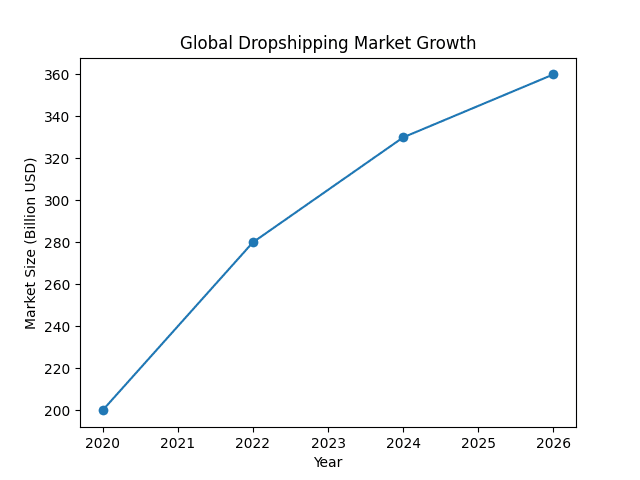
According to Statista, the global dropshipping market has already exceeded $360 billion and continues to grow. This indicates that the model is not only viable but is increasingly being validated and scaled by more experienced sellers.
Why eBay Is Still Ideal for Dropshipping in 2026
eBay’s User Base Favors Long-Term Business
Compared to platforms like TikTok Shop or other emerging marketplaces, eBay may seem less explosive—but that is precisely its advantage.
According to official data, eBay still has over 130 million active buyers, primarily in Western markets. These users exhibit relatively stable purchasing behavior. They are not impulse buyers driven by content—they come with clear intent and actively search for products.
This means that as long as a product has demand, that demand tends to be consistent rather than short-lived.
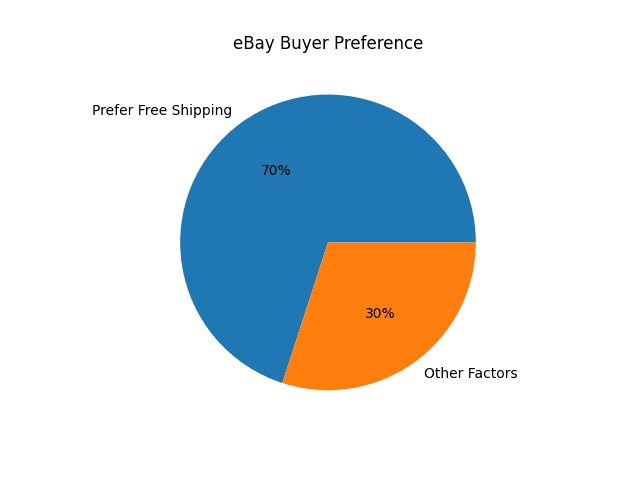
Data from ZIK Analytics shows that eBay receives nearly 700 million monthly visits, with over 70% of orders favoring “free shipping.” This reflects a straightforward decision-making logic: buyers prioritize price, delivery, and reliability over flashy design or marketing.
This user structure naturally supports repeat purchases and long-term operations rather than short-term viral sales.
Dropshipping Aligns Perfectly with This Logic
Once you understand eBay user behavior, it becomes clear that dropshipping is not a “low-barrier model,” but rather a highly compatible operational approach.
Since you don’t need to hold inventory, you can continuously adjust your product mix based on market demand. You can also match different suppliers to different products, optimizing both pricing and shipping speed.
More importantly, dropshipping allows you to scale SKUs rapidly without inventory risk. When you manage dozens or even hundreds of products, your revenue no longer depends on a single item, but on a diversified and stable structure.
On a platform like eBay, this approach is far more likely to generate sustainable long-term income.
The Core Value of Dropshipping: Turning Product Risk into Data Filtering
Why Most Products Don’t Sell
There’s an uncomfortable truth in eCommerce: most products fail.
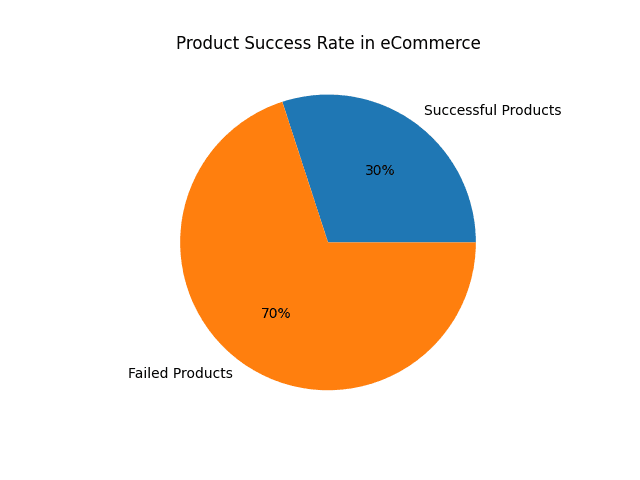
According to Shopify data, over 70% of newly listed products fail to generate consistent sales. This isn’t due to lack of effort—it’s simply how the market works. Only a small percentage of products truly match demand.
In a traditional inventory model, this risk is amplified. You must invest upfront without validation. If you’re wrong, you’re left with unsold stock, tied-up capital, and limited ability to scale.
This is why many sellers struggle to expand after initial investment.
How Dropshipping Changes the Game
At its core, dropshipping turns product selection into an ongoing experiment.
Without inventory pressure, you can test multiple products simultaneously and let market data do the filtering. Products that don’t sell can be quickly eliminated, while those with potential can be optimized and scaled.
The key shift is that you no longer rely on intuition—you rely on real data.
Many successful sellers didn’t choose the right product from the start. They simply eliminated wrong choices faster than others. Over time, this approach leads to a significantly higher success rate than making one big bet.
Profit Is Not Fixed—It Can Be Engineered
Low Initial Profit Is Normal
Many beginners find that dropshipping margins are low at the beginning—sometimes barely profitable.
This is completely normal. At this stage, you’re using generic suppliers and standard logistics, which leaves little room for cost optimization.
But the goal at this stage is not profit—it’s validation.
Once a product starts generating consistent orders, you gain the foundation needed to optimize—and that’s when real profit begins.
According to AutoDS and Hustle Got Real, most eBay dropshipping sellers operate within a 15%–40% profit margin. The difference largely comes from post-validation optimization.
How Profit Scales Over Time
Once a product reaches stable sales, you can improve margins in multiple ways:
Switching to lower-cost, more reliable suppliers
Optimizing shipping methods
Adjusting pricing strategies without hurting conversion rates
This is not a one-time process—it evolves as your order volume grows.
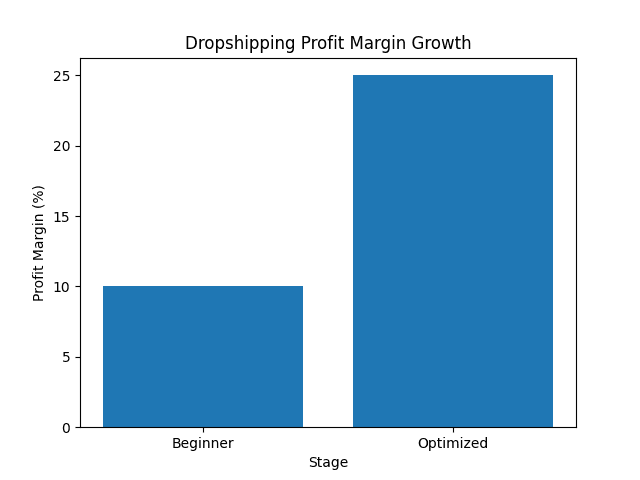
Many sellers start with margins around 10%, but after optimizing their supply chain and operations, they can reach 25% or higher.
This “scalable profit structure” is one of the biggest advantages of dropshipping.
The Products That Make Money Often Look Ordinary
The “Winning Product” Mindset Is Fading
Many beginners enter eBay searching for “winning products.”
But in reality, once a product proves profitable, competition floods in quickly. Prices drop, margins shrink, and sustainability disappears.
This approach may work short term, but it rarely builds a stable business.
Consistent Demand Is the Real Asset
In contrast, seemingly ordinary products often offer greater long-term value.
Categories like pet supplies, home organization, and auto accessories may not go viral—but they generate steady daily demand.
When analyzing “sold listings” on eBay, if a product shows consistent sales over time rather than spikes, it’s usually a sign of long-term demand.
These products face competition, but not the intense saturation of trending items—making them more suitable for sustainable operations.
Your Supply Chain Determines How Far You Can Go
Every Problem Becomes a Fulfillment Problem
Many sellers can generate orders early on. But as volume grows, issues start to surface:
Shipping delays
Inventory mismatches
Tracking errors
If these problems accumulate, they not only damage customer experience but also directly impact account performance.
The platform doesn’t care about the cause—it evaluates based on results. If unresolved, scaling becomes impossible.
A Stable Supply Chain Means Scalability
A mature dropshipping operation must be built on a reliable supply chain.
This includes stable inventory, timely shipping, and systemized order processing. When orders grow from a few per day to dozens or even hundreds, manual handling becomes error-prone.
According to Grand View Research, over 27% of eCommerce sellers use dropshipping, and many are increasingly relying on third-party services to manage supply chains.
The logic is simple: at scale, efficiency itself becomes a competitive advantage.
A Real Growth Path
I’ve worked with a seller who started with just $500.
Instead of holding inventory, he used dropshipping to test products. Rather than chasing trends, he selected data-driven products with consistent demand.
Month 1: Minimal profit, but identified a few products with steady sales
Month 2: Optimized those products and secured more reliable suppliers
Month 3: Reached over 30 daily orders, $20,000+ monthly revenue, ~25% profit margin
What makes this case typical is that there was no luck involved—just disciplined execution of the core dropshipping logic: test, optimize, and scale.
Final Thoughts
If you treat dropshipping as a “quick money-making method,” you will likely be disappointed—it doesn’t deliver instant high profits.
But if you see it as a way to reduce risk and improve operational efficiency, it becomes one of the most reliable growth models available.
In 2026, competition on eBay is no longer about “who finds the winning product,” but about “who builds a sustainable system.”
Once you have a stable supply chain and the ability to continuously test and optimize products, your business no longer depends on isolated opportunities—it becomes scalable and repeatable.
In the end, what truly makes money is not a single product, but a system you can replicate over and over again.