Belgium Dropshipping 2026: Ultimate Guide to Suppliers, Costs, EU Fulfillment & Scaling Strategies
1. The Real Rhythm of the Belgian Market: Not a Blue Ocean, but a Stable Profit Zone
Belgium is frequently overlooked in global dropshipping discussions, largely because of its relatively small population. However, this perspective ignores a more important reality: Belgium operates as a high-value, high-efficiency eCommerce environment rather than a volume-driven market.
With approximately 11.7 million residents and one of the highest GDP per capita levels in the European Union, Belgium offers strong purchasing power concentrated within a compact geographic area. This concentration significantly reduces logistical complexity compared to larger countries, allowing for faster fulfillment cycles and more predictable delivery performance.
Its geographic positioning further amplifies this advantage. Located between the Netherlands, France, and Germany, Belgium functions as a logistical crossroads within Western Europe. The Port of Antwerp—one of the largest in Europe—combined with dense road and rail infrastructure, enables rapid distribution across neighboring markets. For dropshipping businesses, this creates an opportunity to operate not only within Belgium but also as part of a broader regional fulfillment strategy.
According to Eurostat (2025), internet penetration in Belgium exceeds 95%, while over 80% of users actively engage in online shopping. More importantly, more than 60% of consumers have prior cross-border purchasing experience. This indicates a high level of trust in international sellers—but it also raises expectations.
Operational data consistently shows that Belgian consumers are highly sensitive to delivery timelines. When estimated delivery falls within 2–4 business days, conversion rates tend to stabilize between 2.5% and 4%. However, once delivery extends beyond five days, conversion rates often decline sharply. This shift is not merely behavioral—it reflects deeply ingrained expectations shaped by Europe’s mature logistics ecosystem.
Additionally, Belgian consumers tend to behave similarly to German shoppers: rational, detail-oriented, and risk-averse. They are more likely to evaluate product descriptions, shipping policies, and return guarantees before making a purchase decision. This means that conversion optimization in Belgium relies less on emotional triggers and more on clarity, transparency, and perceived reliability.
Ultimately, Belgium is not a “fast money” market. It is a system-driven environment where operational consistency determines long-term profitability. Sellers who prioritize fulfillment reliability and customer experience are significantly more likely to succeed than those chasing short-term product trends.
2. The Evolution of Dropshipping in 2026: From Arbitrage to Operational Capability
The dropshipping model has undergone a fundamental transformation over the past five years. What was once a low-barrier arbitrage opportunity has evolved into a more complex, system-driven business model.
Between 2018 and 2020, success in dropshipping often depended on identifying trending products, sourcing them cheaply, and scaling quickly through paid advertising. At that stage, information asymmetry played a major role. Consumers had limited visibility into product sourcing, and delivery expectations were lower.
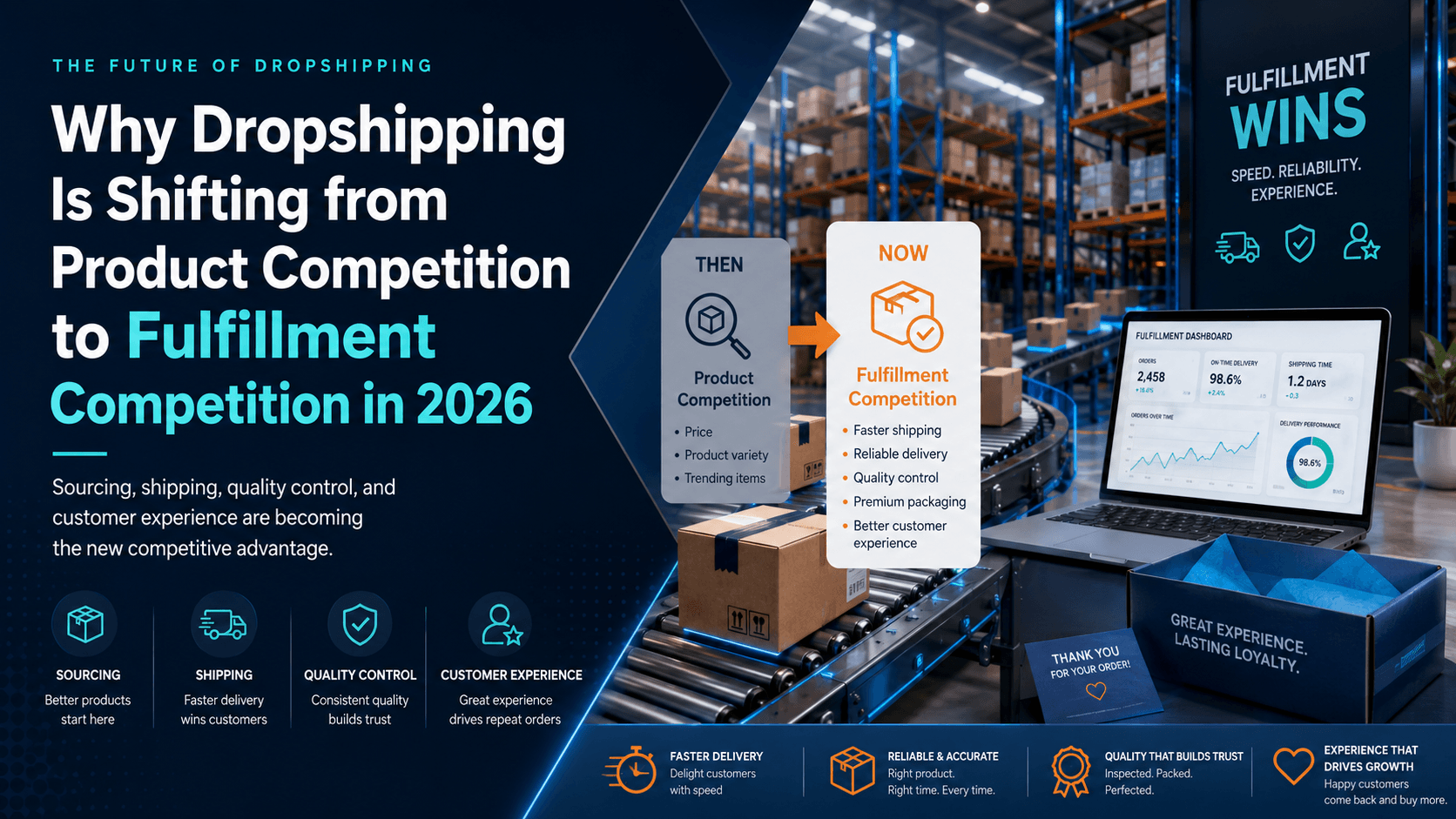
By 2026, this environment has changed significantly—especially in Europe. Information transparency has increased, competitors have multiplied, and consumers have become far more sensitive to service quality. As a result, the traditional model of relying solely on price advantage and aggressive advertising is no longer sustainable.
In Belgium, this shift is particularly visible. Direct shipping from Asia, while still viable for testing, struggles to compete at scale due to inconsistent delivery times and higher refund risks. Sellers who continue to rely on this model often encounter performance ceilings that are difficult to break.
Industry data from Shopify and Statista (2025) highlights this transition. While average profit margins for European independent stores remain in the 15%–25% range, fulfillment strategy is now the primary differentiator. Sellers using EU-based warehouses consistently report lower refund rates, improved customer satisfaction, and more stable advertising performance.
There is also an increasing connection between operational reliability and platform trust. Payment providers monitor refund rates and delivery performance, while advertising platforms factor user experience signals into campaign efficiency. This means operational weaknesses can directly impact visibility and cash flow.
In practical terms, dropshipping in 2026 is no longer about “finding the right product.” It is about building a system that integrates sourcing, fulfillment, marketing, and customer experience into a cohesive structure.
3. Cost Structure Breakdown: Profit Is a System, Not a Margin
A common misconception among new sellers is that profitability can be calculated by subtracting product cost from selling price. In reality, especially in a market like Belgium, profitability is determined by a multi-variable system where each component interacts with the others.
Consider a product priced at €30. On the surface, with a sourcing cost of €10 and shipping cost of €5, it may appear that a €15 margin is available. However, this assumption ignores the largest and most volatile cost component: customer acquisition.
Advertising costs in Belgium vary depending on targeting, creative quality, and competition levels. In most cases, cost per acquisition (CPA) falls between €7 and €11. High-performing creatives may reduce this figure temporarily, but as campaigns scale, costs tend to stabilize at higher levels due to audience saturation and algorithmic adjustments.
Payment processing fees, typically ranging from 2% to 4%, further reduce margins. More importantly, hidden costs—such as refunds, chargebacks, and delivery-related disputes—can significantly impact net profitability.
Refund rates are particularly sensitive to fulfillment performance. When delivery times exceed customer expectations, refund rates can increase from 5% to over 10%. At scale, this difference is substantial. For every 100 orders, an additional five refunds can erase a large portion of profit.
Therefore, profitability should be evaluated at the system level rather than the transaction level. Key metrics such as conversion rate, refund rate, and customer lifetime value must be considered together. Only when these elements are aligned can a business achieve sustainable profitability.
4. Supplier Strategy: Why Supplier Selection Defines Your Ceiling
In Belgium, supplier choice is not just a sourcing decision—it directly determines how far a business can scale. Many beginners underestimate this and treat suppliers as interchangeable. In reality, supplier quality sets the upper limit for delivery speed, product consistency, and ultimately customer trust.
At the testing stage, platforms like AliExpress or CJdropshipping remain viable due to their flexibility and low upfront cost. However, once a product shows traction, continuing with the same suppliers often leads to instability. Delivery variability, inconsistent packaging, and limited communication can quickly affect customer satisfaction.
A more sustainable approach involves transitioning to private agents or EU-based suppliers. Private agents, particularly those operating out of China with optimized logistics lines, can reduce delivery times to 6–9 days while improving product quality control. More importantly, they offer customization options—such as branded packaging—that can significantly enhance perceived value.
For long-term scaling, EU warehouses become a critical component. Suppliers with stock in Belgium, the Netherlands, or Germany can achieve 2–4 day delivery windows, aligning with local consumer expectations. This shift not only improves conversion rates but also reduces refund pressure.
Supplier diversification is equally important. Relying on a single supplier introduces operational risk. Experienced sellers typically maintain at least two supply channels for each winning product to ensure continuity.
5. Logistics Strategy: Speed Is Not an Advantage—It Is a Requirement
In mature European markets, logistics is no longer a competitive edge—it is a baseline expectation. Belgian consumers are accustomed to fast delivery due to the presence of major players like Amazon and local eCommerce platforms.
Shipping from China, while cost-effective, introduces variability. Even with optimized lines, delivery times can fluctuate due to customs processing and seasonal congestion. This unpredictability often leads to customer dissatisfaction.
EU-based fulfillment, on the other hand, offers consistency. Delivery within 2–4 days aligns with customer expectations and significantly improves the post-purchase experience. Faster delivery also reduces anxiety, leading to fewer support inquiries and higher customer satisfaction.
From a financial perspective, faster logistics indirectly improve profitability. Higher satisfaction reduces refund rates, while shorter delivery times improve advertising performance by increasing conversion rates.
The key takeaway is that logistics should be treated as part of the marketing system. Delivery speed influences not only customer experience but also acquisition efficiency.
6. Payment and Trust: The Hidden Conversion Drivers
In Belgium, trust plays a central role in purchasing decisions. Unlike impulse-driven markets, Belgian consumers often evaluate multiple aspects before completing a purchase.
Payment options are a critical component of this trust framework. While credit cards are widely used, local payment methods such as Bancontact are essential for maximizing conversion rates. Stores that fail to offer local payment options often experience friction during checkout.
Transparency is equally important. Clear shipping policies, return guarantees, and visible contact information contribute to perceived legitimacy. Ambiguity in these areas can lead to hesitation and cart abandonment.
Trust signals—such as customer reviews, secure payment badges, and professional design—also play a significant role. These elements collectively reduce perceived risk and encourage purchase decisions.
Ultimately, conversion optimization in Belgium is less about persuasion and more about reassurance.
7. Product Selection Logic: Practicality Over Virality
Product strategy in Belgium differs from more trend-driven markets. While viral products can still generate short-term results, sustainable performance is typically driven by practicality.
Products that solve everyday problems—home organization tools, pet accessories, and functional gadgets—tend to perform consistently. These products align with consumer behavior that prioritizes utility over novelty.
Seasonality also plays a role, but its impact is more predictable. Winter-related products, for example, see steady demand rather than sudden spikes. This stability allows for better inventory planning and reduced risk.
Another important factor is perceived quality. Belgian consumers are less tolerant of low-quality items. Even at lower price points, products must meet a certain standard to avoid negative feedback and refunds.
Successful product selection, therefore, involves balancing demand, quality, and logistical feasibility.
8. Advertising Strategy: Stability Over Aggressive Scaling
Advertising in Belgium requires a more measured approach compared to larger markets. While platforms like Facebook and TikTok remain effective, aggressive scaling often leads to diminishing returns.
Cost per acquisition tends to stabilize quickly, meaning that rapid budget increases do not always translate into proportional revenue growth. Instead, consistent testing and gradual optimization yield better long-term results.
Creative quality is a major differentiator. Ads that clearly demonstrate product functionality tend to outperform purely aesthetic content. This aligns with the rational decision-making behavior observed among Belgian consumers.
Retargeting strategies also play a crucial role. Since purchase decisions are often delayed, retargeting campaigns help capture users who require additional time to evaluate the product.
The overall approach should prioritize efficiency and consistency rather than short-term spikes.
9. Localization: The Overlooked Competitive Advantage
Belgium’s multilingual environment introduces both complexity and opportunity. The country primarily operates in Dutch and French, with regional preferences influencing consumer behavior.
Localized content—whether in product descriptions, ads, or customer support—can significantly improve conversion rates. Even basic translation can enhance user trust, while deeper localization creates a more seamless experience.
Localization extends beyond language. It includes adapting messaging to cultural expectations, payment preferences, and delivery standards.
Many competitors overlook this aspect, creating an opportunity for sellers who invest in localization to differentiate themselves.
10. Legal and Tax Considerations: Compliance as a Growth Enabler
Operating in Belgium requires adherence to EU regulations, particularly regarding VAT and consumer protection laws.
The One-Stop Shop (OSS) system simplifies VAT compliance for cross-border sales within the EU. However, proper setup and reporting are essential to avoid penalties.
Consumer rights regulations mandate clear return policies and refund procedures. Non-compliance can lead to disputes and reputational damage.
Rather than viewing compliance as a burden, successful sellers treat it as a foundation for sustainable growth. Proper legal structure reduces risk and builds long-term credibility.
11. Scaling Strategy: From Testing to Systemization
Scaling in Belgium follows a structured progression. Initial testing focuses on identifying viable products with minimal investment.
Once a product demonstrates consistent performance, the focus shifts to optimization—improving conversion rates, refining creatives, and stabilizing supply chains.
The final stage involves systemization. This includes transitioning to EU warehouses, implementing branding elements, and optimizing customer experience.
Each stage builds upon the previous one. Skipping steps often leads to instability and limits growth potential.
12. Long-Term Perspective: From Dropshipping to Brand Building
Dropshipping should be viewed as an entry point rather than a final destination. While it provides a low-risk way to test products, long-term success depends on building a brand.
Branding enhances customer loyalty, increases repeat purchases, and reduces reliance on paid advertising. Over time, this leads to more stable and predictable revenue streams.
In Belgium, where trust and consistency are highly valued, branding can create a significant competitive advantage. Sellers who invest in brand development are better positioned to achieve sustainable growth.
Conclusion: Dropshipping in Belgium Is a System Game
Belgium represents a unique opportunity within the European eCommerce landscape. It is not defined by explosive growth but by stability and predictability.
Success in this market requires more than identifying winning products. It demands a system that integrates sourcing, logistics, marketing, and customer experience.
Each component influences the others. Weakness in one area can impact overall performance, while alignment across all areas creates a strong foundation for growth.
Ultimately, dropshipping in 2026 is no longer about shortcuts. It is about building a reliable, scalable system that can adapt to changing market conditions.
For sellers willing to adopt this approach, Belgium offers not just short-term profits, but a pathway to long-term success.